Valentine’s Day (February 14) is a time of love, friendship, giving, and caring. Americans use Valentine’s Day as an opportunity to tell friends and family how much they care. Children usually exchange cards at school.
Are you looking for Valentine’s Day activity, recipe and craft ideas? Look no further… Au Pair in America has a Pinterest pinboard devoted to Valentine’s Day.
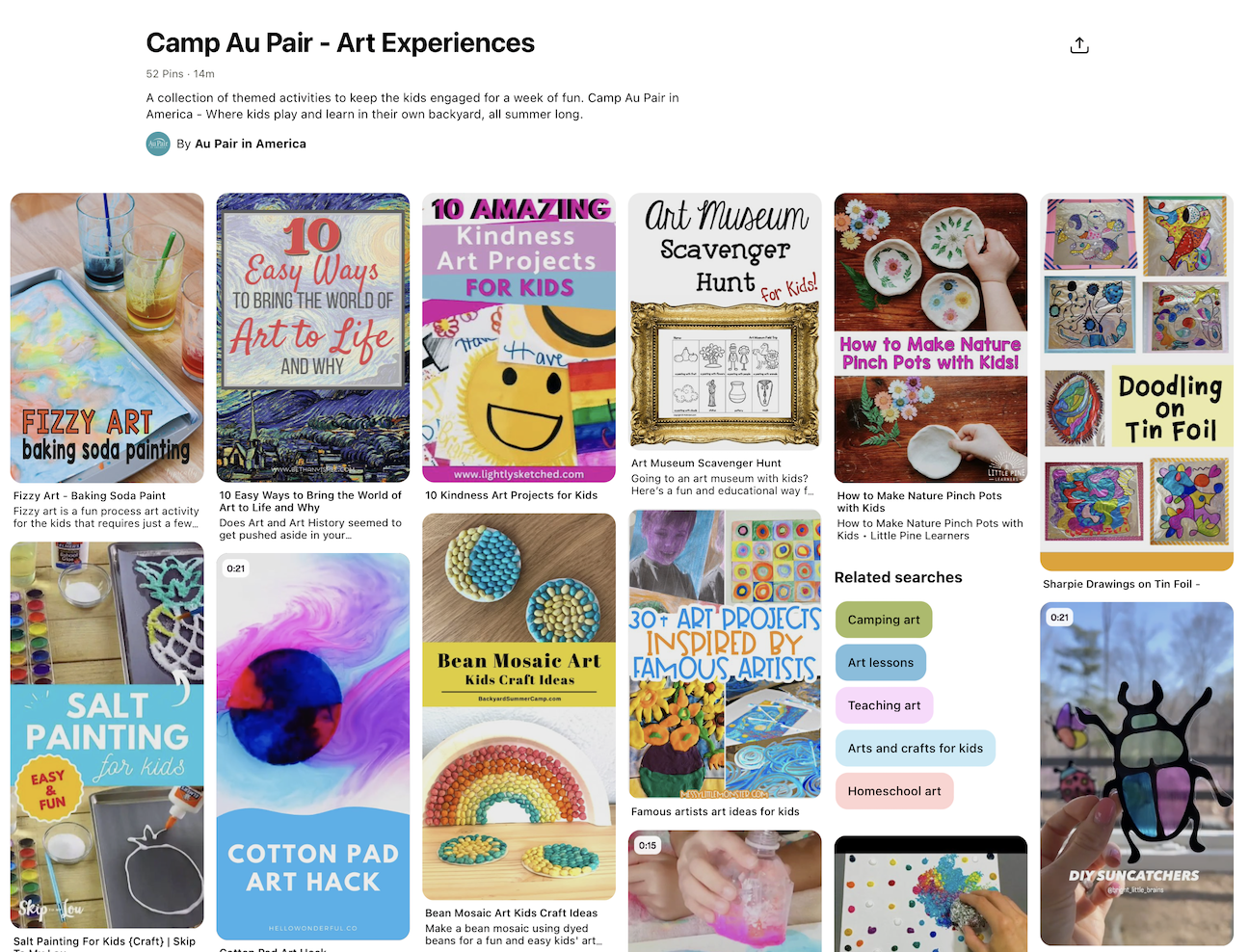
Crafts, recipes, activities, and games related to art can all be found here on the Camp Au Pair – Art Experiences pinboard.
Culture Sharing – Share any specific forms of art that are popular in your home country (mosaics, origami, murals, fabric dying, etc.) Are there any famous artists from your country that you could share their works with your host kids?
Check out the Global Awareness website past contests page to see art submitted by au pairs from a variety of countries. The previous Flag Day Contest winners have some great art inspired by country flags and symbols.
Field Trips can be a great way for kids to learn and have new experiences. Get permission from your host parents before any outings. Check the websites before you go to be sure you understand the hours, costs, and whether advance tickets/reservations are required.
Art Museums (Below are three, but there are lots of others in DC)
American Visionary Art Museum in Baltimore is not your typical art museum. You can tell that when you see the school bus covered in mosaic glass or the mural on the sidewalk outside.
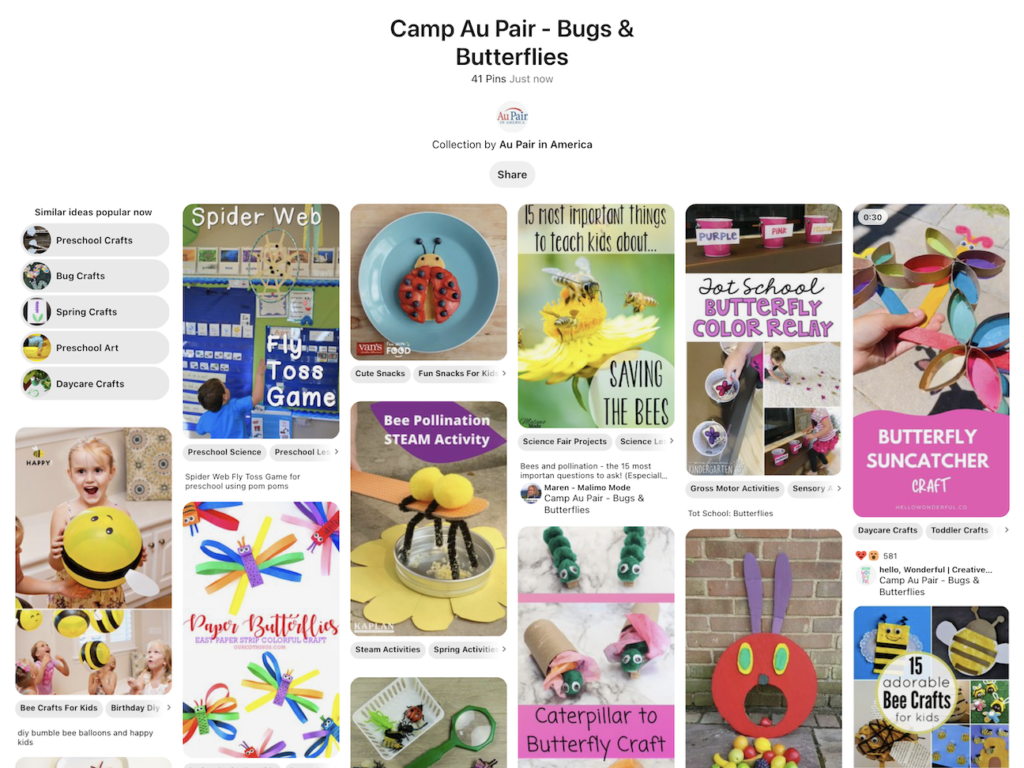
More than 100 crafts, recipes, and activities related to all kinds of bugs, insects, butterflies, and spiders can be found here on the Camp Au Pair – Bugs & Butterflies pinboard.
Field Trips can be an excellent way for kids to learn and have new experiences. Get permission from your host parents before any outings. Check the websites before you go to be sure you understand the hours, costs, and whether advance tickets/reservations are required.
Butterfly exhibits
Flower Gardens
Natural History Museums
Parks with Nature Areas
Zoo
Games – There are more bug and butterfly-themed games than you might expect.
Outdoors – Kids today do not spend enough time outdoors. Take the kids in the backyard or another nature area (approved by your host parents) and do some activities related to this theme:
Allow them to search for bugs and butterflies.
Observe lightning bugs (also known as fireflies) in the evening. Here is a map showing what people call these little guys in different parts of the country.
After it rains, look for earthworms. Not bugs or butterflies, but very interesting creatures you can find in your own backyard.
NOTE: If you are outdoors with the children, be sure to check for ticks when you come back inside. Here is a blog post explaining the health risk ticks can pose and how to find and remove them safely.
Webcams – You can do a Google search for websites with webcams that allow you to observe bugs. Here are some to get you started.
Books – Make a trip to the library and/or check your kids’ bookshelf for books on bugs and butterflies. You may find some classics like The Very Hungry Caterpillar or The Grouchy Ladybug by Eric Carle. You can also find books being read aloud on YouTube videos like this one.
Movies – There are lots of movies with insect themes.
The Ant Bully
Antz
A Bugs Life
The Bee Movie
Charlotte’s Web
James & the Giant Peach
Maya the Bee
Miniscule: Valley of the Lost Ants
Wings of Life (documentary)
Videos – You can find many great videos of butterflies and insects on YouTube. Check out these videos for kids about bees and ants. All about Insects covers lots of tiny creatures who crawl and fly. Here are a few videos to get you started.
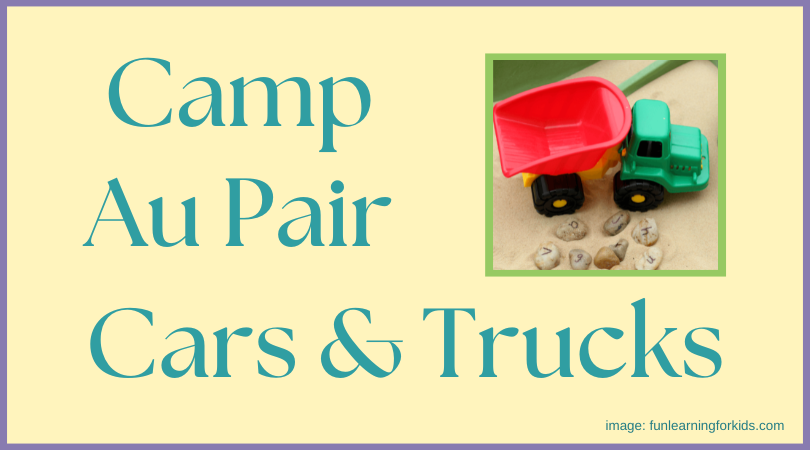
Next week’s Camp Au Pair theme will beCars & Trucks.
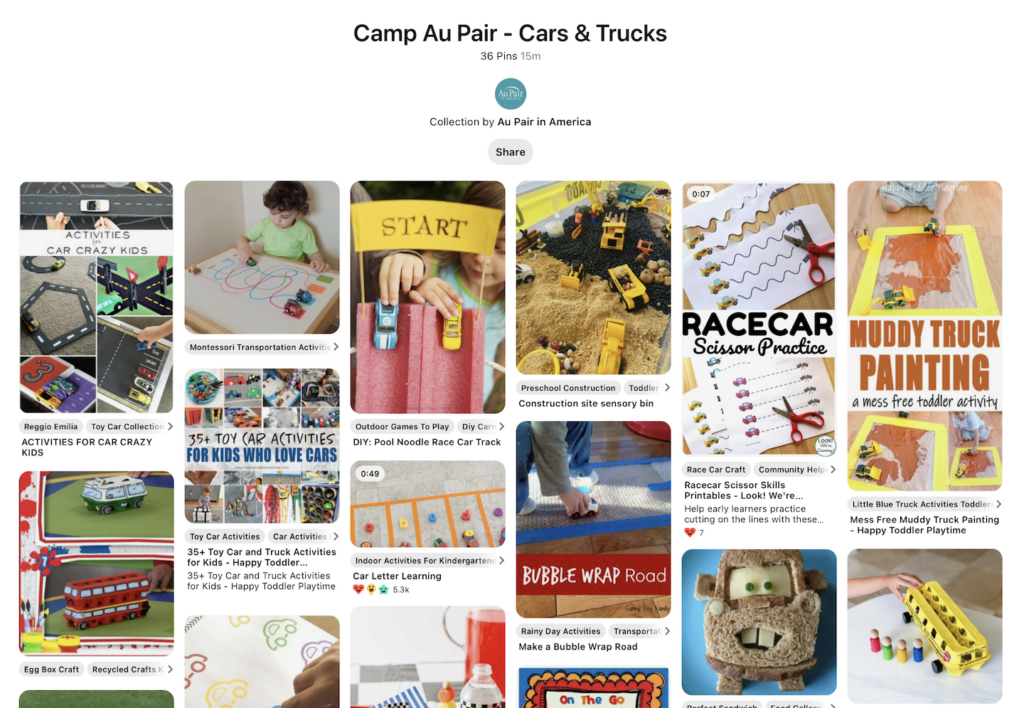
Crafts, recipes, activities, and games related to all kinds of vehicles can all be found here on the Camp Au Pair – Cars & Trucks pinboard.
Field Trips can be an excellent way for kids to learn and have new experiences. Get permission from your host parents before any outings. Here are a few field trips that go with this theme:
Go kart track (even if they aren’t old enough to drive, watching the cars is fun.)
Look for construction areas where the kids can observe big machines in action. Kids should observe from the car or a safe area.
Keep an eye out for the trash truck and let them watch the truck in action.
Go to a drive-through car wash and/or let the kids make their own car wash at home.
Virtual Field Trips
Watch vehicles being assembled with virtual auto plant tours from Toyota & BMW.
Videos – Mighty Machines & Amazing Big Trucks are kid-friendly video channels showing machinery and big trucks in action. Look for fun videos on YouTube about cars and trucks.
Movies – Here are some movies that fit the cars and trucks theme.
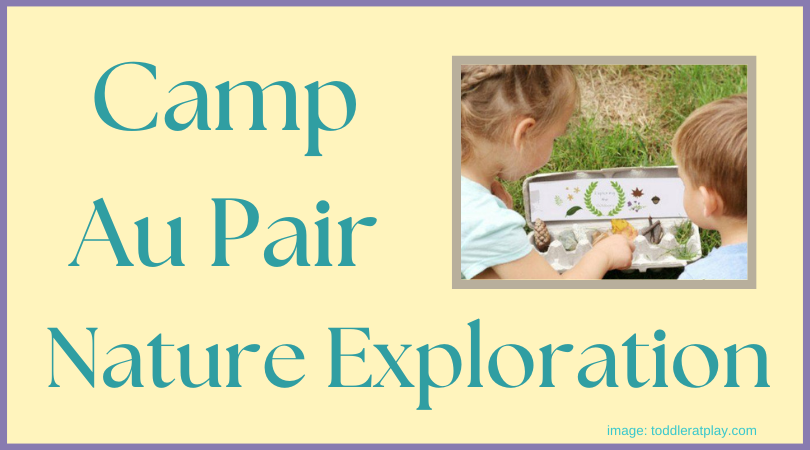
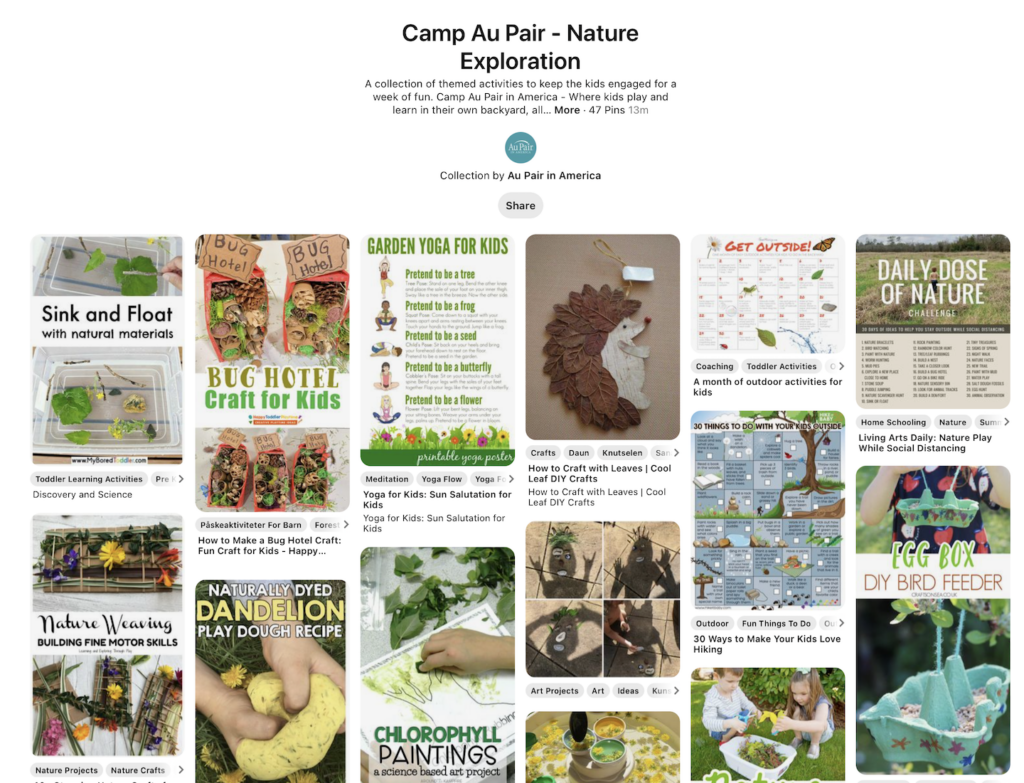
Field Trips can be a great way for kids to learn and have new experiences. You can start observing nature at any local park or in your own backyard. If you want to take it a step further, Below is a list of other local places to go explore nature. Get permission from your host parents before any outings and check websites before you go for hours and information.
Safety note: When coming inside after you have been outside exploring nature, it’s always a good idea to check the children and yourself for ticks. For more information, take a look at this post.
Videos – Look for fun videos on YouTube about nature.
Books – Check your bookshelves and/or stop by your local library and look for books on nature. You can also find many read aloud book videos on YouTube. Here are a few to get you started.
Field Trips can be a great way for kids to learn and have new experiences. Get permission from your host parents before any outings. Check the websites before you go to be sure you understand the hours, costs, and whether advance tickets/reservations are required. Search online to see if your area has any of the following:
Pet or outdoor store (Bass Pro Shop) with fish tanks
Webcams – You can do a google search for aquariums and zoos across the country (and the world) with webcams that allow you to observe sea creatures. Here are a few to get you started.
Videos – Look for fun videos on YouTube about sea creatures. There’s more to see than Baby Shark. Movies like Finding Nemo, Dolphin Tale, and The Little Mermaid also go well with this theme.
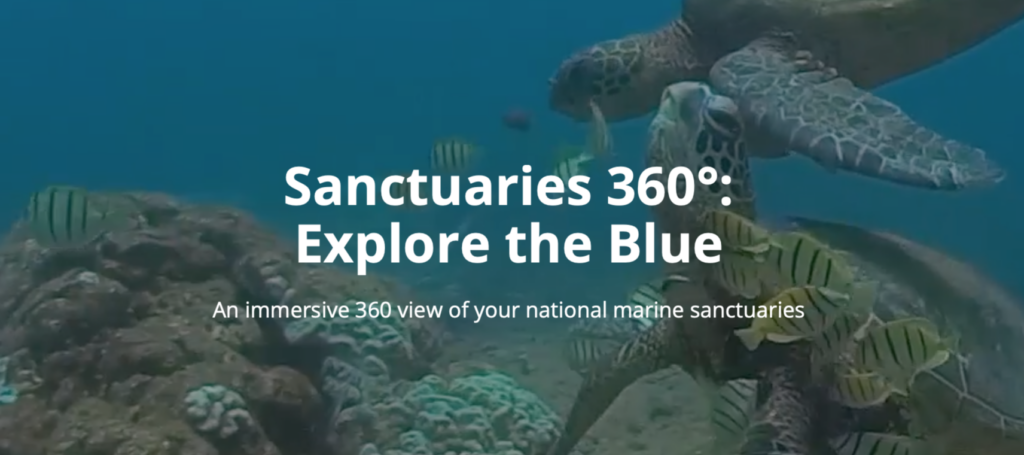
If your kids are a little older, check out 10 Crazy Facts About Sea Turtles (below).
Books – Stop by your local library and look for books on sea creatures. The Rainbow Fish is a classic children’s book, your kids may already own. If not, you can find videos like this of it being read aloud.
Movies – There are lots of movies with under the sea themes.
A Dolphin Tale
Finding Dory
Finding Nemo
Little Mermaid
Moana
Moana 2
Shark Tale
Song of the Sea
Television – There are some episodes of children’s television shows that talk about life under the sea.
The Magic School Bus is a television series that follows Ms. Frizzle and her class as they set off on field trips. Most episodes can be found on YouTube. Here are some episodes that fit this week’s theme.
Bill Nye the Science Guy has episodes on Fish, Marine Animals and more on YouTube.
The Discovery Channel has an annual Shark Week coming up on July 20. Check out 15 JAW-some Activities for Shark Week with lots of fun ideas for kids in grades 5 and up, but a few for younger kids too.
When kids are out of school for the summer, it doesn’t take long for them to become bored and sometimes that leads to sibling squabbles and mischief. Even though they don’t realize it, they are usually missing routine and predictability in their daily schedule. One solution is to make fun plans to keep them busy!
Each week this summer we will share a different Camp Au Pair theme. These weekly themes are designed to give you ideas to keep your host kids occupied and engaged all summer long. They will also be learning. (But shhhh, don’t tell them that part.) Check back each Friday, for the next week’s theme. This gives you a chance to make plans and gather materials for the next week. For each theme there will be crafts, games, snacks and activities. You can just use these ideas or add your own and customize the themes to fit the ages and interests of your host children.
If you get some great pictures doing these activities with your host kids, please send those to your community counselor. We love to share your accomplishments and inspire other au pairs!
“Game plan” means a strategy for how you are going to accomplish something. In the case of keeping kids from getting bored and/or into trouble, the best way to prevent it is to keep them busy with safe, fun activities.
When there are days home from school, letting kids sit around watching TV or playing video games is not the best use of their time. Providing fun alternatives will make it much easier to pull them away from the screen.
You need to make a plan of what you will do with them each day and prepare for that. Planning is very important. You don’t want to tell them you are going someplace fun, only to arrive there and see they are not open that day or you need to bring something and you don’t have it.
If your plan includes a craft or cooking project, make sure you have:
All the ingredients/supplies
Recipe/directions
If your plan includes an outing to someplace fun, figure out:
How will you get there?
When you should leave?
How much it will cost?
What will you do for lunch?
Use some of these online resources to find activities and recipes:
Just because a child is old enough to occupy themselves, doesn’t mean that they should be expected to do so the majority of the time. Host families have a certain expectation of activity and involvement for their children. Get the kids engaged and active. You can be more fun than the TV or a video game.
Problem: But, my kids don’t want to do anything but watch TV or play video games.
Solution: Instead of saying, “Would you like to (fill in the blank with any activity)? The answer will often be, “No.”
Try this, “Now we are going to (fill in the blank with any activity.) or “Would you rather do _____ or ______?” Make sure both the choices are good options. Your chances of co-operation are greatly increased. Even kids who are reluctant to try new things will usually get in the spirit of things and have fun if you pick a good activity.
Problem: I don’t know what to do with school-age kids.
Solution: Look for ideas online. Google “activities school-age kids” or “activities tweens”. You can also take part in an au pair webinar on this topic. Below is a list of some ideas to get you started.
Cooking
Making things (check craft stores like Michael’s for kits and models that are age-appropriate)
Going to fun places (pottery painting, jewelry making, farms, museums, mini-golf, go-karts)*
Let them teach you to do something they enjoy. Kids this age love being the expert.
Get outdoors and visit local parks. You can even make a project of reviewing all the local parks (what kind of equipment they have, is there shade, water fountain?) They can write this up and keep it so they remember which ones they want to go to again and which ones to skip in the future.
Let them help you search and plan some activities.
If you have a GPS, try taking them geocaching. Here is a website with all the details.
Use technology to get them off the couch and sneak in some exercise. The phone app Pokémon Go includes activities that are unlocked by taking steps. There are Pokéstops and gyms at many places they might enjoy going for walks like parks, nature trails, walk/bike paths, and downtown areas.
As part of Au Pair in America’s continuing education webinar series for au pairs , there is a session with advice on working with teens. Be on the lookout for the next time that topic is offered.
Host parents often ask for suggestions on how best to handle common expenses that occur as au pairs are caring for the children.
Miscellaneous Expenses
There are different ways to handle the little day-to-day expenses that come up. Things like when an au pair takes the kids out for ice cream or picks up a gallon of milk. Some families keep a cookie jar fund, a little cash that they set aside weekly or monthly for these types of expenses. Others give their au pair a prepaid debit card for this purpose. Below are some suggestions for avoiding problems with expenses.
Host Families
It’s important to be clear about how long this money should last and what types of expenses are approved.
Let the au pair know whether or not you expect receipts.
Au Pairs
Only spend the money on approved expenses.
If it is something you are not sure about, ask first.
Put your receipts in the cookie jar in place of the money to avoid any confusion.
Gas, Uber & Metro
Transportation costs will vary depending on if your au pair is driving or taking public transportation. Here is a post dedicated to How to Handle Transportation Costs.

 Valentine’s Day (February 14) is a time of love, friendship, giving, and caring. Americans use Valentine’s Day as an opportunity to tell friends and family how much they care. Children usually exchange cards at school.