
What is Diwali?
Diwali, is one of the biggest Indian festivals and also a major occassion in Nepal. The festival has great religious significance for Hindus, Sikhs, Jains and the Nepalese. In India, Diwali is now considered to be more of a national festival, and is enjoyed by most Indians regardless of faith. It is commonly celebrated by decorating homes with lamps and candles, bursting of firecrackers and sparklers, eating sweets and other mouthwatering dishes, praying to Gods and Goddesses, observing religious rituals, wearing new dresses and sending wishes and gifts to one another.

When is Diwali?
Though the number of days of the celebration of the festival differ with different communities, the actual days of observance of Diwali are common and fall on exactly the same set of days across India and Nepal. It is observed generally in the months of October or November. It is celebrated for five consecutive days at the end of Hindu month of Ashvin. Diwali is on November 13th, 2012.
What does Diwali mean?
The word “Divali/Diwali” is a variation of the Sanskrit word “Deepavali” which means “a continuous line of lamps” (The word ‘Deep’ means “light”, and ‘avali’ means “a continuous line”). Thus, Diwali is the time to celebrate with lights. Hindus and Sikhs alike regard it as a celebration of life and use the occasion to strengthen family and social relationships. As one of the most important Hindu festivals, Diwali, marks the beginning of a new year in some Hindu calendars. For Hindus, the festival is not only the time to celebrate but also the time to worship.
Why is Diwali called the “Festival of Lights”?
This is probably because of the manner in which it is observed. The festival is traditionally celebrated with activities like bursting crackers, lighting rows of candles and diyas (earthen lamps) around individual homes, holding dazzling fireworks display and igniting colorful sparklers.
Today Diwali is celebrated across the world as the “Festival of Light,” where the lights or lamps signify victory of good over the evil within every human being .
Happy Diwali!

 The public school children will be off several days in September and October. These are regular workdays for an au pair, unless your host parents tell you otherwise. As with any “school holiday” start making plans for activities with the kids now.
 This day commemorates August 6, 1945 when the first atomic bomb was dropped on Hiroshima, Japan. A young Japanese girl dreamed of creating 1000 paper cranes to release into the wind as a symbol of peace throughout the world. Each year at the Hiroshima Peace Park 1000 paper cranes are released into the wind in the hope that the death and destruction caused by war will never be repeated.

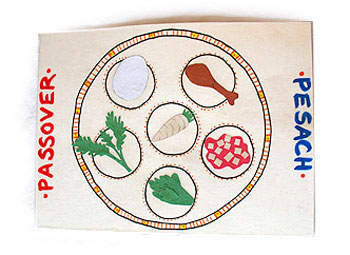 Passover, also known as Pesach or Pesah, is a Holy Day, observed by several religions, beginning on the evening of the 14th day of Nisan and lasting seven days (in Israel and among some liberal Diaspora Jews, and eight days among other Diaspora Jews) that commemorates the exodus and freedom of the Israelites from Egypt; it is also observed by some Christians to commemorate the deliverance from sin by the sacrifice of Jesus.

 I recently asked the au pairs in my cluster to share their favorite holiday memory from fall/winter 2011. I expected to have a lot of replies about Christmas, New Years and maybe Hanukkah. I was surprised that I received more replies about Thanksgiving than any other holiday. I suppose I take Thanksgiving for granted because growing up in the United States, I have celebrated every year of my life.
 Šárka from Czech Republic:
 Lili from Mexico:
 Alex from Austria:
 Swantje from Germany:


