Tag Archives: activities

Camp Au Pair – Cars & Trucks

Next week’s Camp Au Pair theme is Cars & Trucks.

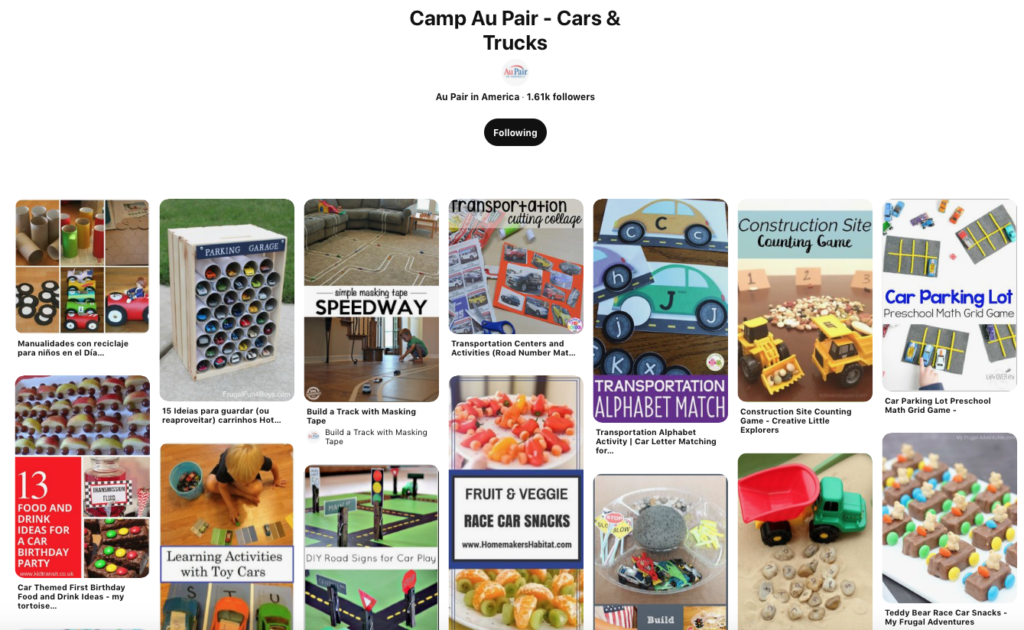
Crafts, recipes, activities, and games related to all kinds of vehicles can all be found here on the Camp Au Pair – Cars & Trucks pinboard.

Field Trips can be a great way for kids to learn and have new experiences. If your host parents are okay with you taking the kids to any outdoor, socially distanced activities, here are a few places to go, that fit this theme:

  • Look for construction areas where the kids can observe big machines in action. Kids should observe from the car or a safe area.
  • Keep an eye out for the trash truck and let them watch the truck in action.
  • Go to a drive-through car wash or let the kids make their own car wash at home.
  • Look for a go kart track in your area. Before you go, check the website to find out what the age and/or height requirements are for children.

VideosMighty MachinesAmazing Big Trucks are kid-friendly video channels showing machinery and big trucks in action. Look for fun videos on YouTube about cars and trucks.

Movies – Cars, Cars 2 & 3, Turbo, Bumble Bee, Chitty Chitty Bang Bang & Bob the Builder Mega Machines movies all fit this theme.

Books – Check your kids’ bookshelf for books on cars & trucks. You can also find many read aloud book videos on YouTube. Little Blue Truck, Trash Trucks, Cool Cars and Don’t Let the Pigeon Drive the Bus are a few fun ones to get you started.

Image: funlearningforkids.com

Welcome to Camp Au Pair in America!

When kids are out of school for the summer, it doesn’t take long for them to become bored and  sometimes that leads to sibling squabbles and mischief. Even though they don’t realize it, they are usually missing routine and predictability in their daily schedule. One solution is to make fun plans to keep them busy! 

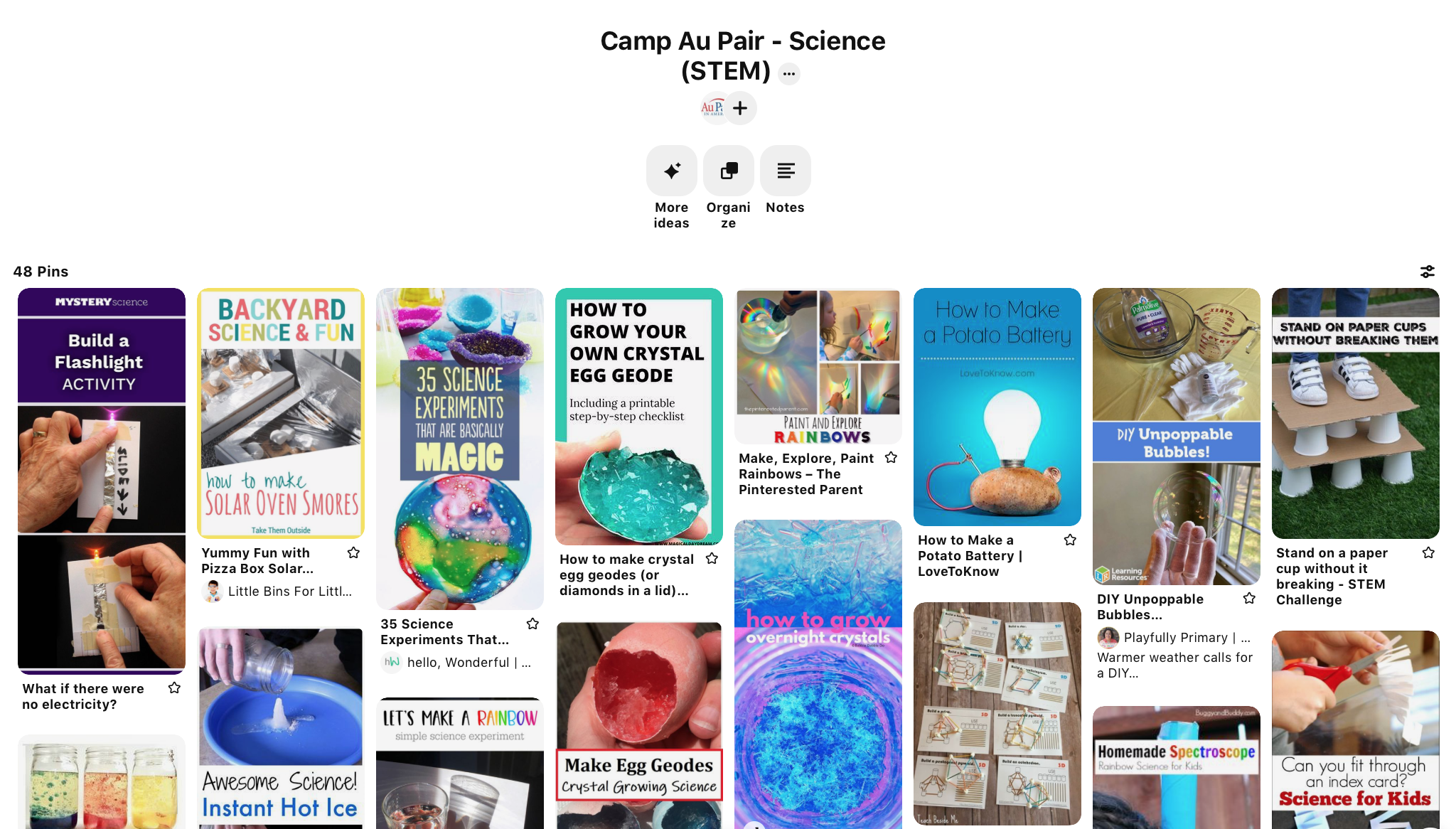
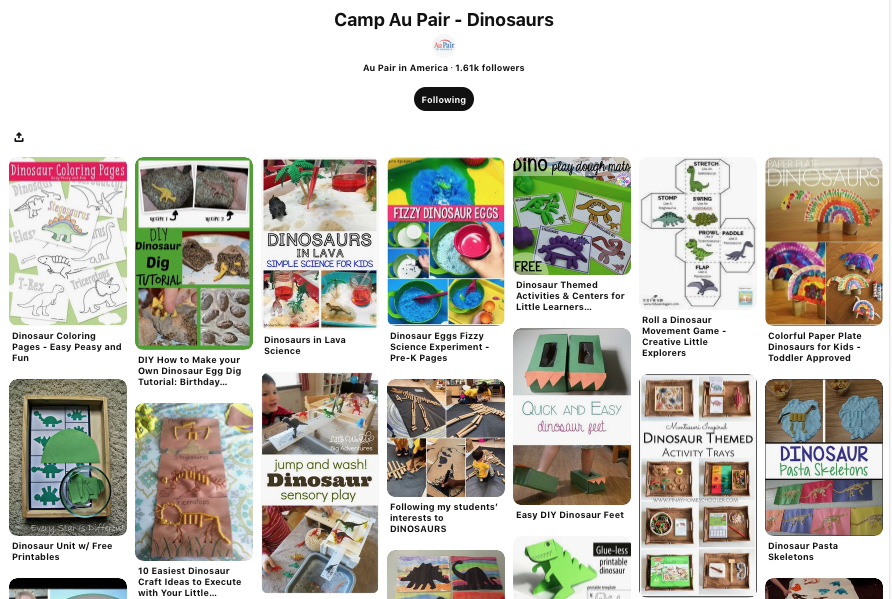
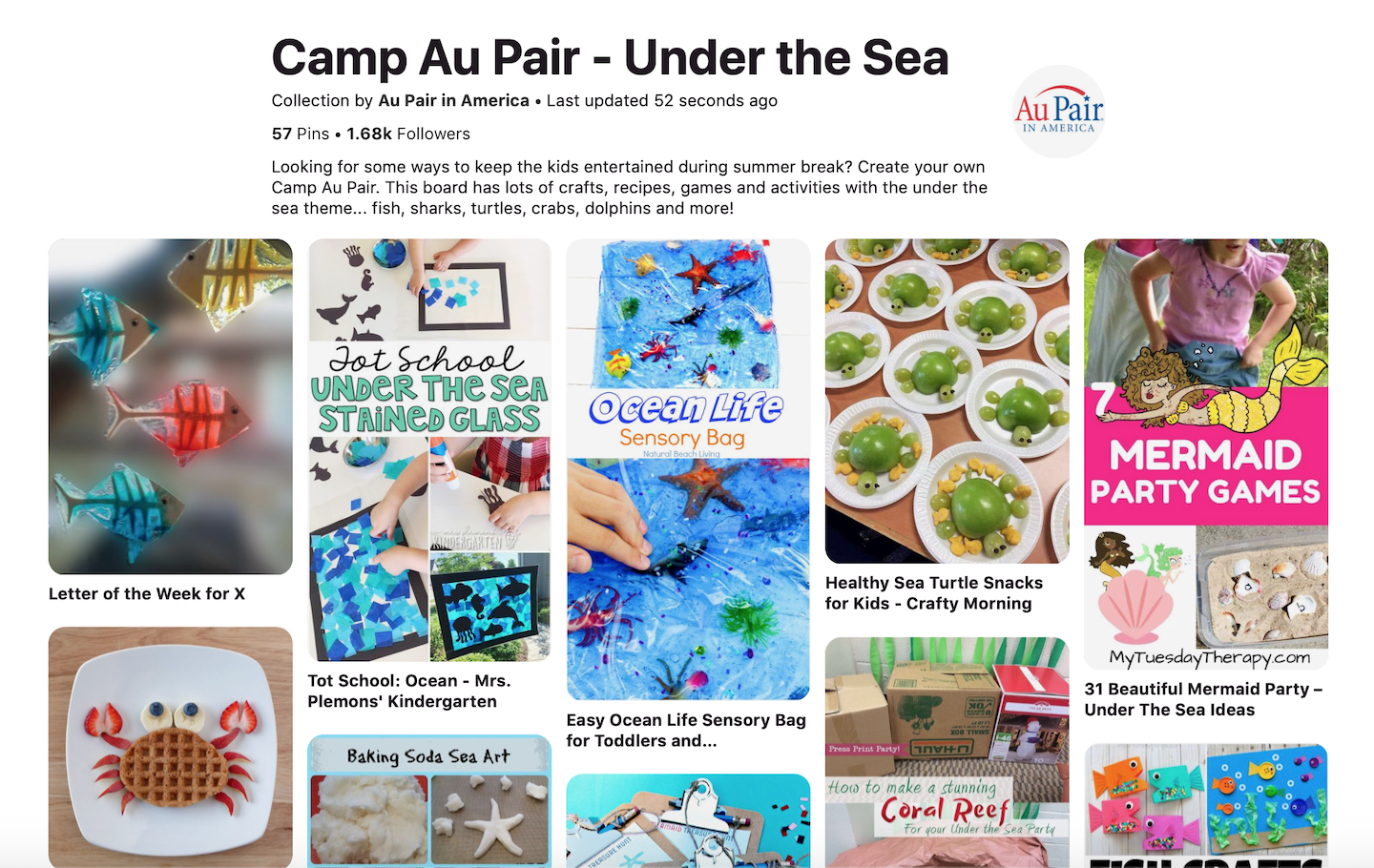
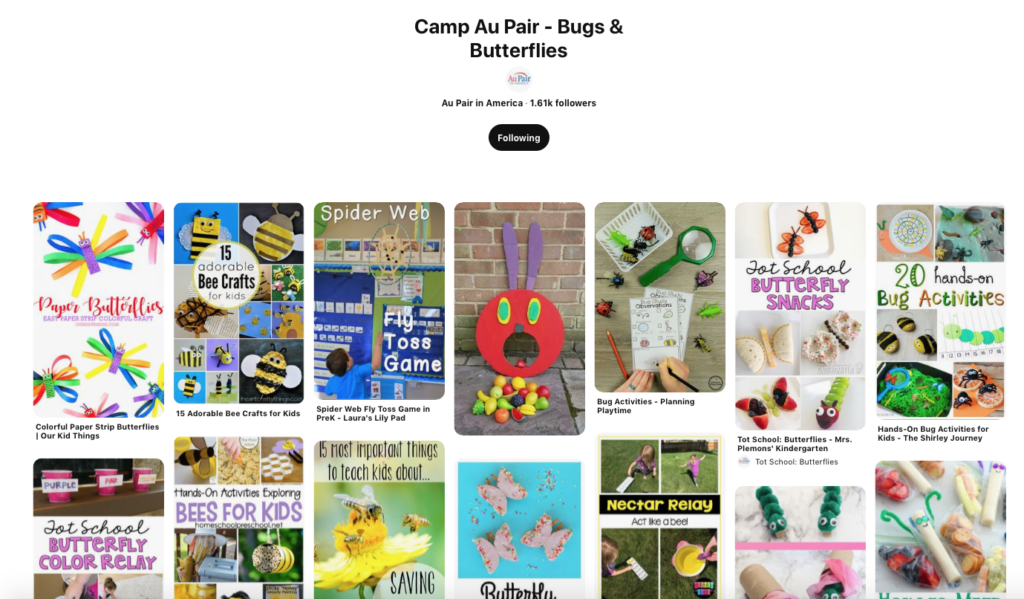
Each week this summer we will share a different Camp Au Pair theme. These weekly themes are designed to give you ideas to keep your host kids occupied and engaged all summer long. They will also be learning. (But shhhh, don’t tell them that part.) Check back each Friday, for the next week’s theme. This gives you a chance to make plans and gather materials for the next week. For each theme there will be crafts, games, snacks and activities. You can just use these ideas or add your own and customize the themes to fit the ages and interests of your host children.

Here are the themes you can look forward to:

  • Art Experiences
  • Backyard Safari
  • Bugs & Butterflies
  • Cars and Trucks
  • Dinosaurs
  • Explore the World
  • Nature Explorations
  • Outer Space
  • Pirate Adventures
  • Princesses & Knights
  • Science (STEM)
  • Under the Sea

Check out Summer Fun & Summer Holidays pin boards for even more ideas.

If you get some great pictures doing these activities with your host kids, please send those to your counselor. We love to share your accomplishments and inspire other au pairs!

Let’s make this an amazing summer!


Memorial Day celebration


Memorial Day is a federal holiday in the United States for remembering and honoring people who have died while serving in the United States Armed Forces. The holiday is observed every year on the last Monday of May.  Many cities and towns host parades (check local websites to get information).  Families and friends often relax and enjoy picnics, cook outs, opening the pool or a trip to the beach.

·         The federal holiday was originally called “Decoration Day” and was first observed on May 5, 1868,

·         Following the battle of Gettysburg, women from Boalsburg, Pennsylvania, placed flowers on the graves of the fallen soldiers.

·         The “National Moment of Remembrance Act” was signed on Dec. 20, 2000, by President Bill Clinton, designating 3 p.m. as a moment set aside to “pause and consider the true meaning of this holiday.”

·         Memorial Day unofficially marks the beginning of summer for many Americans

 Looking to celebrate this very important day? Check what Arlington, VA has to offer:

https://www.stayarlington.com/blog/observe-memorial-day-in-arlington/


How important it is for us to recognize and celebrate our heroes and she-roes!”  ~Maya Angelou

Big Kids Need Interaction Too

Just because a child is old enough to occupy themselves, doesn’t mean that they should be expected to do so the majority of the time.  Host families have a certain expectation of activity and involvement for their children. Get the kids engaged and active. You can be more fun than the TV or a video game.

 

Problem:
But, my kids don’t want to do anything but watch TV or play video games.

Solution:
Instead of saying,  “Would you like to (fill in the blank with any activity)?  The answer will often be, “No.”

Try this, “Now we are going to (fill in the blank with any activity.) or “Would you rather do  _____ or ______?”  Make sure both the choices are good options.
Your chances of co-operation are greatly increased. Even kids who are reluctant to try new things will usually get in the spirit of things and have fun, if you pick a good activity.

Problem:
I don’t know what to do with school age kids.

Solution:
Look for ideas online. Google “activities school age kids” or “activities tweens”. Below is a list of some ideas to get you started.

  • Cooking
  • Making things (check craft stores like Michael’s for kits and models that are age appropriate)
  • Going fun places (pottery painting, jewelry making, farms, museums, mini-golf, go-karts)
  • Sports (soccer, tennis, swimming, bicycling, roller skating, ice skating)
  • Let them teach you to do something they enjoy. Kids this age love being the expert.
  • Get outdoors and visit local parks.  You can even make a project of reviewing all the local parks (what kind of equipment they have, is there shade, water fountain?)  They can write this up and keep, so they remember which ones they want to go to again and which ones to skip in the future.
  • Let them help you search and plan some activities.
  • Check on the APIA Pinterest page and here on our cluster blog for ideas.
  • If you have a GPS, try taking them geocaching. Here is a website with all the details.

Note: Always get permission from your host parents before taking the kids places.

Photo: Killian77

It is cold outside….

snowmanHere are some ideas to keep you busy during the winter  months:

A is for Art – try drawing, painting or gluing
B is for Baking – bake a dessert together for dinner
C is for Clay – Use non-hardening clay or play dough to shape and mold
D is for Dance – put on a lively tape
E is for Exercise – be sure to get some everyday
F is for Friends – invite some over
G is for Greenhouse – find a local greenhouse to visit to enjoy the sights and smells
H is for House – make a playhouse from a large appliance box
I is for Ice skating – take the children to a local rink
J is for Jigsaw puzzle – be sure to pick one that isn’t too difficult
K is for Kitchen science – try a safe experiment
L is for Library – borrow some new books
M is for Movie – make one with a video camera, or watch one
N is for Necklace – make one out of cereal or macaroni
O is for Origami – learn to make simple paper creations
P is for Puppets – socks make easy and fun puppets – put on a show!
Q is for Quiet Time – everyone needs some of this
R is for Reading aloud – choose a good book and a comfortable place to sit
S is for Seeds and Suet – put out food for the birds and watch them eat
T is for Tent – make one from old blankets and chairs
U is for Unplugged – do a day with no TV
V is for Variety – try something new everyday
W is for Walk – take one in any weather (be sure to dress appropriately)
X is for Xylophone – make your own with glasses, water and a metal spoon
Y is for Year – make a calendar or scrapbook to remember the year
Z is for Zoo – visit the animals

HALLOWEEN


images

It`s Halloween! It`s Halloween!
The moon is full and bright
And we shall see what can`t be seen
on any other night:

Skeletons and ghosts and ghouls,
Grinning goblins fighting duels,
Werewolves rising from their tombs,
Witches on their magic brooms.

Jack-o’-lanterns grinning,
Shadows on a screen,
Shrieks and starts and laughter…
This is Halloween!

Happy and Safe Halloween Everyone!

HALLOWEEN SAFETY TIPS:

Alphabet letter S Swords, knives, and similar costume accessories should be short, soft, and flexible.
Alphabet letter A Avoid trick-or-treating alone. Walk in groups or with a trusted adult.
Alphabet letter F Fasten reflective tape to costumes and bags to help drivers see you.
Alphabet letter E Examine all treats for choking hazards and tampering before eating them. Limit the amount of treats you eat.
Alphabet letter H Hold a flashlight while trick-or-treating to help you see and others see you. Always WALK and don’t run from house to house.
Alphabet letter A Always test make-up in a small area first. Remove it before bedtime to prevent possible skin and eye irritation.
Alphabet letter L Look both ways before crossing the street. Use established crosswalks wherever possible.
Alphabet letter L Lower your risk for serious eye injury by not wearing decorative contact lenses.
Alphabet letter O Only walk on sidewalks whenever possible, or on the far edge of the road facing traffic to stay safe.
Alphabet letter W Wear well-fitting masks, costumes, and shoes to avoid blocked vision, trips, and falls.
Alphabet letter E Eat only factory-wrapped treats. Avoid eating homemade treats made by strangers.
Alphabet letter E Enter homes only if you’re with a trusted adult. Only visit well-lit houses. Don’t stop at dark houses. Never accept rides from strangers.
Alphabet letter N Never walk near lit candles or luminaries. Be sure to wear flame-resistant costumes.

Handling Expenses

Host parents often ask for suggestions on how best to handle common expenses that occur as au pairs are caring for the children.

Miscellaneous Expenses

There are different ways to handle the little day to day expenses that come up.  Things like when an au pair takes the kids out for ice cream or picks up a gallon of milk.  Some families keep a cookie jar fund, a little cash that they set aside weekly or monthly for these types of expenses. Others give their au pair a prepaid debit card for this purpose. Below are some suggestions for avoiding problems with expenses.

Host Families

  • It’s important to be clear about how long this money should last and what types of expenses are approved.
  • Let the au pair know whether or not you expect receipts.

Au Pairs

  • Only spend the money on approved expenses.
  • If it is something you are not sure about, ask first.
  • Put your receipts in the cookie jar in place of the money to avoid any confusion.

Gas and Fare Cards 

Host families are responsible for the au pair’s transportation costs: to and from classes, cluster meetings and when driving the kids.

It is a good idea to figure out how much gas an au pair will use for these trips and either put gas in the car or give a gas allowance.   If your au pair is riding to classes or cluster meetings with another au pair, you should offer to share the cost of gas.

Au pairs are responsible for their own transportation at all other times.  You should replace the amount of gas used for personal use.

Photo: Andrea Travillian

VALENTINE’S DAY IN THE USA

hearts-1474

Valentine’s day is celebrated in the United States every year on February 14th. There are many stories and legends behind who the real St. Valentine was, but most scholars agree that he was a martyr who was killed by Roman soldiers because he was marrying people in secret at a time when marriage was outlawed.  Later in the Middle Ages, a great writer named Geoffrey Chaucer wrote a poem as a present to King Richard II, who was going to be married soon. In it, he mentioned St. Valentine, and over time, the idea of Valentine’s Day became associated with the idea of love.

During the Victorian times (in the 1800s), Valentine’s Day became extremely popular! Men and women spent a lot of time making beautiful Valentine’s cards with ribbon, fancy paper and even lace. In those days, people were very reserved and they did not often say what they were feeling. Valentine’s day gave them a way to express their feelings to someone they were in love with anonymously.  The sender would remain a mystery until they could speak more freely.

In the last few decades, Valentine’s day has changed a lot! Today we still exchange cards, but many people buy ready-made cards instead. We also give flowers or chocolates as a gift to remind people of our friendship and love for them. Most Valentine’s gifts and cards make use of the colors red and pink, and are decorated with images of hearts or roses. Another common symbol of love on this day is Cupid, the Roman god of love. He is usually shown as a little angel with a bow and arrow. According to legend, anyone who is struck by his arrows will fall in love.

Here are some links with ideas about how you can celebrate and have fun with the children you care for over the next couple of weeks!

Click here for Valentine’s Day Cards, coloring pages, recipes, crafts, games and puzzles: http://www.dltk-holidays.com/valentines/


Check out our Au Pair in America Pinterest page for Valentine’s Day for more ideas: https://www.pinterest.com/aupairinamerica/valentines-day/

-1

Have fun!

DECEMBER HOLIDAYS


Hanukkah (December 6 at sundown to December 14) ,Christmas (December 25) and Kwanza (December 26 TO January 1) are the major Holidays this month!

These holidays are a time of celebrating,giving and sharing. Our Arlington/Falls Church cluster is going to celebrate these holidays by attending a performance of the Nutcracker at the Warner Theatre and sharing some  Holiday Cheers at their community counselor’s home .

If you are looking to get into the holiday spirit,here are some crafts ideas,no matter what holiday you celebrate,but you can find more under seasonal crafts or under the seasonal calendar on the au pair resources site.

Pencil Can Gift For Mom Or Dad. Wash out a soup can or a juice can. Children can decorate can with paint, glue and noodles, buttons, yarn, etc. Let dry and wrap as a gift.

Make Wrapping Paper: Need plain brown wrapping paper or white tissue paper, paint, pan, and cookie cutters, apples or potatoes. Pour paint into pan. Dip cookie cutter shapes (or apples cut in half, or potatoes cut in half with a design cut into them) into paint and make prints on the paper.

Traditions: Tell the children how you celebrate special holidays in your country.

Holiday Cards: Need construction paper, markers, stickers, glitter, crayons, paint. Fold construction paper in half to create a card. Decorate. Help children write a message inside.

Chanukah

Hanukkah1

Chanukah (also spelled Hanukkah), a Jewish holiday, is known as the Festival of Lights. It is a celebration of religious freedom based on historical events that occurred more than 2100 years ago. It commemorates rebellion against oppression, the first serious attempt in history for a nation to accept religious and cultural diversity.

Chanukah is celebrated for 8 days during the winter with the lighting of candles in a special lamp called a menorah or hanukiah. It is also traditional to exchange gifts or gelt (Yiddish for money), in the form of real coins or chocolate wrapped in gold foil, and to play a game of put-and-take with a four-sided top called a dreidel. The Hebrew letters on the sides of the top stand for words which mean a great miracle happened there.

The traditional legend of the miracle of Chanukah is that a single day’s supply of oil burned for eight days in the Temple in Jerusalem. Because of this Jews eat foods fried in oil on Chanukah, most often fried potato pancakes, known at latkes, and doughnuts, called sufganiyot in Hebrew.

As the essence of Chanukah is about the acceptance of cultural diversity, it is particularly appropriate for au pairs to join in the celebration. Helping children make simple gifts for each other and for their parents, or making Chanukah decorations for the house can add to everyone’s enjoyment of the holiday.

Christmas :

images-2

Christmas or Christmas Day is a holiday observed generally on December 25 to commemorate the birth of Jesus, the central figure of Christianity. The date is not known to be the actual birthday of Jesus, and may have initially been chosen to correspond with either the day exactly nine months after some early Christians believed Jesus had been conceived, the date of the winter solstice on the ancient Roman calendar, or one of various ancient winter festivals. Christmas is central to the Christmas and holiday season, and in Christianity marks the beginning of the larger season of Christmastide, which lasts twelve days.

Although nominally a Christian holiday, Christmas is also widely celebrated by many non-Christians, and many of its popular celebratory customs have pre-Christian or secular themes and origins. Popular modern customs of the holiday include gift-giving, music, an exchange of greeting cards, church celebrations, a special meal, and the display of various decorations; including Christmas trees, lights, garlands, mistletoe, nativity scenes, and holly. In addition, several similar mythological figures, known as Saint Nicholas, Father Christmas and Santa Claus among other names, are associated with bringing gifts to children during the Christmas season.

Kwanzaa:images


Kwanzaa, or “First Fruits of the Harvest,” is an African-American and Pan-African holiday which celebrates and strengthens community, family and culture over a period of seven days. Kwanzaa begins December 26th. Each day, a principle of Kwanzaa is celebrated.

In order to appropriately cite these principles, the officialkwanzaawebsite.org describes these 7 Kwanzaa Principles, authored by Maulana Karenga, in this way:

Umoja or Unity: To strive for and maintain unity in the family, community, nation and race.

Kujichagulia or Self-Determination: To define ourselves, name ourselves, create for ourselves and speak for ourselves.

Ujima or Collective Work and Responsibility: To build and maintain our community together and make our brother’s and sister’s problems our problems and to solve them together.

Ujamaa or Cooperative Economics: To build and maintain our own stores, shops and other businesses and to profit from them together.

Nia or Purpose: To make our collective vocation the building and developing of our community in order to restore our people to their traditional greatness.

Kuumba or Creativity: To do always as much as we can, in any way we can, in order to leave our community more beautiful and beneficial than we inherited it.

Imani or Faith: To believe with all our heart in our people, our parents, our teachers, our leaders and the righteousness will victory of our struggle.

Note that the 7 Principles incorporate the words first in Swahili and then English.