My name is Christine Connally and I have been an Au Pair in America Community Counselor since 2003. My service area includes: Takoma Park, Silver Spring, Prince George's County and Southern Anne Arundel County, Maryland.
Au Pair in America is the nation's first legal au pair program. Since 1986, we have provided the best child care opportunities to host families across the US and au pairs from around the world.
Posted by Christine Connally on Sep 30, 2011No Comments
For the past several years our cluster has participated in the City of Bowie International Festival. It is a wonderful event that brings thousands of people from all over the area who want to sample a variety of cultures from around the globe. We provide free children’s activities. Last year our au pairs had over 700 children visit our booth!!!
It looks like we will have a cool fall day tomorrow and let’s hope the rain stays away.
Depending on when you stop by, you might join us to do one of the following:
writing your name in Thai
learning the colors in various languages
map games
flag games
temporary tattoos
getting your hand painted with the flag of Austria, France, Costa Rica or Brazil
The City of Bowie International Festival will be held on Saturday, October 1, 2011, 11 am-5pm at Allen Pond Park, Northview Drive, Bowie, MD 20716.
This event is FREE, Family-Friendly and open to the public. Hope to see you there!
Posted by Christine Connally on Sep 30, 2011No Comments
Many au pairs and host families are looking for places to get flu shots this time of year. Au Pair insurance does not cover immunizations, but there are lots of places to get flu shots for $30 or less. If the host family is insisting that an au pair get a seasonal flu shot and she agrees to get it, the host family would be responsible for the expense.
If you are planning to get the seasonal flu vaccine, it is recommended that you get it as early as possible.
Posted by Christine Connally on Sep 29, 2011No Comments
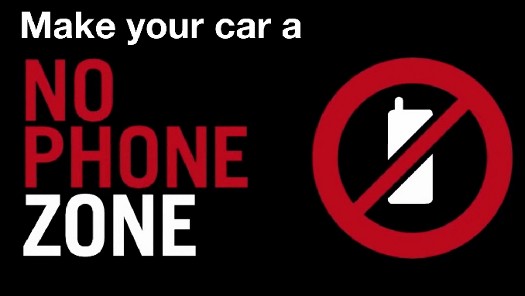
Two important reasons to make your car a phone-free zone:
Safety – There is no text message that is worth risking lives.
It’s the Law – Please read the details below about changes (effective October 1 to the Maryland law to increase enforcement and the penalty (fine & points against your license) for breaking the law.
FromWashingtonpost.com:
Sending and reading text messages behind the wheel has been illegal in Maryland for more than a year, but under the existing law, it was a secondary offense. That meant police had to find another reason to pull a driver over in order to issue a texting citation.
The state legislature changed texting to a primary offense this year. Drivers who are using the Global Positioning System function in their mobile devices or who are sending a text message to the emergency 911 system are exempted from prosecution.
Under the new law, those caught texting can be fined $70 and receive one point toward suspension of a driver’s license. But if the action is judged to have caused an accident, the fine increases to $110 and the number of points to three.
Sending and reading text messages while driving is a primary offense in the District and a secondary office in Virginia. It is a primary offense in 30 other states and a secondary offense in Iowa and Nebraska.
The National Highway Traffic Safety Administration reported that 20 percent of crashes that resulted in injury in 2009 involved distracted driving. NHTSA said 995 fatal crashes that year involved cellphone distraction. Sixteen percent of all drivers younger than 20 who were involved in fatal crashes were reported to have been distracted.
———-
In this 90 second video people share stories about how a simple decision to read or send a text message while driving had deadly consequences.
I urge all au pairs and host families to watch this video and discuss. This is one simple decision and commitment that can make us all safer on the roads.
Posted by Christine Connally on Sep 25, 2011No Comments
From the MVA website: Beginning October 2011, the knowledge test you must pass to get a non-commercial Class C learner’s permit will be based on information in the new Maryland Driver’s Manual. The new Manual includes basic knowledge on driver safety for new drivers, including: traffic laws of this State; highway signs regulating, warning & directing traffic; and safe driving practices. The improved graphics, full-color design, and brief paragraphs provide an easy read of only 39 pages – packed with core driver safety facts.
I have updated the links (on the column to the right) to include the New Driver’s Handbook in English, Spanish and an audio version. Paper copies are available in MVA offices.
There is now one booklet instead of two. The yellow booklet that contains the information on who needs a driver’s license and who does not, which I have given out to be kept in the car, will probably not be available after September.
What to keep in the car for proof now?
I have obtained a copy of the Maryland Law regarding International Drivers. The information is copied directly from a booklet which all police officers have in their squad car. The idea is that it shows them where to look up the law and once they compare your paper to that section of their booklet, they should realize that au pairs are allowed to drive on their country license (for up to one year.) Sometimes, they will still choose to write you the ticket for not having a Maryland license. If that happens, don’t worry. You can go to court and the judge should drop the ticket, as long as you are in your first year and have a valid license from your home country in your possession.
I have uploaded this document on Google Docs. You may access it HERE and print a copy for each car the au pair drives.
Posted by Christine Connally on Sep 21, 2011No Comments
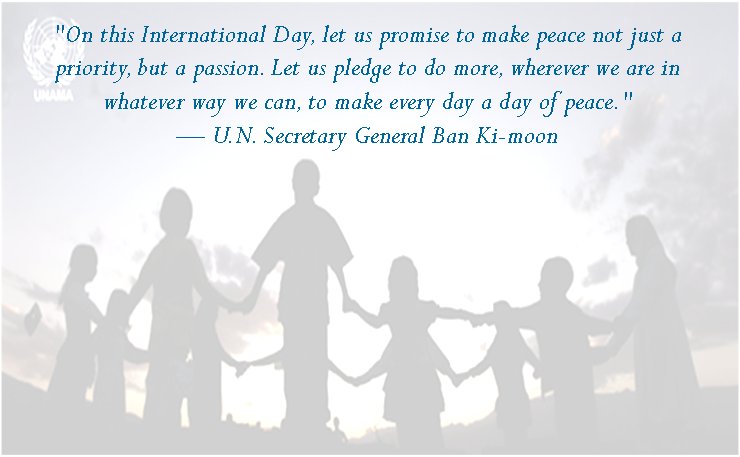
The International Day of Peace (”Peace Day”) provides and opportunity for individuals, organizations and nations to create practical acts of peace on a shared date. It was established by the United Nations resolution in 1981 to coincide with the opening of the General Assembly.
Posted by Christine Connally on Sep 21, 2011No Comments
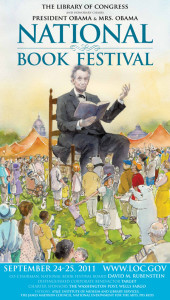
Come to the 11th Annual National Book Festival, organized and sponsored by the Library of Congress, on the National Mall in Washington, D.C. President Barack Obama and Michelle Obama are honorary chairs for the event. The festival is free and open to the public.
Saturday, Sept. 24: 10 a.m. to 5:30 p.m. Sunday, Sept. 25: 1 to 5:30 p.m.
Posted by Christine Connally on Sep 20, 2011No Comments
On Saturday, September 17 we had an au pair soccer match on the National Mall in DC. Our team represented Maryland and we played against a team of au pairs from Virginia. We cheered for our team and they played hard. I think we represented Maryland au pairs very well, even though we did not win. Lots of people stopped, watched and took pictures. After the soccer match, we toured the U.S. Capitol.
Click on the images to view them larger. Click here to see even more pictures from this event in our Cluster Photobucket Album.
Posted by Christine Connally on Sep 19, 2011No Comments
With school back in session and many new au pairs who have recently arrived, I wanted to remind everyone about what to do in different situations with school buses. If you have questions, please ask myself or your host parents.
The rules regarding stopping for school buses are:
It is against the law to pass a stopped school bus while its lights are flashing and its’ stop arm is extended.
On undivided roadways, with no physical barrier or median, vehicles must stop on both sides of the roadway.
Yellow flashing lights indicate that the bus is preparing to load or unload children. Motorists should slow down and prepare to stop their vehicles.
Red flashing lights and extended stop arms indicate that the bus has stopped, and children are getting on or off. Motorists approaching from either direction must wait until the red lights stop flashing before proceeding.
Police, who observe a motorist failing to stop and remained stopped for a school bus, can issue the violator a citation which carries a $570.00 fine and 3 points. Drivers failing to stop for pedestrians in a crosswalk can be issued a citation for $80.00, and drivers failing to exercise due caution when encountering children can be issued a citation for $70.00.
In honor of Baby Safety Month, here are some more specific baby tips:
Check condition and sturdiness of toys. Discard any with sharp edges or are broken or falling apart.
Check children’s clothing for loose buttons and strings.
Is baby’s pacifier still in good condition? If not, toss it. Never use strings to attach the pacifier to baby’s clothes or crib.
Where do you set baby’s carrier when she’s in it? Not on the counter, or any high surface. Babies can wiggle and tip themselves over.
Walkers can be dangerous (especially old ones that don’t meet today’s safety standards), they allow baby to move very quickly and reach things they normally can’t. Never use around stairs.
Stroller check. If your stroller is collapsible, be sure latches are secure before putting baby in. Always check that your child’s arms are out of the way when reversing handle directions so they won’t get pinched. Be sure to use that safety strap. Don’t hang overloaded or heavy bags on the handle of the stroller; this may cause it to tip over.
Can you name the 12 most common choking foods for kids under five? Popcorn, hot dogs, chunks of meat, raisins, ice cubes, chunky peanut butter, nuts of any kind, hard candy, grapes, raw carrots, potato chips and corn chips. Don’t leave toddlers alone while eating; if they begin to choke you need to be nearby to assist.
Get a piggy bank: this is a great place to put coins so they don’t end up on the floor, in the couch cushions and then baby’s mouth.
Never leave your child unattended in the bathtub. If the phone rings, let the answering machine or voice mail pick up.
There are a variety of colleges located in and around our cluster area. Scroll your mouse across the names of the colleges listed below, to find which ones to consider for where you live.
“Au pair” means “on par” or equal. Au pairs and 18-26 year olds from over 60 different countries who travel to the United States on a J-1 Visa to acquire a better understanding and appreciation of American life while living with an American family and caring for their young children.