Category Archives: Fun Things We Do

Big Kids Need Interaction Too

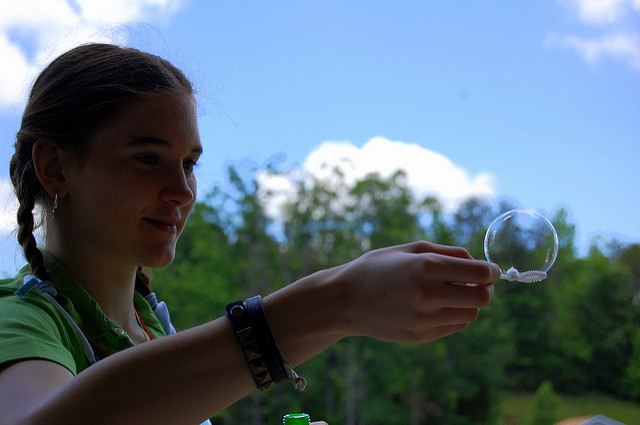
Just because a child is old enough to occupy themselves, doesn’t mean that they should be expected to do so the majority of the time.  Host families have a certain expectation of activity and involvement for their children. Get the kids engaged and active. You can be more fun than the TV or a video game.


Problem:
But, my kids don’t want to do anything but watch TV or play video games.

Solution:
Instead of saying,  “Would you like to (fill in the blank with any activity)?  The answer will often be, “No.”

Try this, “Now we are going to (fill in the blank with any activity.) or “Would you rather do  _____ or ______?”  Make sure both the choices are good options.
Your chances of co-operation are greatly increased. Even kids who are reluctant to try new things will usually get in the spirit of things and have fun, if you pick a good activity.

Problem:
I don’t know what to do with school age kids.

Solution:
Look for ideas online. Google “activities school age kids” or “activities tweens”. Below is a list of some ideas to get you started.

  • Cooking
  • Making things (check craft stores like Michael’s for kits and models that are age appropriate)
  • Going fun places (pottery painting, jewelry making, farms, museums, mini-golf, go-karts)
  • Sports (soccer, tennis, swimming, bicycling, roller skating, ice skating)
  • Let them teach you to do something they enjoy. Kids this age love being the expert.
  • Get outdoors and visit local parks.  You can even make a project of reviewing all the local parks (what kind of equipment they have, is there shade, water fountain?)  They can write this up and keep, so they remember which ones they want to go to again and which ones to skip in the future.
  • Let them help you search and plan some activities.
  • Check on the APIA Pinterest page and here on our cluster blog for ideas.
  • If you have a GPS, try taking them geocaching. Here is a website with all the details.

Note: Always get permission from your host parents before taking the kids places.

Photo: Killian77

Privacy & Personal Information Online

We live in a time of constant sharing through social media. We often share pictures, plans of somewhere we are going or rants about problems, without thinking much about who will see it and what could be the consequences.

Before clicking “post”, stop to think:

  • Am I violating someone’s privacy?
  • Am I sharing personal info. that could put me in danger?
  • Would I want my current or a future employer to see this?

This will help protect your privacy and safety as well as that of your host family. It is important to respect your host family’s privacy and not share personal details and information.  This applies to all kinds of situations, including: personal conversations, email and social websites.

For your own safety, it is a good idea to be careful what personal information you share about yourself as well. You should not give out information like your telephone number and address to people you don’t know. Safer to meet a new friend in a public place, than to give them your address before knowing them.

Once you post something on the internet (even if you later delete it), it can show up elsewhere.  Unless you have specific permission from your host family, you should never post pictures of them, their children or their home on the internet.

If you have a blog or website where you post in your native language, remember there is translation software. So, even if you say it in your native language, be sure it is not something that might be misinterpreted in translation or something you will regret saying.

Happy Lunar New Year!

Lunar New Year begins tomorrow, February 5, and sparks the Year of the Pig.

Lunar New Year is celebrated widely throughout Asia.  It begins on the second new moon after the Winter Solstice and is celebrated until the first full moon of the lunar year, 15 days after the celebrations begin.

Sometimes known as the Spring Festival, traditions include:  visiting family and gathering for meals, especially the New Year’s Eve Feast; gifting children and young adults with special red envelopes containing money; fireworks or lantern displays, accompanied by a Dragon Dance, especially on the last night of celebration.

Individuals born in the Year of the Pig are known for the following traits:

  • Successful, hard-working, responsible, diligent, energetic and enthusiastic
  • Friendly, generous, and compassionate
  • Realistic, calm, sometimes thrifty, though materialistic, and prefer to handle things properly and carefully.

Sharing Cultures: If you’d like  to celebrate Chinese New Year with your host children (or with your Au Pair friends), check out these websites for more information:

  • Chinatown

One of the largest Chinese New Year celebrations in the United States!

951 N. Broadway, Los Angeles

Saturday, February 9, 12noon to 8pm, Free!

lagoldendragonparade.com


  • Pacific Asian Museum

46 N. Robles Ave., Pasadena, In various areas of the museum

Sunday, Feb. 3, 10 a.m., Free!

https://pacificasiamuseum.usc.edu/calendar/details/?event-id=1525835


  • The Original Farmer’s Market & the Gove LA

click here for flyer

6333 W 3rd St., Los Angeles

Sunday, Feb. 17, 12noon to 5 p.m., Free!

https://www.farmersmarketla.com/


Halloween

 The tradition of celebrating spirits of the dead, especially in the autumn, is largely universal to a variety of different world religions and cultures.  Though specific legends and beliefs vary, by 1930’s America, several of those celebrations of the dead were cobbled together to form the version modern-day Halloween, as well as the days that follow.

In the United States, universal Halloween traditions are celebrated by carving jack-o-lanterns, hanging spooky decorations, dressing in costumes, Trick-or-Treating, and eating lots and lots of candy.  A secular (non-religious) holiday, Halloween is celebrated mostly by children, parents, and young adults across the nation.  Evangelical Christians, however, find the holiday abhorrent and will avoid it.

Halloween seems to have originated mostly in Europe and came to the Americas initially with the first white settlers.  Over the years, related fall festivals from other parts of the globe have been incorporated and the holiday has evolved.  Wearing costumes and telling fortunes on the ancient Celtic harvest festival of Samhain, Catholic festivals commemorating martyrs and souls of the dead, the 17th-century British custom of wearing a mask and attending bonfires on Guy Fawkes Day, The lighting of a Yahrzeit Memorial Candle to honor the dead in Jewish tradition, the tradition of cooking the favorite foods of and bringing out photos of deceased loved ones on Mexican Dia de los Muertos, as well as the offering of sweet foods to prevent spirits from becoming angry during the Festival of Hungry Ghosts in China, have all lent a piece of themselves to create the holiday that we know today.

On November 1, Christians celebrate All Hallows’ Day, also known as All Saints Day.  Central to All Saints’ Day is the belief in the “Communion of Saints,” that all of God’s people, living and passed, are re-connected. On this day, congregants pray for and honor not only the saints they are already familiar with, but also the many unknown and unsung Saints.  All Soul’s Day, the Catholic day to remember the dead, comes on Nov. 2 or as in many churches, the following Sunday.  It is thought to have grown out of the tradition of celebrating the “martyrdom of saints during Roman times.  This is when Christians honor all the “Holy Ones, known and unknown.” Some churches set up an Altar of Remembrance, with the names, photos and / or objects reminding us of our deceased loved ones.  Candles are also sometimes lit and flowers placed at this alter, as might also be done by families at the cemetery where family members rest.

Most of the holiday is celebrated on the afternoon and evening of October 31st, and many families do not celebrate at all on November 1st or 2nd.  The biggest part of Halloween is Trick-or-Treating.  Costumed children ask for treats with the phrase “Trick or treat”. The “treat” is usually some form of candy or snack or maybe a tiny toy. The “trick” is an idle threat to perform mischief on the homeowners or their property if no treat is given. Some teenagers might throw eggs, smash jack-o-lanterns or put toilet paper in neighbors’ trees.  But this is generally discouraged by all adults, including the police, for obvious reasons.

For some good fun with the children of any age this Halloween season, watch the animated special “It’s the Great Pumpkin, Charlie Brown,”  make scarecrows and carve or paint jack-o-lanterns, discuss their Halloween costume plans, and maybe have them help you make a costume for yourself.  Adult costumes are almost always optional, and it can be great fun to get into the spirit of it.

Be sure to follow some safety precautions, though, especially in regard to Trick-or-Treating.  The California Highway Patrol (Police) puts out a list of safety tips specifically regarding Halloween that is very helpful.  If you are taking the children out Trick-or-Treating be sure to bring light-sticks or include reflective tape on their costumes as well as carrying a flashlight.  Be sure shoes are tightly tied and all costume elements are secured.  Don’t allow the children to step inside a stranger’s home, and never allow the children to eat any candy until you return home and examine it in the light for any signs of tampering.  If you are staying home to greet guests, be sure to leave a bright porch light on, keep the candy right next to the door so you don’t leave trick-or-treaters unattended and don’t open the door if the trick-or-treating party who rang the bell does not include at least one child (or someone you know).  When you run out of candy or no longer want to answer the door, turn off the porch light and any bright decorations, and trick-or-treaters will stop ringing the bell.  If you are out in the community, please don’t drink alcohol (well, maybe a single beer if you are over 21 and not driving).  Drive extremely carefully, as there are people on the streets everywhere.  And be vigilant when meeting new people who are in costume; It’s great to make new friends, but they are strangers that look different from how they normally do.  Have fun and keep it safe!

 

Volunteer for the Santa Monica Classic

Copyright © 2018 Conqur Endurance Group, All rights reserved.

The Santa Monica Classic 5K, 10K, and Kids Run are just around the corner, coming to the beautiful Santa Monica Pier on Sunday, September 9th! Be a part of this unique, sellout race that kicks off the Conqur LA Challenge.

Volunteers are needed for the following days:
– Saturday, September 8, 2018 – Pre-Race Packet Pickup (Reed Park)
– Sunday, September 9, 2018 – RACE DAY @ the Start Line, Finish Line, and Water Stations

Au Pair In America Volunteers will be handing out water at one of the mile markers.  Typically, volunteers are given a hat and/or a shirt or some other sort of nice “swag.” The LA Marathon was reported by APIA Volunteers to be an Amazing event.

Get more info

Sign up to Volunteer with the APIA group! (select water station stop at the top of the page)


Celebrating the 4th of July!


Known as the Fourth of July and Independence Day, July 4th has been a federal holiday in the United States since 1941, but the tradition of Independence Day celebrations goes back to the 18th century and the American Revolution (1775-83). In June 1776, representatives of the 13 colonies then fighting in the revolutionary struggle weighed a resolution that would declare their independence from Great Britain. On July 2nd, the Continental Congress voted in favor of independence, and two days later its delegates adopted the Declaration of Independence, a historic document drafted by Thomas Jefferson. From 1776 until the present day, July 4th has been celebrated as the birth of American independence, with typical festivities ranging from fireworks, parades, and concerts to more casual family gatherings and barbecues.

10 Tips for Summer Safety

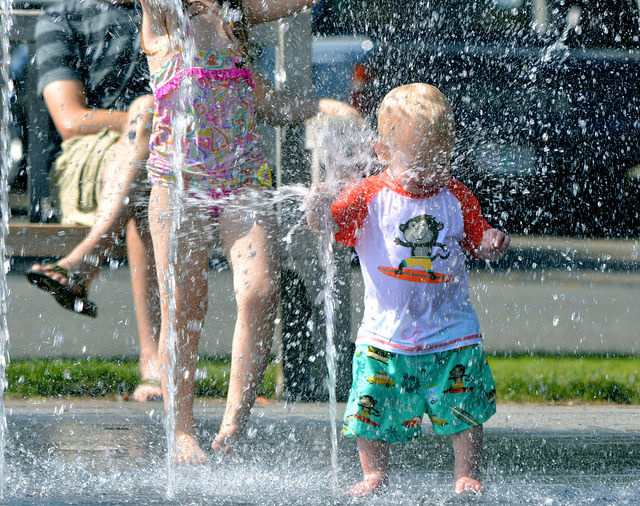
  1. Remember to bring along drinks, especially water. Try to get children to drink water every 20 minutes, when they are outside in hot weather.
  2. Pay attention to surfaces that can be hot against children’s skin, such as metal slides and other playground equipment in the sun.
  3. Safety around water is particularly important. A child can drown in just a few inches of water. Whenever you are near water you must never leave a child alone – if the phone rings, take them with you or let it ring! Always stay within arm’s reach when the children are in or near water.
  4. Young babies should be kept out of direct sunlight. Keep the baby in the shade or under a tree, umbrella or stroller canopy.
  5. Dress babies in lightweight clothing and use brimmed hats.
  6. Apply sunscreen 30 minutes before going outside, even if it appears overcast (cloudy).
  7. Try to keep children out of the sun in the middle of the day when the sun is strongest.
  8. Learn what poison ivy looks like and keep children out of it. A good rule to teach the children is “leaves of three, let it be.”
  9. Use insect repellent spray to keep away mosquitos and ticks. Ask your host parents before applying.
  10. Check for ticks when you bring children in from playing outside, especially if you’ve been in tall grass or the woods.

Photo: Scott97006 (Flickr)

SaveSave

Daylight Saving Time Begins March 11

What is Daylight Saving Time?

During Daylight Saving Time, clocks are turned forward one hour, effectively moving an hour of daylight from the morning to the evening. Today, approximately 70 countries worldwide utilize Daylight Saving Time, in at least some portion of the country. The U.S. started observing it in 1918, so it celebrates it’s 100th birthday, this year.

In March, we move the clock forward one hour, losing an hour of sleep. In November, we move the clock back one hour, regaining that extra hour of sleep.

An easy way to remember it is: Spring forward, Fall back.

Before you go to bed on March 10, be sure to set the clocks forward one hour!

Photo: Mark Lee

Focus on Play: New Ideas for Some Classic Toys

It is good to offer kids a balance of independent play time and play where you are actively engaging with them. You can make toys they may be bored with, feel new and exciting, by suggesting different ways to play with them. Try some of the ideas below as a starting point.

Play Food/Dishes

  • Teach your host children how to say the names of some of the food and dishes in your language.
  • Using English and/or your language play games where you are ordering food like in a restaurant. Take turns with who will be the waiter and who is the customer.
  • Come up with silly food combinations.  For example: Who wants pickles on their slice of cake?
  • Play a guessing game where the children have to figure out what food you are talking about.  For example: I grow under the ground in the dirt.  People eat me fried, mashed and baked.  What am I? (a potato)
  • Play a game with setting the table using your language to ask for the different items (plate, spoon, etc.)
  • Ask the children to divide the foods up into the different food groups (vegetables, meat, dairy, etc.)

Lego Blocks and Other Building Toys

  • Divide up all of the blocks between the people playing, by taking turns for each person to select block by block.
  • Suggest specific things to build (robots, houses, mountains etc.) and build together.
  • Challenge everyone to use all of their blocks.
  • Sort the blocks by color or shape and make patterns with them (red, blue, red, blue or square, triangle, rectangle.)  You can create a pattern and ask the child to fill in what comes next to continue the pattern.
  • Make the tallest block tower you can and let them knock it down (over and over again, if like most kids, they like destroying things.)

Mr. Potato Head

  • Teach your host children the names of the different parts in your language and play a game asking them to put on the body parts by name.
  • Play Hide and Seek with Mr. Potato Head. Have the children cover their eyes and count, while you hide Mr. Potato Head, then they go looking for him. Switch things up by letting them hide Mr. Potato Head and then you are the one to locate him.
  • Play the same game above, but using Simon Says.  Simon Says is a game where the leader gives commands by saying “Simon says” first. For example, “Simon says, put on the nose.”  The players are only to follow the commands when the leader says “Simon says.”  If the leader doesn’t say “Simon says” first and just says, “put on the nose,”  and the player follows the command, they are out of the game.  Repeat the game multiple times, so all kids get a turn to be the leader at least once.

Photos:  Lisa Maxwell (top) & Tom Smalls (bottom)