Category Archives: Kids

Family Emergency Preparedness

September is Emergency Preparedness Month and a great time to update your family’s emergency plan. Here are other good things you can do to prepare for the unexpected:

  1. Review my Emergency Preparedness presentation of natural disasters that can affect us here in Southern California
  2. Download Los Angeles County’s Emergency Survival Guide 
  3. Share your family’s emergency plan with your Au Pair and provide tips on how she can practice the plan with the children.

Social Distancing: Free Virtual Escape Rooms

Libraries may be closed due to COVID-19, but many librarians are coming up with creative ideas to keep people entertained and promote literacy. One of those creative ideas is free virtual escape rooms. With a variety of themes, some may be fun to do on your own, others as activities with the kids.

Sydney Krawiec, Youth Services Librarian at Peters Township Public Library in McMurray, PA created this Hogwarts Virtual Escape Room. She shared this tutorial on how to create your own virtual escape room, which seemed to spark the creativity of many other librarians.

Some amazing librarians all over the country have been busy creating virtual escape rooms with a variety of themes.

Special thanks to the Humboldt County Library in Winnemucca, Nevada for gathering info on many of these escape rooms. Follow them on Facebook for their storytimes and weekly Facebook Live Science Time on Fridays.

Image: Canva.com

How to engage children in play

Children need to have physical activity and brain-developing activities every day. 1 It helps them to grow into smart and socially acceptable adults.  The process of play is the important part, not the end result 3

Learning through Play involves an active, alert, but not-stressed framed of mind. 3 Children must have the opportunity to play and learn in a place where they feel secure and without the fear of failure.  This state of mind allows them to learn new skills. 3

Why engage them?

Meaningful activities build the child’s knowledge, help them learn to interact appropriately, and become more social. 1 Activities like reading and playing develop imagination and creativity and also help in developing brain function. 1 By engaging children, you can easily increase their ability to focus and concentrate. 1

Engaging children in play allows them to explore, identify a sense of self, and create meaning – it can help shape the brain, by creating pathways in the brain. Children who practice meaningful play are more likely to have good memory, strong language and to regulate their own behavior. 3

How can I engage them?

Listening to their developmental status and their interests is important.  When adults model behavior, children learn how to act (such as being polite and trying again). 1

Your interest in their activities, and your comments will help your children use toys productively and learn as they play 4  You can mimic their behavior and create new ways to play as you work alongside the children. 4 Asking questions helps children get started (such as: “Oh, that fell down, didn’t it? Can you put it back on top?”) 4  Ask open-ended questions to encourage the child to think more and express ideas (such as “Why do you think that happened?” Instead of “Did you think that would happen?”)2

Focus on your child’s particular strengths and find a way to use them in the play activities so they can feel successful.  3 Keep activities simple by using only a few rules, or break down the steps into smaller pieces of information, then model or show the child how to participate in the activity. 3 Use the type of play that the child enjoys to build confidence and self-esteem before trying something new. 3

Different Types of Play

In Constructive Play children experiment with objects in their environment (like blocks or sand) to create new things. This is important for children to become empowered and have a sense of control.  3

Movement Play, such as dance or climbing, teaches children to think in motion. 3

Social Play allows children to interact and learn social rules such as sharing, give and take, reasoning, and relationships with others. § You can model behavior for the child or tell him what to say.

Imaginative Play allows children to try out new roles and scenarios, so they can exercise problem solving, use new language, and express different emotions in a safe environment. 3 You don’t need to have many children together to do this, you can be the pirate while the child is the princess.  Imaginative pretend play encourages children to act out scenarios in their world, such as taking on the role of a doctor or patient, a restaurant waiter or customer, or a shopper in a grocery store. 4

With what activities can I engage them?

  • Play Pretend based on whatever they like (we are looking for dinosaur bones, or we are baking a cake)
  • Build with blocks and talk about what you are building
  • Race toy cars and pretend the cars are alive
  • See who can jump rope or swing a hula-hoop the longest
  • Wash and Sort Vegetables1
  • Paint or draw together (on the same page or side-by-side)
  • Go on a treasure hunt 1
  • Play a board game 1
  • After reading a story, talk about how the story is like their own life 4

References:

1. https://flintobox.com/blog/parenting/ways-engage-children-indoors

2. http://resourcesforearlylearning.org/educators/module/20/7/19/

3. https://www.ptonthenet.com/articles/how-to-engage-children-in-play-time-for-groups-and-individuals-4168

4. https://www.naeyc.org/our-work/families/support-learning-with-play

For more, including videos about engaging children: http://resourcesforearlylearning.org/educators/module/20/7/20/

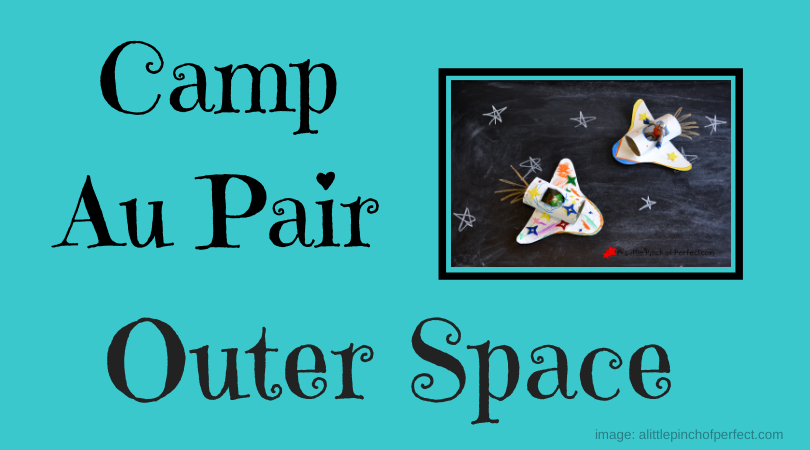
 

Social Distancing: 5 Online Adventures for Kids

Reading, playing, and doing art projects are always great ways to entertain children and keep them physically active and learning. It’s a good idea to limit screen time. But, in this time of social distancing, technology can play an important role in allowing kids to see and connect with the world outside of their homes. Many online resources are popping up to create those opportunities.

Here are five to get you started:

And if kids have questions about the coronavirus, Live Science has created an ultimate kids’ guide to the new coronavirus that has lots of information and is appropriate for school-aged kids.

Make Your Own Play Dough

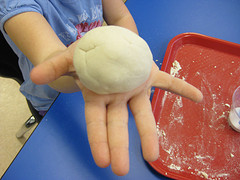
Play dough is the perfect modeling material for children. Their small hands can pat, poke, pinch, roll and knead it into many shapes. Keep it in an airtight container to use another day, or let it air dry into favorite shapes.

8640007416_3170564961_m

Measure 2 cups of flour, one cup of salt and 4 teaspoons of cream of tartar into a bowl. Add 1/4 cup of oil to one cup of water in a separate bowl then add the mixture to the dry ingredients. For colored play dough, squeeze 10-20 drops of food coloring into the water before you add it to the mixture. Cook the dough at low heat in a wide pan, stirring constantly until it becomes rubbery. Remove the dough from the heat and knead it for a few minutes. When it cools the kids can play too!

Photo: Kevin Jarrett (Flickr)

May is National Water Safety Month


With summer right around the corner, now is a good time to remind yourself of important water safety guidelines.  It is important for all adults in the children’s lives to be on the same page about swimming pool rules, and an even better idea to use a Water Watcher Card for each child you take to the beach or pool.

According to Stop Drowning Now, a national water-safety organization, a Water Watcher Card is an important lifesaving tool.  “The Water Watcher Card is to be worn by a responsible adult whose only job is to actively supervise the children in the water for a specific amount of time ([such as] 15-minute shifts).  Water watcher tags are critical during parties or large gatherings. In 94% of the instances when a child drowns, adults thought another adult was watching the child. Water watcher tags are helpful in taking the guesswork out of “who is watching the children.“*[ http://www.stopdrowningnow.org]

A Water Watcher Card is a laminated reminder card attached to an elastic bracelet or lanyard.

Several different versions are available as free downloads:

or you can order them already made:

Brush up on important swimming safety tips:

“8 Life-Saving Water Safety Rules Every Parent Needs to Know” (Parents Magazine)

“Water Safety” (Kids Health)

“The Ultimate Guide to Swimming Safety For Kids” (Mom Loves Best)

“13 Water Safety Tips Every Parent Should Know” (via Buzzfeed)

Water Safety: Tips for Parents of Young Children” “Healthy Children.org)

Focus on Play: New Ideas for Some Classic Toys

It is good to offer kids a balance of independent play time and play where you are actively engaging with them. You can make toys they may be bored with, feel new and exciting, by suggesting different ways to play with them. Try some of the ideas below as a starting point.

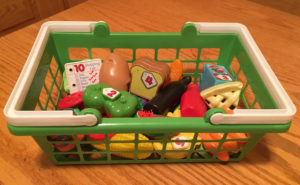
Play Food/Dishes

  • Teach your host children how to say the names of some of the food and dishes in your language.
  • Using English and/or your language play games where you are ordering food like in a restaurant. Take turns with who will be the waiter and who is the customer.
  • Come up with silly food combinations.  For example: Who wants pickles on their slice of cake?
  • Play a guessing game where the children have to figure out what food you are talking about.  For example: I grow under the ground in the dirt.  People eat me fried, mashed and baked.  What am I? (a potato)
  • Play a game with setting the table using your language to ask for the different items (plate, spoon, etc.)
  • Ask the children to divide the foods up into the different food groups (vegetables, meat, dairy, etc.)

Lego Blocks and Other Building Toys

  • Divide up all of the blocks between the people playing, by taking turns for each person to select block by block.
  • Suggest specific things to build (robots, houses, mountains etc.) and build together.
  • Challenge everyone to use all of their blocks.
  • Sort the blocks by color or shape and make patterns with them (red, blue, red, blue or square, triangle, rectangle.)  You can create a pattern and ask the child to fill in what comes next to continue the pattern.
  • Make the tallest block tower you can and let them knock it down (over and over again, if like most kids, they like destroying things.)

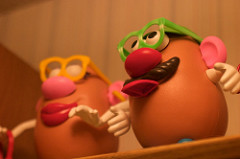
Mr. Potato Head

  • Teach your host children the names of the different parts in your language and play a game asking them to put on the body parts by name.
  • Play Hide and Seek with Mr. Potato Head. Have the children cover their eyes and count, while you hide Mr. Potato Head, then they go looking for him. Switch things up by letting them hide Mr. Potato Head and then you are the one to locate him.
  • Play the same game above, but using Simon Says.  Simon Says is a game where the leader gives commands by saying “Simon says” first. For example, “Simon says, put on the nose.”  The players are only to follow the commands when the leader says “Simon says.”  If the leader doesn’t say “Simon says” first and just says, “put on the nose,”  and the player follows the command, they are out of the game.  Repeat the game multiple times, so all kids get a turn to be the leader at least once.

Photos:  Lisa Maxwell (top) & Tom Smalls (bottom)