Monthly Archives: March 2026

Create a Spring Break Game Plan

“Game plan” means a strategy for how you are going to accomplish something.  In the case of keeping kids from getting bored and/or into trouble, the best way to prevent it is to keep them busy with safe, fun activities.

When there are days home from school, letting kids sit around watching TV or playing video games is not the best use of their time.  Providing fun alternatives will make it much easier to pull them away from the screen.

You need to make a plan of what you will do with them each day and prepare for that. Planning is very important.  You don’t want to tell them you are going someplace fun, only to arrive there and see they are not open that day or you need to bring something and you don’t have it.

If your plan includes a craft or cooking project, make sure you have:

  • All the ingredients/supplies
  • Recipe/directions

If your plan includes an outing to someplace fun, figure out:

  • How will you get there?
  • When you should leave?
  • How much it will cost?
  • What will you do for lunch?

Use some of these online resources to find activities and recipes:

Have a Wonderful Spring Break!

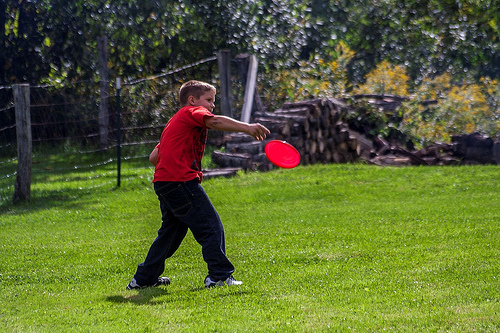
Photos: vmiramontes (Flickr) & tasty.co

National Cherry Blossom Festival 2026

The National Cherry Blossom Festival is an annual event that celebrates springtime in Washington, DC as well as the 1912 gift of the cherry blossom trees and the enduring friendship between the people of the United States and Japan. This year’s festival will be MARCH 20-APRIL 12! This year the events are back in-person.

The predicted peak blooming period of the cherry blossoms for this year is MARCH 29-April 1.

Here are some of the highlights:

Blossom Kite Festival – Saturday, March 28, 2026
Washington Monument Grounds (Smithsonian Metro)
10 am-4 pm

Petalpalooza Festival & Fireworks – Saturday, April 4, 2026
Capitol Riverfront Navy Yard Metro. Official fireworks will be visible from Anacostia Park
1-9 pm, Fireworks around 8:30 pm

Cherry Blossom Parade – Saturday, April 11, 2026
Constitution Avenue from 7th to 17th Streets, NW
11 am-1:30 pm

The one-mile length of the Parade route is accessible from multiple Metro stations. Spectators who are standing along the free & accessible portions of the route from 9th to 15th Streets should utilize the following Metro stops:

    • To stand on the north side of Constitution Avenue – Archives-Navy Memorial-Penn Quarter (Green/Yellow lines), Federal Triangle (Blue/Orange/Silver lines) or Metro Center (Blue/Orange/Red/Silver lines)
    • To stand on the south side of Constitution Avenue – L’Enfant Plaza (Blue/Green/Orange/Silver/Yellow lines) or Smithsonian (Blue/Orange lines)

There are many more great events, visit the festival website for more information.

Helpful links:
Cherry Blossom Festival Website
National Park Service Bloom Watch 
Metro Website (use the trip planner feature on this website to find the metro options, taking the metro is much better than driving for the festival events)

Photo & Video: National Cherry Blossom Festival 

Big Kids Need Interaction Too

Just because a child is old enough to occupy themselves, doesn’t mean that they should be expected to do so the majority of the time.  Host families have a certain expectation of activity and involvement for their children. Get the kids engaged and active. You can be more fun than the TV or a video game.

Problem:
But, my kids don’t want to do anything but watch TV or play video games.

Solution:
Instead of saying,  “Would you like to (fill in the blank with any activity)?  The answer will often be, “No.”

Try this, “Now we are going to (fill in the blank with any activity.) or “Would you rather do  _____ or ______?”  Make sure both the choices are good options.
Your chances of co-operation are greatly increased. Even kids who are reluctant to try new things will usually get in the spirit of things and have fun if you pick a good activity.

Problem:
I don’t know what to do with school-age kids.

Solution:
Look for ideas online. Google “activities school-age kids” or “activities tweens”. You can also take part in an au pair webinar on this topic. Below is a list of some ideas to get you started.

  • Cooking
  • Making things (check craft stores like Michael’s for kits and models that are age-appropriate)
  • Going to fun places (pottery painting, jewelry making, farms, museums, mini-golf, go-karts)*
  • Sports (soccer, tennis, swimming, bicycling, roller skating, ice skating)*
  • Let them teach you to do something they enjoy. Kids this age love being the expert.
  • Get outdoors and visit local parks. You can even make a project of reviewing all the local parks (what kind of equipment they have, is there shade, water fountain?)  They can write this up and keep it so they remember which ones they want to go to again and which ones to skip in the future.
  • Let them help you search and plan some activities.
  • Check on the APIA Pinterest page and here on our cluster blog for ideas.
  • If you have a GPS, try taking them geocaching. Here is a website with all the details.
  • Use technology to get them off the couch and sneak in some exercise. The phone app Pokémon Go includes activities that are unlocked by taking steps. There are Pokéstops and gyms at many places they might enjoy going for walks like parks, nature trails, walk/bike paths, and downtown areas.

As part of Au Pair in America’s continuing education webinar series for au pairs , there is a session with advice on working with teens. Be on the lookout for the next time that topic is offered.

Three Ways for Au Pairs to Stay Red Cross Ready

Being knowledgeable in basic first aid and CPR is important for au pairs (and anyone else caring for children). Au Pair in America’s commitment to infant/child safety begins before au pairs arrive in the U.S., with pre-arrival training and continues throughout the au pair year.

#1 Training At Orientation

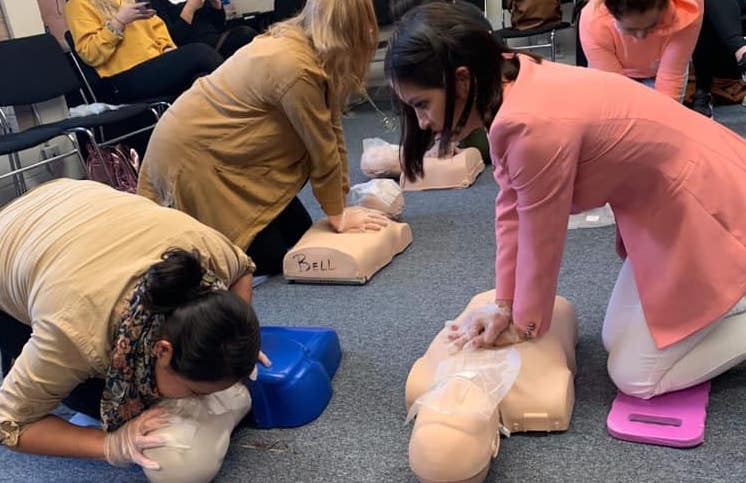
Our orientation training includes a course by the American Red Cross on infant/child CPR and safety. Additional child safety training covers a variety of aspects of child safety and cultural differences in common childcare practices.

#2 Enroll in a Red Cross Certification Class

After settling into their host community, all au pairs are encouraged to complete an Infant/Child CPR and First Aid certification program. Au Pair in America will pay for this training through the American Red Cross.

Classes are available through the Red Cross. Au Pair in America will pay for the cost of a class providing an au pair has at least six months left on their visa and is taking one of several approved childcare/child safety-related classes, such as Adult and Pediatric First Aid/CPR/AED. Au pairs should check with their community counselor and host family before signing up. Au Pair in America will register the au pair directly.

To locate a class, visit www.redcross.org/takeaclass. Email Christine or Lisa the link to the class you have selected and they will have Au Pair in America complete registration.

#3 Stay Current on Safety Information

The official American Red Cross First Aid app puts expert advice for everyday emergencies in your hand. Available for iPhone and Android devices, this app gives you instant access to the information you need to know to handle the most common first-aid emergencies. With videos, interactive quizzes, and simple step-by-step advice, it’s never been easier to know first aid. Download the app for free from the American Red Cross website or in your app store.

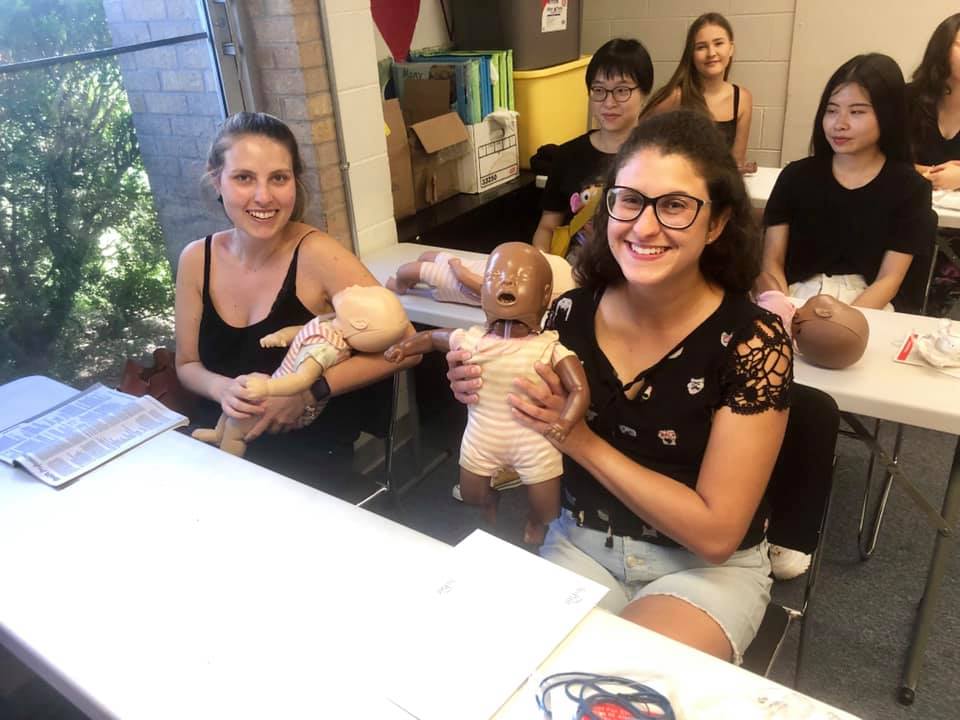
Photos: Robin Leon


Scam Alert: Fake Texts

You may receive texts, emails and phone calls from scammers posing as government agencies putting pressure on you to take action by sending them money. It is NOT NORMAL for government agencies to contact you by text for the purpose of collecting money you owe. Never click a link and take action on one of these messages without first showing the message to your host parents. 99.9% of the time when you get something like this it is a scam.

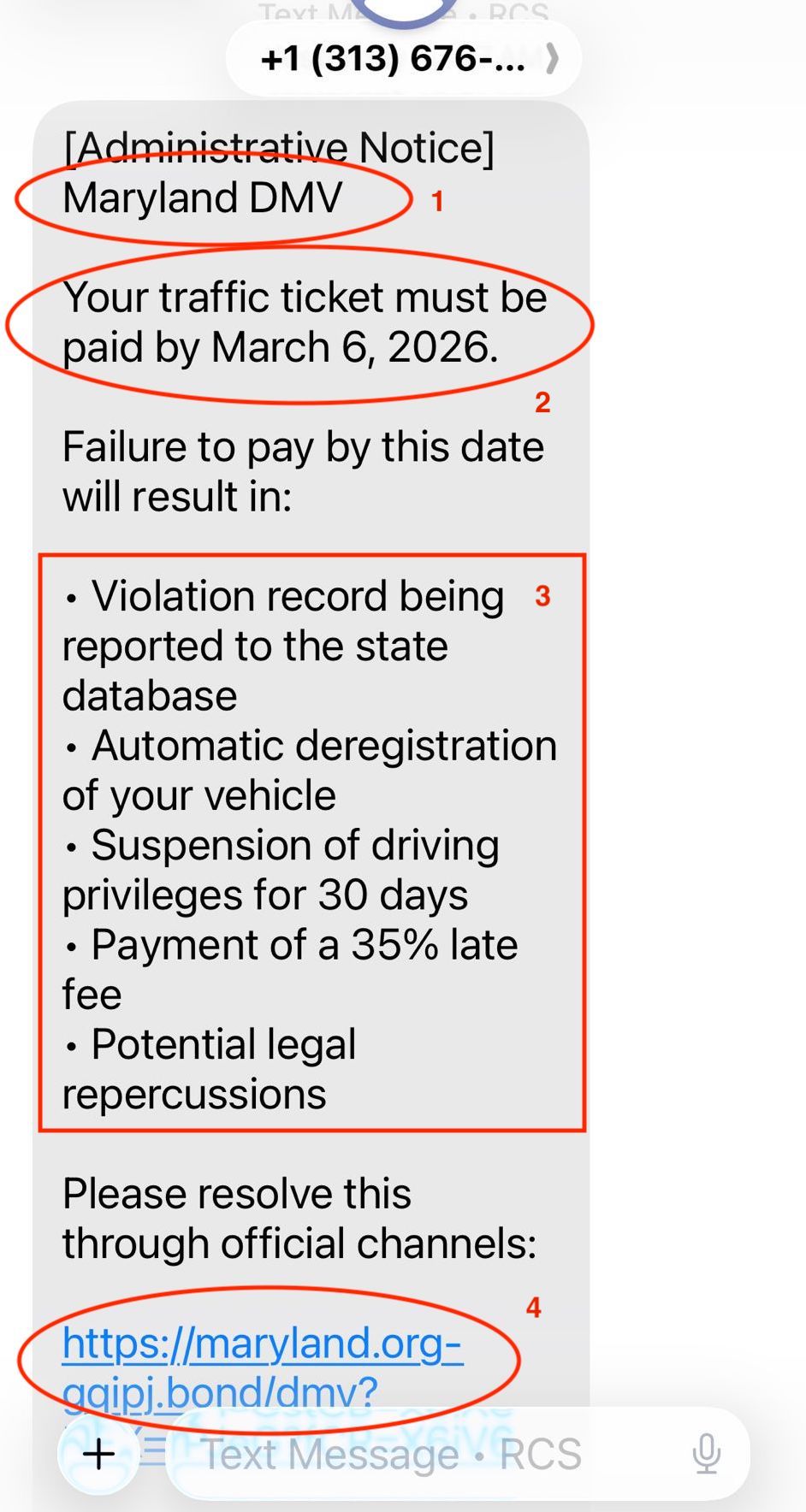
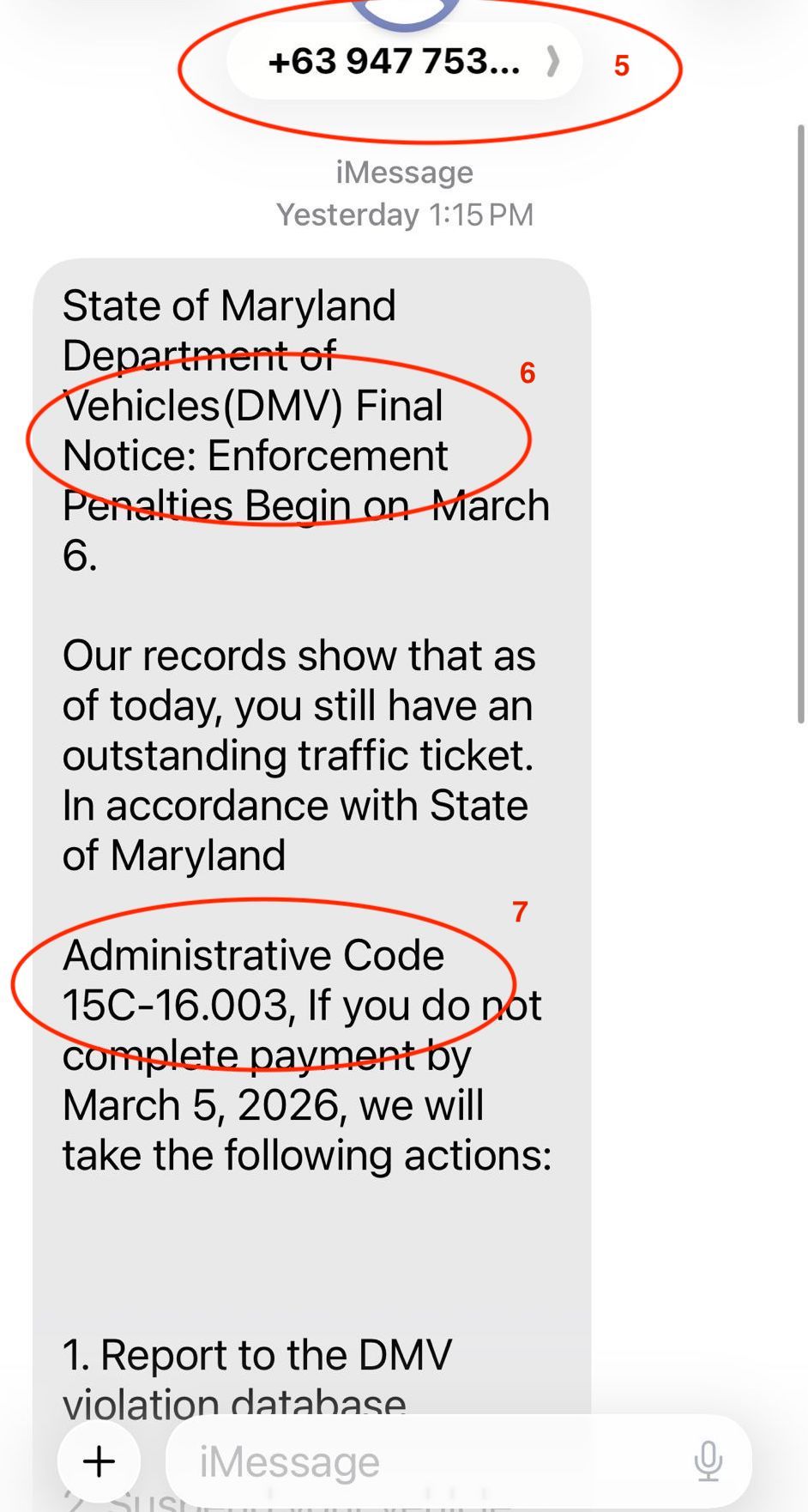
Below are two screenshots of some texts I received recently. I have highlighted some of the red flags that help you realize it’s a scam. If you do have a pending traffic ticket or charge from a video toll you may be nervous receiving this, but it is just a coincidence.

If you click a scam link, in addition to losing your money, you may be compromising the security of your banking information, and personal data on your device. 

Red Flags in these Text Messages

  1. Maryland has a Motor Vehicle Administration (MVA) not a Deptartment of Motor Vehicles (DMV).
  2. Sense of urgency: Telling you that you must act immediately.
  3. Scare tactics: Listing serious consequences to make you afraid.
  4. Fake Link: Most government websites will end in .gov. The actual Maryland MVA website is https://mva.maryland.gov/. You can always look at trusted sources (like our driver’s license resource page) to see if the website matches the official website.
  5. A foreign phone number: A U.S. government agency will not be sending text messages from a phone number that is outside of the U.S. One of these messages has a U.S. phone number, so this is a good example of how the same scam can have different variations, so it’s good to know different red flags to look out for.
  6. Final notice: If you had an actual ticket, you would receive the citation in the mail and if you didn’t pay that, you would receive multiple late notices by mail. You would not be hearing about this for the first time in a text message that is labeled as final notice.
  7. This is a fake code they added to make this look more official. Even if it was the actual code, anyone can reference that, so don’t be fooled. In this case, I looked up this code and it has to do with the care of and riding of a horse!

If you are ever in doubt, ask your host family or community counselor.