Author Archives: Christine Connally

Create a Spring Break Game Plan

“Game plan” means a strategy for how you are going to accomplish something.  In the case of keeping kids from getting bored and/or into trouble, the best way to prevent it is to keep them busy with safe, fun activities.

When there are days home from school, letting kids sit around watching TV or play video games is not the best use of their time.  Providing fun alternatives will make it much easier to pull them away from the screen.

You need to make a plan of what you will do with them each day and prepare for that. Planning is very important.  You don’t want to tell them you are going some place fun, only to arrive there and see they are not open that day or you needed to bring something and you don’t have it.

If your plan includes a craft or cooking project, make sure you have:

  • all the ingredients/supplies
  • recipe/directions

If your plan includes an outing to someplace fun, figure out:

  • How will you get there?
  • When you should leave?
  • How much it will cost?
  • What will you do for lunch?

Use some of these online resources to find activities and recipes:

Have a wonderful Spring Break!

Photos: vmiramontes (Flickr) & tasty.co

Three Ways for Au Pairs to Stay Red Cross Ready

Being knowledgeable in basic first aid and CPR is important for au pairs (and anyone else caring for children). Au Pair in America’s commitment to infant/child safety begins before au pairs arrive in the U.S., with pre-arrival training and continue throughout the au pair year.

#1 Training At Orientation

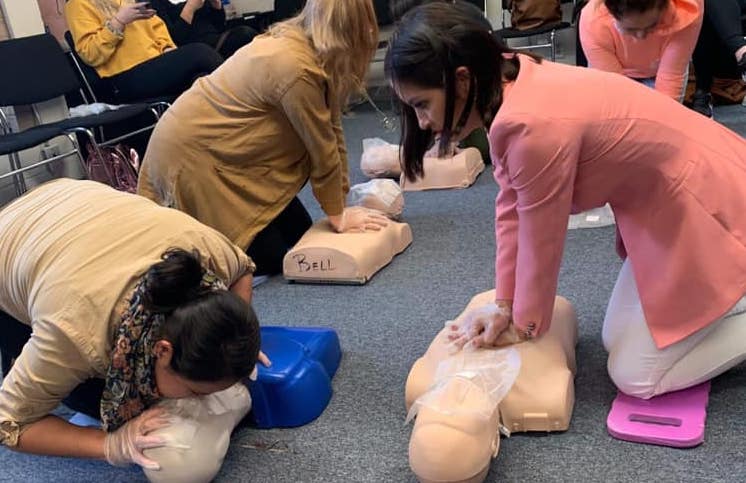
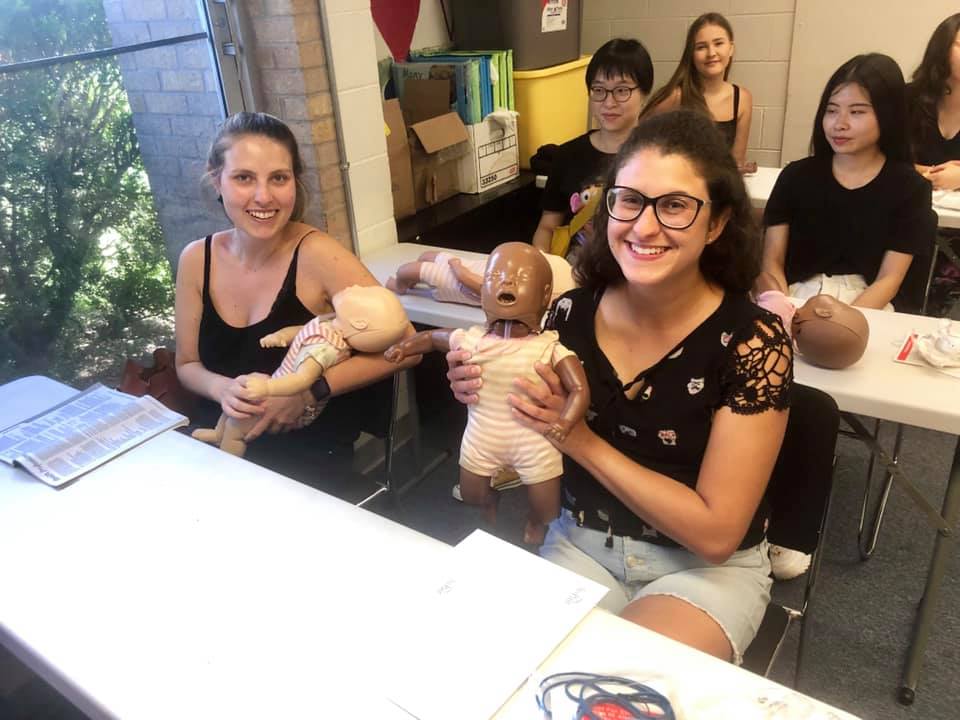
Our orientation training includes a course by American Red Cross on infant/child CPR and safety. Additional child safety training covers a variety of aspects of child safety and cultural differences in common childcare practices.

#2 Enroll in a Red Cross Certification Class

After settling into their host community, all au pairs are encouraged to complete an Infant/Child CPR and First Aid certification program. Au Pair in America will pay for this training through the American Red Cross.

Classes are available through the Red Cross. Au Pair in America will pay for the cost of a class providing an au pair has at least six months left on her visa and is taking one of several approved childcare/child safety-related classes, such as Adult and Pediatric First Aid/CPR/AED. Au pairs should check with their community counselor and host family before signing up. Au Pair in America will register the au pair directly.

To locate a class, visit www.redcross.org/takeaclass. For step-by-step instructions on how to locate a class and have Au Pair in America complete enrollment, click here.

#3 Stay Current on Safety Information

The official American Red Cross First Aid app puts expert advice for everyday emergencies in your hand. Available for iPhone and Android devices, this app gives you instant access to the information you need to know to handle the most common first aid emergencies. With videos, interactive quizzes, and simple step-by-step advice, it’s never been easier to know first aid. Download the app for free from the American Red Cross website or in your app store.

Photos: Robin Leon

Big Kids Need Interaction Too

Just because a child is old enough to occupy themselves, doesn’t mean that they should be expected to do so the majority of the time.  Host families have a certain expectation of activity and involvement for their children. Get the kids engaged and active. You can be more fun than the TV or a video game.

Problem:
But, my kids don’t want to do anything but watch TV or play video games.

Solution:
Instead of saying,  “Would you like to (fill in the blank with any activity)?  The answer will often be, “No.”

Try this, “Now we are going to (fill in the blank with any activity.) or “Would you rather do  _____ or ______?”  Make sure both the choices are good options.
Your chances of co-operation are greatly increased. Even kids who are reluctant to try new things will usually get in the spirit of things and have fun if you pick a good activity.

Problem:
I don’t know what to do with school-age kids.

Solution:
Look for ideas online. Google “activities school-age kids” or “activities tweens”. You can also take part in an au pair webinar on this topic. Below is a list of some ideas to get you started.

  • Cooking
  • Making things (check craft stores like Michael’s for kits and models that are age-appropriate)
  • Going to fun places (pottery painting, jewelry making, farms, museums, mini-golf, go-karts)*
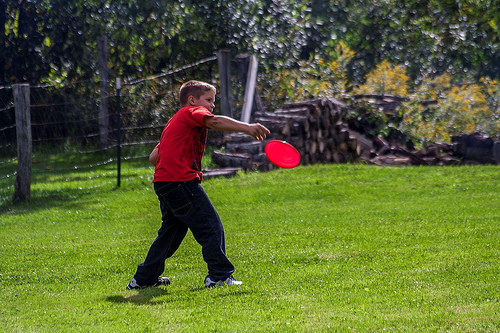
  • Sports (soccer, tennis, swimming, bicycling, roller skating, ice skating)*
  • Let them teach you to do something they enjoy. Kids this age love being the expert.
  • Get outdoors and visit local parks.* You can even make a project of reviewing all the local parks (what kind of equipment they have, is there shade, water fountain?)  They can write this up and keep it so they remember which ones they want to go to again and which ones to skip in the future.
  • Let them help you search and plan some activities.
  • Check on the APIA Pinterest page and here on our cluster blog for ideas.
  • If you have a GPS, try taking them geocaching. Here is a website with all the details.
  • Use technology to get them off the couch and sneak in some exercise. The phone app Pokémon Go includes activities that are unlocked by taking steps. There are Pokéstops and gyms at many places they might enjoy going for walks like parks, nature trails, walk/bike paths, and downtown areas.

*Always get permission from your host parents before taking the kids places and remember to follow social distancing and mask-wearing protocols.

Visiting Baltimore by Train


If you want to visit Baltimore, but are worried about driving there or if you don’t have access to a car, the MARC train is a great option.  Here is some information on how you can enjoy visiting Baltimore via public transportation. Prices and info are accurate as of January 16, 2023. Please check the links to verify prices and schedules before you go.

Getting from DC to Baltimore
The MARC Train Penn Line runs from Union Station (DC) to Baltimore Penn Station. Cost for a one-way ticket ($7-9). Considering the cost of gas and parking in the city, if you drive, makes the train a pretty good deal. Fares & How to Purchase Ticket

View the schedules here –> Weekend Penn Line & Weekday Penn Line

On Saturdays, there are currently running 9 trains from about 8:55 am (1st train northbound from DC) to about 9:15 pm (last train southbound from Baltimore.)  On Sundays, there are currently running 6 trains from about 10:25 am (1st train northbound from DC) to about 6:00 pm (last train southbound from Baltimore.) It is very important to be sure of the time of the final train back from Baltimore to DC. 

On Weekdays, the MARC Penn Line runs from about 5:40 am (1st train northbound from DC) to about 9:35 pm (last train southbound from Baltimore.)

In our cluster area, here are your options:

  1. Take the Metro Red Line to Union Station and get on the MARC Penn Line there.
  2. Take the Metro Orange Line to New Carrollton and get on the MARC Penn Line there.
  3. Drive or take a bus to Bowie State Station (off Rt 197) and get on the MARC Penn Line there.

Free Way to Get Around Baltimore 

Baltimore offers a FREE Charm City Circulator service that features 4 shuttle bus lines and 1 water taxi line. The shuttle buses run about every 10-20 minutes, (depending on the line). The hours are Monday-Thursday: 7 am-8 pm, Friday: 7 am-12 midnight, Saturday: 9 am-12 midnight, Sunday: 9 am-8 pm.  Visit the website here to view the maps and schedules: Charm City Circulator 

To visit the Inner Harbor take the Purple Line from Baltimore Penn Station to stop #302 – S. Calvert St. & W. Pratt St.

Galentine’s Day Cluster Meeting

What is Galentine’s Day? This “girlfriend holiday” dates back to 2010 when it was created by a fictional character named Leslie on a show called Parks and Recreation. During an episode (called “Galentine’s Day”), Leslie gathers a group of her closest gal pals for a brunch full of waffles and love and proclaimed “Every February 13, my lady friends and I leave our husbands and our boyfriends at home and we just come and kick it, breakfast style.” Thus, this holiday of “ladies celebrating ladies” was born.

For our February cluster meeting, we had our own Galentine’s Day celebration with sweet treats, an art project, bingo with prizes, and of course an opportunity to make friends.


What to Keep in the Car Glove Box

The glove box or glove compartment is the opening with a hinged door on the passenger side dashboard area of a car.


If you are like me, you probably have napkins and straws from fast-food restaurants and other assorted items in your glove box in the car.  It can be a nifty storage place, but its main purpose is to keep some important documents related to the car.

It is very important that you keep all of the necessary documents in the car glove box. These items will be necessary if you are stopped by a police officer or have an auto accident. Not having these items can result in your receiving a ticket (citation) from a police officer.

Essential Documents

*Some host parents may tell you to carry these in your wallet instead of keeping them in the car. Follow their instructions.

Helpful Extras

  • Flashlight
  • Tire Pressure Gauge
  • Vehicle Owner’s Manual
  • Tissues and Hand Sanitizer
  • First Aid Kit

In Your Wallet
Carry your Maryland license or country driver’s license, international driver’s permit and a copy of your passport and visa with you at all times, especially when you are driving. You should leave your actual passport and Social Security Card and other documents at home, to reduce the risk of losing them.

Image: Emily May (Flickr)

Planning for Future Snow Days

Chances are good that we will see some snowy weather in the coming weeks and months. It’s a good idea to have ideas ready to keep the kids entertained on a snow day (when they are home from school for winter weather.)

Here is a simple snow day game plan…

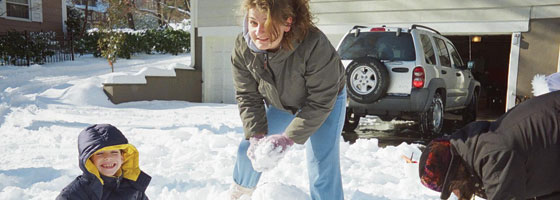
  • Play in the snow.  Pro Tip:  Remind your kids go to the bathroom before you get them all bundled up to go outside. 

  • Come inside and warm up with hot chocolate (don’t forget the marshmallows.) Pro Tip: Shake the snow off of the kids boots and snow clothes. Hang them up to dry or put them in the dryer, so they are ready for round 2 out in the snow. 
  • Make your own play dough.

  • Play board games and/or legos together.
  • Play in the snow again.

  • Warm up inside and make paper snowflakes.

  • Bake cookies together or make some other fun recipe.
  • Make a blanket fort.

Stay warm & have fun!

Photo: Tony Crider (Flickr)

Top 10 Winter Driving Tips

Cold weather can bring a new set of driving challenges, especially if you are not from a climate where you have experience with these conditions. Driving in the snow and ice can be a challenge even for experienced drivers. If you don’t have to go out in bad weather, stay home. If you do have to go out, here are some tips. More information can be found on the AAA website.

Top 10 Winter Driving Tips

  1. Bulky coats and snowsuits should not be worn underneath the harness (straps) of a car seat. Check out information here and discuss with your host parents.
  2. Keep cold-weather supplies in your car, such as a blanket, a flashlight, window ice scraper, snacks and water.
  3. Make certain your tires are properly inflated and have plenty of tread.
  4. Keep at least half a tank of fuel in your vehicle at all times.
  5. Never warm up a vehicle in an enclosed area, such as a garage.
  6. Avoid sudden moves, accelerate and decelerate slowly.
  7. Don’t stop going up a hill.
  8. Increase the following distance between you and the car ahead of you.
  9. Know your brakes. Test out how they perform on slippery surfaces in a safe place where there are no other cars parked close to you.
  10. Leave early to give yourself extra time and drive slowly.

Even better… If you don’t have to go out driving in snow and ice, stay home.

This short video has some great information.

Photo: Steve Pisano (Flickr)

Safety Tips for Holiday Shopping

It is easy to get distracted at this time of year and when you are distracted you are at a greater risk for holiday crime.  Here are some tips that are always a good idea, but especially important to remember at this time of year.

holiday shopping

  • Always pay attention to your surroundings.  Avoid distractions like using your cell phone or listening to music when you are coming and going from stores.
  • Avoid carrying large amounts of cash.  Take just the amount you need or use debit or credit cards.
  • Keep your money in a front pocket.  Pay close attention to your wallet when you are in crowded places like buses, metro, and elevators.
  • Be careful not to lay your purse or bags down on the floor or out of your sight at the mall.
  • Save your most expensive purchases for the end of your shopping when you will be going straight to the car.
  • Whenever possible, shop during daylight hours and if you must shop after dark, go with a friend.
  • If you are not driving yourself to go shopping, use the Metro Trip Planner before going out, to minimize time waiting at the bus stop or metro station.  Never accept a ride from a stranger.
  • Be aware of strangers approaching you for any reason. Criminals will use different methods to distract you and steal your belongings.
  • Look around the parking area when you are leaving.
  • Do not approach your car alone if there are suspicious people in the area.  You can go back into the store and ask security to walk out with you or wait for a family or other group of people to walk out at the same time as you.
  • Trust your instincts, if something seems suspicious or unsafe, you are probably right.  Following the saying, “Better Safe Than Sorry.”

Avoiding Homesickness in the Holiday Season

Homesickness can be a problem during the holidays, even if it hasn’t been at any other time of the year. Au pairs often miss their friends and family, familiar places, and their own traditions and customs. The holiday activities in the United States seem, and may actually be, different just at a time when an au pair would welcome something familiar.

It is common for au pairs’ emotions to be close to the surface during the holidays. Her highs are higher, her lows are lower. The enormity of what she has done–actually living in another country (which is an amazing thing when you think about it!)–hits her and throws her into a self-protective mode.

Au Pairs, there are things you can do to reduce homesickness during the holidays. It is important to balance your activities to feel connected to your family back home and your traditions but also embrace new customs and experiences here in the U.S.

Lina and her friend enjoying one of the most popular celebrations of the year in Colombia. “Every December 7, Colombian families get together with very close friends to light several candles thinking about wishes for the coming year such as health, prosperity, love and happiness. It is also very traditional to share typical food from the region, and what can never be missing is wine and cookies.”

Share your traditions with your host family and friends. Each country has its own special holiday customs. Being friends with other au pairs, you can not only learn about the U.S. but also how other countries celebrate. When you talk with your family back home, you can share some of the new holiday experiences you are having. That can help lessen the feeling of missing out on moments at home by reminding you that you are here in the U.S. for a short time and you are making memories that will last a lifetime.

Host Parents can help her through this unfamiliar territory by talking to her about what your specific family activities will be (gifts, meals, visitors, religious services, in-home traditions, or none of these, as the case may be.) In the spirit of cultural exchange, ask her if she has any favorite holiday traditions or foods that you might be able to incorporate into your family’s celebration of the season. Let her know what you will be doing when you will be doing it, and what she can expect. Talk to her about what has to be accomplished and get her involved and interested. Don’t expect her to just “know” what needs to be done. Give her some clear, agreed-upon assignments. Make her feel a part of things. And, let her know her contribution is needed and appreciated.

Photo: Lina Cabeza Paez