
Category Archives: Host Family Tips

Back to School Tips

Jens Rost backpacks

Kids in our cluster will be returning to school soon. This will mean changes to the au pair schedule and possibly to the duties.  It is very important to communicate these changes to avoid problems.

I suggest you discuss the following (if applicable):

  • Au pair’s work schedule
  • The children’s school and activity schedules
  • Where the children get dropped off and picked up and who will be doing this
  • What to do if a child is staying home sick, late to school, does not get off the bus (if they are supposed to)
  • How to tell if school has been cancelled or delayed for bad weather
  • Add the au pair to your list of people allowed to pick up the kids from school
  • What to pack for lunch
  • The routine after school (do they have free time before starting homework, what to give for snack, any chores, where do they put their backpacks & lunchboxes)
  • How to communicate about what’s going on at school. (Kids in Care Log Books are available upon request from APIA)

Here are some Printable Fill-in-the-Blank School Notes for parents. You may print these out and use them for times when the kids are absent, late, have early dismissal or you need to give permission for something.

If the au pair will be the one going through the children’s back pack and helping with homework, I suggest you designate an area for putting things that need to be read and/or signed by parents.

Reminder: It is illegal in the State of Maryland for a child under the age of 8 to be left alone in the home or car.  Please make sure that your drop off routine does not include leaving children under 8 at home or in the car while dropping off another child.  Even if a host parent gives permission to do this, it is not allowed, because it is against the law.

Photo: Jens Rost (Flickr)

Car Seat Safety is a Shared Responsibility

In MD, DC & VA the laws state that children under age 8 must be secured in a car seat or booster seat that is appropriate for their age, weight and height. Children over age 8 must be properly secured in a vehicle seat belt. (That is more lax than best practice recommendations which suggest children ride in a booster seat until they fit safely into a vehicle seat belt and their feet touch the vehicle floor. This will vary by child and vehicle more than age.)

Car seats and booster seats save lives, there is no doubt about it. But, just having the car seat in the car is not enough.  Car seats and booster seats can only save lives if they are properly installed and used.

Host Parents

  • It is your responsibility to show the au pair how to properly use your car seats and/or booster seats.
  • If you expect her to change seats to different vehicles, show her how to install them properly.
  • If you do not want her to remove and re-install car seats, make that expectation clear.
  • Even if the au pair has a separate car that she is the only one driving the kids in, please check the installation of the seats periodically.

Au Pairs

  • You are responsible for making sure that you understand how to buckle the children safely in their seats and be sure that they are safely buckled in every time you take them in the car with you.
  • The car should not move unless everyone is buckled.
  • Make it a habit to check the seats each time you put the children in to see that the seat is secure and not too loose.
  • If the seat is not working properly or you cannot figure out how to get it tight, ask your host parents as soon as possible.
  • If your host parents have asked you not to remove the car seat(s), please follow that rule.
  • If you need to remove the seat for some reason, ask them for help putting the seat back in.

If you need help installing car seats, find a car seat inspection station near you: http://www.nhtsa.dot.gov/cps/cpsfitting/index.cfm

Newseum KIDS FREE Summer Fun Deal

From the Newseum website:

Now through Sept. 1, 2014

The Newseum offers everything from the Berlin Wall and Pulitzer Prize-winning photos to interactive games. And this summer, there’s one more great reason to visit — kids get in free! July 1 through Labor Day, the Newseum waives admission for youth visitors age 18 and younger. Up to four kids visit for free with each paid adult or senior admission, or Press Pass membership.

Whether you have just a few hours or want to spend all day, you’ll find something for everyone in the Newseum’s 15 theaters and 15 galleries. Don’t miss “Anchorman: The Exhibit,” on display through Aug. 31, 2014, featuring props from the hit movies and a look at real 1970s news teams. Also see “One Nation with News for All,” opening May 16, 2014, a new exhibit that tells the dramatic story of how immigrants and minorities used the power of the press to fight for their rights and shape the American experience.

Time running short? Remember to save your admission ticket and come back the next day for free!

Handling Expenses

Miscellaneous Expenses

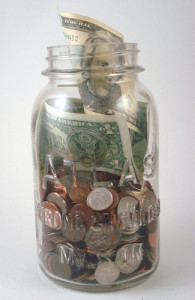
There are different ways to handle the little day to day expenses that come up.  Things like when an au pair takes the kids out for ice cream or picks up a gallon of milk.  Some families keep a cookie jar fund, a little cash that they set aside weekly or monthly for this kind of expenses.  Here are some suggestions for avoiding problems with expenses.

Host Families

  • It’s important to be clear about how long this money should last and what types of expenses are approved.
  • Let the au pair know whether or not you expect receipts.
  • Au Pairs

  • Only spend the money on approved expenses.
  • If it is something you are not sure about, ask first.
  • Put your receipts in the cookie jar in place of the money to avoid any confusion.
  • Gas and Fare Cards

    Host families are responsible for the au pair’s transportation costs:

  • to and from classes and cluster meetings
  • driving the kids
  • It is a good idea to figure out how much gas an au pair will use for these trips and either put gas in the car or give a gas allowance.   If your au pair is riding to classes or cluster meetings with another au pair, you should offer to share the cost of gas.

    Au pairs are responsible for their own transportation at all other times.  You should replace the amount of gas used for personal use.

    Photo: Andrea Travillian

    Privacy, Personal Information & The Internet

    Just a reminder about how important it is to respect your host family’s privacy and not share personal details and information.  This applies to all kinds of situations, including: personal conversations, email and social websites.

    For your own safety, it is a good idea to be careful what personal information you share about yourself as well. You should not be giving out information like your telephone number and address to people you don’t know.

    Once you post something on the internet (even if you later delete it), it can show up elsewhere.  Unless you have specific permission from the host family, you should not post pictures of them, their children or their home on the internet.

    If you have a blog or website where you post in your native language, remember there is translation software.  So, even if you say it in your native language, be sure it is not something you will regret.

    Holiday & Vacation Reminders

    With Memorial Day almost here, I wanted to remind everyone about program rules on holidays and vacations.

    Holidays

    • Host families are NOT REQUIRED to give au pairs any specific holidays.
    • Each host family will make different arrangements on holidays, some au pairs will be off and others will be required to work.
    • Au pairs should NOT make plans for holidays without checking with your host family FIRST.

    luggage maliasVacation

    • Au pair earns 2 weeks of paid vacation during the course of her year.
    • The host family can pick a week and the au pair can pick a week, if an agreement is not reached.
    • All vacation should be preplanned (at least 4 weeks in advance.)
    • All au pair’s friends and/or family visits/vacations should be pre-approved prior to purchasing a ticket.
    • If an au pair travels with their host family, it should be discussed UP FRONT whether this is the au pair’s vacation or if she is working.
    • If an au pair travels with the host family to work, the host family is required to pay for her transportation, lodging and meals.

    Important: An au pair MUST have her DS2019 signed PRIOR to her departure from the US. More info. about this can be found on the right side of this page under “Travel Links for Au Pairs.”

    What to Do After a Car Accident

    car-accident-cartoonHaving a car accident is a very upsetting, stressful situation. Being prepared and knowing what to do can make things a little bit easier. Make sure you know which host parent to call in case of an accident.

    Make sure you have all the necessary documents in your car glove box. Read this post on What to Keep in the Car Glove Box for a detailed list.

    If you have an accident: (from Edmunds.com)

    1. Keep Safety First. Drivers involved in minor accidents with no serious injuries should move cars to the side of the road and out of the way of oncoming traffic. Leaving cars parked in the middle of the road or busy intersection can result in additional accidents and injuries. If a car cannot be moved, drivers and passengers should remain in the cars with seatbelts fastened for everyone’s safety until help arrives. Make sure to turn on hazard lights and set out cones, flares or warning triangles if possible.
    2. Exchange Information. After the accident, exchange the following information: name, address, phone number, insurance company, policy number, driver license number and license plate number for the driver and the owner of each vehicle. If the driver’s name is different from the name of the insured, establish what the relationship is and take down the name and address for each individual. Also make a written description of each car, including year, make, model and color — and the exact location of the collision and how it happened. Finally, be polite but don’t tell the other drivers or the police that the accident was your fault, even if you think it was.
    3. Photograph and Document the Accident. Use your camera to document the damage to all the vehicles. Keep in mind that you want your photos to show the overall context of the accident so that you can make your case to a claims adjuster. If there were witnesses, try to get their contact information; they may be able to help you if the other drivers dispute your version of what happened.

    October 6-12 is Fire Safety Week

    Click here to read more fire safety tips on the FEMA website

    Click here to read more fire safety tips on the FEMA website

    Here are some Fire Safety Tips from http://www.usfa.fema.gov/:

    Control Kids’ Access to Fire

    • Keep all matches and lighters out of the hands of children. If possible, keep these sources of fire in locked drawers. Consider buying only “child-proof” lighters—but be aware that no product is completely child-proof.
    • Children as young as two years old can strike matches and start fires.
    • Never leave children unattended near operating stoves or burning candles, even for a short time.
    • Teach children not to pick up matches or lighters they may find. Instead, they should tell an adult immediately.

    Fire Safety at Home

    • Smoke alarms should be installed on every level of the home, especially near sleeping areas.
    • Smoke alarms should be kept clean of dust by regularly vacuuming over and around them.
    • Replace batteries in smoke alarms at least once a year. And replace the entire unit after ten years of service, or as the manufacturer recommends.
    • Families should plan and practice two escape routes from each room of their home.

    Photo: Tony Alter

    Flu Shots

    Updated  9/19/2013
    Many au pairs and host families are looking for places to get flu shots this time of year. Au Pair insurance does not cover immunizations, but there are lots of places to get flu shots for $30 or less.  If the host family is insisting that an au pair get a seasonal flu shot and she agrees to get it, the host family would be responsible for the expense.

    If you are planning to get the seasonal flu vaccine, it is recommended that you get it as early as possible.

    flu_shots

    Anne Arundel County Health Department – Free

    Montgomery County Health Department – Free (proof of residency may be required)

    Prince George’s County – Details have not been released as of 9/19/13

    Adventist Hospital – $25

    Giant Pharmacy – $30

    CVS Pharmacy & Minute Clinic – $31.99 and up

    Walgreens Pharmacy – cost not listed on website

    Rite Aid Pharmacy – cost not listed on website

    Target Pharmacy & Target Clinic – cost not listed on website


    Going Unplugged During Work Hours

    Au Pairs – Imagine for a moment that you went to the hospital and you were in the care of doctors and nurses.  How would you feel if those doctors and nurses who were there to care for you were more interested in texting or using their personal computer than caring for you?  How would that make you feel, about yourself and about them?  Would you think that you were getting the treatment you deserved?  Would you feel like paying the bill after your stay?

    Life as an au pair, it is a fine balance between employee and family member. You live with your host family and participate with them as a member of the family, but you also have clear responsibilities as a childcare provider. Being a childcare provider is truly one of the most important jobs I can think of, because you are helping to shape our next generation.  What message are you sending them when you would rather interact with a computer than with them? How will they feel about themselves and about you? Children feel as though everything is about them. They will see this as a rejection of them and they will be more likely to act out.

    It also poses a safety concern when you are not paying enough attention to the children in your care.  Accidents happen, but when an adult care giver is close by and appropriately supervising the chances of a major injury dramatically reduce.

    During work hours, the following would not be considered acceptable:
    -Texting
    -Talking to friends on the phone
    -Chatting with friends online
    -Using Skype or Facetime
    -IMing
    -Emailing
    -Updating your status on Facebook
    -Using Orkut, Google+, Studivz, SiempreGente or any other social media site
    -Watching videos on YouTube (even my really fabulous ones)
    -Tweeting on your Twitter
    -Uploading photos on Instragram or Vine
    -Anything else on the computer unless it is going to Nickjr.com together with your host children

    Think about this — even if you work 45 hours a week, that leaves you 123 hours per week for all of that other stuff, or about 70 hours (if you are getting the recommended 7-8 hours of sleep per night.)

    Host Parents – You need to be clear about what you consider acceptable during work hours to avoid misunderstandings.  Also, please understand that you are dealing with a new generation of people who are very accustomed to being plugged in at all times.  Their intention is not to be rude, they don’t necessarily realize how their actions will be perceived.  Please use this information as an opportunity to begin a dialogue on the issue.