Category Archives: Host Family Tips

Making Thanksgiving Memories Together

Thanksgiving is a public holiday celebrated on the fourth Thursday in November every year in the United States. It started as a harvest festival and has been celebrated nationally on and off since 1789.  The most important part of Thanksgiving for American families is to spend family time together.

Martin Cathrae

“My favorite holiday was Thanksgiving. Firstly, it was my first holiday with the whole family in America. Secondly, the whole family came together. All aunts and uncles and their kids came to grandma’s. We played football with all of them, including grandma and grandpa. It was the first time I played it and it was so much fun for all. We had a great dinner with all the typical things you can imagine … it was deeeelicious! It was so great to be with such a big family and I really enjoyed that day. I will remember it my whole life, I hope.” – Swantje from Germany

Here are a few tips to help you have a terrific Thanksgiving experience.

Host Parents
Please plan to include your au pair in your Thanksgiving celebration, if at all possible. If you are traveling or will not be able to invite your au pair to join you for Thanksgiving, give her plenty of notice and help her make alternate plans. You don’t want to leave your au pair alone over the holiday.

Au Pairs
If you are invited to attend dinner, please let your family know within 5 days of the invitation, whether you are planning to attend, so they may make plans. If your host family is unable to include you in their Thanksgiving plans, please let me know if you have trouble making other plans, so I can assist.

Make sure to discuss time off during this holiday weekend. Many host families work the Friday after Thanksgiving so do not assume you have this day off or the entire weekend. Talk to your host family, BEFORE you make any plans.

Bonus Tip for the Kids
If you are looking for a fun recipe to make with your au pair, check out these turkey cookies. Find more fun activities and recipes on the Au Pair in America Fall Holidays pinboard.

Image: Martin Cathrae

Surviving & Thriving in the Holiday Season

The fall/winter holiday season is most often a time of joy and excitement. However, it can also be a time of stress and disappointment for both host families and au pairs.

Here are some ideas and insights that will hopefully help you avoid stress and disappointment and share more of the joy and excitement!

Holiday Work Schedules

Miscommunication over the schedule is the #1 issue for host families and au pairs over the holidays. As a reminder to assist with scheduling, program guidelines state an au pair can work up to 45 hours per week and no more than 10 hours per day. Hours cannot be carried from week to week. Please take the time to discuss your schedules and expectations.

The au pair program regulations do not have requirements for au pairs to be given holidays off. However, in the spirit of the program and since most parents will be at home spending time with their children, the majority of host families give au pairs some or all of the winter holidays off Thanksgiving Day, Christmas Day, New Year’s Eve, and New Year’s Day. Please discuss this so that everyone is clear about the schedule when making holiday plans.

Religion

For au pairs with religious beliefs different from your own, you may choose to encourage them to share the associated traditions with your family. If you are not comfortable with this aspect of cultural exchange, your au pair may need your help as well as appropriate time off to participate in their own holiday traditions. Enabling them to do this is very important. Their holiday or time to celebrate the holiday may not be the same as yours; try to take this into consideration if you can when you make their work schedule. You may find that there is no conflict in giving their time off if their traditions are different, and it can relieve a great deal of anxiety to take their preferences into consideration. If you do need your au pair to work during the holiday, please tell them way in advance so that it is not a surprise. Help them to see this as a positive aspect of the cultural exchange if she will be actively sharing in the holiday celebration.

Changes to Routine

The dynamics of established relationships and routines change during the holiday. The high emotions and energy of the children (compared to their more reasonable behavior during the rest of the year) may seem like craziness to the au pair. Assure them that this new set of behaviors is temporary and the household will be back to normal soon. In the meantime, suggest specific things she can do to help. Encourage them to roll with the punches and enjoy the craziness. Also, the number of gifts, food, decorations, etc., can be unfamiliar and overwhelming. Try to include the au pair in some quiet, meaningful time together when the true spirit of the holidays is shared.

These are important days ahead. This is perhaps the greatest opportunity of the year to respect and learn about cultural differences, which is, indeed, one of the basic elements of the Au Pair in America program. There will be fun-filled memories. This should be a time of love and understanding. Please do your part to make that happen.

Wishing you every happiness of the season!

Photo: Sean Hobson

5 Tips for Safe Trick or Treating

  1. TRICK OR TREAT TOGETHER – Children should trick or treat in groups and younger children should have adult supervision.
  2. DRESS UP SAFELY – Avoid masks that block children’s vision and make sure costumes don’t pose a tripping hazard. Avoid sharp or heavy props that could cause injury.
  3. BE VISIBLE – Children should be visible to drivers. Consider reflective material on their costumes and/or carrying a flashlight or glow stick.
  4. CROSS SAFELY – Children should walk on the sidewalk and cross at corners.
  5. CHECK TREATS – Children should not eat candy until an adult has a chance to check it.

Contest: First au pair to send Christine or Lisa (through WhatsApp) the name of their favorite Halloween candy will receive a prize! 

Image: Ciarán Harron

Going Unplugged During Work Hours

Phones, tablets, and laptops are wonderful tools to stay connected and informed, but we need to be careful not to let them become distractions from real-life interactions and most importantly our responsibilities.

Au Pairs – Imagine for a moment that you went to the hospital and you were in the care of doctors and nurses. How would you feel if those doctors and nurses who were there to care for you were more interested in texting or using their personal computer than caring for you? How would that make you feel, about yourself and about them? Would you think that you were getting the treatment you deserved? Would you feel like paying the bill after your stay?

Life as an au pair, it is a fine balance between employee and family member. You live with your host family and participate with them as a member of the family, but you also have clear responsibilities as a childcare provider. Being a childcare provider is truly one of the most important jobs I can think of because you are helping to shape the next generation. What message are you sending them when you would rather interact with a computer than with them? How will they feel about themselves and about you? Children feel as though everything is about them. They will see this as a rejection of them and they will be more likely to act out.

It also poses a safety concern when you are not paying enough attention to the children in your care. Injuries and accidents happen, but when an adult caregiver is close by and appropriately supervising the chances of a major injury dramatically reduce.

During work hours, the following would not be considered acceptable:

  • Texting or talking to friends on the phone
  • Using Skype, FaceTime, or any other video chat
  • Using TikTok, Instagram, Snapchat, WhatsApp, Twitter, Facebook,YouTube,  or any other app or social media site
  • Playing online games
  • Anything else on your phone or computer (unless it is going a children’s website together with your host children)

There are some things you can do to make avoiding phone distractions easier:

  • Turn off notifications on apps that may distract you during the day.
  • Set specific notification sounds and ring tones for your host parents, so you can tell when it’s them trying to contact you.
  • Set boundaries with your friends and family back home and let them know when your typical work hours are and ask them to avoid contacting you during those times unless it’s an emergency.
  • Set up the driving mode feature on your phone.

Even if you work 45 hours a week, that leaves you 123 hours per week for all of that other stuff, or about 70 hours (if you are getting the recommended 7-8 hours of sleep per night.)

Phone Use in the Car – Using your phone to text or talk without Bluetooth while driving is illegal, a huge safety risk, and a bad example for the children (future drivers) in the car with you. One moment of distraction when you are driving can change someone’s life forever: your own and/or others around you.

Host Parents – You need to be clear about what you consider acceptable during work hours to avoid misunderstandings. Also, please understand that you are dealing with a generation of people who are very accustomed to being plugged in at all times. Their intention is not to be rude, they don’t necessarily realize how their actions will be perceived. Please use this information as an opportunity to begin a dialogue on the issue.

Image: Pexels.com

Local Fairs & Maryland Renaissance Festival

What is a Fair?

According to Wikipedia:
fair (sometimes fayre) is a gathering of people to display or trade produce or other goods, to parade or display animals and often to enjoy associated carnival or funfair entertainment. Activities at fairs vary widely.

Fairs are also known by many different names around the world, such as agricultural show, carnival, fete or fête, county fair, exhibition or state fair, festival, market and show. Flea markets and auto shows are sometimes incorporated into a fair.

MD fair

Maryland State Fair
August 22-September 8, 2024. Maryland State Fairgrounds, 2200 York Road Timonium, Maryland. (410) 252-0200. The Maryland State Fair was named one of the top 50 fairs in North America. This year’s 11-day festival will feature swifty swine racing pigs, live thoroughbred horse racing, bull riding and barrell racing, concerts, agricultural fair tours, games, rides and more.

Anne Arundel County Fair
September 11-15, 2024. Anne Arundel County Fairgrounds, Generals Highway, Crownsville, Maryland. (410) 923-3400. Monster truck rides, carnival rides and games, farm animals and exhibits, pig races, antique saw mill, pie eating contest, talent show and much more.

The Montgomery & Howard County Fairs took place earlier this month. Unfortunately, Prince George’s County is not having a fair this year.

Renn Fest

Au Pairs enjoying the Renn Fest’s iconic turkey legs.

Maryland Renaissance Festival 
August 24-October 20, 2024.
1821 Crownsville Rd, Annapolis, MD 21401. Set in a fictional 16th-century English village named Revel Grove, the festival is spread over 25 acres (100,000 m2). The second largest renaissance fair in the United States. Features costumed staff,  food, performances, glass-blowing demonstrations, jousting, crafts and much more.

Tickets must be purchased online before you go and they often sell out, so plan ahead. Bring cash to pay for food, drinks and attractions because some only accept cash. They have ATMs there, but the fees are very high.

Tip: If you go on a rainy day, wear shoes you don’t mind getting muddy. The Festival grounds are not paved.

Stopping for School Buses

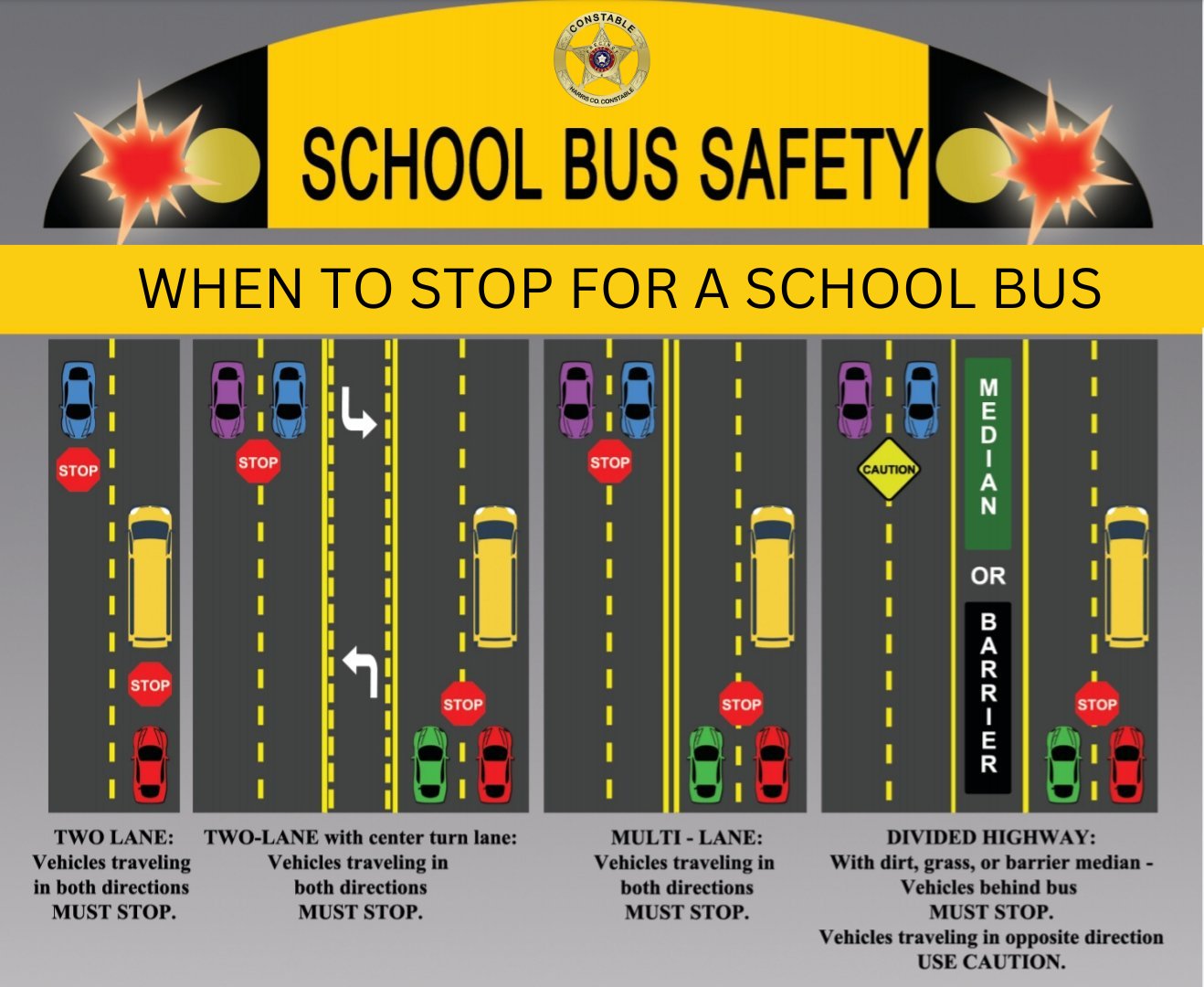
With schools getting back in session soon and many new au pairs, I wanted to remind everyone about the Maryland law that requires you to stop for school buses. Below you will find pictures explaining what to do in 4 different types of roads if you approach a school bus at a stop. If you have questions, please ask me or your host parents.

The rules regarding stopping for school buses are:

  • It is against the law to pass a stopped school bus while its lights are flashing and its’ stop arm is extended.
  • On undivided roadways, with no physical barrier or median, vehicles must stop on both sides of the roadway.
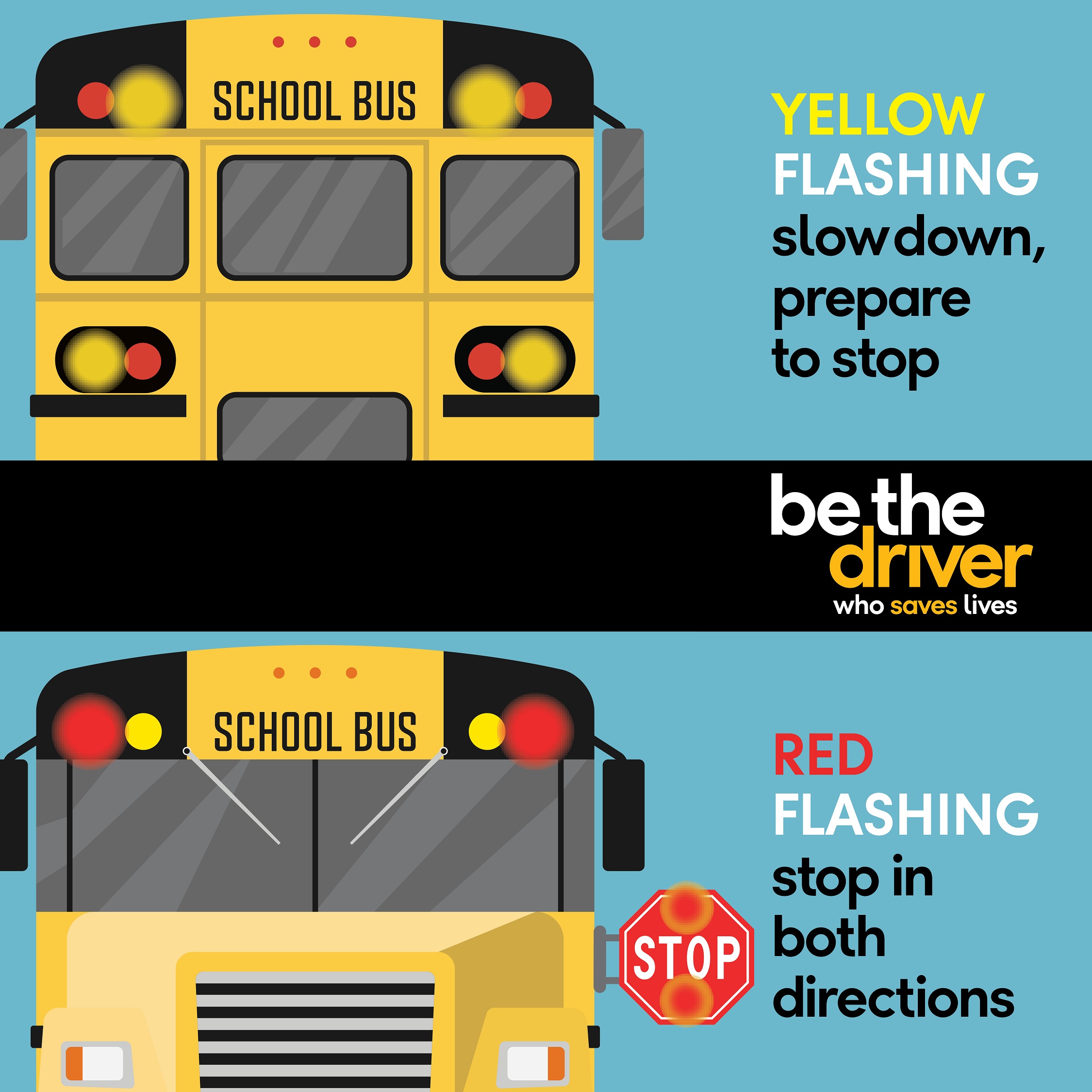
  • Yellow flashing lights indicate that the bus is preparing to load or unload children. Motorists should slow down and prepare to stop their vehicles.
  • Red flashing lights and extended stop arms indicate that the bus has stopped, and children are getting on or off. Motorists approaching from either direction must wait until the red lights stop flashing before proceeding.

Police, who observe a motorist failing to stop and remain stopped for a school bus, can issue the violator a citation which carries a $570.00 fine and 3 points. There are also cameras on buses and the camera-generated fine is $250. Drivers failing to stop for pedestrians in a crosswalk can be issued a citation for $90-$500. These fines are subject to change and could increase. I am sharing them for your information.

Images: Maryland Center for School Safety & MD State Police

Back to School Planning

Back to school time is here. This can mean changes to the au pair schedule and possibly to the duties.  It is very important to communicate these changes to avoid problems.

Here is a list of topics to consider discussing:

  • Au pair’s work schedule.
  • The children’s school and activity schedules.
  • Where the children get dropped off and picked up and who will be doing this.
  • What to do if a child is staying home sick, late to school, does not get off the bus (if they are supposed to).
  • Driving laws regarding stopping for school buses.
  • How to tell if school has been canceled or delayed for bad weather.
  • Add the au pair to your list of people allowed to pick up the kids from school and explain the process.
  • What to pack for lunch.
  • The routine after school (do they have free time before starting homework, what to give for a snack, any chores, where do they put their backpacks & lunchboxes).
  • How to communicate about what’s going on at school. Your Kids in Care logbook from Au Pair in America can be a great two-way communication tool for keeping track of schedules, afterschool activities and day to day info that needs to be transferred between host parents and au pair.
  • If your au pair will be the one going through the children’s backpack and helping with homework, consider designating an area for putting things that need to be read and/or signed by parents.

Here are some Printable Fill-in-the-Blank School Notes for parents. You can print these out and have them ready for times when the kids are absent, late, have an early dismissal or you need to give permission for something.

Check out Au Pair in America’s Pinterest School Tips and Ideas pinboard for things like organization ideas, back to school traditions, printable lunch box notes, and fun lunch recipes.

Reminder: It is illegal in the State of Maryland for a child under the age of 8 to be left alone in the home or car. Please make sure that your drop off routine does not include leaving children under 8 at home or in the car while dropping off another child. Even if a host parent gives permission to do this, it is not allowed, because it is against the law.

Host Family Hints to Help Your Au Pair Match Flourish

Host parents have many responsibilities and are often very busy. Maintaining a good relationship with your au pair is essential and can prevent many potential issues. Below are a few simple things you can do to help your au pair match flourish.

Communication – Make time every couple of weeks for a check-in conversation. This provides your au pair a time to bring up questions or concerns which she may be hesitant to bring up when she sees how busy you are daily. It’s also a good time for discussing any concerns you have as well as planning for upcoming events or schedule changes.

I cannot emphasize enough how important these check-in conversations are, even after an au pair has been with a host family for months and into the extension year. Having these regular conversations says to your au pair that you care about how she is feeling and how things are going. It is an investment in keeping a match healthy and successful.

Treat Your Au Pair Like a Family Member – Au pairs who feel appreciated and included as a member of their host family tend to see their host children as family members and feel very invested in their happiness and success.

Stay on Top of Payments –  Au pairs can feel very uncomfortable if they need to ask for their weekly stipend payment. This can also make them feel their work is not appreciated or you are unconcerned about their needs. Add a recurring weekly event on your calendar, use payment apps or automatic bank transfers to schedule your au pair’s stipend payment, and give yourself one less thing to remember.

The same is true for their transportation costs to cluster meetings and classes. Au pairs let their host family know about the expenses but some host parents don’t always follow through and reimburse them. Here’s a blog post with information and tips on how to handle transportation costs.

Photo: Shared by an APIA Host Family

Holiday & Vacation Reminders

“Rest and be thankful.” – William Wordsworth

Holidays and vacations are a great opportunity to rest, recharge and explore the U.S.

Memorial Day Weekend is the unofficial start of the summer travel season. Here are some reminders about program rules regarding holidays, vacations, and international travel.

Holidays

  • Host families are not required to give au pairs off on any specific holidays.
  • Each host family will make different arrangements for holidays, some au pairs will be off and others will be required to work.
  • Au pairs should not make plans for holidays without checking with their host family first.

Vacations

  • Au pairs earn 2 weeks of paid vacation during the course of their year.
  • Vacation time should be mutually agreed upon.
  • All vacations should be preplanned (at least 4 weeks in advance).
  • All au pair’s friends and/or family visits/vacations should be pre-approved prior to purchasing tickets.
  • If an au pair travels with their host family, it should be discussed in advance whether they are working or if this would be the au pair’s vacation time.
  • If an au pair travels with the host family to provide childcare:
    • It does not count as their vacation time.
    • They must have a private bedroom.
    • Their transportation, lodging, and meals should be paid for by the host family.

Travel Outside of the U.S.

Check out our Travel Resource Page for the most current information on international travel.

Photo: Leah Kelly from Pexels

Travel Outside of the U.S.

7 Things to Know Before You Go

  1. There is always some risk with traveling outside of the U.S., as re-entry is at the discretion of the port of entry agent. APIA recommends that au pairs and host families discuss the risks and decide whether they are comfortable.
  2. Please review the appropriate checklist(s) from APIA, as you make your travel plans.
  3. All Au Pairs must email their scanned DS-2019 along with a Travel Validation Request Form to APIA, at least 1-2 weeks prior to international travel. Note: The travel validation ensures that you are in good standing with the program, it is not formal permission to travel. 
  4. Year 1 Au Pairs must have a valid visa to travel internationally and plan to return to the U.S. at least 2 weeks prior to the date their visa (inside their passport) says it expires. This can be different from the actual program end date.
  5. Year 2 Au Pairs may visit Canada, Mexico, and the adjacent islands due to the Automatic Revalidation Policy. No other international travel is allowed in Year 2.
  6. Travel Validation is good for the remainder of your current program year. If you have your Year 1 DS-2019 form validated for travel for one trip, you may use that same travel validation to take additional trips outside of the U.S. before Year 1 ends. Be sure to check the expiration date printed on your visa inside your passport, and return before that date.
  7. All Au Pairs must independently research whether they will need an additional visitor’s visa for their destination. This will depend on their nationality and travel destination.

Photo: Porapak Apichodilok from Pexels