Category Archives: Blog

30 Hours of Service Update – Sending Smiles

Back in May, we announced that our cluster would be celebrating Au Pair in America’s 30th anniversary year with 30 Hours of Service in 2016. We are counting the time preparing for and carrying out the volunteer projects.

We have done these project so far:
April 10 – Making Sandwiches for the Homeless (5 hours of service)
July 31 – J-Day Shoe Donation (3 hours)
August 9 – Storm Drain Project (6 hours)
September – Preparing for International Festival (4 hours)

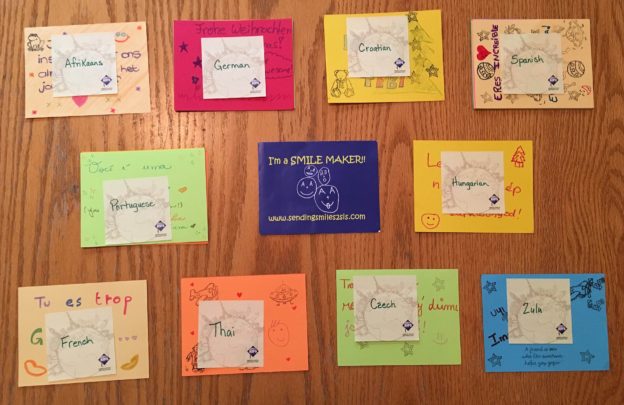
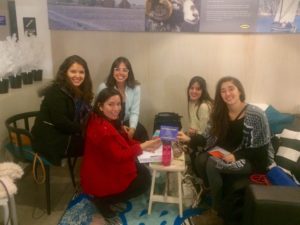
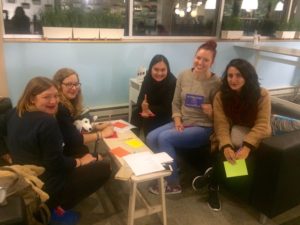
And at our November 27 cluster meeting – Making cards for Sending Smiles (2 hours)

img_1336

img_1335


img_1334

img_1333


Still to come:
December – Holiday Global Awareness presentation for Cub Scouts, buying and wrapping gifts for needy kids, making scarves and volunteering at a school Santa shop.

Veteran’s Day

Veterans Day, formerly Armistice Day, is an annual United States holiday honoring military veterans.

It is a federal holiday that is observed on November 11. It coincides with other holidays such as Armistice Day or Remembrance Day, which are celebrated in other parts of the world and also mark the anniversary of the signing of the Armistice that ended World War I. (Major hostilities of World War I were formally ended at the 11th hour of the 11th day of the 11th month of 1918 with the German signing of the Armistice.)

Carving Pumpkins

pumpkinWith our Annual Pumpkin Patch Cluster Meeting coming up this weekend, I thought it might be helpful to show how to carve a pumpkin for au pairs who will be attempting this for the first time. Here is a video explaining how to carve a pumpkin (as well as some non-carving alternatives.) If you get a pumpkin at our pumpkin patch cluster meeting, I don’t recommend carving it until the week before Halloween, so it will stay looking fresh for big day.

Find more fun on the APIA Halloween Fun Pinterest board.

Photo: Jeff Kramer

Fire Prevention Tips

Click here to read more fire safety tips on the FEMA website

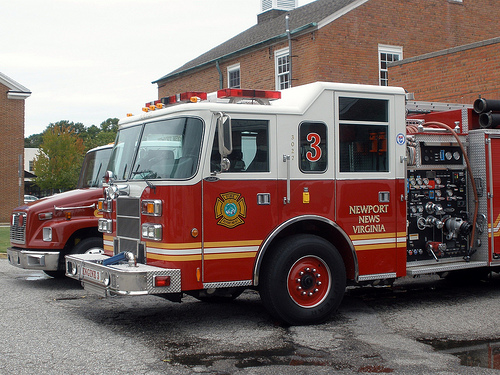
October 9-15 is Fire Prevention Week in the USA.

Here are some Fire Safety Tips from http://www.usfa.fema.gov/:

Control Kids’ Access to Fire

  • Keep all matches and lighters out of the hands of children. If possible, keep these sources of fire in locked drawers. Consider buying only “child-proof” lighters—but be aware that no product is completely child-proof.
  • Children as young as two years old can strike matches and start fires.
  • Never leave children unattended near operating stoves or burning candles, even for a short time.
  • Teach children not to pick up matches or lighters they may find. Instead, they should tell an adult immediately.

Fire Safety at Home

  • Smoke alarms should be installed on every level of the home, especially near sleeping areas.
  • Smoke alarms should be kept clean of dust by regularly vacuuming over and around them.
  • Replace batteries in smoke alarms at least once a year. And replace the entire unit after ten years of service, or as the manufacturer recommends.
  • Families should plan and practice two escape routes from each room of their home.

Photo: Tony Alter

Healthy Eating – Downsize Portions

portion_sizeHow much you eat is just as important as what you eat. You want to experience life in the U.S., but don’t feel compelled to pick up bad habits. Stick to the portions you would normally eat. The U.S. is known for its “supersizing”, especially in restaurants.  It is OK to ask for a to-go box and take home that food you couldn’t finish at the restaurant.

Also, check food and drink packages to find out what is considered a normal serving. For example a 20 oz. bottle of soda is actually 2 1/2 servings. Many things that are packaged in what appear to be single serving sizes are actually 2 or more portions.

It’s easier to maintain a healthy weight than it is to overeat and have a lot to lose later.

Federal & School Holidays

As you may be aware, the public school children will be off several days in September and October. These are regular workdays for an au pair, unless your host parents tell you otherwise. As with any “school holiday” start making plans for activities with the kids now.

In addition to holiday in September (Labor Day & Rosh Hashanah,) many public schools are also out additional days for teacher development and the end of the grading period. As with any holiday, it is up to the host family’s schedule whether you will have the holiday off. Please check with your host families before you assume you have this day off. Do not make any travel plans until you have received confirmation that you will not work on this day.

Host parents, please check your schedule to make sure that you are factoring in these hours and make adjustments as needed to stay within the State Department regulations not exceeding 10 hours per day or 45 hours per week (or 30 hours her week for Educare.)

Hints for Success – Homesickness/Culture Shock

Almost everyone experiences culture shock when they come to a completely new environment. Everything is different: the language, the food, and the people.

Here are my Top 5 Tips for
Dealing with Homesickness

1. Make Friends – Don’t wait for other au pairs to reach out to you, reach out to them. There are other lots of new au pairs who are feeling the same way you are right now. Set a goal to reach out to a few of them each day. Some will respond and some will not. Don’t let that discourage you. No one will ever be mad at you for sending them a message to say hello or ask if they want to do something together. Make friends from various countries and you will also get a chance to practice your English skills together.

2. Stay in touch with your home country, but not too much. Skyping or talking on the phone every day with your family and/or friends back home normally makes homesickness worse. Try emailing instead and reduce the Skype and phone calls to once a week, until you feel stronger. It’s much harder seeing the faces and hearing the voices of those you miss.

3. Get out of the house (or your room specifically) – Go to cluster meetings, have coffee or movies with other au pairs, join a gym, go to the library, go for a walk, visit the mall, get a manicure, visit a museum. If someone invites you out, say “yes.” Also, don’t be afraid to do the inviting. If your host family invites you to do things with them, say “yes.” This will help you get to know each other and contribute to your overall happiness.

4. Realize that it definitely gets better – All au pairs experience homesickness and nearly all of them stay and have a successful year (some stay for two years.) So, it must get better, right? Once you get past the initial homesickness, most au pairs report how quickly the year goes by.

5. Make Plans – Create your own Au Pair Bucket List (places you want to go, new foods to try, new things to experience during your year in the U.S.) and start doing them now. Post on our cluster Facebook group to find others who may want to join you on your adventures.


Photo by:  Shimelle Laine (Flickr)

The Au Pair Education Requirement

7658288734_de19b54754_zAu pairs are required to complete 6 credits or 8 CEUs or 72 or more hours.

EduCare Companions are required to complete 12 credits or 16 CEUs or 144 or more hours.

You may take credit or non-credit classes from an accredited college. Look on the right side of this page under “Education Options” for accredited schools in our cluster area. If you want to take a class at a school not listed here on my blog, please check with me first to make sure it is accredited. Otherwise, it would not count toward your education requirement.

Your host family will pay an education allowance to assist you in completing your education requirement. Au Pairs education allowance – $500, EduCare education allowance – $1000

There are ways to get your credits for just your education allowance, but it will not give you a lot of choices. Normally au pairs will contribute some of their own money ($200+) towards their education.

The APIA Advantage UCLA Course is the only State Dept. approved class with an online component. No other online classes are accepted.

Note: Au pairs are allowed to take one weekend course for up to half their education requirement per contract year. The Department of State views our program as a cultural exchange experience and an au pair going to a campus over the length of a semester alongside her American peers facilitates this while promoting the spirit of the program.

Photo: CollegeDegrees360

SaveSave

Stopping for School Buses

With some schools about to go back in session and many new au pairs who have recently arrived, I wanted to remind everyone about what to do in different situations with school buses. If you have questions, please ask myself or your host parents.

The rules regarding stopping for school buses are:

  • It is against the law to pass a stopped school bus while its lights are flashing and its’ stop arm is extended.
  • On undivided roadways, with no physical barrier or median, vehicles must stop on both sides of the roadway.
  • Yellow flashing lights indicate that the bus is preparing to load or unload children. Motorists should slow down and prepare to stop their vehicles.
  • Red flashing lights and extended stop arms indicate that the bus has stopped, and children are getting on or off. Motorists approaching from either direction must wait until the red lights stop flashing before proceeding.

Police, who observe a motorist failing to stop and remained stopped for a school bus, can issue the violator a citation which carries a $570.00 fine and 3 points. There are also cameras on buses and the camera-generated fine is $125. Drivers failing to stop for pedestrians in a crosswalk can be issued a citation for $80.00, and drivers failing to exercise due caution when encountering children can be issued a citation for $70.00.