
Tag Archives: au pair

Snow Days are Here!

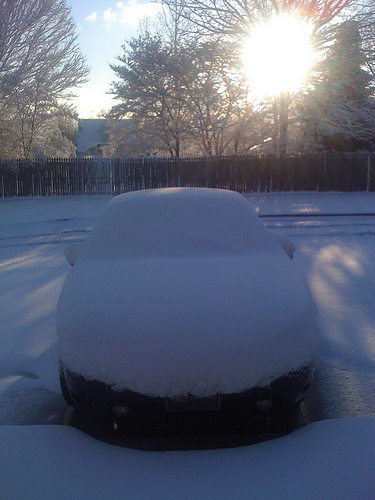
Looking for ideas to keep the kids busy on a snow day (when they are home from school for winter weather?)

Here is a simple snow day game plan…

  1. Play in the snow. Do you wanna build a snowman? Here’s a great how-to video.
  2. Come inside and warm up with hot chocolate (don’t forget the marshmallows.)
  3. May your own play dough.
  4. Play board games or legos together.
  5. Ever heard of Snow Ice Cream? Great for freshly fallen snow.
  6. Look for more fun things to do on the APIA Pinterest Boards:
  7. Bake cookies together or make some other fun recipe.
  8. Play in the snow again.
  9. Warm up inside taking turns on the Make a Snowflake Website.
  10. Make a blanket fort.

Stay warm & have fun!

Photo: Tony Crider (Flickr)

Winter Sports & Sports Insurance

Is it risky to do winter sports without the sports insurance?

Yes. If you have to pay your own hospital bills for a broken bone, you might be shocked at how much that would cost. I checked this website for some cost estimates.

Here are a couple examples:

  • Without medical coverage, to treat a broken arm or leg (that does not require surgery) it could cost up to $2,500.
  • Without medical coverage, to treat a broken arm or leg (requiring surgery) it could cost $16,000 or more.

I wanted to make sure everyone understands how the medical coverage works for sports related injuries. There is a list of “high-risk sports/activities” that are not covered with the basic or upgrade medical insurance plans. Those activities are only covered with the Sports Insurance Package (also known as Option A.)

The Sports Insurance Package was available pre-departure and may also be purchased at any time during your year. It takes effect within 48 hours of your enrollment and it is good for 12 months. The cost will be the same ($85) whether you have a month left or your whole year ahead of you. I recommend you pay for it early on, if you didn’t already purchase it. You never know when an opportunity might present itself and you don’t want to miss out on an adventure. You also don’t want to take a risk on getting injured and being responsible for the bill on your own.

Below is a partial list of sports that are only covered with the sports insurance package:
Football, Rugby, Scuba diving, Ski-doo,  Wakeboarding, Skydiving, Parachuting, Rock climbing, Zip line, Skate boarding, Rollerblading, Roller skating,  Ice Skating, SkiingSnowboardingSnowmobiles & Snowshoeing.  View the full list on page 3 of the insurance brochure HERE(2015 arrival au pairs) & HERE for (2016 arrival au pairs)
Note: Injuries sustained while partaking in these sports are covered with purchase of the Sports Insurance ONLY.

How to register for the Sports Insurance
Contact Lisa or Christine to get a copy of the Sports Insurance Enrollment Form. It takes a few days for your coverage to begin. If you think you will be doing any of these sports, you should get it now.

October 4-10 is Fire Prevention Week

Click here to read more fire safety tips on the FEMA website

Click here to read more fire safety tips on the FEMA website

Here are some Fire Safety Tips from http://www.usfa.fema.gov/:

Control Kids’ Access to Fire

  • Keep all matches and lighters out of the hands of children. If possible, keep these sources of fire in locked drawers. Consider buying only “child-proof” lighters—but be aware that no product is completely child-proof.
  • Children as young as two years old can strike matches and start fires.
  • Never leave children unattended near operating stoves or burning candles, even for a short time.
  • Teach children not to pick up matches or lighters they may find. Instead, they should tell an adult immediately.

Fire Safety at Home

  • Smoke alarms should be installed on every level of the home, especially near sleeping areas.
  • Smoke alarms should be kept clean of dust by regularly vacuuming over and around them.
  • Replace batteries in smoke alarms at least once a year. And replace the entire unit after ten years of service, or as the manufacturer recommends.
  • Families should plan and practice two escape routes from each room of their home.

Photo: Tony Alter

Healthy Eating – Downsize Portions

portion_size

How much you eat is just as important as what you eat. You want to experience life in the U.S., but don’t feel compelled to pick up bad habits. Stick to the portions you would normally eat. The U.S. is known for its “supersizing”, especially in restaurants.  It is OK to ask for a to-go box and take home that food you couldn’t finish at the restaurant.

Also, check food and drink packages to find out what is considered a normal serving. For example a 20 oz. bottle of soda is actually 2 1/2 servings. Many things that are packaged in what appear to be single serving sizes are actually 2 or more portions.

It’s easier to maintain a healthy weight than it is to overeat and have a lot to lose later.

Tax Information for Au Pairs

taxes-pic

We have been talking about taxes at our Coffee Meetings since January and the deadline for filing is approaching.

Here are some of the basic questions:

Who is supposed to file taxes? – All au pairs who made $3950 or more in the calendar year (Jan 1 – Dec 31.) Au pairs who made less than $3950, are not required to file a tax return for 2014.

Will all au pairs have to pay something? – No, it depends on when you arrived and how much money you earned last year.

When are 2014 taxes due? – April 15, 2015

Where can I get the tax form? –  1040NR-EZ Form

Where can I get the instruction booklet?1040NR-EZ Booklet

Where can I get detailed information and see a sample au pair tax form?APIA Tax Info for Au Pairs *Important note – This tax info document contains a very helpful sample filled out tax form. It will open properly in all browsers except Firefox. I suggest you open this in Chrome, Safari or IE*

Where should I mail my tax return form?
Department of the Treasury
Internal Revenue Service
P.O. Box 1303
Charlotte, NC 28201-1303

How do I write a check or money order? – Check here

How do I address an envelope? – Check here

Safety Tips for Holiday Shopping

It is easy to get distracted at this time of year and when you are distracted you are at a greater risk for holiday crime.  Here are some tips that are always a good idea, but especially important to remember at this time of year.

holiday shopping

  • Always pay attention to your surroundings.  Avoid distractions like using cell phone or listening to your iPod when you are coming and going from stores.
  • Avoid carrying large amounts of cash.  Take just the amount you need or use debit or credit cards.
  • Keep your money in a front pocket.  Pay close attention to your wallet when you are in crowded places like buses, metro and elevators.
  • Be careful not to lay your purse or bags down on the floor or out of your sight at the mall.
  • Save your most expensive purchases for the end of your shopping when you will be going straight to the car.
  • Whenever possible, shop during daylight hours and if you must shop after dark, go with a friend.
  • If you are not driving yourself to go shopping, use the Metro Trip Planner before going out, to minimize time waiting at the bus stop or metro station.  Never accept a ride from a stranger.
  • Be aware of strangers approaching you for any reason. Criminals will use different methods to distract you and steal your belongings.
  • Look around the parking area when you are leaving.
  • Do not approach your car alone if there are suspicious people in the area.  You can go back into the store and ask security to walk out with you or wait for a family or other group of people to walk out at the same time with you.
  • Trust your instincts, if something seems suspicious or unsafe, you are probably right.  Following the saying, “Better Safe Than Sorry.”

Today is Game One of the Baseball World Series

2318093969_1c77083865_mGame One of the Baseball World Series – In baseball the World Series is the championship games of Major League Baseball in North America, played in October after the end of the regular season between the pennant winners of the American and National Leagues. The Series winner is determined through a best-of-seven playoff, meaning that the first team to win four games wins the series. The World Series has been an annual event since 1903. It is played at the baseball stadiums of the two teams in the series. Baseball is so popular that it is sometimes called the “national pastime.” The word “ballgame” in the United States almost always refers to a game of baseball, and “ballpark” to a baseball field.

The rules of baseball can be found here on the Au Pair in America website.

Photo: Andrei Niemimäki


October is Month of the Young Adolescent

Parque do IbirapueraDedicated to ages 10-15 this serves as a reminder of the insecurity of young adolescents. Help the young adolescents you care for to recognize their abilities. Help to make home a safe and comfortable place where it is okay to learn from mistakes. Help them to learn about the adult values of hard work, family and discipline.

Even though kids this age are typically pretty independent and may seem like they don’t need or want much interaction from an au pair, this is not completely true. They still enjoy when you take an interest in their activities.  Find ways to connect with them through shared interests or let them introduce you to things they care about.

Photo: Marlon Dias

Federal & School Holidays

The public school children will be off several days in September and October. These are regular workdays for an au pair, unless your host parents tell you otherwise. As with any “school holiday” start making plans for activities with the kids now.

In addition to holiday in September (Labor Day & Rosh Hashanah,) many public schools are also out additional days for teacher development and the end of the grading period. As with any holiday, it is up to the host family’s schedule whether you will have the holiday off. Please check with your host families before you assume you have this day off. Do not make any travel plans until you have received confirmation that you will not work on this day.

Host parents, please check your schedule to make sure that you are factoring in these hours and make adjustments as needed to stay within the State Department regulations not exceeding 10 hours per day or 45 hours per week (or 30 hours her week for Educare.)