Tag Archives: safety

Top 10 Tips for Summer Safety

  1. Remember to bring along drinks, especially water. Try to get children to drink water every 20 minutes, when they are outside in hot weather.
  2. Pay attention to surfaces that can be hot against children’s skin, such as metal slides and other playground equipment in the sun.
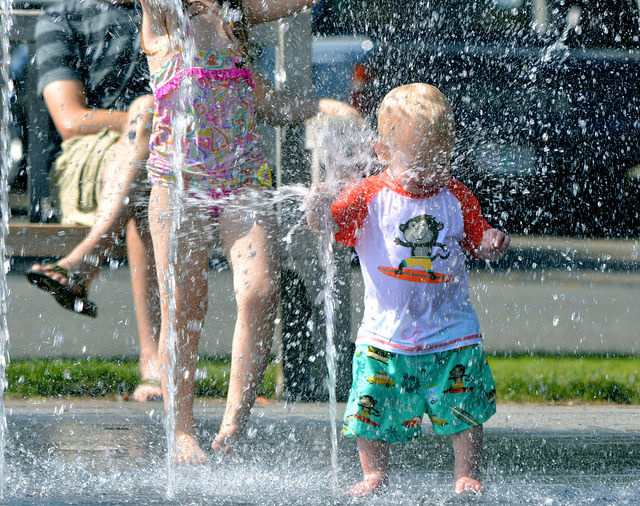
  3. Safety around water is particularly important. A child can drown in just a few inches of water. Whenever you are near water you must never leave a child alone – if the phone rings, take them with you or let it ring! Always stay within arm’s reach when the children are in or near water.
  4. Young babies should be kept out of direct sunlight. Keep the baby in the shade or under a tree, umbrella or stroller canopy.
  5. Dress babies in lightweight clothing and use brimmed hats.
  6. Apply sunscreen 30 minutes before going outside, even if it appears overcast (cloudy).
  7. Try to keep children out of the sun in the middle of the day when the sun is strongest.
  8. Learn what poison ivy looks like and keep children out of it. A good rule to teach the children is “leaves of three, let it be.”
  9. Use insect repellent spray to keep away mosquitos and ticks. Ask your host parents before applying.
  10. Check for ticks when you bring children in from playing outside, especially if you’ve been in tall grass or the woods.

Photo: Scott97006 (Flickr)

10 Safety Tips for Au Pairs – Staying Safe Out and About

These tips are not intended to scare you, but to make you aware of some simple things you can do to prevent being the victim of a crime.

  • When you get into an Uber or Lyft, make sure the vehicle matches the description and the driver is who the app shows.
  • When riding on metro, try to wait in well lit areas where there are other people and try to get into a train car with other people, rather than being alone.
  • Be very careful using outside ATMs at night or in unfamiliar surroundings.
  • When walking, face the oncoming traffic. It will be harder for someone to pull you into a car and abduct you. You can also see cars coming in your lane.
  • Tell someone where you’ll be and what time you’re supposed to return, or if you will be with someone you don’t know well.
  • If you are meeting someone new for the first time, meet in a public place.
  • Don’t overload yourself with packages. If you must have your hands full, visualize how you would respond if approached, how you would get your hands free, etc.
  • Don’t wear earbuds or headphones, while walking or jogging.
  • Don’t read or get distracted by your cell phone while walking or standing on the street.
  • Pay attention to what is going on around you and be aware of people near you. 

Photo: Antonio Touriño

Privacy & Personal Information Online

We live in a time of constant sharing through social media. We often share pictures, plans of somewhere we are going or rants about problems, without thinking much about who will see it and what could be the consequences.
Before clicking “post”, stop to think:

  • Am I violating someone’s privacy?
  • Am I sharing personal information that could put me in danger?
  • Would I want my current or a future employer to see this?

This will help protect your privacy and safety as well as that of your host family. It is important to respect your host family’s privacy and not share personal details and information.  This applies to all kinds of situations, including personal conversations, email, and social websites.

For your own safety, it is a good idea to be careful what personal information you share about yourself as well. You should not give out information like your telephone number and address to people you don’t know. Safer to meet a new friend in a public place, than to give them your address before knowing them.

Once you post something on the Internet (even if you later delete it), it can show up elsewhere.  Unless you have specific permission from your host family, you should never post pictures of them, their children or their home on the Internet.

If you have a blog or website where you post in your native language, remember there is translation software. So, even if you say it in your native language, be sure it is not something that might be misinterpreted in translation or something you will regret saying.

9 Winter Driving Tips to Stay Safe in the Ice & Snow

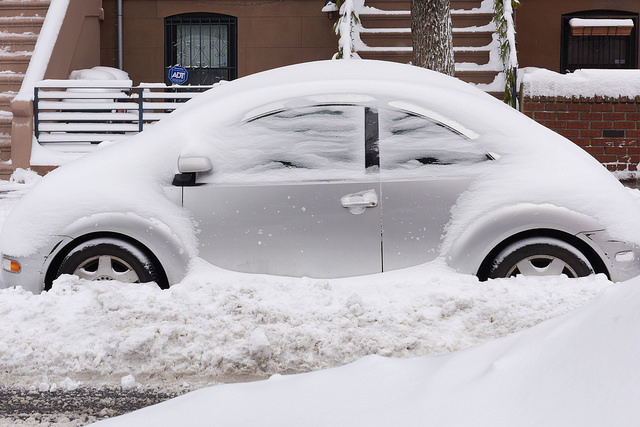
The best advice for driving in bad winter weather is not to drive at all, if you can avoid it. Don’t go out until the snow plows and sanding trucks have had a chance to do their work, and allow yourself extra time to reach your destination.
If you must drive in snowy conditions, make sure your car is prepared, and that you know how to handle road conditions. It’s a good idea to always keep at least a half tank of gas in your car, especially in winter months where you could get stranded. It’s helpful to practice winter driving techniques in a snowy, open parking lot, so you’re familiar with how your car handles. Consult your owner’s manual for tips specific to your vehicle.

Driving safely on icy roads

  1. Decrease your speed and leave yourself plenty of room to stop. You should allow at least three times more space than usual between you and the car in front of you.
  2. Brake gently to avoid skidding. If your wheels start to lock up, ease off the brake.
  3. Turn on your lights to increase your visibility to other motorists.
  4. Keep your lights and windshield clean.
  5. Use low gears to keep traction, especially on hills.
  6. Don’t use cruise control or overdrive on icy roads.
  7. Be especially careful on bridges, overpasses and infrequently traveled roads, which will freeze first. Even at temperatures above freezing, if the conditions are wet, you might encounter ice in shady areas or on exposed roadways like bridges.
  8. Don’t pass snow plows and sanding trucks. The drivers have limited visibility, and you’re likely to find the road in front of them worse than the road behind.
  9. Don’t assume your vehicle can handle all conditions. Even four-wheel and front-wheel drive vehicles can encounter trouble on winter roads.

Photo: Steve Pisano (Flickr)

What to Do After an Accident

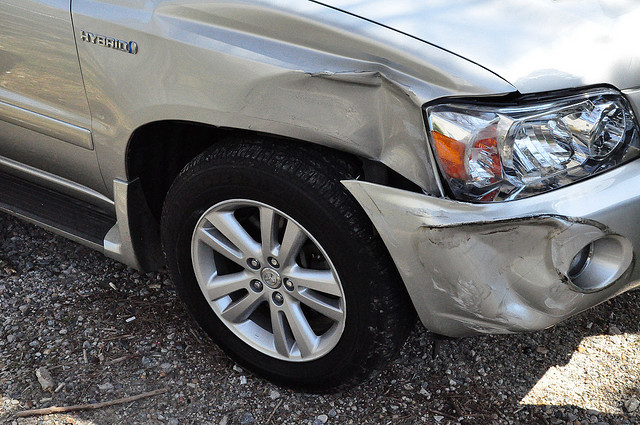
car accidentHaving a car accident is a very upsetting, stressful situation. Being prepared and knowing what to do can make things a little bit easier. Make sure you know which host parent to call in case of an accident.

Make sure you have all the necessary documents in your car glove box. Read this post on What to Keep in the Car Glove Box for a detailed list.

If you have an accident: (from Edmunds.com)

  1. Keep Safety First. Drivers involved in minor accidents with no serious injuries should move cars to the side of the road and out of the way of oncoming traffic. Leaving cars parked in the middle of the road or busy intersection can result in additional accidents and injuries. If a car cannot be moved, drivers and passengers should remain in the cars with seatbelts fastened for everyone’s safety until help arrives. Make sure to turn on hazard lights and set out cones, flares or warning triangles if possible.
  2. Exchange Information. After the accident, exchange the following information: name, address, phone number, insurance company, policy number, driver license number and license plate number for the driver and the owner of each vehicle. If the driver’s name is different from the name of the insured, establish what the relationship is and take down the name and address for each individual. Also make a written description of each car, including year, make, model and color — and the exact location of the collision and how it happened. Finally, be polite but don’t tell the other drivers or the police that the accident was your fault, even if you think it was.
  3. Photograph and Document the Accident. Use your camera to document the damage to all the vehicles. Keep in mind that you want your photos to show the overall context of the accident so that you can make your case to a claims adjuster. If there were witnesses, try to get their contact information; they may be able to help you if the other drivers dispute your version of what happened.

Image: cygnus921 (Flickr)

Halloween Health & Safety Tips

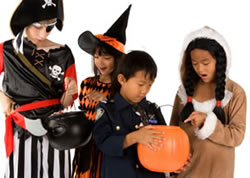
Going trick-or-treating? Check out these tips from the CDC website.  

alphabet letter s Swords, knives, and other costume accessories should be short, soft, and flexible.

alphabet letter a Avoid trick-or-treating alone. Walk in groups or with a trusted adult.

alphabet letter f Fasten reflective tape to costumes and bags to help drivers see you.

alphabet letter eExamine all treats for choking hazards and tampering before eating them. Limit the amount of treats you eat.
halloween

alphabet letter h Hold a flashlight while trick-or-treating to help you see and others see you. WALK and don’t run from house to house.

alphabet letter a Always test make-up in a small area first. Remove it before bedtime to prevent possible skin and eye irritation.

alphabet letter l Look both ways before crossing the street. Use crosswalks wherever possible.

alphabet letter l Lower your risk for serious eye injury by not wearing decorative contact lenses.

alphabet letter o Only walk on sidewalks whenever possible, or on the far edge of the road facing traffic to stay safe.

alphabet letter w Wear well-fitting masks, costumes, and shoes to avoid blocked vision, trips, and falls.

alphabet letter e Eat only factory-wrapped treats. Avoid eating homemade treats made by strangers.

alphabet letter e Enter homes only if you’re with a trusted adult. Only visit well-lit houses. Never accept rides from strangers.

alphabet letter n Never walk near lit candles or luminaries. Be sure to wear flame-resistant costumes.

Stopping for School Buses

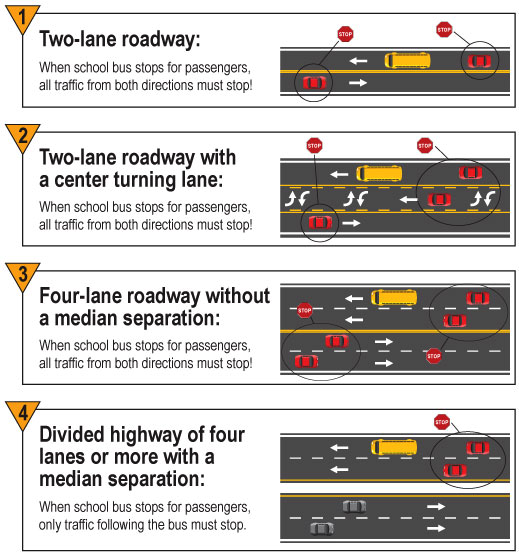
At our last cluster meeting, we discussed school bus safety and the laws regarding stopping for a school bus. Here is an overview. If you have questions, please ask myself or your host parents.

The rules regarding stopping for school buses are:

  • It is against the law to pass a stopped school bus while its lights are flashing and its’ stop arm is extended.
  • On undivided roadways, with no physical barrier or median, vehicles must stop on both sides of the roadway.
  • Yellow flashing lights indicate that the bus is preparing to load or unload children. Motorists should slow down and prepare to stop their vehicles.
  • Red flashing lights and extended stop arms indicate that the bus has stopped, and children are getting on or off. Motorists approaching from either direction must wait until the red lights stop flashing before proceeding.

Police, who observe a motorist failing to stop and remained stopped for a school bus, can issue the violator a citation which carries a $570.00 fine and 3 points. There are also cameras on buses and the camera-generated fine is $125. Drivers failing to stop for pedestrians in a crosswalk can be issued a citation for $80.00, and drivers failing to exercise due caution when encountering children can be issued a citation for $70.00.

10 Tips for Summer Safety

  1. Remember to bring along drinks, especially water. Try to get children to drink water every 20 minutes, when they are outside in hot weather.
  2. Pay attention to surfaces that can be hot against children’s skin, such as metal slides and other playground equipment in the sun.
  3. Safety around water is particularly important. A child can drown in just a few inches of water. Whenever you are near water you must never leave a child alone – if the phone rings, take them with you or let it ring! Always stay within arm’s reach when the children are in or near water.
  4. Young babies should be kept out of direct sunlight. Keep the baby in the shade or under a tree, umbrella or stroller canopy.
  5. Dress babies in lightweight clothing and use brimmed hats.
  6. Apply sunscreen 30 minutes before going outside, even if it appears overcast (cloudy).
  7. Try to keep children out of the sun in the middle of the day when the sun is strongest.
  8. Learn what poison ivy looks like and keep children out of it. A good rule to teach the children is “leaves of three, let it be.”
  9. Use insect repellent spray to keep away mosquitos and ticks. Ask your host parents before applying.
  10. Check for ticks when you bring children in from playing outside, especially if you’ve been in tall grass or the woods.

Photo: Scott97006 (Flickr)

Privacy & Personal Information Online

We live in a time of constant sharing through social media. We often share pictures, plans of somewhere we are going or rants about problems, without thinking much about who will see it and what could be the consequences.

Before clicking post, stop to think:

  • Am I violating someone’s privacy?
  • Am I sharing personal info. that could put me in danger?
  • Would I want my current or a future employer to see this?

This will help protect your privacy and safety as well as that of your host family. It is important to respect your host family’s privacy and not share personal details and information.  This applies to all kinds of situations, including: personal conversations, email and social websites.

For your own safety, it is a good idea to be careful what personal information you share about yourself as well. You should not give out information like your telephone number and address to people you don’t know. Safer to meet a new friend in a public place, than to give them your address before knowing them.

Once you post something on the internet (even if you later delete it), it can show up elsewhere.  Unless you have specific permission from your host family, you should never post pictures of them, their children or their home on the internet.

If you have a blog or website where you post in your native language, remember there is translation software.  So, even if you say it in your native language, be sure it is not something you will regret.

What to Keep in the Car Glove Box

If you are like me, you probably have napkins and straws from fast food restaurants and other assorted items in your glove box in the car.  It can be a nifty storage place, but it’s main purpose is to keep some important documents related to the car. glove box

It is very important that you keep all of the necessary documents in the car glove box. These items will be necessary if you are stopped by a police officer or have an auto accident. Not having these items can result in your receiving a ticket (citation) from a police officer.

Essential Documents

*Some host parents may tell you to carry these in your wallet instead of keeping them in the car. Follow their instructions.

Helpful Extras

  • Flashlight
  • Tire Pressure Gauge
  • Vehicle Owner’s Manual
  • Map or GPS
  • Tissues and Hand Sanitizer
  • First Aid Kit

In Your Wallet
Carry your Maryland license or country driver’s license and international driver’s permit with you at all times, especially when you are driving. You should leave your passport and Social Security Card and other documents at home, to reduce the risk of losing them.