Tag Archives: safety

8 Winter Driving Tips to Stay Safe in the Ice & Snow

Driving in the snow and ice can be a challenge even for experienced drivers. If you don’t have to go out in bad weather, stay home. If you do have to go out, here are some tips from AAA. Check out the full article on the AAA website.
8 Tips for driving in the snow:
  1. Accelerate and decelerate slowly.
  2. Drive slowly.
  3. The normal dry pavement following distance of three to four seconds should be increased to eight to ten seconds.
  4. Know your brakes.
  5. Don’t stop if you can avoid it.
  6. Don’t power up hills.
  7. Don’t stop going up a hill.
  8. Stay home (if at all possible.)

Photo: Steve Pisano (Flickr)

Going Unplugged During Work Hours

Phones, tablets, and laptops are wonderful tools to stay connected and informed, but we need to be careful not to let them become distractions from real life interactions and most importantly our responsibilities.

Au Pairs – Imagine for a moment that you went to the hospital and you were in the care of doctors and nurses.  How would you feel if those doctors and nurses who were there to care for you were more interested in texting or using their personal computer than caring for you?  How would that make you feel, about yourself and about them?  Would you think that you were getting the treatment you deserved?  Would you feel like paying the bill after your stay?

Life as an au pair, it is a fine balance between employee and family member. You live with your host family and participate with them as a member of the family, but you also have clear responsibilities as a childcare provider. Being a childcare provider is truly one of the most important jobs I can think of, because you are helping to shape our next generation.  What message are you sending them when you would rather interact with a computer than with them? How will they feel about themselves and about you? Children feel as though everything is about them. They will see this as a rejection of them and they will be more likely to act out.

It also poses a safety concern when you are not paying enough attention to the children in your care.  Accidents happen, but when an adult care giver is close by and appropriately supervising the chances of a major injury dramatically reduce.

During work hours, the following would not be considered acceptable:
-Texting*
-Talking to friends on the phone
-Chatting with friends online
-Using Skype or FaceTime
-IMing
-Emailing
-Updating your status on Facebook
-Using Snapchat, WhatsApp or any other app or social media site
-Watching videos on YouTube
-Tweeting on Twitter
-Uploading photos on Instagram
-Anything else on the computer unless it is going to Nickjr.com together with your host children

*you do want to be on the look out for texts from your host parents

Think about this — even if you work 45 hours a week, that leaves you 123 hours per week for all of that other stuff, or about 70 hours (if you are getting the recommended 7-8 hours of sleep per night.)

Host Parents – You need to be clear about what you consider acceptable during work hours to avoid misunderstandings.  Also, please understand that you are dealing with a new generation of people who are very accustomed to being plugged in at all times.  Their intention is not to be rude, they don’t necessarily realize how their actions will be perceived.  Please use this information as an opportunity to begin a dialogue on the issue.

SaveSave

SaveSave

Stopping for School Buses

With schools about to go back in session and many new au pairs who have recently arrived, I wanted to remind everyone about what to do in different situations with school buses. If you have questions, please ask myself or your host parents.

The rules regarding stopping for school buses are:

  • It is against the law to pass a stopped school bus while its lights are flashing and its’ stop arm is extended.
  • On undivided roadways, with no physical barrier or median, vehicles must stop on both sides of the roadway.
  • Yellow flashing lights indicate that the bus is preparing to load or unload children. Motorists should slow down and prepare to stop their vehicles.
  • Red flashing lights and extended stop arms indicate that the bus has stopped, and children are getting on or off. Motorists approaching from either direction must wait until the red lights stop flashing before proceeding.

Police, who observe a motorist failing to stop and remained stopped for a school bus, can issue the violator a citation which carries a $570.00 fine and 3 points. There are also cameras on buses and the camera-generated fine is $125. Drivers failing to stop for pedestrians in a crosswalk can be issued a citation for $80.00, and drivers failing to exercise due caution when encountering children can be issued a citation for $70.00.

Preventing Dehydration in Hot Weather

Dehydration means that the body lacks the necessary amount of fluid. Infants and small children are more likely to become dehydrated than older children or adults, because they can lose relatively more fluid quickly.

Here are some steps to take to make sure children remain hydrated in the summer months:

  • Encourage your child to drink plenty of water. On hot days, children should drink significantly more water than usual, as they are losing more due to the heat.
  • Do not wait until your child is thirsty to give him water. By the time they feel thirsty, they are already becoming dehydrated.
  • If your child is resistant to drinking enough water, have other liquids on hand for your child to drink throughout the day.
  • Be alert to changes in behavior. A child may act confused or more irritable when they are becoming dehydrated/overheated. Get them into cooler temperatures and drinking more fluids.
  • Dress your child in lightweight clothing in the summer months, particularly if she’ll be playing outdoors in warm weather. You may also consider clothes that are well ventilated as they do not trap heat close to the body.
  • When there are heat and/or air quality advisories because the weather is dangerously hot, you should avoid taking the children outdoors. Check with your host parents for further guidance on this topic.

Remember to follow these tips for yourself too, so you stay well hydrated.

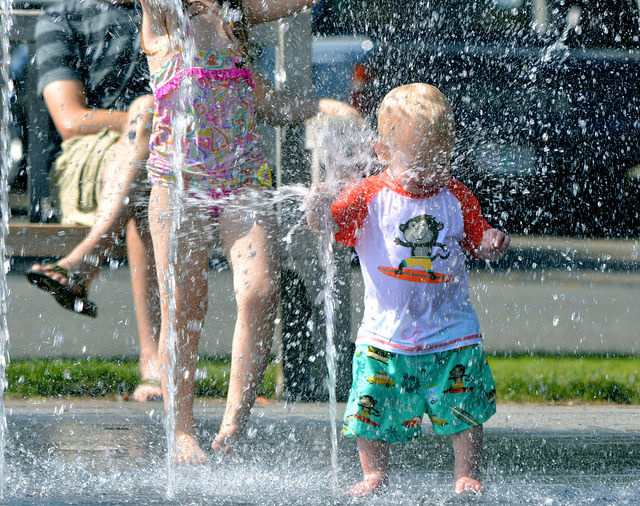
Photo: Darwin Bell (Flickr)

Health & Safety – Where are Ticks?

When the weather is nice, we spend more time outdoors with the children. Playing in the back yard, at the playground or walking on nature trails are great ways to get fresh air and exercise.

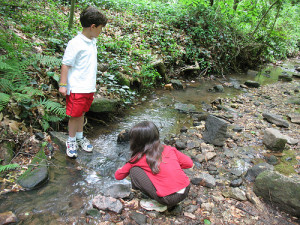
kids in woods

What are ticks? – Ticks are small mites that attach themselves to skin and suck blood. Click HERE to see examples of ticks.

Where are ticks commonly found? – Ticks are normally found in areas with trees, bushes or tall grass. This includes back yards, parks, nature areas and most places you would be spending time with the children outdoors in the nice weather.

What needs to be done? – When you return home from areas where ticks might live, carefully check the children and yourself (clothing, skin and scalp) for ticks. If you find a tick on one of your host children, notify your host parents immediately.

Most ticks do not carry diseases, and most tick bites do not cause serious health problems. But it is important to remove a tick as soon as you find it. Removing the tick completely and cleaning the area with soap and water or antiseptic spray, may help avoid diseases such as Lyme Disease that the tick may pass on during feeding, or a skin infection where it bit you.

Click HERE for Instructions on Removing a tick from WebMD.com.

How do you reduce risk of tick bites?  – Use a repellent with DEET on skin. Repellents containing 20% or more DEET can protect up to several hours. Always follow product instructions. Adults should apply this product to their children, avoiding the hands, eyes, and mouth. When you come back in from outside, it’s best to wash the repellent off of skin with soap and water. For detailed information about using DEET on children, see recommendations from the American Academy of Pediatrics.

Privacy & Personal Information Online

We live in a time of constant sharing through social media. We often share pictures, plans of somewhere we are going or rants about problems, without thinking much about who will see it and what could be the consequences.
Before clicking post, stop to think:

  • Am I violating someone’s privacy?
  • Am I sharing personal info. that could put me in danger?
  • Would I want my current or a future employer to see this?

This will help protect your privacy and safety as well as that of your host family. It is important to respect your host family’s privacy and not share personal details and information.  This applies to all kinds of situations, including: personal conversations, email and social websites.

For your own safety, it is a good idea to be careful what personal information you share about yourself as well. You should not give out information like your telephone number and address to people you don’t know. Safer to meet a new friend in a public place, than to give them your address before knowing them.

Once you post something on the internet (even if you later delete it), it can show up elsewhere.  Unless you have specific permission from your host family, you should never post pictures of them, their children or their home on the internet.

If you have a blog or website where you post in your native language, remember there is translation software.  So, even if you say it in your native language, be sure it is not something you will regret.

Driving – Car Safety Kit

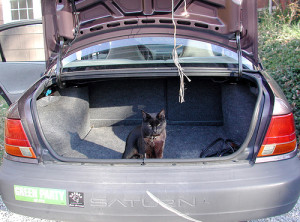
62922586_bd9aa19227What should you have in the trunk of your car in case of an emergency?

I’ll give you a hint- it’s not a cat. While they are cute, they are not very helpful in a crisis. Below is a list of some more helpful things to keep in the car.

Recommended items to have in the car in case of emergency

  • Cell phone car charger
  • Jumper Cables (be sure you know how to use them)
  • Flashlight and extra batteries
  • Flares & Reflective triangles
  • Bag of sand or kitty litter (to help if stuck in ice, snow)
  • Small shovel, snow brush and ice scraper
  • Extra windshield solvent
  • Blankets and extra clothing
  • Nonperishable food items and water (e.g.. snack bars)
  • List of emergency telephone numbers on a card in the glove compartment
  • Auto club card (AAA or roadside assistance)

Here is another post with a list of what to keep in the car glove box.

It is always a good idea to keep the gas tank at least half full at all times, especially in the winter.

Photo: Bart Everson

Winter Driving Tips

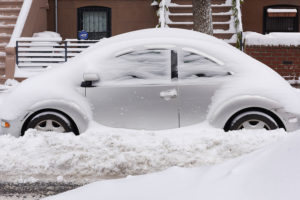
snow carDriving in the snow and ice can be a challenge even for experienced drivers. If you don’t have to
go out in bad weather, stay home. If you do have to go out, here are some tips from AAA. Check out the full article on the AAA website.
Tips for driving in the snow:
  • Accelerate and decelerate slowly. …
  • Drive slowly. …
  • The normal dry pavement following distance of three to four seconds should be increased to eight to ten seconds. …
  • Know your brakes. …
  • Don’t stop if you can avoid it. …
  • Don’t power up hills. …
  • Don’t stop going up a hill. …
  • Stay home.

Photo: Steve Pisano (Flickr)

What to Do After an Accident

Having a car accident is a very upsetting, stressful situation. Being prepared and knowing what to do can make things a little bit easier. Make sure you know which host parent to call in case of an accident.

Make sure you have all the necessary documents in your car glove box. Read this post on What to Keep in the Car Glove Box for a detailed list.

If you have an accident: (from Edmunds.com)

  1. Keep Safety First. Drivers involved in minor accidents with no serious injuries should move cars to the side of the road and out of the way of oncoming traffic. Leaving cars parked in the middle of the road or busy intersection can result in additional accidents and injuries. If a car cannot be moved, drivers and passengers should remain in the cars with seatbelts fastened for everyone’s safety until help arrives. Make sure to turn on hazard lights and set out cones, flares or warning triangles if possible.
  2. Exchange Information. After the accident, exchange the following information: name, address, phone number, insurance company, policy number, driver license number and license plate number for the driver and the owner of each vehicle. If the driver’s name is different from the name of the insured, establish what the relationship is and take down the name and address for each individual. Also make a written description of each car, including year, make, model and color — and the exact location of the collision and how it happened. Finally, be polite but don’t tell the other drivers or the police that the accident was your fault, even if you think it was.
  3. Photograph and Document the Accident. Use your camera to document the damage to all the vehicles. Keep in mind that you want your photos to show the overall context of the accident so that you can make your case to a claims adjuster. If there were witnesses, try to get their contact information; they may be able to help you if the other drivers dispute your version of what happened.

Important Reminder: You may always phone the police (911) to ask for help, if you feel unsafe because of how the other person is behaving. Your safety is the most important thing.

Image: cygnus921 (Flickr)

Halloween Health and Safety Tips

Going trick-or-treating? Check out these tips from the CDC website.  

alphabet letter s Swords, knives, and other costume accessories should be short, soft, and flexible.

alphabet letter a Avoid trick-or-treating alone. Walk in groups or with a trusted adult.

alphabet letter f Fasten reflective tape to costumes and bags to help drivers see you.

alphabet letter eExamine all treats for choking hazards and tampering before eating them. Limit the amount of treats you eat.

halloween

alphabet letter h Hold a flashlight while trick-or-treating to help you see and others see you. WALK and don’t run from house to house.

alphabet letter a Always test make-up in a small area first. Remove it before bedtime to prevent possible skin and eye irritation.

alphabet letter l Look both ways before crossing the street. Use crosswalks wherever possible.

alphabet letter l Lower your risk for serious eye injury by not wearing decorative contact lenses.

alphabet letter o Only walk on sidewalks whenever possible, or on the far edge of the road facing traffic to stay safe.

alphabet letter w Wear well-fitting masks, costumes, and shoes to avoid blocked vision, trips, and falls.

alphabet letter e Eat only factory-wrapped treats. Avoid eating homemade treats made by strangers.

alphabet letter e Enter homes only if you’re with a trusted adult. Only visit well-lit houses. Never accept rides from strangers.

alphabet letter n Never walk near lit candles or luminaries. Be sure to wear flame-resistant costumes.