Tag Archives: safety

Fire Prevention Tips

Click here to read more fire safety tips on the FEMA website

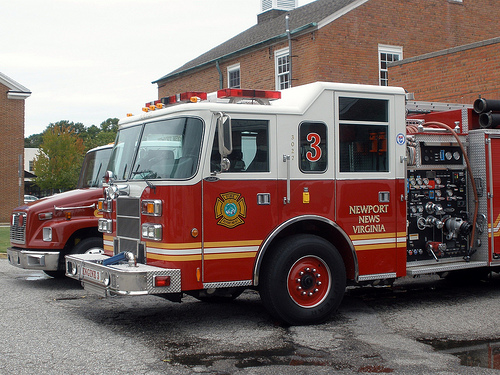
October 9-15 is Fire Prevention Week in the USA.

Here are some Fire Safety Tips from http://www.usfa.fema.gov/:

Control Kids’ Access to Fire

  • Keep all matches and lighters out of the hands of children. If possible, keep these sources of fire in locked drawers. Consider buying only “child-proof” lighters—but be aware that no product is completely child-proof.
  • Children as young as two years old can strike matches and start fires.
  • Never leave children unattended near operating stoves or burning candles, even for a short time.
  • Teach children not to pick up matches or lighters they may find. Instead, they should tell an adult immediately.

Fire Safety at Home

  • Smoke alarms should be installed on every level of the home, especially near sleeping areas.
  • Smoke alarms should be kept clean of dust by regularly vacuuming over and around them.
  • Replace batteries in smoke alarms at least once a year. And replace the entire unit after ten years of service, or as the manufacturer recommends.
  • Families should plan and practice two escape routes from each room of their home.

Photo: Tony Alter

Stopping for School Buses

With some schools about to go back in session and many new au pairs who have recently arrived, I wanted to remind everyone about what to do in different situations with school buses. If you have questions, please ask myself or your host parents.

The rules regarding stopping for school buses are:

  • It is against the law to pass a stopped school bus while its lights are flashing and its’ stop arm is extended.
  • On undivided roadways, with no physical barrier or median, vehicles must stop on both sides of the roadway.
  • Yellow flashing lights indicate that the bus is preparing to load or unload children. Motorists should slow down and prepare to stop their vehicles.
  • Red flashing lights and extended stop arms indicate that the bus has stopped, and children are getting on or off. Motorists approaching from either direction must wait until the red lights stop flashing before proceeding.

Police, who observe a motorist failing to stop and remained stopped for a school bus, can issue the violator a citation which carries a $570.00 fine and 3 points. There are also cameras on buses and the camera-generated fine is $125. Drivers failing to stop for pedestrians in a crosswalk can be issued a citation for $80.00, and drivers failing to exercise due caution when encountering children can be issued a citation for $70.00.

Health & Safety – What are Ticks?

When the weather is nice, we spend more time outdoors with the children. Playing in the back yard, at the playground or walking on nature trails are great ways to get fresh air and exercise.

kids in woods

What are ticks? – Ticks are small mites that attach themselves to skin and suck blood. Click HERE to see examples of ticks.

Where are ticks commonly found? – Ticks are normally found in areas with trees, bushes or tall grass. This includes back yards, parks, nature areas and most places you would be spending time with the children outdoors in the nice weather.

What needs to be done? – When you return home from areas where ticks might live, carefully check the children (their skin and scalp) for ticks.

Most ticks do not carry diseases, and most tick bites do not cause serious health problems. But it is important to remove a tick as soon as you find it. Removing the tick completely may help you avoid diseases such as Lyme Disease that the tick may pass on during feeding, or a skin infection where it bit you.

Click HERE for Instructions on Removing a tick from WebMD.com.

Preventing Dehydration in Hot Weather

drinking-fountain-water

Step 1
Encourage your child to drink plenty of water. On hot days, children should drink significantly more water than usual, as they are losing more due to the heat.

Step 2
Do not wait until your child is thirsty to give him water. By the time they feel thirsty, they are already becoming dehydrated.

Step 3
Have other liquids on hand for your child to drink throughout the day. Juices also help with hydration.

Step 4
Be alert to changes in behavior.  A child may act confused or more irritable when they are becoming dehydrated/overheated.  Get them into cooler temperatures and drinking more fluids.

Step 5
Dress your child in lightweight clothing in the summer months, particularly if she’ll be playing outdoors in warm weather. You may also consider clothes that are well ventilated as they do not trap heat close to the body.

Additional Safety Note: When there are heat and/or air quality advisories because the weather is dangerously hot, you should avoid taking the children outdoors. Check with your host parents for further guidance on this topic.

Stopping for School Buses

With some schools about to go back in session and many new au pairs who have recently arrived, I wanted to remind everyone about what to do in different situations with school buses. If you have questions, please ask myself or your host parents.

school-bus-stop

The rules regarding stopping for school buses are:

  • It is against the law to pass a stopped school bus while its lights are flashing and its’ stop arm is extended.
  • On undivided roadways, with no physical barrier or median, vehicles must stop on both sides of the roadway.
  • Yellow flashing lights indicate that the bus is preparing to load or unload children. Motorists should slow down and prepare to stop their vehicles.
  • Red flashing lights and extended stop arms indicate that the bus has stopped, and children are getting on or off. Motorists approaching from either direction must wait until the red lights stop flashing before proceeding.

Police, who observe a motorist failing to stop and remained stopped for a school bus, can issue the violator a citation which carries a $570.00 fine and 3 points. Drivers failing to stop for pedestrians in a crosswalk can be issued a citation for $80.00, and drivers failing to exercise due caution when encountering children can be issued a citation for $70.00.

Health & Safety – What are Ticks?

When the weather is nice, we spend more time outdoors with the children. Playing in the back yard, at the playground or walking on nature trails are great ways to get fresh air and exercise.

kids in woods

What are ticks? – Ticks are small mites that attach themselves to skin and suck blood. Click HERE to see examples of ticks.

Where are ticks commonly found? – Ticks are normally found in areas with trees, bushes or tall grass. This includes back yards, parks, nature areas and most places you would be spending time with the children outdoors in the nice weather.

What needs to be done? – When you return home from areas where ticks might live, carefully check the children (their skin and scalp) for ticks.

Most ticks do not carry diseases, and most tick bites do not cause serious health problems. But it is important to remove a tick as soon as you find it. Removing the tick completely may help you avoid diseases such as Lyme Disease that the tick may pass on during feeding, or a skin infection where it bit you.

Click HERE for Instructions on Removing a tick from WebMD.com.

Safety Tips for Holiday Shopping

It is easy to get distracted at this time of year and when you are distracted you are at a greater risk for holiday crime.  Here are some tips that are always a good idea, but especially important to remember at this time of year.

holiday shopping

  • Always pay attention to your surroundings.  Avoid distractions like using cell phone or listening to your iPod when you are coming and going from stores.
  • Avoid carrying large amounts of cash.  Take just the amount you need or use debit or credit cards.
  • Keep your money in a front pocket.  Pay close attention to your wallet when you are in crowded places like buses, metro and elevators.
  • Be careful not to lay your purse or bags down on the floor or out of your sight at the mall.
  • Save your most expensive purchases for the end of your shopping when you will be going straight to the car.
  • Whenever possible, shop during daylight hours and if you must shop after dark, go with a friend.
  • If you are not driving yourself to go shopping, use the Metro Trip Planner before going out, to minimize time waiting at the bus stop or metro station.  Never accept a ride from a stranger.
  • Be aware of strangers approaching you for any reason. Criminals will use different methods to distract you and steal your belongings.
  • Look around the parking area when you are leaving.
  • Do not approach your car alone if there are suspicious people in the area.  You can go back into the store and ask security to walk out with you or wait for a family or other group of people to walk out at the same time with you.
  • Trust your instincts, if something seems suspicious or unsafe, you are probably right.  Following the saying, “Better Safe Than Sorry.”

Stopping for School Buses

With some schools about to go back in session and many new au pairs who have recently arrived, I wanted to remind everyone about what to do in different situations with school buses. If you have questions, please ask myself or your host parents.

school-bus-stop

The rules regarding stopping for school buses are:

  • It is against the law to pass a stopped school bus while its lights are flashing and its’ stop arm is extended.
  • On undivided roadways, with no physical barrier or median, vehicles must stop on both sides of the roadway.
  • Yellow flashing lights indicate that the bus is preparing to load or unload children. Motorists should slow down and prepare to stop their vehicles.
  • Red flashing lights and extended stop arms indicate that the bus has stopped, and children are getting on or off. Motorists approaching from either direction must wait until the red lights stop flashing before proceeding.

Police, who observe a motorist failing to stop and remained stopped for a school bus, can issue the violator a citation which carries a $570.00 fine and 3 points. Drivers failing to stop for pedestrians in a crosswalk can be issued a citation for $80.00, and drivers failing to exercise due caution when encountering children can be issued a citation for $70.00.

Car Seat Safety is a Shared Responsibility

In MD, DC & VA the laws state that children under age 8 must be secured in a car seat or booster seat that is appropriate for their age, weight and height. Children over age 8 must be properly secured in a vehicle seat belt. (That is more lax than best practice recommendations which suggest children ride in a booster seat until they fit safely into a vehicle seat belt and their feet touch the vehicle floor. This will vary by child and vehicle more than age.)

Car seats and booster seats save lives, there is no doubt about it. But, just having the car seat in the car is not enough.  Car seats and booster seats can only save lives if they are properly installed and used.

Host Parents

  • It is your responsibility to show the au pair how to properly use your car seats and/or booster seats.
  • If you expect her to change seats to different vehicles, show her how to install them properly.
  • If you do not want her to remove and re-install car seats, make that expectation clear.
  • Even if the au pair has a separate car that she is the only one driving the kids in, please check the installation of the seats periodically.

Au Pairs

  • You are responsible for making sure that you understand how to buckle the children safely in their seats and be sure that they are safely buckled in every time you take them in the car with you.
  • The car should not move unless everyone is buckled.
  • Make it a habit to check the seats each time you put the children in to see that the seat is secure and not too loose.
  • If the seat is not working properly or you cannot figure out how to get it tight, ask your host parents as soon as possible.
  • If your host parents have asked you not to remove the car seat(s), please follow that rule.
  • If you need to remove the seat for some reason, ask them for help putting the seat back in.

If you need help installing car seats, find a car seat inspection station near you: http://www.nhtsa.dot.gov/cps/cpsfitting/index.cfm

Childcare Focus – Supervision

8624952272_309e2a66ef_nWhether you are at the park, in the backyard or in the playroom, stay with the children at all times!  If you are on duty the safety and well being of the children is your job. Children also find it more enjoyable if you are playing with them rather than sitting on the sidelines watching.

If you have a middle-schooler, who is able to walk to and from school, or play outside with friends, you still need to know where he/she is and whether an adult is present. Make plans for when he/she will call you, where you can find him/her, and what time you expect him/her home.

Photo: Sam Howzit (Flickr)