Tag Archives: safety

Safety Tips for Holiday Shopping

It is easy to get distracted at this time of year and when you are distracted you are at a greater risk for holiday crime.  Here are some tips that are always a good idea, but especially important to remember at this time of year.

holiday shopping

  • Always pay attention to your surroundings.  Avoid distractions like using cell phone or listening to your iPod when you are coming and going from stores.
  • Avoid carrying large amounts of cash.  Take just the amount you need or use debit or credit cards.
  • Keep your money in a front pocket.  Pay close attention to your wallet when you are in crowded places like buses, metro and elevators.
  • Be careful not to lay your purse or bags down on the floor or out of your sight at the mall.
  • Save your most expensive purchases for the end of your shopping when you will be going straight to the car.
  • Whenever possible, shop during daylight hours and if you must shop after dark, go with a friend.
  • If you are not driving yourself to go shopping, use the Metro Trip Planner before going out, to minimize time waiting at the bus stop or metro station.  Never accept a ride from a stranger.
  • Be aware of strangers approaching you for any reason. Criminals will use different methods to distract you and steal your belongings.
  • Look around the parking area when you are leaving.
  • Do not approach your car alone if there are suspicious people in the area.  You can go back into the store and ask security to walk out with you or wait for a family or other group of people to walk out at the same time with you.
  • Trust your instincts, if something seems suspicious or unsafe, you are probably right.  Following the saying, “Better Safe Than Sorry.”

What to Do After a Car Accident

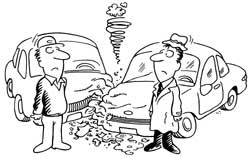
car-accident-cartoonHaving a car accident is a very upsetting, stressful situation. Being prepared and knowing what to do can make things a little bit easier. Make sure you know which host parent to call in case of an accident.

Make sure you have all the necessary documents in your car glove box. Read this post on What to Keep in the Car Glove Box for a detailed list.

If you have an accident: (from Edmunds.com)

  1. Keep Safety First. Drivers involved in minor accidents with no serious injuries should move cars to the side of the road and out of the way of oncoming traffic. Leaving cars parked in the middle of the road or busy intersection can result in additional accidents and injuries. If a car cannot be moved, drivers and passengers should remain in the cars with seatbelts fastened for everyone’s safety until help arrives. Make sure to turn on hazard lights and set out cones, flares or warning triangles if possible.
  2. Exchange Information. After the accident, exchange the following information: name, address, phone number, insurance company, policy number, driver license number and license plate number for the driver and the owner of each vehicle. If the driver’s name is different from the name of the insured, establish what the relationship is and take down the name and address for each individual. Also make a written description of each car, including year, make, model and color — and the exact location of the collision and how it happened. Finally, be polite but don’t tell the other drivers or the police that the accident was your fault, even if you think it was.
  3. Photograph and Document the Accident. Use your camera to document the damage to all the vehicles. Keep in mind that you want your photos to show the overall context of the accident so that you can make your case to a claims adjuster. If there were witnesses, try to get their contact information; they may be able to help you if the other drivers dispute your version of what happened.

Stopping for School Buses

With some schools back in session and many new au pairs who have recently arrived, I wanted to remind everyone about what to do in different situations with school buses. If you have questions, please ask myself or your host parents.

school-bus-stop

The rules regarding stopping for school buses are:

  • It is against the law to pass a stopped school bus while its lights are flashing and its’ stop arm is extended.
  • On undivided roadways, with no physical barrier or median, vehicles must stop on both sides of the roadway.
  • Yellow flashing lights indicate that the bus is preparing to load or unload children. Motorists should slow down and prepare to stop their vehicles.
  • Red flashing lights and extended stop arms indicate that the bus has stopped, and children are getting on or off. Motorists approaching from either direction must wait until the red lights stop flashing before proceeding.

Police, who observe a motorist failing to stop and remained stopped for a school bus, can issue the violator a citation which carries a $570.00 fine and 3 points. Drivers failing to stop for pedestrians in a crosswalk can be issued a citation for $80.00, and drivers failing to exercise due caution when encountering children can be issued a citation for $70.00.
Preventing Dehydration in Hot Weather

drinking-fountain-water

Step 1
Encourage your child to drink plenty of water. On hot days, children should drink significantly more water than usual, as they are losing more due to the heat.

Step 2
Do not wait until your child is thirsty to give him water. By the time they feel thirsty, they are already becoming dehydrated.

Step 3
Have other liquids on hand for your child to drink throughout the day. Juices also help with hydration.

Step 4
Be alert to changes in behavior.  A child may act confused or more irritable when they are becoming dehydrated/overheated.  Get them into cooler temperatures and drinking more fluids.

Step 5
Dress your child in lightweight clothing in the summer months, particularly if she’ll be playing outdoors in warm weather. You may also consider clothes that are well ventilated as they do not trap heat close to the body.

Additional Safety Note: When there are heat and/or air quality advisories because the weather is dangerously hot, you should avoid taking the children outdoors. Check with your host parents for further guidance on this topic.

Privacy, Personal Information & The Internet

fb twitter youtubeJust a reminder about how important it is to respect your host family’s privacy and not share personal details and information.  This applies to all kinds of situations, including: personal conversations, email and social websites.
For your own safety, it is a good idea to be careful what personal information you share about yourself as well. You should not be giving out information like your telephone number and address to people you don’t know.

Once you post something on the internet (even if you later delete it), it can show up elsewhere.  Unless you have specific permission from the host family, you should not post pictures of them, their children or their home on the internet.

If you have a blog or website where you post in your native language, remember there is translation software.  So, even if you say it in your native language, be sure it is not something you will regret.

Driving – Car Safety Kit

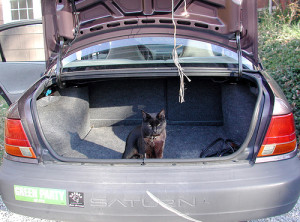
62922586_bd9aa19227What should you have in the trunk of your car in case of an emergency? I’ll give you a hint- it’s not a cat. While they are cute, they are not very helpful in a crisis. Below is a list of some more helpful things to keep in the car.

Recommended items to have in the car in case of emergency

  • Cell phone car charger
  • Jumper Cables (be sure you know how to use them)
  • Flashlight and extra batteries
  • Flares & Reflective triangles
  • Bag of sand or kitty litter (to help if stuck in ice, snow)
  • Small shovel, snow brush and ice scraper
  • Extra windshield solvent
  • Blankets and extra clothing
  • Nonperishable food items and water (e.g.. snack bars)
  • List of emergency telephone numbers on a card in the glove compartment
  • Auto club card (AAA or roadside assistance)

Here is another post with a list of what to keep in the car glove box.

It is always a good idea to keep the gas tank at least half full at all times, especially in the winter.

Photo: Bart Everson

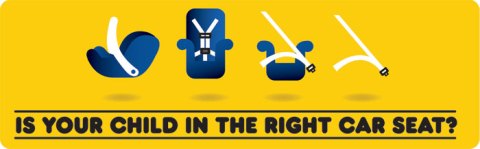
Car Seat Safety is a Shared Responsibility

trsbanner-480

In MD, DC & VA the laws state that children under age 8 must be secured in a car seat or booster seat that is appropriate for their age, weight and height. Children over age 8 must be properly secured in a vehicle seat belt.

Car seats and booster seats save lives, there is no doubt about it. But, just having the car seat in the car is not enough.  Car seats and booster seats can only save lives if they are properly installed and used.

Host Parents

  • It is your responsibility to show the au pair how to properly use your car seats and/or booster seats.
  • If you expect her to change seats to different vehicles, show her how to install them properly.
  • If you do not want her to remove and re-install car seats, make that expectation clear.
  • Even if the au pair has a separate car that she is the only one driving the kids in, please check the installation of the seats periodically.

Au Pairs

  • You are responsible for making sure that you understand how to buckle the children safely in their seats and be sure that they are safely buckled in every time you take them in the car with you.
  • The car should not move unless everyone is buckled.
  • Make it a habit to check the seats each time you put the children in to see that the seat is secure and not too loose.
  • If the seat is not working properly or you cannot figure out how to get it tight, ask your host parents as soon as possible.
  • If your host parents have asked you not to remove the car seat(s), please follow that rule.
  • If you need to remove the seat for some reason, ask them for help putting the seat back in.

If you need help installing car seats, find a car seat inspection station near you: http://www.nhtsa.dot.gov/cps/cpsfitting/index.cfm

Halloween Health and Safety Tips

From cdc.gov

halloween cdc.govFor many people, autumn events like Halloween and Harvest Day are fun times to dress up in costumes, go trick-or-treating, attend parties, and eat yummy treats. These events are also opportunities to provide nutritious snacks, get physical activity, and focus on safety.

Below are tips to help make the festivities fun and safe for trick-or-treaters and party guests.

Going trick-or-treating?

Alphabet letter S Swords, knives, and similar costume accessories should be short, soft, and flexible.
Alphabet letter A Avoid trick-or-treating alone. Walk in groups or with a trusted adult.
Alphabet letter F Fasten reflective tape to costumes and bags to help drivers see you.
Alphabet letter E Examine all treats for choking hazards and tampering before eating them. Limit the amount of treats you eat.
_________________________________________________________________
Alphabet letter H Hold a flashlight while trick-or-treating to help you see and others see you. Always WALK and don’t run from house to house.
Alphabet letter A Always test make-up in a small area first. Remove it before bedtime to prevent possible skin and eye irritation.
Alphabet letter L Look both ways before crossing the street. Use established crosswalks wherever possible.
Alphabet letter L Lower your risk for serious eye injury by not wearing decorative contact lenses.
Alphabet letter O Only walk on sidewalks whenever possible, or on the far edge of the road facing traffic to stay safe.
Alphabet letter W Wear well-fitting masks, costumes, and shoes to avoid blocked vision, trips, and falls.
Alphabet letter E Eat only factory-wrapped treats. Avoid eating homemade treats made by strangers.
Alphabet letter E Enter homes only if you’re with a trusted adult.
Alphabet letter N Never walk near lit candles or luminaries. Be sure to wear flame-resistant costumes.

Fire Safety Week 10/9

Click here to read more Fire Safety Tips on PBS Kids

Click here to read more Fire Safety Tips on PBS Kids

Here are some fire safety tips from PBSKids.org. Go over these fire safety tips with your children.

Be Smart

  1. Don’t touch matches. Stay away from lighters and candles, too.
  2. Don’t touch radiators or heaters. Ask a grown-up to turn a heater on or off for you. Don’t stand too close to a fireplace or wood stove, either.
  3. Don’t play with electrical cords. And don’t stick anything into an electrical socket.
  4. Don’t play around in the kitchen. If you want to cook something, be sure to check with a grown-up first.
  5. Don’t put anything over a lamp. Things thrown over a lamp (like blankets or clothing) could catch fire.

Texting + Driving = Danger & Major Traffic Violation

txtstopperimageTwo important reasons to make your car a phone-free zone:

  1. Safety – There is no text message that is worth risking lives.
  2. It’s the Law – Please read the details below about changes (effective October 1 to the Maryland law to increase enforcement and the penalty (fine & points against your license) for breaking the law.

From Washingtonpost.com:
Sending and reading text messages behind the wheel has been illegal in Maryland for more than a year, but under the existing law, it was a secondary offense. That meant police had to find another reason to pull a driver over in order to issue a texting citation.

The state legislature changed texting to a primary offense this year. Drivers who are using the Global Positioning System function in their mobile devices or who are sending a text message to the emergency 911 system are exempted from prosecution.

Under the new law, those caught texting can be fined $70 and receive one point toward suspension of a driver’s license. But if the action is judged to have caused an accident, the fine increases to $110 and the number of points to three.

Sending and reading text messages while driving is a primary offense in the District and a secondary office in Virginia. It is a primary offense in 30 other states and a secondary offense in Iowa and Nebraska.

The National Highway Traffic Safety Administration reported that 20 percent of crashes that resulted in injury in 2009 involved distracted driving. NHTSA said 995 fatal crashes that year involved cellphone distraction. Sixteen percent of all drivers younger than 20 who were involved in fatal crashes were reported to have been distracted.

———-

In this 90 second video people share stories about how a simple decision to read or send a text message while driving had deadly consequences.

I urge all au pairs and host families to watch this video and discuss. This is one simple decision and commitment that can make us all safer on the roads.