
Category Archives: Au Pair Tips

Going Unplugged During Work Hours

Kiev, Ukraine - August 26, 2013 - A collection of well-known social media brands printed on paper and placed on plastic signs. Include Facebook, YouTube, Twitter, Google Plus, Instagram and Tumblr logos.

Phones, tablets, and laptops are wonderful tools to stay connected and informed, but we need to be careful not to let them become distractions from real life interactions and most importantly our responsibilities.

Au Pairs – Imagine for a moment that you went to the hospital and you were in the care of doctors and nurses.  How would you feel if those doctors and nurses who were there to care for you were more interested in texting or using their personal computer than caring for you?  How would that make you feel, about yourself and about them?  Would you think that you were getting the treatment you deserved?  Would you feel like paying the bill after your stay?

Life as an au pair, it is a fine balance between employee and family member. You live with your host family and participate with them as a member of the family, but you also have clear responsibilities as a childcare provider. Being a childcare provider is truly one of the most important jobs I can think of, because you are helping to shape our next generation.  What message are you sending them when you would rather interact with a computer than with them? How will they feel about themselves and about you? Children feel as though everything is about them. They will see this as a rejection of them and they will be more likely to act out.

It also poses a safety concern when you are not paying enough attention to the children in your care.  Accidents happen, but when an adult care giver is close by and appropriately supervising the chances of a major injury dramatically reduce.

During work hours, the following would not be considered acceptable:
-Texting
-Talking to friends on the phone
-Chatting with friends online
-Using Skype or FaceTime
-IMing
-Emailing
-Updating your status on Facebook
-Using Snapchat, WhatsApp or any other app or social media site
-Watching videos on YouTube
-Tweeting on Twitter
-Uploading photos on Instagram
-Anything else on the computer unless it is going to Nickjr.com together with your host children

Think about this — even if you work 45 hours a week, that leaves you 123 hours per week for all of that other stuff, or about 70 hours (if you are getting the recommended 7-8 hours of sleep per night.)

Host Parents – You need to be clear about what you consider acceptable during work hours to avoid misunderstandings.  Also, please understand that you are dealing with a new generation of people who are very accustomed to being plugged in at all times.  Their intention is not to be rude, they don’t necessarily realize how their actions will be perceived.  Please use this information as an opportunity to begin a dialogue on the issue.

Top Ten Outdoor Activities for Fall

Top Ten Outdoor Activities for Fall

Summer is over, and in many places the air is turning colder. As the weather changes be sure to take advantage of what the fall season has to offer. Even if you don’t live in a place that sees a lot colorful leaves, there are fun family-friendly ways to get outdoors this fall:

• Go apple picking. Sure, most of us can get apples year-round from the grocery store, but there’s nothing quite like orchard fresh apples, picked straight from the tree during harvest season. That crunchy, tangy, sweet apple flavor is at its peak during this time of year. Many commercial orchards will let you pick your own. It’s not only fun, it’s also a great way to show kids where their food comes from. Get extras for canning applesauce, or making pies. When you’re done, warm up with a delicious mulled cider.

• Go on a nature hike. Bring along a field guide to identify different kinds of trees. Look for wildlife collecting food for winter. Explain to kids how animals are starting to fatten up and grow thick, protective winter coats. Watch for migrating birds.

• Collect fall leaves. Press them into books or preserve them in glycerin (recipe below*). Paste them onto handmade paper to create greeting cards, or glue them between two pieces of wax paper to make an attractive sun catcher. Go lightly on the glue, or substitute crayon shavings to add color; use a warm iron to melt the shavings and hold the paper together.

• Take a hayride. Many farms offer hayrides during the fall. This is a great way to kick back and enjoy nature with smaller kids who may not be up for a long walk.

• Visit the pumpkin patch. Don’t buy your Halloween pumpkin from the grocery store. Go straight to the source. Kids will love wandering around the patch to pick out the perfect pumpkin. Choose a couple of big ones for jack-o-lanterns, and grab a few smaller ones for painting or general household decorations. Smaller pumpkins make great additions to fall centerpieces. Roast the seeds in your oven with a sprinkling of tasty spices, and grab a few to make pumpkin pies.

• Visit a corn maze. Many farms earn extra income for the winter by turning their cornfields into large mazes. Test your directional sense, and get some fresh air in the process. Corn mazes are fun or all ages.

• Stuff a scarecrow. Dig out an old shirt and overalls, and stuff it with leaves until firm. Add a pumpkin head (from your trip to the pumpkin patch) and you’ve got a great fall decoration.

• Fly a kite. The gusty, brisk air makes autumn a great time for flying kites. Buy one from the store, or make your own from two long sticks, strong paper, and string.

• Have a bonfire. Invite some friends over for a backyard bonfire. The chill in the air makes fall the perfect time to sit together by the warmth of a blazing fire with a nice warm mug of cocoa or cider. Be sure to get any necessary permits from your town first.

• Make a leaf pile and jump in!

*Bring a mixture of two parts water to one part glycerin to a boil in a saucepan, and pour the solution into a heat-safe container. Drop in the leaves, and gently submerge them with a wooden spoon. Place the container in a cool, dark place for up to seven days. Remove the leaves when you begin to notice a slight change in their coloring, and blot them dry with a paper towel

Make It The Best Year Ever

There are so many new faces in the cluster.  You must have heard “make this the best year ever”, but what does it really mean?  Here is a list of suggestions I gathered from my former au pairs.  They all agree that the year goes by really fast and despite having some bad days, they do miss being an au pair.  When I asked them what suggestions they wanted to share, here is what they told me:

1.  Take good care of the kids (this really was their first response!)

2.  Listen and respect your host family, be honest about your mistakes, don’t try to hide them….it will only make things worse.

3.  Travel as soon as you can, don’t procrastinate.

4.  Meet new people, try not to hang out with only au pairs from your country

5.  Enjoy every moment

6.  Be open-minded, don’t compare

7.  Don’t spend all your money on the stuff you don’t need.  It’s not easy to take it home

8.  Give it a good chance, even it you are feeling homesick, shy or nervous. Stick it out because its definitely worth it

9.  Take advantage of your free time, volunteer and help out.  The reference letter may help you get a job in the future.

10.  Pick your classes carefully.  There are some options that you will find interesting.

Enjoy your journey!

Know Your Driving Rules

Bus-Clip-Art1

Au Pairs often find themselves driving the kids around to activities. Be sure to know the rules of the road in order to be safe and avoid getting a fine.  The rules regarding stopping for school buses are:

  • Yellow flashing lights indicate that the bus is preparing to load or unload children. You should slow down and prepare to stop the car.
  • Red flashing lights and extended stop arms indicate that the bus has stopped, and children are getting on or off. Motorists approaching from either direction must wait until the red lights stop flashing before proceeding.
  • It is against the law to pass a stopped school bus while its lights are flashing and its’ stop arm is extended. Vehicles must stop on both sides of the roadway. Failure to stop can result in high fines which the au pair has to pay, not the host family.

https://blogs.aupairinamerica.com/mdf/wp-content/uploads/sites/2/2011/09/school-bus-stop-300×199.jpg

Going Unplugged During Work Hours

Au Pairs – Imagine for a moment that you went to the hospital and you were in the care of doctors and nurses.  How would you feel if those doctors and nurses who were there to care for you were more interested in texting or using their personal computer than caring for you?  How would that make you feel, about yourself and about them?  Would you think that you were getting the treatment you deserved?  Would you feel like paying the bill after your stay?

Life as an au pair, it is a fine balance between employee and family member. You live with your host family and participate with them as a member of the family, but you also have clear responsibilities as a childcare provider. Being a childcare provider is truly one of the most important jobs I can think of, because you are helping to shape our next generation.  What message are you sending them when you would rather interact with a computer than with them? How will they feel about themselves and about you? Children feel as though everything is about them. They will see this as a rejection of them and they will be more likely to act out.

It also poses a safety concern when you are not paying enough attention to the children in your care.  Accidents happen, but when an adult care giver is close by and appropriately supervising the chances of a major injury dramatically reduce.

During work hours, the following would not be considered acceptable:
-Texting
-Talking to friends on the phone
-Chatting with friends online
-Using Skype
-IMing
-Emailing
-Updating your status on Facebook
-Checking in on Orkut, Studivz, SiempreGente or any other social media site
-Watching videos on YouTube (even my really fabulous ones)
-Tweeting on your Twitter
-Uploading photos
-Anything else on the computer unless it is going to Nickjr.com together with your host children

Think about this — even if you work 45 hours a week, that leaves you 123 hours per week for all of that other stuff, or about 70 hours (if you are getting the recommended 7-8 hours of sleep per night.)

Host Parents – You need to be clear about what you consider acceptable during work hours to avoid misunderstandings.  Also, please understand that you are dealing with a new generation of people who are very accustomed to being plugged in at all times.  Their intention is not to be rude, they don’t necessarily realize how their actions will be perceived.  Please use this information as an opportunity to begin a dialogue on the issue.

Holiday Reminders for Au Pairs and Host Families

With the holiday season just around the corner, it is important to review this little reminder about program rules for holidays and vacations.luggage malias

Holidays

  • Host families are NOT REQUIRED to give au pairs any specific holidays.
  • Each host family will make different arrangements on holidays, some au pairs will be off and others will be required to work.
  • Au pairs should NOT make plans for holidays without checking with your host family FIRST.

Vacation

  • Au pair earns 2 weeks of paid vacation during the course of her year.
  • The host family can pick a week and the au pair can pick a week, if an agreement is not reached.
  • All vacation should be preplanned (at least 4 weeks in advance.)
  • All au pair’s friends and/or family visits/vacations should be pre-approved prior to purchasing a ticket.
  • If an au pair travels with their host family, it should be discussed UP FRONT whether this is the au pair’s vacation or if she is working.
  • If an au pair travels with the host family to work, the host family is required to pay for her transportation, lodging and meals.

Keep these things in mind as you plan your travel and we wish everyone a safe and happy holiday season!

Important: An au pair MUST have her DS2019 signed PRIOR to her departure from the US. More info. about this can be found on the right side of this page under “Travel Links for Au Pairs.”

Tax Information for Au Pairs

taxes-pic


We have been talking about taxes a lot lately and there have been lots of questions. I will continue going over tax questions each month at our Coffee Meetings. 


Here are some of the basic questions:

Who is supposed to file taxes? – All au pairs (even those who don’t owe money)

Will all au pairs have to pay something? – No, it depends on when you arrived and how much money you earned last year.

When are 2010 taxes due? – April 18, 2011

Where can I get the tax form? –  1040NR-EZ Form

Where can I get the instruction booklet?1040NR-EZ Booklet

Where can I get detailed information and see a sample au pair tax form?APIA Tax Info for Au Pairs

What to Keep In the Car Glove Box

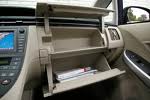
 If you are like me, you probably have napkins and straws from fast food restaurants and other assorted items in your glove box in the car.  It can be a nifty storage place, but it’s main purpose is to keep some important documents related to the car. glove box

 It is very important that you keep all of the necessary documents in the car glove box. These items will be necessaryif you are stopped by a police officer or have an auto accident. Not having these items can result in your receiving a ticket (citation) from a police officer. 

 Essential Documents

*Some host parents may tell you to carry these in your wallet instead of keeping them in the car. Follow their instructions.

Helpful Extras

  • Flashlight
  • Tire Pressure Gauge
  • Vehicle Owner’s Manual
  • Map or GPS
  • Tissues and Hand Sanitizer
  • First Aid Kit 

In Your Wallet
Carry your Maryland license or country driver’s license and international driver’s permit with you at all times, especially when you are driving. You should leave your passport and Social Security Card and other documents at home, to reduce the risk of losing them

Safe Driving in Winter Weather.

Winter Driving Tips
You are likely to find ice and snow on the roads in many parts of the country. There are some basic rules to remember to stay safe in the car in difficult driving conditions:

  • Start early and take your time.
  • Accelerate slowly, especially on hills
  • Drive slowly to avoid having to stop while going up a hill, as it will be hard to start again.
  • Don’t make any sudden turns or stops.
  • Be sure that the mirrors and windows are always free of snow and ice.
  • If you skid, try to steer in the direction the car is sliding to regain control.
  • The changes in temperature sometimes cause potholes in the streets. If you don’t see the pothole in time to steer around it, apply the brakes before hitting the pothole and release them just before you reach the pothole. If you keep the brake on as you hit the pothole, it will do more damage to the tire.
  • Try to keep your gas tank at least half full.
  • If your wheels spin on ice, switch to low gear, even on automatics.
  • Leave extra space between you and the car in front of you.
  • Remember that bridges and exit ramps are icier than roads.
  • Ask what kind of brakes your car has and how to use them in case of a skid.

Wet Weather Driving Tips (from www.nyAAA.com)

  • Summer rainstorms can quickly reduce visibility and create dangerous driving conditions.
  • In stormy conditions, it is more difficult to see other vehicles, road signs and the road itself. It is critical that motorists take steps so they can see and be seen.
  • Drivers should regularly clean their windshield and windows, on both the inside and outside. Drivers who smoke should take extra care to make sure their interior windows are clear of a buildup of smoke residue.
  • AAA also suggests that motorists regularly check that headlights, taillights, brake lights and turn signals are working properly.
  • As soon as rain begins, AAA recommends drivers turn on headlights and windshield wipers. Many states require headlights to be turned on when it is raining or if the visibility is reduced to less than 500 feet.
  • When visibility is so limited that the edges of the road or other vehicles cannot be seen at a safe distance, it is time to pull over and wait for the rain to ease up. It is best to stop at a rest area or other protected location. If the roadside is your only option, AAA recommends pulling off as far as possible, preferably past the end of a guardrail. Keep headlights on and turn on emergency flashers to alert other drivers.
  • In addition to reducing visibility, rain creates slippery roads that require motorists to use extra caution. AAA suggests that when driving in rain, motorists slow down and increase the distance between vehicles to compensate for reduced tire traction.