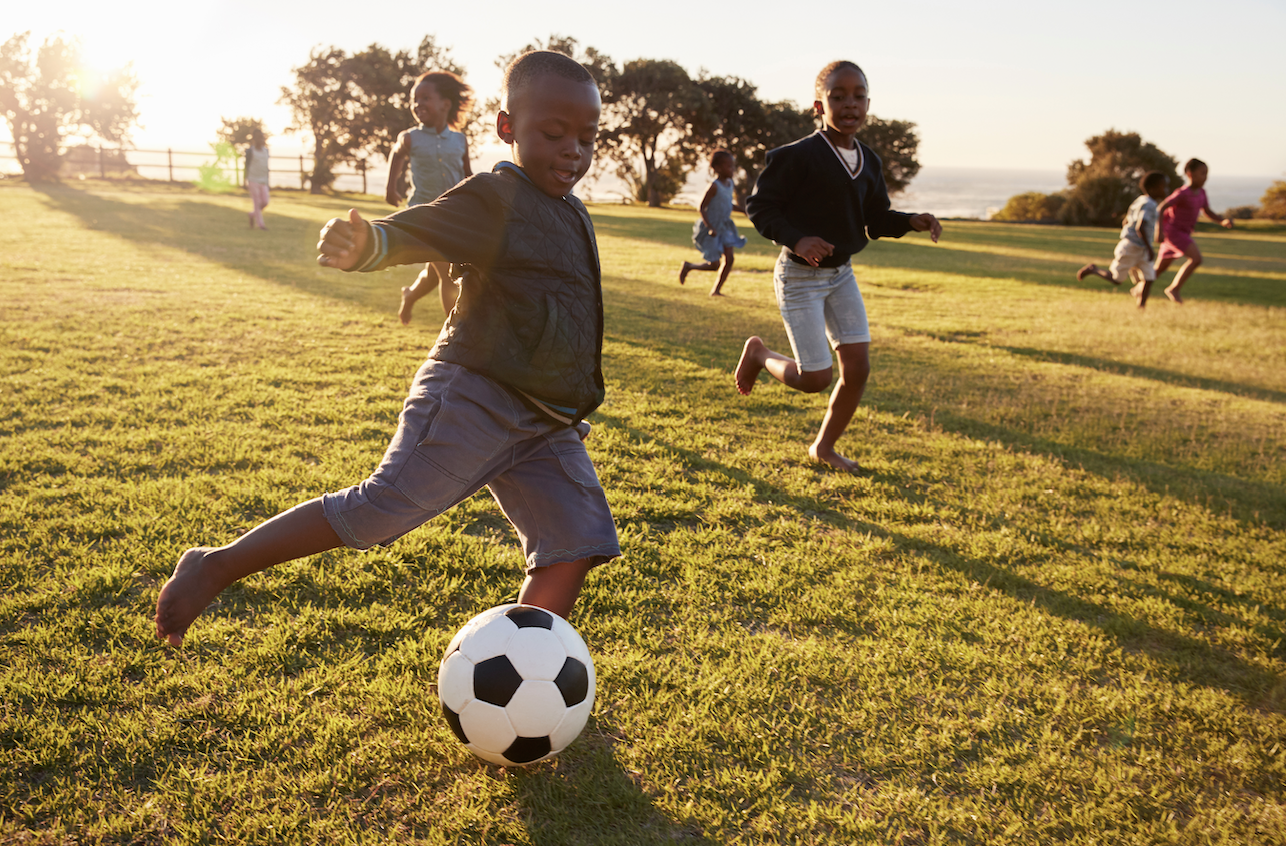
Soccer is a shared childhood experience for people in every corner of the globe. In fact, it is often recognized as the most popular sport in the world, with an estimated 3.5 to 4 billion fans globally—roughly half the world’s population. If you’re tuning into the FIFA World Cup, you might not think about how different soccer traditions are in each country. After all, national teams follow the same rules and compete on the same standardized fields.
But when you look at kids’ soccer around the world, there’s a rich and varied tradition of how they actually play the game, and it says a lot about how culture shapes our childhood experiences.
Discover how children play soccer around the world—and what those traditions reveal about the places they call home!
Brazil
In some countries, soccer encompasses a wider range of activities than most of us in the U.S. are familiar with. For many people around the world, Futsal goes hand in hand with soccer. Originating in Uruguay, this fast-paced, small-sided version of soccer found great popularity across much of South America, and (perhaps most of all) Brazil. In cities like São Paulo and Rio de Janeiro, as well as small villages across the country, you’ll find children of all ages gathering on empty courts, roadsides, and patches of open ground to play both soccer and futsal.
Both Brazilian soccer fans and players are known for their fierce passion, and this enthusiasm is evident from the start. Children of all ages and sizes come together in cities and countrysides to face off to see who has the best skills. For those without the benefit of formal coaching, creativity becomes a major advantage. Younger, smaller players learn quickly to pass the ball fast and maneuver around larger opponents rather than compete on strength alone. The result, over generations, has been some of the most technically gifted soccer players the world has ever seen—and the most Men’s World Cup wins of any nation.
Argentina
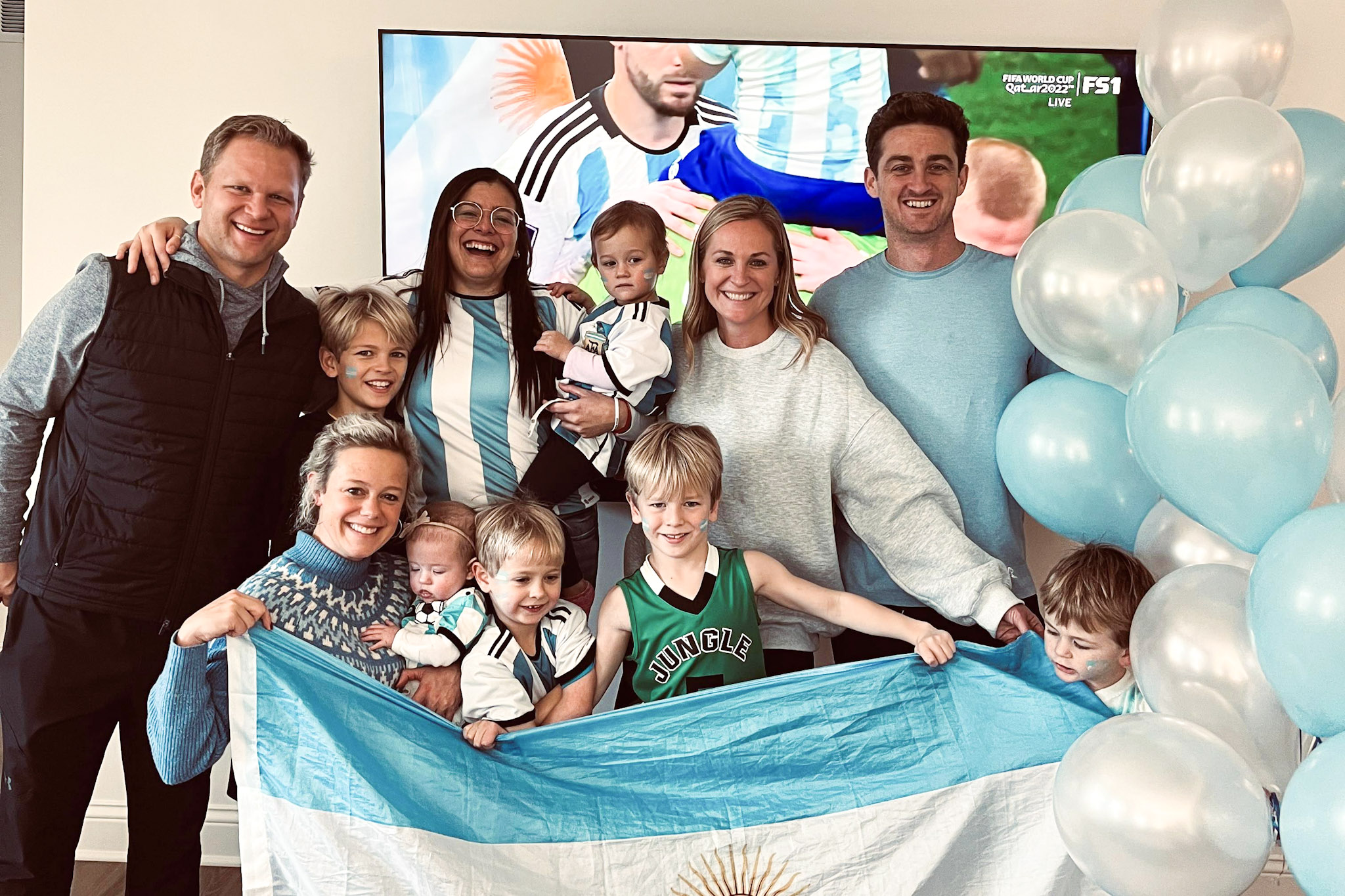
In Argentina, children learn soccer from an early age. Growing up, kids across the country can be found playing potrero, an unstructured, informal street game that can take place just about anywhere or any time: along roadsides, in fields, vacant lots, during family gatherings or after school; morning, noon, and night. Groups that don’t have a proper soccer ball may use an inflatable ball (or balón) or fashion their own by tightly wrapping plastic and newspaper around a balloon or other object.. The often small, uneven, and restricted spaces combined with a makeshift ball force the young players to develop close control, creative thinking, and quick reactions early on.
Baby fútbol (similar to futsal, except it makes use of walls and nearby surfaces to keep the ball in constant motion) is also widely played. The cumulative effect of this daily, informal exposure is a soccer culture that is deeply instinctive and fiercely creative, and it’s one of many reasons Argentina has long been a dominant force on the global stage.
Mexico
Informal pickup matches called cascaritas are known to just about every Mexican child. Like Argentina’s potreros, these spontaneous games can take place anywhere—on the street, in a schoolyard, or in the park—with backpacks, shoes, or rocks marking the goalposts. With no referees, formal teams, or fixed rules, speed and skill are the only factors that truly matter.
Mexican youth clubs also play an important role, providing more structured development for children who want to pursue the game more seriously. But for most children, soccer begins in the cascarita—a chaotic, joyful, neighborhood-level tradition that prioritizes participation over perfection.
England
Later named “soccer” by Oxford University students, “association football” (as it was called at the time) was officially codified in England in the 19th century, and it’s played a central role in the culture ever since. Like many American communities, most English children learn soccer through school teams and local clubs.
While formal soccer opportunities abound for many English children, casual pickup games in the park are a part of so many of their childhoods. The phrase “jumpers for goalposts” (“jumpers” referring to sweaters or jackets) is a genuine childhood institution. For many English children and nostalgic adults, it conjures up images of green lawns or muddy fields, with piles of multi-colored jumpers designating goalposts. In certain London neighborhoods where green spaces are harder to reach, you’ll find the famous “concrete cages.” These turf fields, often tucked beneath overpasses or framed by brutalist concrete, give inner-city kids a place to hone their skills.
Germany
Like many parts of German culture and society, youth soccer is largely defined by organization and a clear development pathway. After the national team was eliminated in the first round of Euro 2000, the country took drastic action by implementing a nationwide academy system, the DFB (Deutscher Fußball-Bund) Talent Development Programme, which is dedicated to developing, training, and educating homegrown talent. Whether they grow up in a small German village or a major city, these days all German children enjoy access to structured club environments from a young age.
Outside of club settings, informal play has its place too. As with just about every country, schoolyard matches and neighborhood pickup games are a part of countless German childhoods. The DFB understands the importance of encouraging unstructured sporting fun at a young age, with limited adult intervention. While technical precision and tactical discipline are vital to develop a true talent, the organization doesn’t hinder the kind of creative play that comes naturally to children from all around the world.
Japan
While soccer didn’t become popular in Japan as early as it did in many of the other countries competing in the World Cup, today it’s one of the nation’s most beloved sports, and Japan’s national teams are currently among the strongest in Asia, with the Women’s team winning last in 2011.
Like much of the nation’s culture, Japanese youth soccer is highly structured. Many children begin in bukatsu, the traditional school-based club system. After class, students who join bukatsu often train for hours with their teams, building the skills and discipline that can help carry them toward Senshuken, the All Japan High School Soccer Tournament. Similar to the youth soccer academies popular across Europe, Japan is also home to J.League academies, which focus on long-term talent development.
While Japan may not have centuries of soccer history like some European and South American nations, what it lacks in tradition, it makes up for in teamwork and collective precision—and the national team’s recent World Cup performances reflect just that.
South Africa
Soccer is the most popular team sport in South Africa and carries deep cultural significance. During apartheid, soccer became a symbol of the oppressed, as South Africa’s White minority government chose to fund rugby and cricket for White citizens while leaving soccer relegated to the Black majority and largely underfunded. Today, the sport is a source of pride, identity, and joy for post-apartheid South Africa. Inside and outside majority Black communities, you can find children playing soccer just about everywhere.
Like children in every corner of the world, kids in South Africa know how to get creative when improvising soccer fields. Grassy fields provide a suitable pitch, while sticks, rocks, or shirts can mark the goalposts. They also play 5-a-side soccer, both informally and through official clubs, with two teams of five facing off on a small, enclosed court. Because of the close quarters, the game demands fast thinking, close control, and quick, precise movement. While formal youth development is an option for some South African children, pickup games in the street or on local fields are what come to mind for most.
What Soccer Culture Can Teach Us About the World
Whether they call it “soccer,” “football,” or something else, every country on this list plays the same game. While their early childhood experiences can differ vastly depending on where they grow up playing, it all comes down to the same basic set of rules: passing a ball between players without using their hands and trying to get it between the other team’s goalposts. The rules are so specific, yet how it’s played as a child can look so different depending on where you are in the world.
An Argentine child kicking the ball to his friend on his walk through a wide valley in the Patagonia has a vastly different experience than the English kid who practices after school at one of London’s concrete cages. And the Japanese youth who’s used to a highly organized, disciplined game may balk at the chaos of an informal Brazilian match. But at the end of the day, it’s all the same game.
While each culture may grow up playing the game a little differently, they all come together in professional arenas and follow the exact same set of rules. The sport is universal, making soccer culture an excellent entry point into global culture. While two people may not speak the same language, if they both grew up playing soccer, they’ll have something they can enjoy in common.
How Au Pairs Bring These Traditions Home
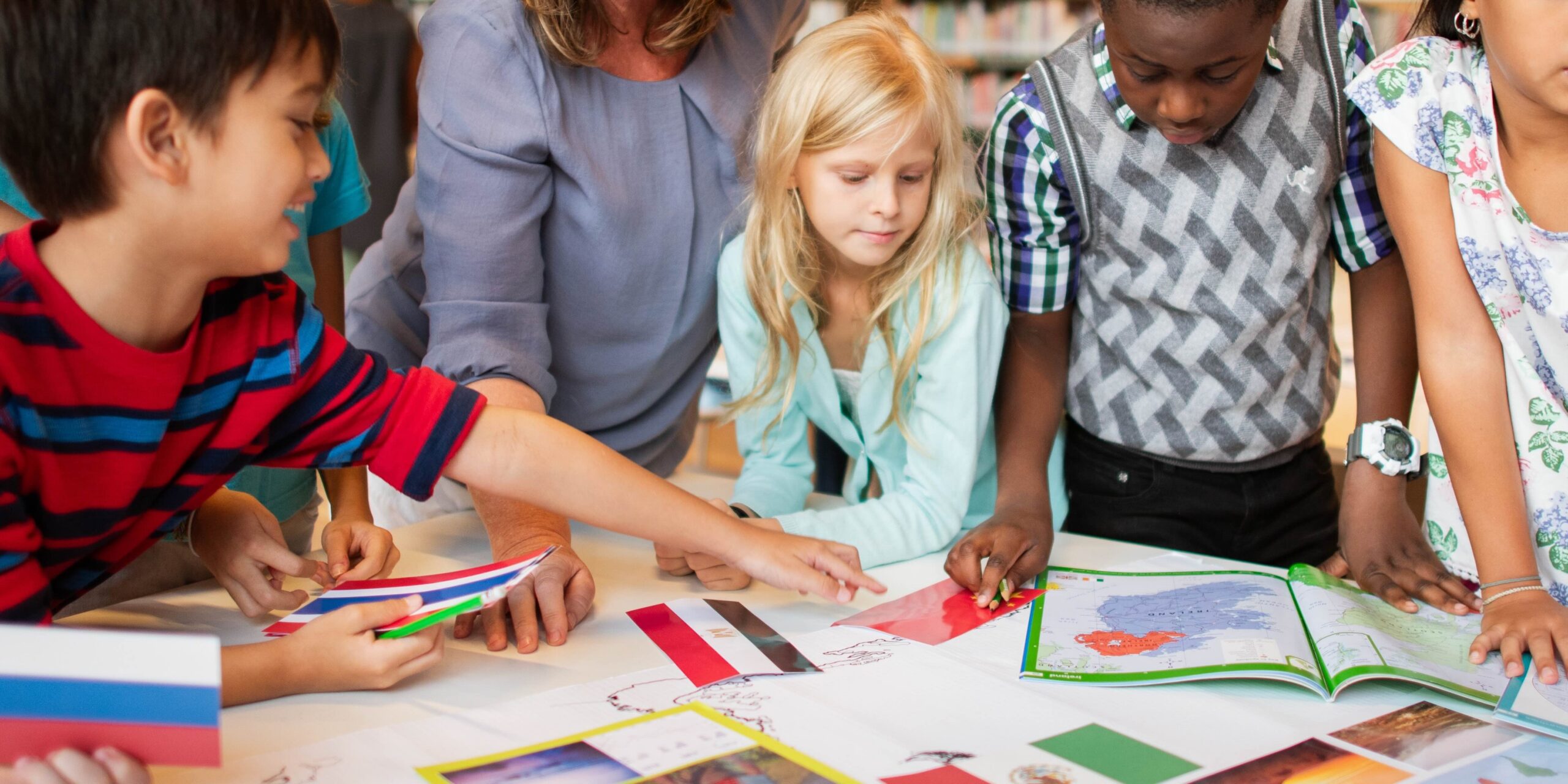
Families who host an au pair can welcome these cultural insights into their household without flying halfway across the world. Au pairs bring these unique childhood experiences with them, and whether they grew up playing soccer or not, sharing their favorite activities often comes naturally.
To get the ball rolling, you can ask your au pair about the games they played as a child. Let them teach your children the version of soccer they grew up with or introduce a game from their neighborhood that your kids have never heard of. These moments of cultural exchange are exactly what the au pair program is built on.
Teach your children about the world through intercultural play—host an au pair with Au Pair in America®.
Soccer is proof that no matter how different two cultures may seem, all share some things in common, like the ability of children to make the most of what they have so that they can play the games they love. Whether it’s along a beach, a muddy field, a dusty roadside, or an official soccer pitch, it’s all one game. This summer, use soccer as a launching point to welcome the world—whether that means learning through an au pair, celebrating the World Cup, or trying something new.
Looking for an au pair who can bring a little of the world into your family’s backyard? Au Pair in America is a great place to kick off your search!
