“Game plan” means a strategy for how you are going to accomplish something. In the case of keeping kids from getting bored and/or into trouble, the best way to prevent it is to keep them busy with safe, fun activities.
When there are days home from school, letting kids sit around watching TV or playing video games is not the best use of their time. Providing fun alternatives will make it much easier to pull them away from the screen.
You need to make a plan of what you will do with them each day and prepare for that. Planning is very important. You don’t want to tell them you are going someplace fun, only to arrive there and see they are not open that day or you need to bring something and you don’t have it.
If your plan includes a craft or cooking project, make sure you have:
All the ingredients/supplies
Recipe/directions
If your plan includes an outing to someplace fun, figure out:
How will you get there?
When you should leave?
How much it will cost?
What will you do for lunch?
Use some of these online resources to find activities and recipes:
The National Cherry Blossom Festival is an annual event that celebrates springtime in Washington, DC as well as the 1912 gift of the cherry blossom trees and the enduring friendship between the people of the United States and Japan. This year’s festival will be MARCH 20-APRIL 12! This year the events are back in-person.
The predicted peak blooming period of the cherry blossoms for this year is MARCH 29-April 1.
Here are some of the highlights:
Blossom Kite Festival – Saturday, March 28, 2026 Washington Monument Grounds (Smithsonian Metro) 10 am-4 pm
Petalpalooza Festival & Fireworks – Saturday, April 4, 2026 Capitol Riverfront Navy Yard Metro. Official fireworks will be visible from Anacostia Park 1-9 pm, Fireworks around 8:30 pm
Cherry Blossom Parade – Saturday, April 11, 2026 Constitution Avenue from 7th to 17th Streets, NW 11 am-1:30 pm
The one-mile length of the Parade route is accessible from multiple Metro stations. Spectators who are standing along the free & accessible portions of the route from 9th to 15th Streets should utilize the following Metro stops:
To stand on the north side of Constitution Avenue – Archives-Navy Memorial-Penn Quarter (Green/Yellow lines), Federal Triangle (Blue/Orange/Silver lines) or Metro Center (Blue/Orange/Red/Silver lines)
To stand on the south side of Constitution Avenue – L’Enfant Plaza (Blue/Green/Orange/Silver/Yellow lines) or Smithsonian (Blue/Orange lines)
There are many more great events, visit the festival website for more information.
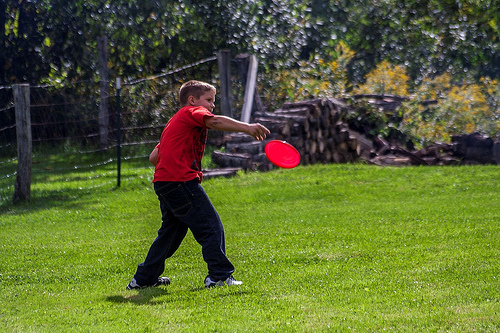
Just because a child is old enough to occupy themselves, doesn’t mean that they should be expected to do so the majority of the time. Host families have a certain expectation of activity and involvement for their children. Get the kids engaged and active. You can be more fun than the TV or a video game.
Problem: But, my kids don’t want to do anything but watch TV or play video games.
Solution: Instead of saying, “Would you like to (fill in the blank with any activity)? The answer will often be, “No.”
Try this, “Now we are going to (fill in the blank with any activity.) or “Would you rather do _____ or ______?” Make sure both the choices are good options. Your chances of co-operation are greatly increased. Even kids who are reluctant to try new things will usually get in the spirit of things and have fun if you pick a good activity.
Problem: I don’t know what to do with school-age kids.
Solution: Look for ideas online. Google “activities school-age kids” or “activities tweens”. You can also take part in an au pair webinar on this topic. Below is a list of some ideas to get you started.
Cooking
Making things (check craft stores like Michael’s for kits and models that are age-appropriate)
Going to fun places (pottery painting, jewelry making, farms, museums, mini-golf, go-karts)*
Let them teach you to do something they enjoy. Kids this age love being the expert.
Get outdoors and visit local parks. You can even make a project of reviewing all the local parks (what kind of equipment they have, is there shade, water fountain?) They can write this up and keep it so they remember which ones they want to go to again and which ones to skip in the future.
Let them help you search and plan some activities.
If you have a GPS, try taking them geocaching. Here is a website with all the details.
Use technology to get them off the couch and sneak in some exercise. The phone app Pokémon Go includes activities that are unlocked by taking steps. There are Pokéstops and gyms at many places they might enjoy going for walks like parks, nature trails, walk/bike paths, and downtown areas.
As part of Au Pair in America’s continuing education webinar series for au pairs , there is a session with advice on working with teens. Be on the lookout for the next time that topic is offered.
Program rules dictate several situations when the host parents are required to cover an au pair’s transportation costs. Aside from those specific requirements there are some things to consider when deciding how to handle an au pair’s personal transportation.
Situations when host parents are responsible for the au pair’s transportation costs:
To/from cluster meetings
To/from classes (for the education requirement)
When they are transporting the host children
What are some ways host parents can pay for those required transportation costs?
By providing car use and paying for the cost of gas in those situations
By giving an allowance for Metro or bus fare
By giving an allowance toward Uber/Lyft
Who is responsible for an au pair’s transportation in her free time?
If an au pair has car use, it would be reasonable for the host parents to ask her to pay for the gas used for personal car use.
If no car use is provided and an au pair must rely solely on public transportation, many host parents will give a transportation allowance to help with those costs.
What factors should you consider when deciding how to handle personal transportation costs?
Where do you live?
If you live in the city, you may be within easy walking and/or bike-riding distance to shopping and activities.
If you live in the farther out suburbs, there isn’t normally much an au pair can walk or bike to.
Is car use provided?
When host parents provide car use, that includes them covering the cost of car insurance and maintenance. So, it is fair to ask the au pair to pay for her own gas for personal use.
If host parents are not providing car use, many will figure out how much they are saving by not paying for insurance and maintenance costs and offer that to their au pair as an allowance for public transportation (metro, bus, Uber/Lyft).
Other Things to Consider
Au pairs are happiest when they are able to explore the area and make friends. This goes a long way to reduce homesickness and ensure a great cultural exchange experience. The more host parents can do to support this, the more successful their match will typically be.
When car use is provided, be clear about any limitations. Is it okay to transport friends, take the car overnight, go on a road trip, drive to Baltimore or Ocean City? In what situations does she have automatic permission and when does she need to ask in advance?
Every match is different. Transportation is only one aspect. Whatever works well for a host family and their au pair is what’s best (as long as the minimum program requirements are being met). Things like whether a host family is paying a higher stipend (over the regulation minimum), offering other benefits and driving the au pair to some places all may factor into how personal transportation costs are handled.
Please discuss transportation plans for cluster meetings in advance. Participation in cluster meetings is important for an au pair’s overall cultural experience, making friends and getting to know her counselor. Transportation to meetings should not be an impediment to those experiences. Add cluster meetings to your calendar as a reminder to reimburse your au pair if she is attending the meeting.
If you have questions or concerns about how to handle transportation, reach out to your counselor to discuss.
Being an au pair is an important role in a child’s life. When you are caring for young children up to 45 hours per week, there are lots of opportunities to help them learn language. Many host parents are eager for their children to be exposed to more than just English. If this is true of your host parents, you can try the suggestions below, in both English and your native language.
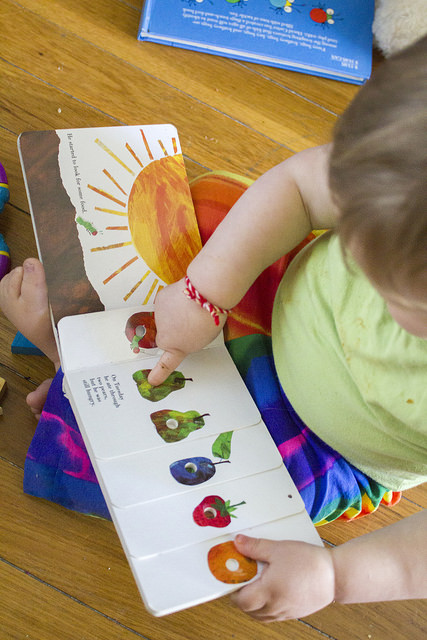
Read – Read to them daily, point out pictures and ask questions. Even if they can’t answer the questions, this is still modeling conversation.
Talk – Point out objects around them, names of their body parts, explain what you are doing and places you are going. Long before babies can speak, they benefit greatly from being spoken to.
Sing – You can sing childhood classics or make up your own silly songs. If you are looking for song ideas, HERE is a great website with lists of songs, lyrics and links to youtube videos* of the songs. Children’s music is also available at the public library and even on iTunes.
Words – As children move from toddlers to preschoolers begin to point out written language.
Writing – Toddlers and preschoolers can begin to learn pre-writing skills by drawing with crayons or doing finger paints.
*The American Academy of Pediatrics recommends no screen time for babies under 18 months of age. For children 18 months to 5 years they recommend no more than 1 hour of high quality content. You can play the songs on youtube for the audio and not necessarily show the screen to the child.
Host parents often ask for suggestions on how best to handle common expenses that occur as au pairs are caring for the children.
Miscellaneous Expenses
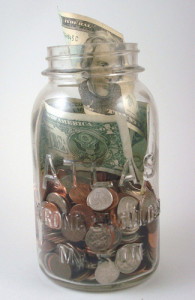
There are different ways to handle the little day-to-day expenses that come up. Things like when an au pair takes the kids out for ice cream or picks up a gallon of milk. Some families keep a cookie jar fund, a little cash that they set aside weekly or monthly for these types of expenses. Others give their au pair a prepaid debit card for this purpose. Below are some suggestions for avoiding problems with expenses.
Host Families
It’s important to be clear about how long this money should last and what types of expenses are approved.
Let the au pair know whether or not you expect receipts.
Au Pairs
Only spend the money on approved expenses.
If it is something you are not sure about, ask first.
Put your receipts in the cookie jar in place of the money to avoid any confusion.
Gas, Uber & Metro
Transportation costs will vary depending on if your au pair is driving or taking public transportation. Here is a post dedicated to How to Handle Transportation Costs.
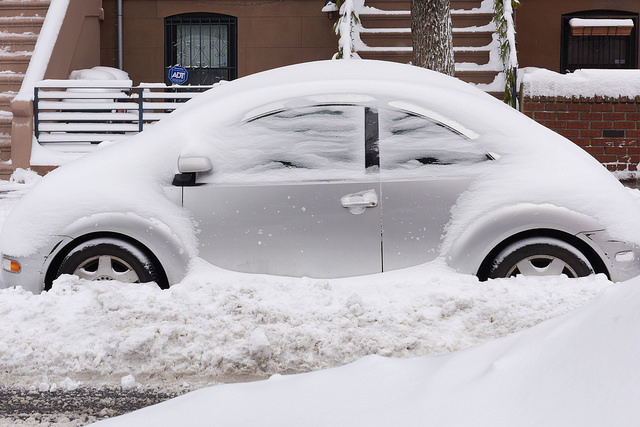
Chances are good that we will see some snowy weather very soon. It’s a good idea to have ideas ready to keep the kids entertained on a snow day (when they are home from school for winter weather.)
Here is a simple snow day game plan…
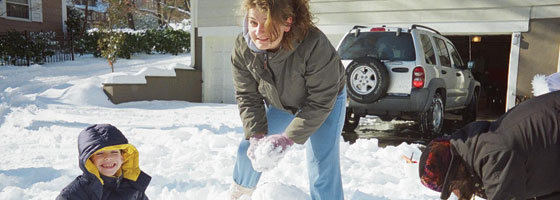
Play in the snow. Pro Tip: Remind your kids go to the bathroom before you get them all bundled up to go outside.
Come inside and warm up with hot chocolate (don’t forget the marshmallows.) Pro Tip: Shake the snow off of the kids boots and snow clothes. Hang them up to dry or put them in the dryer, so they are ready for round 2 out in the snow.
Make your own play dough.
Play board games and/or legos together.
Play in the snow again.
Warm up inside and make paper snowflakes.
Bake cookies together or make some other fun recipe.
The best advice for driving in bad winter weather is not to drive at all, if you can avoid it. Don’t go out until the snow plows and sanding trucks have had a chance to do their work, and allow yourself extra time to reach your destination.
If you must drive in snowy conditions, make sure your car is prepared, and that you know how to handle road conditions. It’s a good idea to always keep at least a half tank of gas in your car, especially in winter months when you could get stranded. It’s helpful to practice winter driving techniques in a snowy, open parking lot to familiarize yourself with how your car handles. Consult your owner’s manual for tips specific to your vehicle.
Driving Safely on Icy Roads
Decrease your speed and leave yourself plenty of room to stop. You should allow at least three times more space than usual between you and the car in front of you.
Brake gently to avoid skidding. If your wheels start to lock up, ease off the brake.
Turn on your lights to increase your visibility to other motorists.
Keep your lights and windshield clean.
Use low gears to keep traction, especially on hills.
Don’t use cruise control or overdrive on icy roads.
Be especially careful on bridges, overpasses, and infrequently traveled roads, which will freeze first. Even at temperatures above freezing, if the conditions are wet, you might encounter ice in shady areas or on exposed roadways like bridges.
Don’t pass snow plows and sanding trucks. The drivers have limited visibility, and you’ll likely find the road in front of them worse than the road behind.
Don’t assume your vehicle can handle all conditions. Even four-wheel and front-wheel drive vehicles can encounter trouble on winter roads.
Homesickness can be a problem during the holidays, even if it hasn’t been at any other time of the year. Au pairs often miss their friends and family, familiar places, and their own traditions and customs. The holiday activities in the United States seem, and may actually be, different just at a time when an au pair would welcome something familiar.
It is common for au pairs’ emotions to be close to the surface during the holidays. Their highs are higher, their lows are lower. The enormity of what they have done–actually living in another country (which is an amazing thing when you think about it!)–hits and throws them into a self-protective mode.
Au Pairs, there are things you can do to reduce homesickness during the holidays. It is important to balance your activities to feel connected to your family back home and your traditions and embrace new customs and experiences here in the U.S.
Lina and her friend enjoying one of the most popular celebrations of the year in Colombia. “Every December 7, Colombian families get together with close friends to light several candles thinking about wishes for the coming year such as health, prosperity, love, and happiness. It is also very traditional to share typical food from the region, and what can never be missing is wine and cookies.”
Share your traditions with your host family and friends. Each country has its own special holiday customs. Being friends with other au pairs, you can not only learn about the U.S. but also how other countries celebrate. When you talk with your family back home, you can share some of the new holiday experiences you are having. That can help lessen the feeling of missing out on moments at home by reminding you that you are here in the U.S. for a short time and you are making memories that will last a lifetime.
Host Parents, you can help your au pair through this unfamiliar territory by talking to them about specific family activities (gifts, meals, visitors, religious services, in-home traditions, or none of these, as the case may be.) In the spirit of cultural exchange, ask if they have any favorite holiday traditions or foods that you might be able to incorporate into your family’s celebration of the season. Let them know what you will be doing and when you will be doing it, so they know what to expect. Talk to them about what has to be accomplished and get them involved and interested. Don’t expect them to just “know” what needs to be done. Give some clear, agreed-upon assignments. Make them feel a part of things. And, let them know their contribution is needed and appreciated.
Having a car accident is a very upsetting, stressful situation. Being prepared and knowing what to do can make things a little bit easier. Make sure you know which host parent to call in case of an accident.
Make sure you have all the necessary documents in your car glove box. Read this post on What to Keep in the Car Glove Box for a detailed list.
If you have an accident: (from Edmunds.com)
Keep Safety First. Drivers involved in minor accidents with no serious injuries should move cars to the side of the road and out of the way of oncoming traffic. Leaving cars parked in the middle of the road or busy intersection can result in additional accidents and injuries. If a car cannot be moved, drivers and passengers should remain in the cars with seatbelts fastened for everyone’s safety until help arrives. Make sure to turn on hazard lights and set out cones, flares or warning triangles if possible.
Exchange Information. After the accident, exchange the following information: name, address, phone number, insurance company, policy number, driver license number and license plate number for the driver and the owner of each vehicle. If the driver’s name is different from the name of the insured, establish what the relationship is and take down the name and address for each individual. Also make a written description of each car, including year, make, model and color — and the exact location of the collision and how it happened. Finally, be polite but don’t tell the other drivers or the police that the accident was your fault, even if you think it was.
Photograph and Document the Accident. Use your camera to document the damage to all the vehicles. Keep in mind that you want your photos to show the overall context of the accident so that you can make your case to a claims adjuster. If there were witnesses, try to get their contact information; they may be able to help you if the other drivers dispute your version of what happened.






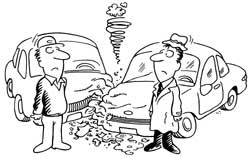 Having a car accident is a very upsetting, stressful situation. Being prepared and knowing what to do can make things a little bit easier. Make sure you know which host parent to call in case of an accident.