Tag Archives: au pair

Temporary Changes to Au Pair Education Requirement Due to COVID-19

UPDATED: July 31, 2020

Due to COVID-19, Au Pair in America has temporarily given approval for online/virtual classes, with a few conditions. Classes must be offered by an accredited school and the class must conclude by the end of 2020. Au pairs must still produce certificates or other acceptable documentation confirming the completion of the class.

If in doubt, ask your counselor to check if the school is accredited. All class hours must be completed by the end of your 11th month in the program if you wish to extend.

The following schools are offering online or virtual classes as of July 28, 2020.

ESL Specific Schools

Community Colleges

Other Languages

Weekend/U.S. Culture/Travel Courses

Online Class Websites – These platforms will list online courses all over the country. These courses come from a variety of sources and some are not accredited. You must be sure you are selecting a course that is from an accredited university.

*This class would be great for au pairs who have already taken or plan to take a PGCC Transition ESL class when things go back to normal. Those classes usually earn 50-60 hours, so this could be enough to complete your education requirement, in combination with one of those classes.

All Things American *NEW*

Click HERE for a great list of online courses on a variety of topics related to American culture and history. They are available through Coursera and are being taught by accredited colleges and universities. They range from 9-80 hours towards your education requirement and the cost is typically $49.

Photo: Ivan Radic

Valentines Day Fun With Your Kids

Valentine’s Day (February 14) is a time of love, friendship, giving, and caring. Americans use Valentine’s Day as an opportunity to tell friends and family how much they care.  Children usually exchange cards at school.

Are you looking for Valentine’s Day activity, recipe and craft ideas? Look no further…  Au Pair in America has a Pinterest pinboard devoted to Valentine’s Day.

                      APIA Valentine’s Day Pinboard

Photo: Clever Cupcakes (Flickr)

The Au Pair Education Requirement

Au pairs are required to complete 6 credits or 7.2 CEUs or 72 or more hours.

EduCare Companions are required to complete 12 credits or 14.4 CEUs or 144 or more hours.

You may take credit or non-credit classes from an accredited college. Look on the right side of this page under “Education Options” for accredited schools in our cluster area. If you want to take a class at a school not listed here on my blog, please check with me first to make sure it is accredited. Otherwise, it would not count toward your education requirement.

Your host family will pay an education allowance to assist you in completing your education requirement. Au Pairs education allowance – $500, EduCare education allowance – $1000

There are ways to get your credits for just your education allowance, but it will not give you a lot of choices. Normally au pairs will contribute some of their own money ($200+) towards their education.

The APIA Advantage UCLA Course is the only State Dept. approved class with an online component. No other online classes are accepted.

Note: Au pairs are allowed to take one weekend course for up to half their education requirement per contract year. The Department of State views our program as a cultural exchange experience and an au pair going to a campus over the length of a semester alongside her American peers facilitates this while promoting the spirit of the program.

Photo: CollegeDegrees360

Top 3 Tips for Beating the Winter Blues

The winter has it’s own kind of beauty, but when the days are short and it’s cold outside, some people feel less energetic or even sad. The cold weather can make you feel like staying indoors. For some au pairs, those conditions can cause homesickness to resurface.


Here are some tips to fight the winter blues (sadness):

  1. Don’t hibernate. Hibernation is staying inactive or indoors for an extended period of time. Seeing friends and enjoying new activities is a great way to fight homesickness.
    • Meet up with friends for coffee or a movie.
    • Try new activities and foods.
    • Visit places you’ve been wanting to visit like museums and indoor landmarks.
  2. Stay physically active. Keeping moving helps elevate your mood and boosts your immune system.
    • Head to the gym or community center.
    • Go walking inside a shopping mall.
    • If you are feeling brave, dress warmly and get out there and enjoy the winter beauty!
  3. Maintain a Healthy Sleep Routine. It’s important to keep your body on a consistent sleep schedule. Too much or too little sleep can impact your mood and health.

Photo: Marwan Youssef

Making Thanksgiving Memories Together

Thanksgiving is a public holiday celebrated on the fourth Thursday in November every year in the United States. It started as a harvest festival and has been celebrated nationally on and off since 1789.  The most important part of Thanksgiving for American families is to spend family time together.

Martin Cathrae

 “My favorite holiday was Thanksgiving. Firstly, it was my first holiday with the whole family in America. Secondly, the whole family came together. All aunts and uncles and their kids came to grandma’s. We played football with all of them, including grandma and grandpa. It was the first time I played it and it was so much fun for all. We had a great dinner with all the typical things you can imagine … it was deeeelicious! It was so great to be with such a big family and I really enjoyed that day. I will remember it my whole life, I hope.” – Swantje from Germany

Here are a few tips to help you have a terrific Thanksgiving experience.

Host Parents
Please plan to include your au pair in your Thanksgiving celebration, if at all possible. If you are traveling or will not be able to invite your au pair to join you for Thanksgiving, give her plenty of notice and help her make alternate plans. You don’t want to leave your au pair alone over the holiday.

Au Pairs
If you are invited to attend dinner, please let your family know within 5 days of the invitation, whether you are planning to attend, so they may make plans. If your host family is unable to include you in their Thanksgiving plans, please let me know if you have trouble making other plans, so I can assist.

Make sure to discuss time off during this holiday weekend. Many host families work the Friday after Thanksgiving so do not assume you have this day off or the entire weekend. Talk to your host family, BEFORE you make any plans.

Bonus Tip for the Kids
If you are looking for a fun recipe to make with your au pair, check out these turkey cookies. Find more fun activities and recipes on the Au Pair in America Fall Holidays pinboard.

Contest for au pairs: The first au pair to let Lisa or Christine know which traditional Thanksgiving food you are most looking forward to trying, will receive a prize!


How to Handle Expenses

Host parents often ask for suggestions on how best to handle common expenses that occur as au pairs are caring for the children.

Miscellaneous Expenses

There are different ways to handle the little day to day expenses that come up.  Things like when an au pair takes the kids out for ice cream or picks up a gallon of milk.  Some families keep a cookie jar fund, a little cash that they set aside weekly or monthly for these types of expenses. Others give their au pair a prepaid debit card or transfer money using an app like Venmo or Zelle for this purpose. Below are some suggestions for avoiding problems with expenses.

Host Families

  • It’s important to be clear about how long this money should last and what types of expenses are approved.
  • Let the au pair know whether or not you expect receipts.

Au Pairs

  • Only spend the money on approved expenses.
  • If it is something you are not sure about, ask first.
  • Put your receipts in the cookie jar in place of the money to avoid any confusion.

Transportation Costs 

Host families are responsible for the au pair’s transportation costs: to and from classes, cluster meetings and when driving the kids. Transportation costs include: gas, parking, metro, bus, Uber or Lyft fare.

It is a good idea to figure out how much these transportation costs will be and give a gas or public transit allowance.  If your au pair is riding to classes or cluster meetings with another au pair, you should offer to share the cost of gas.

Au pairs are responsible for their own transportation at all other times.  You should replace the amount of gas used for personal use.

Photo: Andrea Travillian

Camp Au Pair Week #8 – Nature Exploration

This week’s Camp Au Pair theme is Nature Exploration.

Crafts, recipes, activities, and games can all be found here on the Camp Au Pair – Nature Exploration pinboard.

Field Trips can be a great way for kids to learn and have new experiences. You can start observing nature at any local park or your own backyard. If you want to take it a step further,  here are a few other local places to go, that fit this theme:

Webcams – You can do a google search for websites with webcams that allow you to observe nature.

Videos – Look for fun videos on YouTube about nature.

Books – Stop by your local library and look for books on nature.

Image: toddleratplay.com

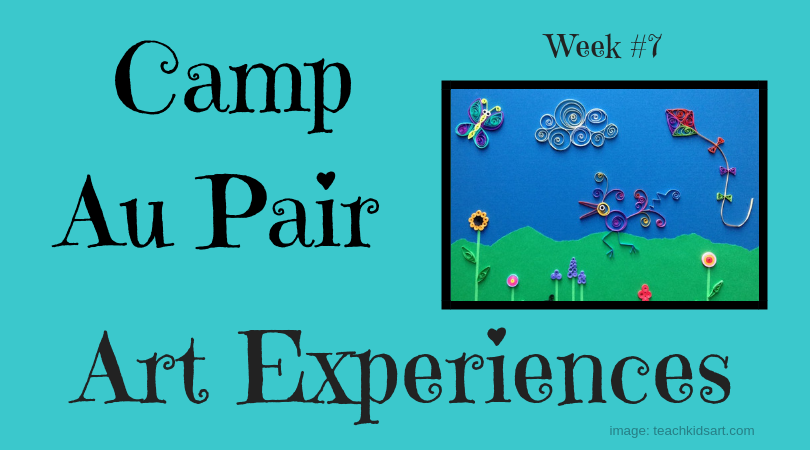
Camp Au Pair Week #7 – Art Experiences

This week’s Camp Au Pair theme is Art Experiences.

Crafts, recipes, activities, and games related to art can all be found here on the Camp Au Pair – Art Experiences pinboard.

Field Trips can be a great way for kids to learn and have new experiences. Here are a few places to go, that fit this theme:

Online Art FunHere is an article about the best art museum websites with interactive online fun.

Videos – Look for fun videos on YouTube about drawing and all kinds of art.

Books – Stop by your local library and look for books on famous artists and art.

Image: teachkidsart.com

Water Safety Tips for Children

When hot summer weather hits, the pool and beach are popular places to cool off. Here are some tips for host parents and au pairs to keep everyone safe when supervising children around water.

Water Safety Tips

  • Never leave a child unattended near water.
  • Drowning is silent; keep your eyes on the children at all times.
  • If in the pool with a young child, never be more than an arm’s length away.
  • Make sure the fence around the pool is closed properly.
  • If you have an above-ground pool, remove the ladder when not in use.
  • Swim at the beach or lake only when a lifeguard is on duty.
  • Children over 4 years old should learn how to swim.
  • Designate a specific person to watch the children.
  • If boating, always wear a Coast-Guard approved life jacket.
  • Keep a phone close by in case there is an emergency.
  • If you leave the area for any reason, the kids go with you.
  • Consider taking a water safety course.

Here is a video with info on how to spot when someone is in trouble in the water.


Holiday & Vacation Reminders


Holidays and vacations are a great opportunity to rest, recharge and explore the U.S.

Memorial Day Weekend (last weekend in May) is the unofficial start of summer travel season. Here are some reminders about program rules regarding holidays and vacations.

Holidays

  • Host families are not required to give au pairs any specific holidays.
  • Each host family will make different arrangements on holidays, some au pairs will be off and others will be required to work.
  • As holidays approach, it is helpful for host parents to let their au pair know if they will be off or not, so plans may be made.
  • Au pairs should not make plans for holidays without checking with their host family first.

Vacations

  • Au pairs earns 2 weeks of paid vacation during the course of their year.
  • Vacation time should be mutually agreed upon.
  • All vacations should be preplanned (at least 4 weeks in advance).
  • All au pair’s friends and/or family visits/vacations should be pre-approved prior to purchasing tickets.
  • If au pairs travel with their host family, it should be discussed in advance whether this is the au pair’s vacation or if they’re working.
  • If au pairs travel with their host family to work, the host family is required to pay for the au pair’s transportation, lodging and meals.

Travel Outside the U.S.

  • Au pairs in year one, are allowed to travel outside of the U.S. and return, however there are some important steps to take.
    • Au pairs must have their DS2019 signed (travel validation) PRIOR to their departure from the US.
    • More information and the travel validation request form may be found here on the Au Pair in America website.
    • It is essential that au pairs make their travel plans to return to the U.S. prior to the expiration date listed on their visa. This date can sometimes be earlier than their actual year end date.
  • There are limitations on travel outside of the U.S. for au pairs in year two. Please speak with Christine or Lisa, prior to making travel plans.

Photo: Canva.com