Category Archives: Kids

Make a scratch picture!

scratch art picture

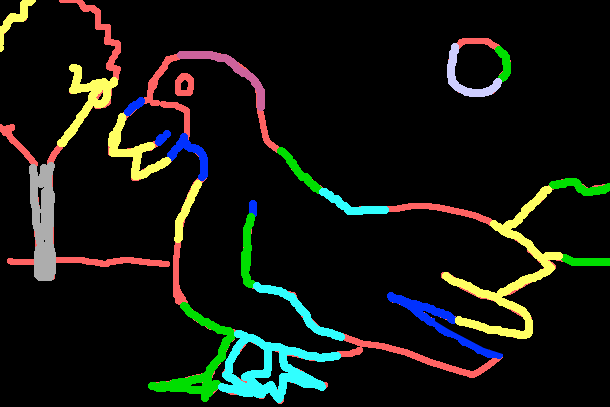
This is a fun art project for children ages 7 and up. You need paper, crayons (make sure you have a black one), and a paper clip. Take one crayon and rub it over the paper. Use the flat side of the crayon and rub hard. Take another color and do the same to another part of the paper. Cover the whole paper with different colors of crayon. Now, take the black crayon and color over all the other colors until the whole paper is black. With a paper clip or any other pointed but not sharp object, draw a picture by scratching through the black crayon. The other colors will show through where the drawing is scratched.

Are we there yet?

0703_FF_family_travel


Ideas for making those car trips memorable in the very best way:

1. WINDOW AS CANVAS If you don’t mind wiping the windows, let the kids use dry-erase markers to color pictures. Kids love to play tic-tac-toe. A baby wipe clears it up fast — makes the kids great travelers.

2. FOR VERY YOUNG ONES Pick up two clipboards at the dollar store to draw on. Tear pages out of coloring books and bring plain white paper. Let them use crayons – not as messy as markers. Also bring along some favorite lost and forgotten figurines from the bottom of the toy box. It was fun and quiet.

3. TAPES & ZIPLOCS Bring for each child lap desks for coloring, and individual snacks packed in their own Ziploc snack bags, and lots of sing-along tapes.

4. WIRED FOR PLAY Borrow a small tv/vcr and hook it up in the car so the kids can watch movies.With Red box or Blockbuster you can borrow them here and return along the way at other locations. Let them bring headphones and tapes or CDs they like. Get a couple of books on tape for the youngest kids that they really liked to listen to. The oldest can bring cards to play (like Uno, Go FIsh, a regular deck). Also pack a Frisbee, ball and gloves, and some bubbles in an easy-to-get-to place, so when stopping at a rest area you can all get a little exercise.

5. BOOKS & ACTIVITY BAGS Make a trip to the library and let each child pick out a couple of books for the ride. Pack an activity bag that straps onto the seat in front of the kids that are stocked with papers for drawing, activity books, and colored pencils (crayons melt in hot cars). Also bring a family activity bag with small magnetic games like checkers, Chinese checkers, etc.

6. MODEL MAGIC Take a couple of packages of multi-colored pipe cleaners and several packages of Crayola Model Magic which sticks to itself but not to the interior of the car or the kids’ clothes, it doesn’t blend unless the kids make it blend. Any little crumbles can just be brushed out or vacuumed away.

7. NIGHTTIME TRAVEL Even if it is a baby toy, kids have fun with ANYTHING that lights up. The dollar store has neon glow bracelets and sticks (the kind you’d purchase at an amusement park or nighttime parade) that kids can connect and make bracelets or necklaces out of. Glow-in-the-dark star stickers are fun to get out too. Have them use their mini-flashlights on them to get them to shine. They can stick them above their seat in the car (if they are big enough), or you can have them do it before it gets dark when stopping for gasoline or something quick.

8. TRAVEL JOURNALS Create travel journals in a 3-prong folder. Print off info — state bird, state flag, state capital — on the states you will be vacationing in (and also driving through) from state Web sites. Print out coloring pages from free Web sites on subjects having to do with those states (a moose for Maine, seashells for the beach). And to stop the dreaded “Are we there yet?”print out a map of our route and highlight the roads, marking off the parts as we complete them.Take all of the printables, add a few sheets of lined paper, and start each new section of the journal with “Our Trip to … Summer 2012.” Then the kids add what time we left, where we stopped, what we saw on the way, etc. They now have a collection of memories in one folder of all our trips.

9. TRAVEL BINGO Purchase auto bingo boards for sale, or just make them yourself and get the kids to help out.

10. SMALL SURPRISES Prepare small gifts along the way to keep the children occupied. Wrap them and tell the kids they will receive a gift if they are well behaved until the next stop.

11. CAR LICENSE GAME Play the car license game with them. Older kids can identify the states, and younger ones can look for the different colors, letters or numbers.

12. MAD LIBS Buy some Mad Libs. The kids will take turns filling in the answers and will love reading the funny stories

Inside games to play

It’s difficult when the weather is too hot for kids to play outside and get all of that great kid energy out.

JuggleGirl

Here are some indoor physical activity ideas:

  • Create an indoor obstacle course in the largest, kid safe room in the house (playroom, basement, family room, etc.)  Use large cushions and toys to create places for kids to climb over and under.
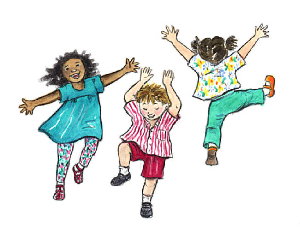
  • Turn on some music (kid music or other music that is appropriate) and dance.
  • Play freeze dance. Tell the kids to dance when you turn the music on and to stop dancing when the music stops.  Let the kids take turns being the leader,  controlling the music.
  • Do the limbo dance.  Play music and challenge the kids to go under the limbo pole as it gets lower and lower.

kids_dancing

  • Make paper airplanes and see how far they can fly.  Remind the kids not to throw them at other other people.
  • Mark small squares on the floor and challenge the kids to see who can stay on their spot the longest.  Make it tougher for older kids by having them stand on one foot.
  • Play ball toss games with soft items like rolled up socks.   The younger the children the larger the container they are tossing into should be.  For very young kids, use a laundry basket.  For older kids, use something smaller like a box, basket or large plastic mixing bowl.
  • Build a fort using blanket and furniture like chairs and tables.  Or if the kids have a small play tent put that up.
  • Play sports charades.  Charades is a game where you act out something while people try to guess.  You can do this with sports actions, using no equipment, just making the actions.  For example – hitting a golf ball, pitching a baseball, serving a tennis ball, bowling, etc.)
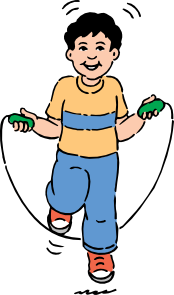
  • Jump rope. Jumping_rope.
  • Play with a hula hoop.
  • Try juggling, top spinning, or yo-yo contests.
  • Play hide and go seek.
  • Play “keep the balloon up”. Use one balloon per child or one balloon per small group. The group may add additional balloons as they gain control and awareness. *

* Safety Note – Balloons are a choking hazard, supervise children when playing with balloons and make sure to find and throw away any pieces of popped balloons.

Bug crafts for fun!

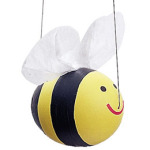
bee-easter-egg-craft-photo-260-FF0302EGGA03

Bee Egg

With this project, kids blow an egg, then turn it into a flying wonder. All you need is a raw egg, paint, craft supplies, and fishing line for hanging the egg. The best part? This blown-egg creature will keep indefinitely.

Materials

  • eggs
  • newsprint
  • egg dye
  • paper towels
  • birthday candles or crayons
  • red and black acrylic or tempera paint
  • brushes
  • white tissue
  • glue

Instructions
  1. Blow the Egg: Wash and dry the raw egg. Cover your table with newsprint and set out bowls, pushpins, and paper towels. Shake the egg to break the yolk. Next, pierce the top and bottom with a pushpin, making the hole on the wider end a bit larger. Position the egg over the bowl and blow through the small hole, allowing the inside of the egg to seep into the bowl. Set the empty egg, with the large hole down, in an egg carton to dry. Be sure children wash their hands after handling raw egg.
  2. Degg-orate the Egg: Let the kids paint half of the egg, stand it atop a bottle cap to dry (use a hair dryer to speed things up), then paint the other half. Centering the face on either hole, paint on features with contrasting colors. Paint your bee bright yellow, then paint on a red smile, black eyes, and black stripes. Glue on white tissue paper wings.
  3. Take Flight: Tape a long length of fishing line to the end of an unfolded paper clip. Starting at the small hole, thread the line through the decorated egg and out the large hole. To keep your flying critter upright, tape the fishing line just above the hole in the critter’s back. Hang it from the ceiling or an egg tree.

Grow a Grassapillar

Grassapillar Celebrate the arrival of spring by bringing this fuzzy critter to life.
Begin by mixing 3/4 cup of potting soil and 2 tablespoons of grass seed in a bowl. Add water to moisten the mixture, then set it aside.

Cut away a three-cup section of an egg carton, then trim the section along the longer edges so that your grassapillar will look the same from both sides. With a permanent marker, draw a face on one end as shown. Gently spoon the seed mixture into the cups.

Set your creation on a dish in a brightly lit spot and keep the soil moist. The grass should sprout in about a week.

origami-butterfly-craft-photo-260-FF0399KDCOTA02Origami Butterfly

Origami, Japan’s traditional craft of paper-folding, has been used since the 10th century to sculpt animals and wrap gifts. Animals, birds, fish and insects are favorite origami subjects. After folding the butterfly featured here, you can make it flutter by pressing on its back with the tip of your finger.

Materials
  • 6 x 6-inch sheet of origami paper
  • Glue
  • 1 x 4-inch strips of origami paper or curling ribbon
  • Scissors
  • 2 googly eyes
  • Markers

X

Instructions
  1. Origami Butterfly Step 1 This colorful creature is created not by metamorphosis but by folding the origami paper in half to form a triangle.
  2. Origami Butterfly Step 2 Fold the triangle in half again.
  3. Origami Butterfly Step 3 Unfold the second triangle, then fold each side so that it crosses the center crease at a right angle.
  4. Origami Butterfly Step 4 (Continuation of above directions.)
  5. Origami Butterfly Step 5 Unfold. Glue on the strips for antennae and curl them using the edge of a scissor. Glue on the googly eyes and decorate with markers.

Have some chocolate chips today!

National Chocolate Chip Day

Try this delicious recipe. Be sure to let the children pour and stir ingredients but don’t let them near the hot oven!

Traditional Chocolate Chip Cookies

Ingredients:

  • 2-1/4 cups all-purpose flour
  • 1 teaspoon baking soda
  • 1/2 teaspoon salt
  • 1 cup (2 sticks) butter, softened
  • 3/4 cup granulated sugar
  • 3/4 cup packed light brown sugar
  • 1 teaspoon vanilla extract
  • 2 eggs
  • 2 cups (12-oz. pkg.) Semi-Sweet Chocolate Chips
  • 1 cup chopped nuts (optional – ask about allergies)

Directions:

  • Heat oven to 375°F.
  • Stir together flour, baking soda and salt. Beat butter, granulated sugar, brown sugar and vanilla in large bowl with mixer until creamy. Add eggs; beat well. Gradually add flour mixture, beating well. Stir in chocolate chips and nuts, if desired. Drop by rounded teaspoons onto ungreased cookie sheet.
  • Bake 8 to 10 minutes or until lightly browned. Cool slightly; remove from cookie sheet to wire rack. Cool completely.

Makes about 5 dozen cookies.

photo from suppersanityclub.blogspot.com

ABC’s of Winter Fun

snowflake

A is for Art – try drawing, painting or gluing
B is for Baking – bake a dessert together for dinner
C is for Clay – Use non-hardening clay or play dough to shape and mold
D is for Dance – put on a lively tape
E is for Exercise – be sure to get some everyday
F is for Friends – invite some over
G is for Greenhouse – find a local greenhouse to visit to enjoy the sights and smells
H is for House – make a playhouse from a large appliance box
I is for Ice skating – take the children to a local rink
J is for Jigsaw puzzle – be sure to pick one that isn’t too difficult
K is for Kitchen science – try a safe experiment
L is for Library – borrow some new books
M is for Movie – make one with a video camera, or watch one
N is for Necklace – make one out of cereal or macaroni
O is for Origami – learn to make simple paper creations
P is for Puppets – socks make easy and fun puppets – put on a show!
Q is for Quiet Time – everyone needs some of this
R is for Reading aloud – choose a good book and a comfortable place to sit
S is for Seeds and Suet – put out food for the birds and watch them eat
T is for Tent – make one from old blankets and chairs
U is for Unplugged – do a day with no TV
V is for Variety – try something new everyday
W is for Walk – take one in any weather (be sure to dress appropriately)
X is for Xylophone – make your own with glasses, water and a metal spoon
Y is for Year – make a calendar or scrapbook to remember the year
Z is for Zoo – visit the animals

It’s international drum month!

Here are instructions (from www.pbskids.org/zoom) for a drum experiment for school age children. Remind them that drums can be played softly too!

  • First get a container that you think will make a good drum, like a metal bowl or an oatmeal container. Sylvia says that larger containers make better sounds.
  • Put double-sided tape all the way around the container 2 inches from the top.
  • Cut 2 pieces of shrink-wrap big enough to cover the tape on the container. Then, push it onto the tape.
  • Tape the edges of the shrink-wrap with masking tape so it’s really secure.
  • Now blow-dry the shrink-wrap with a blow dryer set on hot. This shrinks the plastic and makes a very tight drum.
  • Be sure you don’t put the end of the blow dryer too close to the plastic, or it will melt.
  • Once it’s really tight, bang your drum.

Now it’s time to experiment. Try to change the sound your drum makes. Can you make a drum with a really deep sound? Test it out with different containers.

Younger children might like to use a coffee can or oatmeal box as a drum and bang on it along with some lively music.

Top 100 picture books

Which ones have you read to your children?

#1: Where the Wild Things Are by Maurice Sendak (1963)
#2: Goodnight Moon by Margaret Wise Brown (1947)
#3: The Very Hungry Caterpillar by Eric Carle (1979)
#4: The Snowy Day by Ezra Jack Keats (1962)
#5: Don’t Let the Pigeon Drive the Bus by Mo Willems (2003)
#6: Make Way for Ducklings by Robert McCloskey (1941)
#7: Harold and the Purple Crayon by Crockett Johnson (1955)
#8: Madeline by Ludwig Bemelmans (1939)
#9: Millions of Cats by Wanda Gag (1928)
#10: Knuffle Bunny: A Cautionary Tale by Mo Willems (2004)
#11: The Story of Ferdinand by Monroe Leaf, ill. Robert Lawson (1936)
#12: Good Night Gorilla by Peggy Rathmann (1994)
#13: Blueberries for Sal by Robert McCloskey (1948)
#14: The True Story of the Three Little Pigs by Jon Scieszka, ill. Lane Smith(1989)
#15: Lilly’s Purple Plastic Purse by Kevin Henkes (1996)
#16: Owl Moon by Jane Yolen (1987)
#17: Caps for Sale by Esphyr Slobodkina (1947)
#18: In the Night Kitchen by Maurice Sendak (1970)
#19: Miss Rumphius by Barbara Cooney (1982)
#20: George and Martha by James Marshall (1972)
#21: Bark, George by Jules Feiffer (1999)
#22: The Monster at the End of this Book by Jon Stone, ill. by Mike Smollin (1971)
#23: Bread and Jam for Frances by Russell Hoban, illustrated by Lillian Hoban (1964)
#24: Chicka Chicka Boom Boom by Bill Martin, Jr. and John Archambault, ill. Lois Ehlert (1989)
#25: The Little House by Virginia Lee Burton (1942)
#26: Corduroy by Donald Freeman (1976)
#27: The Tale of Peter Rabbit by Beatrix Potter (1902)
#28: Alexander and the Terrible, Horrible, No Good, Very Bad Day by Judith Viorst, ill. Ray Cruz(1972)
#29: Sylvester and the Magic Pebble by William Steig (1969)
#30: Brown, Bear, Brown Bear, What do you See? by Bill Martin Jr., ill. Eric Carle (1967)
#31: No, David by David Shannon (1998)
#32: Click Clack Moo, Cows That Type by Doreen Cronin, ill. by Betsy Lewin (2000)
#33: Cloudy with a Chance of Meatballs by Judi and Ron Barrett (1978)
#34: Olivia by Ian Falconer (2000)
#35: Tikki Tikki Tembo by Arlene Mosel, ill. Blair Lent (1968)
#36: Stinky Cheese Man and Other Fairly Stupid Tales by Jon Scieszka, ill. Lane Smith (1992)
#37: Eloise by Kay Thompson, ill. Hilary Knight (1955)
#38: Harry the Dirty Dog by Gene Zion, ill. by Margaret Bloy Graham (1956)
#39: The Napping House by Audrey and Don Wood (1984)
#40: Mike Mulligan and His Steam Shovel by Virginia Lee Burton (1939)
#41: The Relatives Came by Cynthia Rylant, ill. Stephen Gammell (1985)
#42: Curious George by H.A. Rey (1941)
#43: Tuesday by David Wiesner (1991)
#44: Strega Nona by Tomie de Paola (1975)
#45: The Polar Express by Chris Van Allsburg (1985)
#46: Scaredy Squirrel by Melanie Watt (2006)
#47: If You Give a Mouse a Cookie by Laura Numeroff  (1985)
#48: The Big Orange Splot, by Daniel Pinkwater (1977)
#49: King Bidgood is in the Bathtub by Audrey Wood, ill. Don Wood (1985)
#50: Black and White by David Macaulay (1990)
#51: Jumanji by Chris Van Allsburg (1981)
#52: Miss Nelson is Missing by Harry Allard, ill. James Marshall (1977)
#53: The Snowman by Raymond Briggs (1978)
#54: The Three Pigs by David Wiesner (2001)
#55: The Little Engine That Could by Watty Piper, ill. George & Doris Hauman (1961)
#56: Frederick by Leo Lionni (1967)
#57: Diary of a Worm by Doreen Cronin, ill. Harry Bliss (2003)
#58: Flotsam by David Wiesner (2006)
#59: Why Mosquitoes Buzz in People’s Ears (1975) by Verna Aardema, ill.Leo and Diane Dillon (1975)
#60: Chicken Soup With Rice: A Book of Months by Maurice Sendak (1962)

#61: Lost and Found by Oliver Jeffers (2005)

#62: The Story About Ping by Marjorie Flack (1933)
#63: Traction Man is Here!, by Mini Grey (2005)
#64: “I Can’t,” Said the Ant: A Second Book of Nonsense by Polly Cameron (1961)
#65: Skippyjon Jones by Judy Schachner (2003)
#66: Officer Buckle and Gloria by Peggy Rathmann (1995)
#67: Little Blue and Little Yellow by Leo Lionni (1959)
#68: The Arrival by Shaun Tan (2006)
#69: We’re Going on a Bear Hunt by Michael Rosen, ill. Helen Oxenbury (1989)
#70: Miss Fanshawe and the Great Dragon Adventure by Sue Scullard (1986)
#71: The Paper Bag Princess by Robert Munsch, ill by Michael Martchenko (1980)
#72: The Little Brute Family by Russell Hoban, ill. Lilian Hoban (1966)
#73: The Story of Babar, the Little Elephant (1933) by Jean de Brunhoff
#74: Runaway Bunny by Margaret Wise Brown (1942)
#75: Horton Hatches the Egg by Dr. Seuss (1940)
#76: Zoom at Sea by Tim Wynne-Jones, ill. Eric Beddows (1983)
#77: The Library by Sarah Stewart, ill. David Small (1995)
#78: How the Grinch Stole Christmas by Dr. Seuss
#79: Our Animal Friends at Maple Hill Farm, by Alice and Martin Provensen (1974)
#80: The Jolly Postman: or, Other People’s Letters by Janet Ahlberg  (1986)
#81: Possum Magic by Mem Fox, ill. Julie Vivas (1983)
#82: Who Needs Donuts? by Mark Alan Stamaty (1973)
#83: The Lorax by Dr. Seuss (1971)
#84: Chester’s Way by Kevin Henkes  (1988)
#85: Whistle for Willie by Ezra Jack Keats (1964)
#86: Yoko by Rosemary Wells (1998)
#87: Kitten’s First Full Moon by Kevin Henkes (2004)
#88: Stellaluna by Janell Cannon (1993)
#89: A Hole is to Dig: A First Book of First Definitions by Ruth Krauss, ill. Maurice Sendak (1952)
#90: Not a Box by Antoinette Portis (2006)
#91: Dinosaur Bob and His Adventures With the Family Lazardo by William Joyce (1988)
#92: Swimmy by Leo Lionni (1963)
#93: The Giving Tree by Shel Silverstein (1964)
#94: The Little Mouse, the Red Ripe Strawberry, and the Big Hungry Bear by Audrey and Don Wood (1984)
#95: The Gardener by Sarah Stewart, ill. David Small (1997)
#96: The Very Quiet Cricket by Eric Carle (1990)
#97: Where Is the Green Sheep? by Mem Fox, ill. Judy Horacek (2004)
#98: Anatole by Eve Titus (1956)
#99: Little Pea by Amy Krause Rosenthal, ill. by Jen Corace (2005)
#100: Go Away, Big Green Monster by Ed Emberley (1992)
#101: More, More, More Said the Baby: Three Love Stories by Vera B. Williams

from http://blog.schoollibraryjournal.com/afuse8production/2009/05/16/top-100-picture-books-poll-results-1-101/ and examiner.com

Fun Summer activities!

schools-out-craft-photo-260-FF0608SCHOOLA01

Summer time fun is up to you to plan and enjoy with your kids.  Have you run out of ideas?  Looking for something fresh?  Here are 100 fun summer activities!

  1. Pick your own….whatever. Find a farm with blueberries, strawberries, tomatoes, flowers, etc., and get picking.
  2. Play outside in the rain. Smell the rain on the pavement; splash in puddles; make mud pies.
  3. Make your own rain. Douse everyone with the hose or sprinkler.
  4. Take family naps. Parents nap too!
  5. Have daily quiet time. Big kids need rest too.
  6. Cook out….frequently. Go beyond the burgers. Try veggies or fish. The kids might like them!
  7. Make ‘smores. Chocolate + marshmallow + graham cracker=summer
  8. Camp out. First-timers, try backyard camping.
  9. Camp in. Put the sleeping bags on the floor and have a family slumber party.
  10. Stargaze. Invite friends and make a party of it.
  11. Catch lightening bugs. And then watch them flicker away into the night.
  12. Rearrange the furniture. Give the kids graph paper and have them draw out a plan first.
  13. Make your own pizza. Look online for  a recipe.
  14. Invite friends over for a game night. Have a kids’ games table and an adult one too.
  15. Go to the demolition derby. And expect to see some major crashes.
  16. See an air show. And hope for no crashes.
  17. Stop to smell the flowers. (Go to a botanical garden.)
  18. Talk to the animals. (Go to the zoo.)
  19. Get wet. (Go to a water park.)
  20. Play a word game. Think Scrabble, Boggle or Bananagrams.
  21. Play a card game. Maybe crazy eights, spoons or poker. Take your pick.
  22. Play a board game. Candyland, chess or Monopoly, depending on age and inclination.
  23. Make good use of nearby parks. Go to your local parks website, print the schedule of activities and tape it to the refrigerator.
  24. Pack a picnic. And plop down to eat it just about anywhere, at a free concert, in a state park or in your own backyard.
  25. Start the back-to-school shopping early. The farther from the start of school the more fun my kids think it is.
  26. Get the summer homework done. Not exactly fun, but get it out of the way.
  27. Experiment with new hairdos. Let the kids try out not-permanent colors or braids. Or maybe a spiked look.
  28. Dig in the sand at the beach. Doesn’t matter if it’s on the ocean, lake or bay.
  29. Set a goal and complete a home project. Find ways to let the kids help.
  30. Take an early morning bird walk.
  31. Grow vegetables. And then eat them.
  32. Grow flowers. And then arrange them .
  33. Let the kids cook dinner. In fact, make a tradition of it.
  34. Host the kids’ friends for a sleepover. And the maybe your kids will be invited next…giving you a free evening.
  35. Go to a nearby museum that you’ve never been to before.
  36. Go to your favorite local museum…again.
  37. Go to a carnival or county fair. Eat cotton candy, fried dough or something really bad once this summer.
  38. Decorate your walkways with chalk.
  39. Take a hike. Choose a route near your house or take a drive to a more distant park.
  40. Plant a butterfly garden. Watch the butterflies flutter by.
  41. Make fresh lemonade. Maybe even sell it at a lemonade stand!
  42. Take road trip to a nearby city. Spend the night if you can or just make it a day trip.
  43. Show the kids science is fun. Look for easy experiments online.
  44. Go to a matinee. Find a bargain movie houses and pay less.
  45. Go to the drive-in. If there isn’t one nearby, look for one near your vacation spot. Every kid should go to the drive-in at least once!
  46. Read a chapter book aloud. Or even go on and read a whole series together.
  47. Listen to a classic as an audiobook.
  48. Teach the kids a game you haven’t played since you were a kid.
  49. Meet friends at the playground. Not groundbreaking, but always popular nonetheless.
  50. Visit a historic house. Kids will be amazed at what the old-timers lived without.
  51. Make ice cream.
  52. Use bikes as a mode of transit. Show the kids the way to the store or a friend’s.
  53. Take bike rides for fun. Either leave from your own house or drive to biking trails.
  54. Go fishing. In many states kids can drop a line in without a license.
  55. Paddle a kayak or a canoe. Or if you’re really adventurous try white water rafting.
  56. Jump rope.
  57. Press summer flowers.
  58. String beads.
  59. Blow bubbles.
  60. Play miniature golf. Can you make the last hole-in-one for a free game?
  61. Eat at the counter of a diner. And let the kids spin on the stools.
  62. Find a new place to play. Easy idea: Clear out the basement or garage. Complicated idea: Build a treehouse.
  63. Build a Lego castle. Clear off a table and make it a family project.
  64. Master a new skill together. Learn to juggle, play harmonica, do the hula hoop, etc.
  65. Teach the grandparents to use a computer.
  66. Build a fort. Try pillows in the living room or cardboard boxes in the yard.
  67. Make fairy houses. Use moss, bark and leaves in a dwelling fit for Thumbelina.
  68. Write/illustrate a comic book. Make it a group effort or let everyone do their own.
  69. Oooh and ahh at fireworks. Might have to wait until July 4.
  70. Find a free concert near you.
  71. Fly a kite.
  72. Run in the yard. Kickball, wiffleball, Frisbee and tag will keep you moving.
  73. Visit a local farmers market. And feast on the fruits and veggies of the season.
  74. Create art with beach items.
  75. Have breakfast in bed. Take turns being the server and the served.
  76. Play with clay. Then bake your creations to make them permanent.
  77. Make play dough creations. Then rip them up and do it again.
  78. Make paper airplanes. See whose goes the farthest.
  79. Join the library summer reading club. Parents can list all their books read over the summer too, but I doubt the library will give you a prize.
  80. Keep a sketch diary.
  81. Write in a journal. At the end of the summer share selections with each other about the highlights of the season.
  82. Teach the kids to skip stones.
  83. Make artwork using old photos. Grandma will love them.
  84. Take lessons together. Cooking, yoga, tennis, music, etc.
  85. Play croquet on the lawn. And try bocci too.
  86. Set up a badminton net. You could use it for volleyball too.
  87. Play HORSE. With little ones, set up a mini basketball net next to the real one.
  88. Create a scavenger hunt. Do it on your own property or around town.
  89. Erect a bird feeder. And then watch the show from your window.
  90. Join a Junior Ranger program at a national park.
  91. See a dramatic performance together. Doesn’t matter if it’s a puppet show in the park or a touring Broadway show.
  92. Put on your own dramatic performance. Write a script, sew costumes or just do a little improv.
  93. Make music. Either make your own instruments or play traditional ones.
  94. Play charades.
  95. Break out the family movies. And the popcorn too!
  96. Go to a flea market or garage sale. See if the kids are better negotiators than you.
  97. Have a garage sale. Kids can earn spending money by selling their old stuff.
  98. Climb trees together. Of course, only if the kids are big enough, and you are brave enough.
  99. Get a book a riddles. See if you can stump each other, then write your own.
  100. Keep your kitchen cool. Find a recipe for no bake cookies.

Make this a great Summer!

Let’s make play dough!

play dough

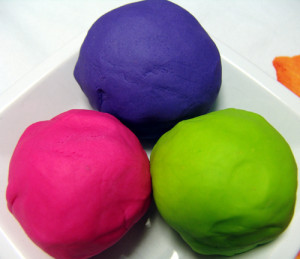
Play dough is the perfect modeling material for children. Their small hands can pat, poke, pinch, roll and knead it into many shapes. Keep it in an airtight container to use another day, or let it air dry into favorite shapes.

Measure 2 cups of flour, one cup of salt and 4 teaspoons of cream of tartar into a bowl. Add 1/4 cup of oil to one cup of water in a separate bowl then add the mixture to the dry ingredients. Squeeze 10-20 drops of food coloring into one cup of water and add it to the mixture. Mix well to make it smooth and to spread the color evenly. Cook the dough at low heat in a wide pan, stirring constantly until it becomes rubbery. Remove the dough from the heat and knead it for a few minutes. When it cools the kids can play too!

Photo: Gina Guillotine