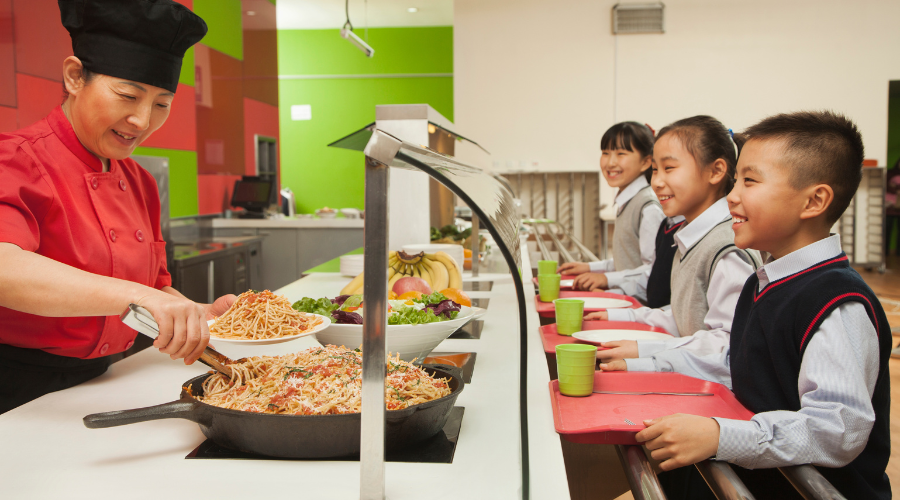
Lunch is one of the most anticipated parts of the school day for many children. And depending on the family, the school, and the country they live in, it can include a wide array of options spanning packed lunches, hot cafeteria meals, shared dishes with classmates, or at-home meals with family.
School lunches can reveal a lot about a country’s culture, traditions, and approach to nutrition and education. Just as school calendars and customs vary around the globe, so do lunchtime routines. Learning about school lunches around the world can be a fun way for families to explore other cultures and find inspiration for their own lunchboxes.
Explore school lunches around the world and discover how children in different countries fuel their school day.
Brazil
Brazil operates one of the world’s largest free school meal programs, serving more than 40 million students each day. One unique aspect of the program is its emphasis on local sourcing: at least 45% of ingredients used in public school meals must come directly from local family farms and family-run enterprises.
A typical Brazilian school lunch might include rice, beans, roast meat, and fresh fruits or vegetables. Since regional ingredients vary across the country, lunches typically reflect local culinary traditions as well.
China
School lunches in China focus on nutritional balance. While lunch menus vary by region, many meals include protein such as meat, fish, or tofu with cooked vegetables (like cabbage, bok choy, spinach, and gai lan) served alongside rice or mantou (steamed buns).
Fun fact: Whether a child eats rice or steamed buns for lunch likely depends on whether they live in Southern China, where rice is the primary staple, or Northern China, where the climate is more suitable for growing wheat, and therefore wheat-based foods such as steamed buns prevail.
France
In France, school lunches are often treated as an important part of a child’s education. There is a strong cultural emphasis on helping children develop an appreciation for a wide variety of foods from an early age.
French school lunches frequently include items that American families might associate with dinner for adults rather than lunch for children. Menus may feature salads, roasted vegetables, grilled chicken, beef, guinea fowl, bread, cheese, and fresh fruit or fruit tarts.
Germany
Many younger students in Germany finish school before lunchtime and return home to eat with their families. Children who remain at school through the afternoon generally enjoy a school lunch that reflects traditional German comfort foods.
Potatoes, pasta, sausage, and fresh fruits and vegetables are common options. School meals tend to be straightforward and filling, though regional specialties may influence what’s served. A lunch menu in Bavaria may feature dumplings, sausages, spätzle, or potato salad, while students in Northern Germany are more likely to encounter fish dishes alongside vegetables and grains.
Japan
In Japan (especially in elementary schools and junior high), school lunches are often served and eaten in the classroom rather than a cafeteria. Meals typically include rice, grilled fish, miso soup, vegetables, noodles, milk, and fruit.
Many Japanese schools prioritize preparing nutritious meals at an affordable price. This focus on teaching healthy eating habits at a young age is believed to contribute to the country’s low obesity rates and high life expectancy. Additionally, it’s common for students in Japan to take turns serving their classmates, teachers, and other staff rather than relying on cafeteria workers.
Mexico
While many students in Mexico return home for lunch, some schools also provide meals or snacks throughout the day.
Common school lunches in Mexico include tortillas eaten with red rice, beans, salsa, and vegetables, along with fresh fruit. Depending on the region and school, students may also enjoy fresh juices, milk, or a chilledagua fresca made from blended fruits or grains, water, and sugar.
South Africa
With its wide array of cultural and ethnic influences, it’s no wonder the school lunches in the Rainbow Nation can vary so much. Some students in South Africa bring packed lunches from home, others purchase food from school tuck shops, and many participate in government-supported nutrition programs.
Similar to the U.S., packed lunches in South Africa may include peanut butter or tomato and cheese sandwiches, fruit, and water or juice. However, school lunches can also differ greatly, with hot meals featuring rice, stews, and other traditional dishes, sometimes accompanied by local favorites such as biltong(a cured meat snack) or vetkoek (fried bread).
Family Conversation Starters
Learning about school lunches around the world can spark interesting conversations at the dinner table.
Some family conversation starters you can ask after reading this blog post with your children include:
- Which country’s lunch sounds most appealing to you?
- What foods would you want to try?
- How would you feel about eating lunch in your classroom or at home every day?
- Should students help serve lunch at school?
- What foods would represent the United States if people from another country studied our school lunches? And what might they say about them?
These conversations can help children think more deeply about different cultures and everyday experiences around the world.
Lunchbox Inspiration from Around the World
Looking to add some international inspiration to your child’s lunchbox?
Try incorporating:
- Rice and beans inspired by Brazil
- Cooked vegetables, tofu, and rice inspired by China
- Cheese, bread, and roasted vegetables inspired by France
- Simple potato, sausage, and pasta dishes inspired by Germany
- Tortillas, beans, and fresh fruit inspired by Mexico
Introducing new foods doesn’t have to mean completely changing your family’s routine. Even adding one internationally inspired item each week can be a fun way to explore another culture together. For example, you could make Wednesdays “Around the World Day.” It’s a great way to expand their palate and discover some new favorite foods at the same time.
Ready to bring global perspectives into your family’s daily routine? Host an au pair with Au Pair in America®!
Food is often one of the easiest and most enjoyable ways for children to learn about another culture. Families who host an au pair have a unique opportunity to experience those cultural connections firsthand.
Whether it’s preparing a favorite meal from their home country, sharing childhood memories while they pack school lunches, or introducing new ingredients and traditions, hosting an au pair with Au Pair in America®can help make cultural exchange part of everyday life.
