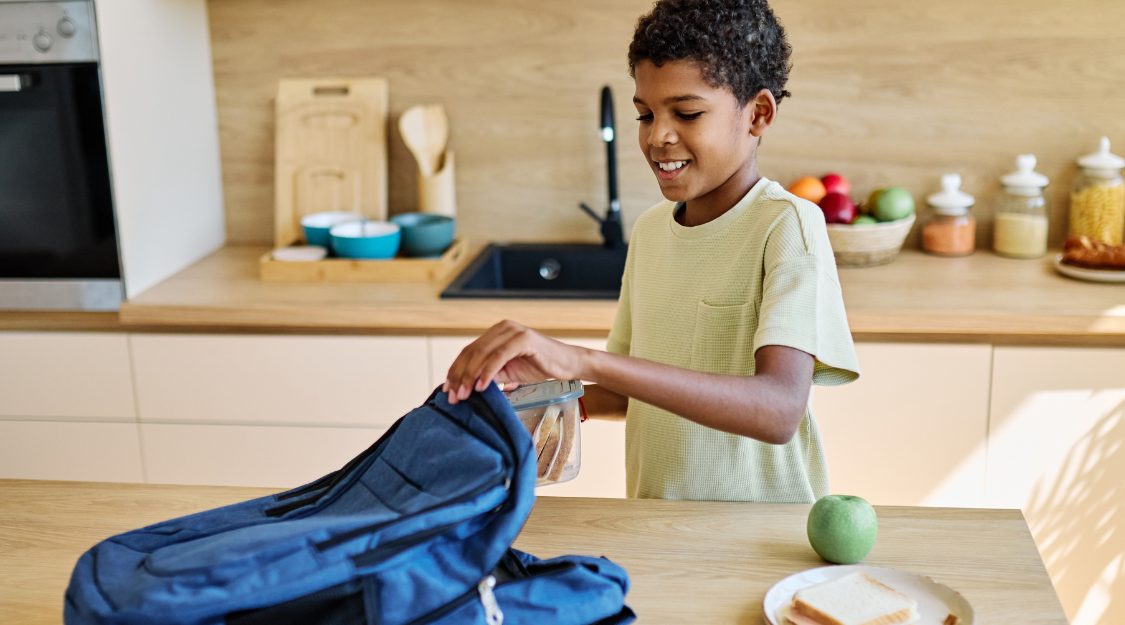
“Where’s my backpack?” “Did you pack my homework?” “What’s for breakfast?” The school year comes with a steady stream of questions and last-minute reminders for parents. While it’s natural to want to help, constantly stepping in can make it harder for children to develop independence.
Teaching independence to kids is one of the most valuable investments parents can make. Children who learn to take ownership of age-appropriate tasks often develop greater confidence and a stronger sense of responsibility. Plus, when they do more for themselves, daily school routines often run faster and feel less stressful for the whole family.
Ready to teach your children to be more independent this school year? Here are some tips for an easier transition!
Start with Age-Appropriate Responsibilities
Teaching independence to kids takes time. Just as children learn to ride a bike or tie their shoes one step at a time, they learn responsibility through repeated practice. Although parents may want to wait until children are older, handing over responsibility is much easier when you start early.
The back-to-school season creates countless opportunities to practice responsibility. Instead of managing every detail yourself, consider which parts of your child’s morning and afternoon routine they can begin handling independently.
Depending on their age, children may be able to:
- Pack their own backpack
- Lay out clothes for the next day
- Keep track of library books
- Set their own alarm clock
- Prepare simple snacks or pack lunch
- Follow a daily checklist
Visual reminders and predictable routines can be especially helpful at first. Many families find that a simple before- and after-school checklist reduces the number of reminders parents need to give while helping children stay organized.
Encourage Independence with Homework
It can be tempting to correct mistakes or jump in whenever children get stuck on homework, but closely managing every assignment and always offering to solve a tough problem can prevent children from developing essential skills. Children may learn most during those minutes spent working through a tough assignment. It teaches problem-solving and resilience, and it’s ultimately more rewarding when they do it on their own.
To encourage independence during homework time, offer guidance when needed and help them think through problems—but let them find the answers themselves.
As children get older, they should become responsible for tracking assignments, meeting deadlines, and communicating with teachers about missing work or questions.
Let Natural Consequences Do Some Teaching
A parent’s natural instinct may tell them to swoop in at any sign of trouble and prevent every mistake before it happens. As it turns out, this instinct isn’t always right—especially when it comes to the little things. While there are certainly times when parents need to step in, small setbacks can be valuable learning opportunities.
Forgetting a homework folder once may help a child remember to double-check their backpack the next day—especially if you find yourself reminding them over and over and nothing seems to change. Running late because they weren’t ready on time may reinforce the importance of preparing ahead. The goal isn’t to set children up for failure, but to help them understand the value of responsibility through firsthand experience.
Teach Older Children to Advocate for Themselves
As children grow, independence can include more than chores and routines. Older children and teenagersbenefit from learning how to communicate directly with teachers, coaches, and other adults when they have questions or concerns.
This could mean:
- Emailing a teacher about a missed assignment
- Asking a coach for clarification
- Requesting help when they need it
Learning to speak up for themselves instead of always needing their parent to do it can help older children build confidence and prepare them for greater responsibility later in life.
Learn to Let Go (Just a Little)
Teaching independence can be just as challenging for parents as it is for children. Giving children household responsibilities may mean accepting that things won’t always be done exactly the way you want them done.
A backpack may be completely disorganized or a bed may not be made just how you like it, but remember, it’s all part of the learning process. If you’re struggling to step back, try focusing on progress, not perfection. For example, they may have made a mess preparing their school lunch, but at least they made lunch. Next time, you can focus on teaching them how to make a sandwich neatly. For now, take a deep breath and appreciate the progress.
Support Children’s Growing Independence with an Au Pair
Teaching independence doesn’t mean removing support altogether. Children tend to do better when they’re encouraged to tackle problems and responsibilities on their own, with the knowledge that there’s a trusted adult nearby should they need them.
An au pair can help reinforce back-to-school routines, encourage children to take ownership of their responsibilities, and offer support without taking over. Additionally, hosting an au pair gives children exposure to new cultural perspectives that help them develop into even more confident, well-rounded people.
Hosting an au pair with Au Pair in America® can provide stability and trusted childcare support as your family navigates shifting responsibilities.
Teaching independence to kids is a gradual process. By giving children age-appropriate responsibilities and opportunities to learn from experience, parents can help them build confidence one step at a time.
Hosting an au pair with Au Pair in America® provides flexible childcare assistance that supports families and adapts to their needs as children grow. Whether they’re providing passive homework supervision, offering guidance as your child works through social struggles, or simply being there as they adjust to new routines, hosting an au pair provides a sense of stability that helps children and families move forward with peace of mind.
