
Check out our St. Patrick’s Day pinboard on Pinterest for recipes, games, crafts and other fun activity ideas to do with your kids.

Check out our St. Patrick’s Day pinboard on Pinterest for recipes, games, crafts and other fun activity ideas to do with your kids.
After our laser tag cluster meeting in February, we decided to make our own Harlem Shake video.
Thank you to The Castle Laser Tag for providing a great location for our video.

Today is Random Acts of Kindness Day.
So, perform a few random acts of kindness- hold the door for a stranger, let someone go ahead of you in line at the grocery store, pay the road toll for the car behind you, give a compliment… the ideas are endless.
See if you can “pay it forward” and make today a great day!
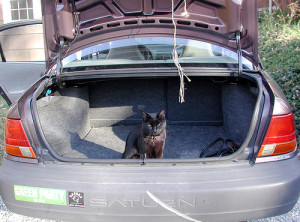 What should you have in the trunk of your car in case of an emergency? I’ll give you a hint- it’s not a cat. While they are cute, they are not very helpful in a crisis. Below is a list of some more helpful things to keep in the car.
Recommended items to have in the car in case of emergency
Here is another post with a list of what to keep in the car glove box.
It is always a good idea to keep the gas tank at least half full at all times, especially in the winter.
Photo: Bart Everson
If you are like me, you probably have napkins and straws from fast food restaurants and other assorted items in your glove box in the car. It can be a nifty storage place, but it’s main purpose is to keep some important documents related to the car. 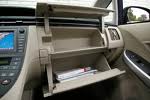
It is very important that you keep all of the necessary documents in the car glove box. These items will be necessary if you are stopped by a police officer or have an auto accident. Not having these items can result in your receiving a ticket (citation) from a police officer.
Essential Documents
*Some host parents may tell you to carry these in your wallet instead of keeping them in the car. Follow their instructions.
Helpful Extras
In Your Wallet
Carry your Maryland license or country driver’s license and international driver’s permit with you at all times, especially when you are driving. You should leave your passport and Social Security Card and other documents at home, to reduce the risk of losing them.

A is for Art – try drawing, painting or gluing
B is for Baking – bake a dessert together for dinner
C is for Clay – Use non-hardening clay or play dough to shape and mold
D is for Dance – put on a lively tape
E is for Exercise – be sure to get some everyday
F is for Friends – invite some over
G is for Greenhouse – find a local greenhouse to visit to enjoy the sights and smells
H is for House – make a playhouse from a large appliance box
I is for Ice skating – take the children to a local rink
J is for Jigsaw puzzle – be sure to pick one that isn’t too difficult
K is for Kitchen science – try a safe experiment
L is for Library – borrow some new books
M is for Movie – make one with a video camera, or watch one
N is for Necklace – make one out of cereal or macaroni
O is for Origami – learn to make simple paper creations
P is for Puppets – socks make easy and fun puppets – put on a show!
Q is for Quiet Time – everyone needs some of this
R is for Reading aloud – choose a good book and a comfortable place to sit
S is for Seeds and Suet – put out food for the birds and watch them eat
T is for Tent – make one from old blankets and chairs
U is for Unplugged – do a day with no TV
V is for Variety – try something new everyday
W is for Walk – take one in any weather (be sure to dress appropriately)
X is for Xylophone – make your own with glasses, water and a metal spoon
Y is for Year – make a calendar or scrapbook to remember the year
Z is for Zoo – visit the animals
 It is important to know when schools close or have delayed openings because of weather or other emergencies. You may sign up to receive alerts via email, texts and other messages. Please check the list below for the school system your host children go to and follow the link to register. If your children go to a private school, check with your host family to find out if they follow the county closings or not.
Anne Arundel County Public Schools – Register HERE (email is free, text there is a fee)
Montgomery County Public Schools – Register HERE
Prince George’s County Public Schools – Register HERE
Photo: Lookatmyhappyrainbow.com

You can’t turn on the television news lately without hearing about the flu epidemic. The seasonal flu has started early this year and is spreading quickly throughout the state. Here’s some useful information from the Center for Disease Control about how you can protect yourself from the flu and how to treat yourself and your host children should you get sick.
It is NOT too late to get a Flu Vaccine. Check out THIS blog post for a list of places to get your flu shot.
An Ounce of Prevention
There are steps you can take in your daily life to help protect you from getting the flu.
Symptoms of the Flu
The flu and the common cold have similar symptoms. It can be difficult to tell the difference between them. Your healthcare provider can give you a test within the first few days of your illness to determine whether or not you have the flu.
In general, the flu is worse than the common cold. Symptoms such as fever, body aches, tiredness, and cough are more common and intense with the flu.
Flu symptoms include:
Treating the Flu
You can treat flu symptoms without medication by:
Children are at higher risk for getting the flu because their immune systems are not fully developed. If your host child gets sick, always ask your host parents before giving any medications to the children. There are strict guidelines for dosages and they MUST be followed. Never give aspirin to children or teenagers who have the flu. Giving aspirin to children with the flu can cause a rare but serious illness called Reye’s Syndrome. Read ingredient labels on over-the-counter medications carefully to ensure they do not contain aspirin.

Our snow tubing trip is just over a week away. Now is the time to buy your snow clothes, if you don’t already have some. If you wait too late in the snow season, it can be hard to find some of these items.
Here are some detailed instructions on the Liberty Mountain website. But, below is a list of the basic outerwear you want to have to stay dry and warm.
For Skiing/Snowboarding/Snow tubing
Snow pants can be found at places like Sports Authority, Dick’s, Modell’s, REI and Bass Pro Shop as well as online retailers. You can usually find an adult pair for $25-$40. Many of you (au pairs in my cluster) are small enough that you could buy a pair of XL snow pants in the boy’s department. Those will cost you less and can sometimes be found at places like Target, KMart and WalMart for $15-$25.
If you don’t have waterproof snow pants to wear, I suggest you bring an extra pair of pants. Your pants will get wet while snow tubing. You will have a more comfortable ride home if you have dry clothes to wear.
