Yearly Archives: 2021

Welcome to Camp Au Pair in America!

When kids are out of school for the summer, it doesn’t take long for them to become bored and  sometimes that leads to sibling squabbles and mischief. Even though they don’t realize it, they are usually missing routine and predictability in their daily schedule. One solution is to make fun plans to keep them busy! 
Each week this summer we will share a different Camp Au Pair theme. These weekly themes are designed to give you ideas to keep your host kids occupied and engaged all summer long. They will also be learning. (But shhhh, don’t tell them that part.) Check back each Friday, for the next week’s theme. This gives you a chance to make plans and gather materials for the next week. For each theme there will be crafts, games, snacks and activities. You can just use these ideas or add your own and customize the themes to fit the ages and interests of your host children.

Here are the themes you can look forward to:

  • Art Experiences
  • Backyard Safari
  • Bugs & Butterflies
  • Cars and Trucks
  • Dinosaurs
  • Explore the World
  • Nature Explorations
  • Outer Space
  • Pirate Adventures
  • Princesses & Knights
  • Science (STEM)
  • Under the Sea

Check out Summer Fun & Summer Holidays pin boards for even more ideas.

If you get some great pictures doing these activities with your host kids, please send those to your counselor. We love to share your accomplishments and inspire other au pairs!

Let’s make this an amazing summer!
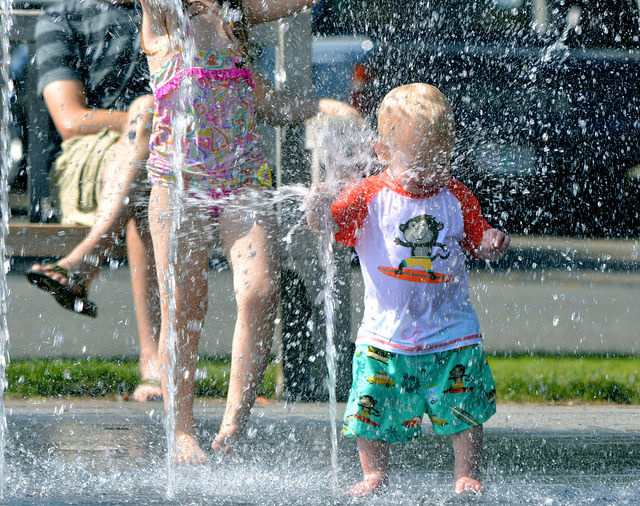
 

10 Tips for Summer Safety

  1. Remember to bring along drinks, especially water. Try to get children to drink water every 20 minutes, when they are outside in hot weather.
  2. Pay attention to surfaces that can be hot against children’s skin, such as metal slides and other playground equipment in the sun.
  3. Safety around water is particularly important. A child can drown in just a few inches of water. Whenever you are near water you must never leave a child alone – if the phone rings, take them with you or let it ring! Always stay within arm’s reach when the children are in or near water.
  4. Young babies should be kept out of direct sunlight. Keep the baby in the shade or under a tree, umbrella or stroller canopy.
  5. Dress babies in lightweight clothing and use brimmed hats.
  6. Apply sunscreen 30 minutes before going outside, even if it appears overcast (cloudy).
  7. Try to keep children out of the sun in the middle of the day when the sun is strongest.
  8. Learn what poison ivy looks like and keep children out of it. A good rule to teach the children is “leaves of three, let it be.”
  9. Use insect repellent spray to keep away mosquitos and ticks. Ask your host parents before applying.
  10. Check for ticks when you bring children in from playing outside, especially if you’ve been in tall grass or the woods.

Photo: Scott97006 (Flickr)

Holiday & Vacation Reminders

“Rest and be thankful.” – William Wordsworth

Holidays and vacations are a great opportunity to rest, recharge and explore the U.S.

Memorial Day Weekend is the unofficial start of summer travel season. Here are some reminders about program rules regarding holidays, vacations and international travel.

Holidays

  • Host families are not required to give au pairs off on any specific holidays.
  • Each host family will make different arrangements on holidays, some au pairs will be off and others will be required to work.
  • Au pairs should not make plans for holidays without checking with your host family first.

Vacations

  • During the pandemic, it is important that au pairs and host families discuss what travel and activities are an acceptable level of risk, before plans are made.
  • Au pairs earns 2 weeks of paid vacation during the course of her year.
  • Vacation time should be mutually agreed upon.
  • All vacation should be preplanned (at least 4 weeks in advance).
  • All au pair’s friends and/or family visits/vacations should be pre-approved prior to purchasing tickets.
  • If an au pair travels with her host family, it should be discussed in advance whether this is the au pair’s vacation or if she is working.
  • If an au pair travels with the host family to work, the host family is required to pay for her transportation, lodging and meals.

Travel Outside of the U.S.

Check out this blog post with current information on international travel.


Photo: Leah Kelly from Pexels


Travel Outside of the U.S.

Au Pair in America is discouraging international travel during the pandemic for multiple reasons. Here are some resources to help you understand the process and risks, so you can make an informed decision.

10 Things to Know Before You Go

  1. Read APIA Travel Advisory due to COVID-19
  2. If an au pair decides to travel outside of the U.S., she and her host family need to understand and accept the possible risks.
  3. The following au pairs should NOT travel outside of the U.S.:
    • Au pairs who arrived on National Interest Exception (NIE) visas. (Those are single entry visas.)
    • Au pairs in their travel month
    • Au pairs on a special 6 month extension
  4. As you make your travel plans, please review the appropriate checklist(s) from APIA:
  5. Au pairs must mail their original DS-2019 along with a Travel Validation Request Form  to APIA, at least 3-4 weeks prior to international travel.
  6. Year 1 au pairs should plan international travel to return to the U.S. prior to the date their visa says it expires. This can be different from your actual program end date.
  7. Au pairs must find out if they will need a visa to visit another country. This can be different for au pairs than for host parents. You must check with the consulate of the country you are planning to visit, find more information HERE.
  8. The CDC requires a negative PCR test to fly into the U.S. Investigate where you can get this test and how much it will cost before you travel.
  9. When you return to the U.S. you should follow CDC and local guidelines regarding quarantine and testing.
  10. There is always some risk with traveling outside the US, as re-entry is at the discretion of the port of entry agent. Au Pair in America is not responsible for additional costs or travel arrangements should a delay in returning to the US occur.

Photo: Porapak Apichodilok from Pexels

Handling Problems or Poor Customer Service

Places like the MVA and Social Security office can be challenging for Americans, so I can understand how difficult it could be for an au pair to run into problems there.
If you encounter a problem in one of these locations or at other places like college enrollment,  a store, bank, etc., here are some tips:

  • Remain calm and polite, even if the person you are dealing with doesn’t. You don’t want to be viewed as being unreasonable or out of control, because that will not help your situation.
  • Ask to speak with a supervisor, if you are being told something that goes against the procedure you have been told (by your counselor, host parent, Au Pair in America or a previous encounter with the office you are visiting).
  • Ask for the name of the person with whom you are speaking. It is a reasonable question and can help if you need to reference this conversation later. It also adds some accountability for the person who gave you the answer.

If the supervisor is still unable to help you, please discuss the problem with your host parents and/or your community counselor. Maybe there has been a change in the procedure. If there has not been a change and you just got unlucky with the person with which you were dealing, you may find success going back another day.

Positive Discipline – Rewarding Good Behavior

Years ago when my kids were younger, I had a cluster meeting at my house and a few au pairs commented on the chore and behavior charts I had posted in my family room. With four kids, I sometimes found it difficult to keep track of who had done what and who had gained or lost various privileges. So, over the years, I have used charts to keep everything on track.  I have also created charts for host families and au pairs dealing with behavior the children may be having.

I uploaded a few of these charts in case you may find them helpful.

Positive Behavior – Recognizing and rewarding positive behavior can often be a good way to reduce negative behavior. The goal behind lots of children’s actions is the same, attention seeking. Try to show them more positive attention when they do well and make less of a fuss over negative behaviors.

Explain how the chart will work and then look for times when you can call their attention to something they did that was kind or helpful. It is nice to have short term and longer term goals. For example, the thrill of putting a sticker on the chart can be exciting for toddlers and preschoolers and that along with your words of praise are instant gratification. Saying when you get 5 stickers you get a larger reward (trip to the park, extra story or video, special activity) is intended to make them want to keep up the positive behavior. Positive Behavior Chart

Tracking Privileges – For school aged children it can be helpful to tie how they are behaving to privileges they want to have. I used this chart with different colored push pins, so my children could see where they were on the ladder and I could remember who I had told they could do what. The ladder style chart is based on an idea of the Dilley Family (famous parents of sextuplets.) I figured if it worked for them with six kids, it might work for me- and it has for many years. You can tell my kids are teenagers now, because I have Gameboy and PSP listed. You can make this chart your own substituting the kinds of activities your kids enjoy.  Ladder Chart 

Chores – Having chores teaches children that they are an important part of the family and their efforts count. This teaches responsibility and promotes positive self-esteem.  Chore Chart with Basic Chores

These are just a starting point, you can make your own charts and even involve the children in the process.

#1 Tip – Be Consistent!

All adults in the house need to be on the same page. It takes time to change behavior. Don’t expect instant results.


Earth Day Activity: Planting Seeds with Children

In honor of Earth Day, our April cluster meeting topic was planting seeds with children. We met on Zoom with several other clusters from the DMV area and discussed different activities we can do with our kids planting seeds.

Here are some of the supplies needed to complete this activity with your host kids:

  1. Potting soil
  2. Cups for planting the seeds (biodegradable cups can be planted directly in the ground. If using small plastic cups, you’ll need to remove the plant from the cup after they sprout before you plant them in a bigger pot or in the ground). There are links below showing how to make your own biodegradable cups out of newspaper.
  3. Seeds (we planted Black-Eyed Susans – the Maryland State flower, but sunflower seeds are easy to find and grow).

Below you will find some of the resources we used during this meeting.

Information sheets on growing seeds.

Making your own biodegradable planting cups from newspaper.

This time lapse videos showing the growth process of a sunflower.


Drive-In Movies

Have you ever been to a drive-in movie? Drive-in movies are outdoor theaters where the movie is projected on a large screen and you watch from your car. There were once over 4,000 drive-in theaters in the U.S., now only a few hundred remain.

One of those still operating is right here in Maryland, in the Baltimore area.  Bengies Drive-In has been in business since 1956.  It is about an hour drive from most parts of our cluster, but since they are the only one left in the entire state of Maryland, that doesn’t sound so far.

During the pandemic, drive-ins have become popular with many regular theaters closed and people being concerned about the risks of going to an indoor theater. Drive-in theaters were social distancing before it was even a thing!  You either sit in your own car or outside in a chair in your parking space. Bengie’s is enforcing mask wearing when people are outside of their parking space and limiting the number of people inside the concession stand. You can check out their full COVID precautions here.

Bengies

Click photo to visit their website

I have been taking my kids to drive-in movies at Bengie’s for the years and we love it.

The drive-in is only open Spring-Fall.

Drive-In Movie Tips for First Timers:

  1. You pay one price whether you stay for 1, 2 or all 3 movies.  Tickets may be purchased online in advance or with cash only at the gate. Since you are driving a good distance to get there, I would recommend purchasing tickets in advance online.
  2. You may stay in your car or bring chairs to sit in in front of your parking space.
  3. If you go in the summer and plan to sit outside, bring insect repellent spray or bug bracelets.
  4. If you go in the fall when the weather is cool, bring blankets.
  5. You cannot bring in outside food or drinks, unless you purchase an outside food permit. I recommend you buy your snacks there. They have some interesting options that you don’t see at a regular movie concession stand and that’s part of the full experience.
  6. Before you go, read the information on their website about headlights. You need to know how to disable your headlights when you are inside the movie.
  7. You also need to figure out how to turn your vehicle to the “accessory setting” with your key. This will allow you to listen to the movie without draining your battery. VERY IMPORTANT
  8. There is a note on their website about how to enter their address with GPS.  There address is listed as “Middle River”not Baltimore on GPS.

As with all activities, please discuss this with your host parents first to make sure it fits with the social distancing precautions you all are observing.

Big Kids Need Interaction Too

Just because a child is old enough to occupy themselves, doesn’t mean that they should be expected to do so the majority of the time.  Host families have a certain expectation of activity and involvement for their children. Get the kids engaged and active. You can be more fun than the TV or a video game.

Problem:
But, my kids don’t want to do anything but watch TV or play video games.

Solution:
Instead of saying,  “Would you like to (fill in the blank with any activity)?  The answer will often be, “No.”

Try this, “Now we are going to (fill in the blank with any activity.) or “Would you rather do  _____ or ______?”  Make sure both the choices are good options.
Your chances of co-operation are greatly increased. Even kids who are reluctant to try new things will usually get in the spirit of things and have fun, if you pick a good activity.

Problem:
I don’t know what to do with school age kids.

Solution:
Look for ideas online. Google “activities school age kids” or “activities tweens”. You can also take part in an au pair webinar on this topic. Below is a list of some ideas to get you started.

  • Cooking
  • Making things (check craft stores like Michael’s for kits and models that are age appropriate)
  • Going fun places (pottery painting, jewelry making, farms, museums, mini-golf, go-karts)*
  • Sports (soccer, tennis, swimming, bicycling, roller skating, ice skating)*
  • Let them teach you to do something they enjoy. Kids this age love being the expert.
  • Get outdoors and visit local parks.* You can even make a project of reviewing all the local parks (what kind of equipment they have, is there shade, water fountain?)  They can write this up and keep, so they remember which ones they want to go to again and which ones to skip in the future.
  • Let them help you search and plan some activities.
  • Check on the APIA Pinterest page and here on our cluster blog for ideas.
  • If you have a GPS, try taking them geocaching. Here is a website with all the details.

*Always get permission from your host parents before taking the kids places and remember to follow social distancing and mask-wearing protocols.