Like a witch’s cauldron brimming with bubbles, Halloween is practically boiling over with sensory activities for young kids! Bright orange pumpkins and multi-colored fall foliage, squishy gummies and sticky treats, spooky sounds and silly Halloween music, as well as creative costumes, crafts, and decorations all open up a whole new world of sensory input for children. Each sensory experience becomes a chance for children to interact with the world in a positive way while engaging their growing brains.
For toddlers and preschoolers, sensory play can be especially beneficial because it encourages hands-on discovery. Halloween sensory activities also offer a fun way to build fine motor skills, explore new textures, expand vocabulary, and channel that endless October excitement into age-appropriate tactile play.
Fortunately, you can create tons of sensory activities for young children using everyday household items.
Discover Halloween sensory activities for kids that encourage curious minds and busy hands!
Create a Halloween Sensory Bin
Halloween sensory bins are a great way to keep young children engaged. Start with a large plastic container and fill it with Halloween-themed materials such as:
- Candy corn
- Dried black beans
- Orange rice
- Mini pumpkins
- Plastic spiders
- Cotton ball ghosts
- Halloween erasers
- Small scoops, cups, and containers
Children can dig, pour, sort, hide objects, and invent imaginative Halloween stories as they play.
Sensory bins are especially valuable because they can easily be adapted to different ages and interests. One child may enjoy sorting objects by color, while another may turn the bin into a miniature haunted world filled with spiders and pumpkins.
Although some Halloween bins may include edible materials, make sure children (especially young toddlers) understand they’re for touching with their hands and fingers, not for eating or mouthing! (In some cases, it may be a good idea to leave out edible foods altogether to avoid confusion.)
Make Halloween Oobleck
Few sensory activities capture a child’s attention quite like oobleck. Similar to slime, this fascinating concoction is fun to make at home and even more engaging when children put the finished product in their hands.
The simple (2:1) mixture of cornstarch and water behaves like both a liquid and a solid, creating a fascinating sensory experience. Add orange and black food coloring for a Halloween twist, then let children poke, squeeze, stir, and experiment.
The activity combines sensory exploration with early scientific thinking and observation, making it a favorite for curious preschoolers and mad scientists alike.
Set Up a Pumpkin Investigation Lab
Want more science-inspired Halloween activities? All you need for this sensory activity is a pumpkin!
Transform jack-o’-lantern carving day into an investigation lab by encouraging children to examine every part of the pumpkin before and after it gets carved. Let children:
- Feel the smooth outer surface
- Compare large and small pumpkins
- Scoop out pulp and seeds
- Smell the inside
- Count and clean seeds
- Observe colors and textures
Parents can also create a pumpkin squish bag by sealing pumpkin pulp, seeds, and a few drops of food coloring inside a heavy-duty zipper bag. Children can safely squeeze, squash, and squish the textures in their hands without creating a big mess.
Make Halloween Sensory Balloons
Sensory balloons follow the same concept as a pumpkin squish bag. Instead of pumpkin pulp and plastic bags, what you need for this tactile activity are some empty balloons and different sensory materials such as:
- Rice
- Flour
- Dried beans
- Sand
- Water beads (for older children with supervision)
Once sealed, children can squeeze, compare, and describe the different textures. Some balloons may feel firm while others feel soft, bumpy, stretchy, or squishy. Latex balloons or double-bagged balloons are recommended to prevent tearing.
These homemade sensory tools can also double as calming fidgets when children need a quiet moment during the excitement of Halloween season.
Bonus tip: Make a pumpkin squish bag and fill a sensory balloon with pumpkin pulp to see which one kids prefer!
Bake Halloween Treats Together
While chewing and swallowing must be avoided for all of the above sensory activities, for this one, taste is half the fun!
Baking offers countless opportunities for children to work with different textures while practicing important fine motor skills. Rolling dough, kneading ingredients, sprinkling decorations, stirring batter, and cutting shapes all provide valuable sensory experiences.
Halloween cookies are an easy place to start. Cookie cutters shaped like ghosts, pumpkins, bats, and witches add a festive twist, and children often love helping decorate the finished treats. Families looking for a larger project might even build a Halloween cookie house or spooky gingerbread-style creation together.
Looking for more ideas? Check out our blog post, Halloween Treats and Autumn Sweets from Around the World, which features plenty of seasonal recipes children can help prepare and enjoy.
Make Spiced Apple Cider
If you’re looking for another Halloween activity that isn’t all about tactile play, spiced apple cider is a great way to engage children’s sense of smell and taste. Plus, nothing says fall quite like a cozy day indoors with familyand a hot, spiced drink in hand.
Parents can heat a gallon of apple cider on the stove while children touch and smell whole spices like cinnamon sticks, cloves, allspice berries, and nutmeg. Children can try using a mortar and pestle to crush spices, and when they’re ready, parents can safely add them (along with some optional brown sugar and orange slices) to the pot of cider.
As the mixture simmers, the whole kitchen will fill with the aroma of spiced cider. Once it’s done and the cider has cooled, children can enjoy the flavors of their creation!
Play the Halloween Mystery Box Game
Halloween and mystery go together like black cats and witches’ brooms.
For this activity, place different items inside a covered box, cut a hand-sized opening in the side, and cover it with a small cloth so children can’t see inside. Children will then reach inside the box and guess what each object is based on touch alone.
Adding silly Halloween labels makes the game even more entertaining. For example, you can label peeled grapes “eyeballs,” pipe cleaners “spider legs,” and cooked spaghetti “brains.”
The contrast between expectation and reality often leads to squeals of laughter (and lots of “ew!”s) while encouraging children to describe textures using new vocabulary.
Brew a Batch of Witches’ Stew
Hocus pocus, this activity captures kids’ focus!
To make a sensory witches’ brew, start by boiling spaghetti with a few drops of food coloring. Once drained and cooled, place the pasta in a large bowl and add Halloween-themed items such as:
- Plastic spiders
- Toy eyeballs
- Pumpkin confetti
- Candy corn (for decoration only)
Children can stir, stretch, squeeze, and mix their magical concoction while inventing spells and stories. For extra excitement, adults can add baking soda and vinegar at the end for a fizzy reaction that makes the brew bubble and foam.
This activity works best outdoors or on a washable surface and should always be supervised. Make sure children understand that the mixture is for sensory play rather than eating.
Build Halloween Monsters with Clay or Playdough
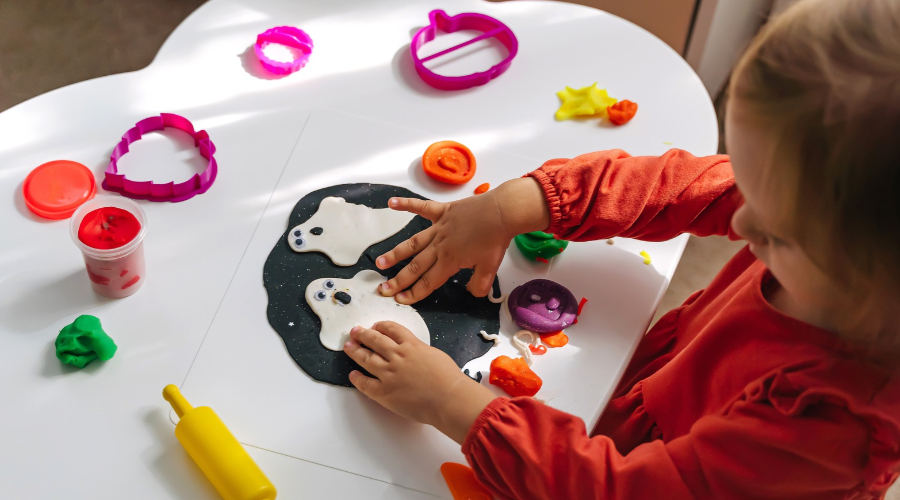
Playdough and clay are great materials to encourage sensory exploration. Invite children to make their own silly or ghoulish creations by hand. No two monsters ever look alike, which makes this a particularly good activity for supporting creativity and imagination.
To add another dimension to this activity, you can include simple accessories such as:
- Googly eyes
- Pipe cleaners
- Craft sticks
- Pom-poms
- Buttons
As children roll, pinch, flatten, and mold the dough, they strengthen muscles they’ll later use for writing, drawing, and other fine motor activities.
Outdoor “I Spy”
One of the best sensory activities for preschoolers and toddlers involves a simple walk in the woods or around the neighborhood.
Play the “I Spy” game by having one person choose something from their environment and letting the other person guess what it might be. “I Spy” requires children to pay attention to their surroundings and really observe what they see, smell, touch, and hear. Plus, it’s a great way to get kids outside exploring during the fall season!
For more ideas like this, read our blog post: 15 Outdoor Fall Activities for Kids: Make the Most of Cooler Days.
Share Halloween Sensory Play Through Cultural Exchange
For families who host an au pair, Halloween sensory activities can become an especially fun way to share traditions.
An au pair may have experienced Halloween very differently growing up, or perhaps they celebrated an entirely different autumn holiday. As children explore pumpkins, bake cookies, or mix a batch of witches’ brew, conversations often emerge about seasonal traditions, favorite holiday foods, and childhood memories from around the world.
These small moments of play can become opportunities for cultural exchange, helping children understand that families in different countries celebrate the season in unique ways.
Grab hold of Halloween fun this season with Au Pair in America®!
Halloween sensory activities give toddlers and preschoolers a chance to get into the spirit of the holiday while exploring new textures, practicing fine motor skills, and engaging their senses through hands-on play.
For families who host an au pair with Au Pair in America®, activities like these can become even easier to incorporate into the season. An au pair can help supervise messy sensory projects, set up age-appropriate activities, and keep children engaged while parents focus on other responsibilities. At the same time, the flexible childcare support an au pair provides can help create more opportunities for families to slow down, spend quality time together, and build Halloween traditions that will stick with children for many years to come.
