Yearly Archives: 2022

Winter Sports & Sports Insurance

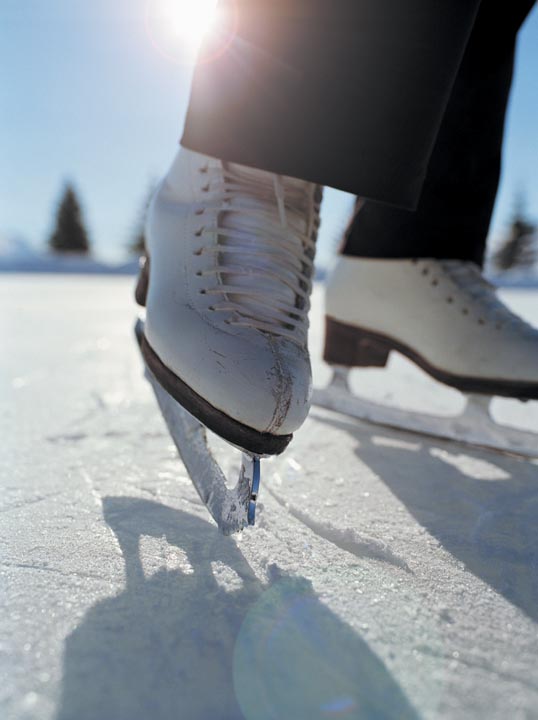
Trying out winter sports like ice skating, skiing, and snowboarding can be very exciting, especially if this is your first time experiencing winter weather. However, you should also know the risks and be prepared.

Is it risky to do winter sports without sports insurance?

Yes. If you have to pay your own hospital bills for a broken bone, you might be shocked at how much that would cost. I checked this website for some cost estimates.

Here are a couple examples:

  • Without medical coverage, treating a broken arm or leg (that does not require surgery) could cost up to $2,500.
  • Without medical coverage, treating a broken arm or leg (requiring surgery) could cost $16,000 or more.

It is important that you understand how your medical coverage works for sports-related injuries. There is a list of “high-risk sports/activities” that are not covered by basic or upgrade medical insurance plans. Those activities are only covered by the Sports Insurance Package.

The Sports Insurance was available pre-departure and may also be purchased at any time during your year. It takes effect within 48 hours of your enrollment and it is good for 12 months. The cost will be the same ($105) whether you have a month left or your whole year ahead of you. I recommend you pay for it early on if you didn’t already purchase it. You never know when an opportunity might present itself and you don’t want to miss out on an adventure. You also don’t want to take the risk of getting injured and being responsible for the bill on your own.

Below is a partial list of sports that are only covered by the sports insurance package:
Football, Rugby, Scuba diving, Ski-doo,  Wakeboarding, Skydiving, Parachuting, Rock climbing, Zipline, Skateboarding, Rollerblading, Roller skating,  Ice Skating, SkiingSnowboardingSnowmobiles & Snowshoeing.  View the full list on your insurance brochure.

Note: Injuries sustained while partaking in these sports are ONLY covered with the purchase of Sports Insurance.

How to register for the Sports Insurance
Use the 2022 Sports Insurance Enrollment Form to register. Contact your community counselor, if you are unsure which insurance package you have and/or have questions about sports insurance.

If you think you will be doing any of these sports, you should get it now.
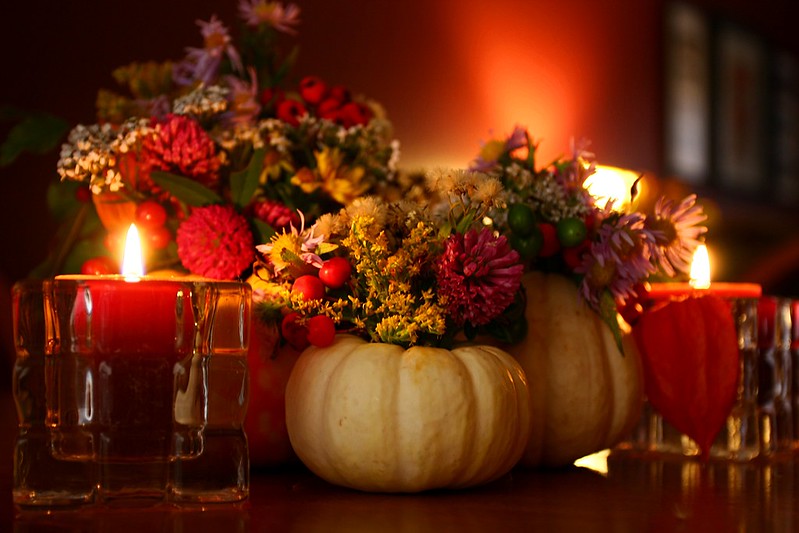
Making Thanksgiving Memories Together

Thanksgiving is a public holiday celebrated on the fourth Thursday in November every year in the United States. It started as a harvest festival and has been celebrated nationally on and off since 1789.  The most important part of Thanksgiving for American families is to spend family time together.

Martin Cathrae

 “My favorite holiday was Thanksgiving. Firstly, it was my first holiday with the whole family in America. Secondly, the whole family came together. All aunts and uncles and their kids came to grandma’s. We played football with all of them, including grandma and grandpa. It was the first time I played it and it was so much fun for all. We had a great dinner with all the typical things you can imagine … it was deeeelicious! It was so great to be with such a big family and I really enjoyed that day. I will remember it my whole life, I hope.” – Swantje from Germany

Here are a few tips to help you have a terrific Thanksgiving experience.

Host Parents
Please plan to include your au pair in your Thanksgiving celebration, if at all possible. If you are traveling or will not be able to invite your au pair to join you for Thanksgiving, give her plenty of notice and help her make alternate plans. You don’t want to leave your au pair alone over the holiday.

Au Pairs
If you are invited to attend dinner, please let your family know within 5 days of the invitation, whether you are planning to attend, so they may make plans. If your host family is unable to include you in their Thanksgiving plans, please let me know if you have trouble making other plans, so I can assist.

Make sure to discuss time off during this holiday weekend. Many host families work the Friday after Thanksgiving so do not assume you have this day off or the entire weekend. Talk to your host family, BEFORE you make any plans.

Bonus Tip for the Kids
If you are looking for a fun recipe to make with your au pair, check out these turkey cookies. Find more fun activities and recipes on the Au Pair in America Fall Holidays pinboard.


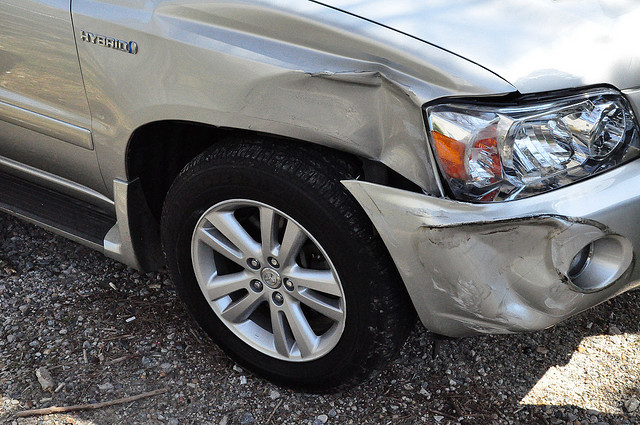
What to do After an Auto Accident

Having a car accident is a very upsetting, stressful situation. Being prepared and knowing what to do can make things a little bit easier. Make sure you know which host parent to call in case of an accident.

Make sure you have all the necessary documents in your car glove box. Read this post on What to Keep in the Car Glove Box for a detailed list.

If you have an accident: (from Edmunds.com)

  1. Keep Safety First. Drivers involved in minor accidents with no serious injuries should move cars to the side of the road and out of the way of oncoming traffic. Leaving cars parked in the middle of the road or busy intersections can result in additional accidents and injuries. If a car cannot be moved, drivers and passengers should remain in the cars with seatbelts fastened for everyone’s safety until help arrives. Make sure to turn on hazard lights and set out cones, flares, or warning triangles if possible.
  2. Exchange Information. Print this Car Accident Emergency Form to keep in the car. After the accident, exchange the following information: name, address, phone number, insurance company, policy number, driver license number, and license plate number for the driver and the owner of each vehicle. If the driver’s name is different from the name of the insured, establish what the relationship is and take down the name and address for each individual. Also make a written description of each car, including year, make, model and color — and the exact location of the collision and how it happened. Finally, be polite but don’t tell the other drivers or the police that the accident was your fault, even if you think it was.
  3. Photograph and Document the Accident. Use your camera to document the damage to all the vehicles. Keep in mind that you want your photos to show the overall context of the accident so that you can make your case to a claims adjuster. If there were witnesses, try to get their contact information; they may be able to help you if the other drivers dispute your version of what happened.

Image: cygnus921 (Flickr)

Surviving & Thriving in the Holiday Season

The fall/winter holiday season is most often a time of joy and excitement. However, it can also be a time of stress and disappointment for both host families and au pairs. The pandemic will add its own complexities to the holiday season.
Here are some ideas and insights that will hopefully help you avoid stress and disappointment and share more of the joy and excitement!

Holiday Work Schedules

Miscommunication over the schedule is the #1 issue for host families and au pairs over the holidays. As a reminder to assist with scheduling, program guidelines state an au pair can work up to 45 hours per week and no more than 10 hours per day. Hours cannot be carried from week to week. Please take the time to discuss your schedules and expectations.

The au pair program regulations do not have requirements for au pairs to be given holidays off. However, in the spirit of the program and since most parents will be at home spending time with their children, the majority of host families give au pairs some or all of the winter holidays off Thanksgiving Day, Christmas Day, New Year’s Eve, and New Year’s Day. Please discuss this so that everyone is clear about the schedule when making holiday plans.

Religion

For au pairs with religious beliefs different from your own, you may choose to encourage her to share the associated traditions with your family. If you are not comfortable with this aspect of cultural exchange, your au pair may need your help as well as appropriate time off to participate in her own holiday traditions. Enabling her to do this is very important. Her holiday or her time to celebrate the holiday may not be the same as yours; try to take this into consideration if you can when you make her work schedule. You may find that there is no conflict in giving her time off if her traditions are different, and it can relieve a great deal of anxiety to take her preferences into consideration. If you do need your au pair to work during the holiday, please tell her way in advance so that it is not a surprise. Help her to see this as a positive aspect of the cultural exchange if she will be actively sharing in the holiday celebration.

Changes to Routine

The dynamics of established relationships and routines change during the holiday. The high emotions and energy of the children (compared to their more reasonable behavior during the rest of the year) may seem like craziness to the au pair. Assure her that this new set of behaviors is temporary and the household will be back to normal soon. In the meantime, suggest specific things she can do to help. Encourage her to roll with the punches and enjoy the craziness. Also, the number of gifts, food, decorations, etc., can be unfamiliar and overwhelming. Try to include the au pair in some quiet, meaningful time together when the true spirit of the holidays is shared.

These are important days ahead. This is perhaps the greatest opportunity of the year to respect and learn about cultural differences, which is, indeed, one of the basic elements of the Au Pair in America program. There will be fun-filled memories. This should be a time of love and understanding. Please do your part to make that happen.

Wishing you every happiness of the season!

Photo: Sean Hobson

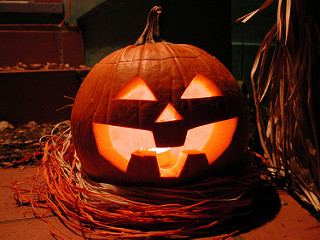
Fall Traditions: Carving Pumpkins

A treasured fall/Halloween tradition in the United States is pumpkin carving or making “jack-o’-lanterns”. Whether this is your first time decorating a pumpkin or you are a seasoned pro, these videos have a few tips and ideas you may find helpful.

How do I make it safe for the children? If you are carving a pumpkin with your host child(ren), remember to be very careful with them around sharp tools. You can purchase kid-safe pumpkin carving tools that cut without a sharp blade. If you don’t have those, let kids help with all of the tasks that don’t involve a knife such as: picking the pumpkin, scooping out the insides, choosing the design and adding any other decorative touches. You can buy or print pumpkin templates online and school aged kids can use a thumbtack to mark the pattern on the pumpkin. Here you can find a free template and instructions on how to do this.

How long do they last? Carved jack-o-lanterns begin to deteriorate after just a few days outside (depending on the weather). Temperatures over 60˚F (15˚C), rain, and freezing then thawing all make them rot more quickly. So, if you want your pumpkin to be fresh on the big night, don’t carve it more than a few days before Halloween and/or keep it in a cool place.

Check out Au Pair in America’s Halloween Fun Pinterest board and our Fall Bucket List for more fall traditions and activities to try.

Here are video readings of two of my favorite pumpkin stories.

Image: Jeff Kramer

Preparing for Cold Weather

We’re in that time of year when Virginia temperatures start dipping a little lower. It can be 70°F (21°C) one day and 40°F (4°C) the next. This is a time when many people begin to opt for indoor activities instead of outdoor ones. But there may be times when COVID case numbers are high and you might want to try outdoor activities to minimize your risk of getting sick.

There is a Scandinavian saying…

If you come from a warmer climate this may sound impossible to you. Over the years I have noticed that the temperature difference is much easier on those who have a gradual adjustment. It allows your body time to adjust to the lower temperatures. So, that’s the good news for all of you who are already here. Your body is already getting adjusted, give your mind a chance to stay open to enjoying the outdoors.

The next thing to do is get yourself the proper clothing and accessories. Start shopping for cold weather clothing: sweater, coat, gloves, hat, scarf, long underwear & boots. Ask your host family if they have some you can use and then start looking out for sales and checking thrift shops for the rest. Take a look at what you already have and think of ways to layer it. A long sleeve t-shirt under a sweatshirt may be as warm as a jacket. A pair of leggings or tights under a pair of jeans adds a lot of warmth.

It may also help to remind yourself that people in other parts of the U.S. and other countries experience much colder temperatures than we do and are still able to enjoy the outdoors.

Pick your activities carefully. If you are sitting next to a fire pit or doing physical activity you will feel warmer. When you take the kids to the playground or out in the snow, don’t sit on the bench and watch. You will feel warmer and have more fun if you are actively involved and have fun with them.

If you have tips on enjoying the cold weather, please share them!

CONTEST: The first au pair in our cluster to message Christine their favorite cold-weather activity will win a prize! WINNER – Gilma!

Image: Canva.com

What are the Rules for Holidays?

There are no regulations requiring  host families to give au pairs any specific holidays off. In the spirit of the au pair program, many host families will give their au pair the day off on major holidays (Thanksgiving, Christmas, New Year’s Eve, July 4th). Most au pairs look forward to sharing holidays like Thanksgiving and Christmas with their host families to truly experience American family life.

There are other federal holidays (usually on Mondays), when many offices and sometimes schools are closed. These are regular workdays for an au pair, unless their host parents tell them otherwise.

There are also days when the children will be home from school. These can be on holidays, special work days for teachers or closures due to bad weather. Host parents and au pairs should review the calendar sent home from school and mark these on the family calendar and/or au pair work schedule. It’s a good idea for au pairs to plan some activities to occupy children who are at home. Keeping kids occupied and engaged can prevent boredom and sibling squabbles.

Au Pairs – Please check with your host parents before you assume you have any holiday off. Do not make any travel plans until you have received confirmation that you will not work on this day.

Host Parents – Please let your au pair know in advance when she will have a holiday off or a day when kids will be home from school, so she may plan accordingly. When there are school days off,  be sure to make adjustments to your au pair’s work schedule  to stay within the State Department regulations: not exceeding 10 hours per day or 45 hours per week (or 30 hours per week for Educare).

Photo: Dafne Cholet

Where to Get Your Flu Shot

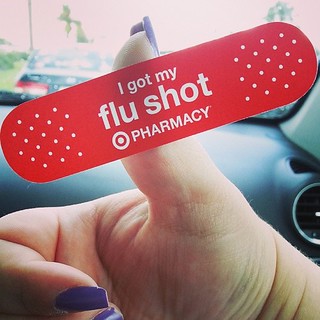
Many au pairs and host families are looking for places to get flu shots this time of year. Your au pair insurance does NOT cover preventive care like immunizations. But there are lots of places to get flu shots for free or a small fee. (There are also lots of places to get a free COVID-19 booster shot, more information on that can be found here on our medical resources page.)

If the host family is urging their au pair to get the seasonal flu shot and she agrees to get it, the host family would be responsible for the expense.

If you are planning to get the seasonal flu vaccine, it is recommended that you get it as early as possible. Below are some links to help you decide where to go for a flu shot.

County Health Department

I have been told that Kaiser Permanente is offering free flu shots as well.

Local Pharmacies

Flu shots are also available for a fee at local pharmacies. Here are the current without insurance prices for some local pharmacies. (Even though you have medical insurance, it doesn’t cover vaccines, so that is why you will pay the without insurance price.) Prices are subject to change, so check before you go.

  • Target $25
  • Costco (members and non-members) $15
  • CVS $32
  • Walgreens $32
  • Walmart $25

Avoid Falling Victim to Scammers

There are always people out there who are looking for ways to trick people out of their money and personal information. Below I will explain some scams and how to protect yourself.


SCAM #1 – Calls asking for your PIN, password, personal information, or payment.

  • Your bank will not call you and ask you for your PIN number or password.
  • IRS and Social Security Administration will not ask you for payment or personal info over the phone. Government agencies usually handle issues like this by sending a letter.
  • The number shown on the caller ID can be manipulated, don’t take that as a sign that a call is legitimate.

What to do? Whenever you are in doubt, hang up and call the bank (or company) directly using a number you already have for them.

SCAM #2 – Email asking you to click a link to verify your personal information or share your password or PIN.

  • Be very suspicious of emails asking you to click links.
  • Scammers are very good at creating official-looking emails and web pages.

What to do? Whenever you are in doubt, go directly to the website (not using the link in the email).

SCAM #3 – You see an offer online telling you to send them some money and they will double it or a pop-up ad says that you have won a great prize and just need to give them your information.

  • When something sounds too good to be true, it usually is.

What to do? Do not give your personal information or any money to people you don’t know.

SCAM #4– You receive a call and you are told to stay on the phone while you go transfer or withdraw money from the bank and if you don’t you will be arrested or your bank account seized.

  • They are using the idea that this is an urgent situation to make you act quickly without thinking to avoid the consequence they have told you.

What to do? Do not follow their instructions.

Whenever you are in doubt, do not do as the caller or email asks. Check with your host parents or community counselor.

One last note on protecting your personal information…

It is very important to keep your social security number private. 

There are very few situations where you will need to share this (bank, IRS, department of motor vehicles). Those are times you are taking an action and need to provide it. At other times, leave your Social Security card safe at home. There is not a legitimate time when someone would be calling you on the phone or emailing you asking for that number.

Image: Canva.com

Stopping for School Buses

With schools in session and many new au pairs who have recently arrived, I wanted to remind everyone about what to do in different situations with school buses. If you have questions, please ask me or your host parents.
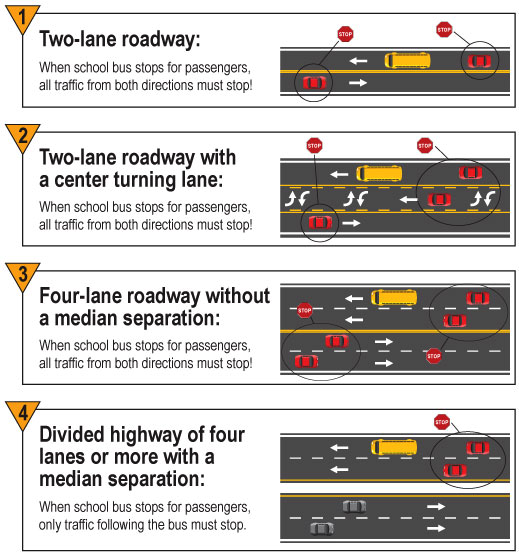


The rules regarding stopping for school buses are:

  • It is against the law to pass a stopped school bus while its lights are flashing and its’ stop arm is extended.
  • On undivided roadways, with no physical barrier or median, vehicles must stop on both sides of the roadway.
  • Yellow flashing lights indicate that the bus is preparing to load or unload children. Motorists should slow down and prepare to stop their vehicles.
  • Red flashing lights and extended stop arms indicate that the bus has stopped, and children are getting on or off. Motorists approaching from either direction must wait until the red lights stop flashing before proceeding.

Police, who observe a motorist failing to stop and remain stopped for a school bus, can issue the violator a citation that carries a large fine and points against your driver’s license. There are also cameras on buses and the camera-generated fine is at least $250.