Category Archives: Au Pair Tips

Preparing for Cold Weather

We’re in that time of year when Virginia temperatures start dipping a little lower. It can be 70°F (21°C) one day and 40°F (4°C) the next. This is a time when many people begin to opt for indoor activities instead of outdoor ones. But there may be times when COVID case numbers are high and you might want to try outdoor activities to minimize your risk of getting sick.

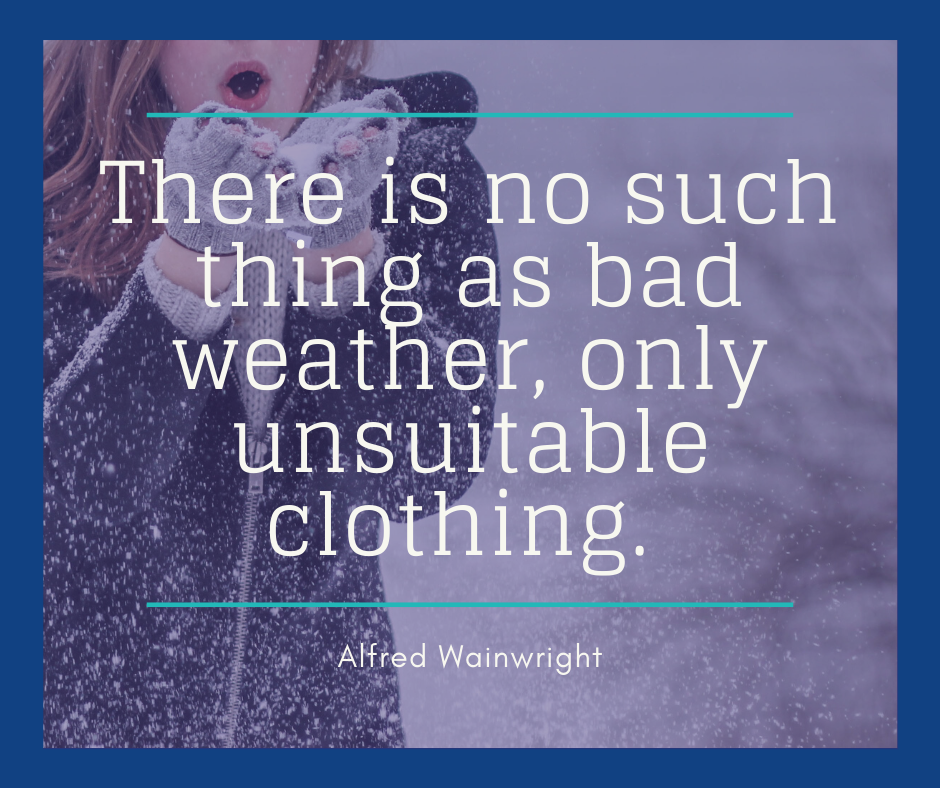
There is a Scandinavian saying…

If you come from a warmer climate this may sound impossible to you. Over the years I have noticed that the temperature difference is much easier on those who have a gradual adjustment. It allows your body time to adjust to the lower temperatures. So, that’s the good news for all of you who are already here. Your body is already getting adjusted, give your mind a chance to stay open to enjoying the outdoors.

The next thing to do is get yourself the proper clothing and accessories. Start shopping for cold weather clothing: sweater, coat, gloves, hat, scarf, long underwear & boots. Ask your host family if they have some you can use and then start looking out for sales and checking thrift shops for the rest. Take a look at what you already have and think of ways to layer it. A long sleeve t-shirt under a sweatshirt may be as warm as a jacket. A pair of leggings or tights under a pair of jeans adds a lot of warmth.

It may also help to remind yourself that people in other parts of the U.S. and other countries experience much colder temperatures than we do and are still able to enjoy the outdoors.

Pick your activities carefully. If you are sitting next to a fire pit or doing physical activity you will feel warmer. When you take the kids to the playground or out in the snow, don’t sit on the bench and watch. You will feel warmer and have more fun if you are actively involved and have fun with them.

If you have tips on enjoying the cold weather, please share them!

CONTEST: The first au pair in our cluster to message Christine their favorite cold-weather activity will win a prize! WINNER – Gilma!

Image: Canva.com

What are the Rules for Holidays?

There are no regulations requiring  host families to give au pairs any specific holidays off. In the spirit of the au pair program, many host families will give their au pair the day off on major holidays (Thanksgiving, Christmas, New Year’s Eve, July 4th). Most au pairs look forward to sharing holidays like Thanksgiving and Christmas with their host families to truly experience American family life.

There are other federal holidays (usually on Mondays), when many offices and sometimes schools are closed. These are regular workdays for an au pair, unless their host parents tell them otherwise.

There are also days when the children will be home from school. These can be on holidays, special work days for teachers or closures due to bad weather. Host parents and au pairs should review the calendar sent home from school and mark these on the family calendar and/or au pair work schedule. It’s a good idea for au pairs to plan some activities to occupy children who are at home. Keeping kids occupied and engaged can prevent boredom and sibling squabbles.

Au Pairs – Please check with your host parents before you assume you have any holiday off. Do not make any travel plans until you have received confirmation that you will not work on this day.

Host Parents – Please let your au pair know in advance when she will have a holiday off or a day when kids will be home from school, so she may plan accordingly. When there are school days off,  be sure to make adjustments to your au pair’s work schedule  to stay within the State Department regulations: not exceeding 10 hours per day or 45 hours per week (or 30 hours per week for Educare).

Photo: Dafne Cholet

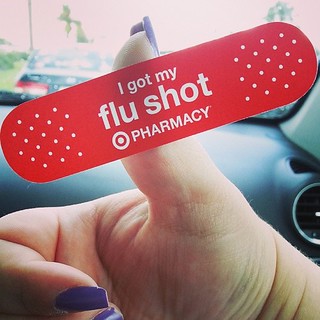
Where to Get Your Flu Shot

Many au pairs and host families are looking for places to get flu shots this time of year. Your au pair insurance does NOT cover preventive care like immunizations. But there are lots of places to get flu shots for free or a small fee. (There are also lots of places to get a free COVID-19 booster shot, more information on that can be found here on our medical resources page.)

If the host family is urging their au pair to get the seasonal flu shot and she agrees to get it, the host family would be responsible for the expense.

If you are planning to get the seasonal flu vaccine, it is recommended that you get it as early as possible. Below are some links to help you decide where to go for a flu shot.

County Health Department

I have been told that Kaiser Permanente is offering free flu shots as well.

Local Pharmacies

Flu shots are also available for a fee at local pharmacies. Here are the current without insurance prices for some local pharmacies. (Even though you have medical insurance, it doesn’t cover vaccines, so that is why you will pay the without insurance price.) Prices are subject to change, so check before you go.

  • Target $25
  • Costco (members and non-members) $15
  • CVS $32
  • Walgreens $32
  • Walmart $25

Avoid Falling Victim to Scammers

There are always people out there who are looking for ways to trick people out of their money and personal information. Below I will explain some scams and how to protect yourself.


SCAM #1 – Calls asking for your PIN, password, personal information, or payment.

  • Your bank will not call you and ask you for your PIN number or password.
  • IRS and Social Security Administration will not ask you for payment or personal info over the phone. Government agencies usually handle issues like this by sending a letter.
  • The number shown on the caller ID can be manipulated, don’t take that as a sign that a call is legitimate.

What to do? Whenever you are in doubt, hang up and call the bank (or company) directly using a number you already have for them.

SCAM #2 – Email asking you to click a link to verify your personal information or share your password or PIN.

  • Be very suspicious of emails asking you to click links.
  • Scammers are very good at creating official-looking emails and web pages.

What to do? Whenever you are in doubt, go directly to the website (not using the link in the email).

SCAM #3 – You see an offer online telling you to send them some money and they will double it or a pop-up ad says that you have won a great prize and just need to give them your information.

  • When something sounds too good to be true, it usually is.

What to do? Do not give your personal information or any money to people you don’t know.

SCAM #4– You receive a call and you are told to stay on the phone while you go transfer or withdraw money from the bank and if you don’t you will be arrested or your bank account seized.

  • They are using the idea that this is an urgent situation to make you act quickly without thinking to avoid the consequence they have told you.

What to do? Do not follow their instructions.

Whenever you are in doubt, do not do as the caller or email asks. Check with your host parents or community counselor.

One last note on protecting your personal information…

It is very important to keep your social security number private. 

There are very few situations where you will need to share this (bank, IRS, department of motor vehicles). Those are times you are taking an action and need to provide it. At other times, leave your Social Security card safe at home. There is not a legitimate time when someone would be calling you on the phone or emailing you asking for that number.

Image: Canva.com

Stopping for School Buses

With schools in session and many new au pairs who have recently arrived, I wanted to remind everyone about what to do in different situations with school buses. If you have questions, please ask me or your host parents.


The rules regarding stopping for school buses are:

  • It is against the law to pass a stopped school bus while its lights are flashing and its’ stop arm is extended.
  • On undivided roadways, with no physical barrier or median, vehicles must stop on both sides of the roadway.
  • Yellow flashing lights indicate that the bus is preparing to load or unload children. Motorists should slow down and prepare to stop their vehicles.
  • Red flashing lights and extended stop arms indicate that the bus has stopped, and children are getting on or off. Motorists approaching from either direction must wait until the red lights stop flashing before proceeding.

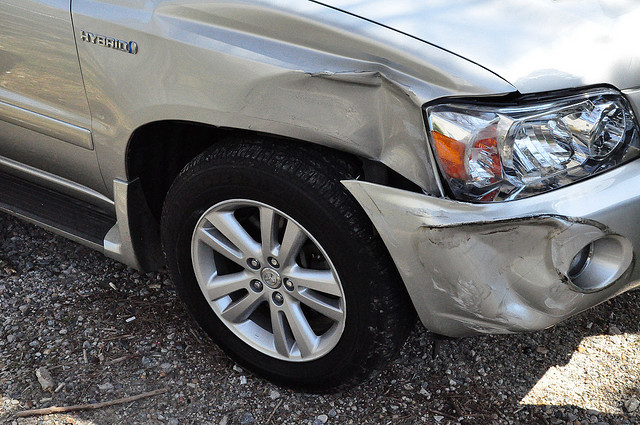
Police, who observe a motorist failing to stop and remain stopped for a school bus, can issue the violator a citation that carries a large fine and points against your driver’s license. There are also cameras on buses and the camera-generated fine is at least $250.

Going Unplugged During Work Hours

Phones, tablets, and laptops are wonderful tools to stay connected and informed, but we need to be careful not to let them become distractions from real-life interactions and most importantly our responsibilities.

Au Pairs – Imagine for a moment that you went to the hospital and you were in the care of doctors and nurses. How would you feel if those doctors and nurses who were there to care for you were more interested in texting or using their personal computer than caring for you?  How would that make you feel, about yourself and about them? Would you think that you were getting the treatment you deserved?  Would you feel like paying the bill after your stay?

Life as an au pair, it is a fine balance between employee and family member. You live with your host family and participate with them as a member of the family, but you also have clear responsibilities as a childcare provider. Being a childcare provider is truly one of the most important jobs I can think of because you are helping to shape the next generation.  What message are you sending them when you would rather interact with a computer than with them? How will they feel about themselves and about you? Children feel as though everything is about them. They will see this as a rejection of them and they will be more likely to act out.

It also poses a safety concern when you are not paying enough attention to the children in your care. Injuries and accidents happen, but when an adult caregiver is close by and appropriately supervising the chances of a major injury dramatically reduce.

During work hours, the following would not be considered acceptable:

  • Texting* or talking to friends on the phone
  • Using Skype, FaceTime, or any other video chat
  • Using TikTok, Instagram, Snapchat, WhatsApp, Twitter, Facebook,YouTube,  or any other app or social media site
  • Playing online games
  • Anything else on your phone or computer unless it is going to Nickjr.com together with your host children

*you do want to be on the lookout for texts from your host parents

Even if you work 45 hours a week, that leaves you 123 hours per week for all of that other stuff, or about 70 hours (if you are getting the recommended 7-8 hours of sleep per night.)

Phone Use in the Car – Using your phone to text or talk without Bluetooth while driving is illegal, a huge safety risk, and a bad example for the children (future drivers) in the car with you. One moment of distraction when you are driving can change someone’s life forever: your own and/or others around you. If you find the temptation to check your phone is too much for you, set up the driving mode feature on your phone.

Host Parents – You need to be clear about what you consider acceptable during work hours to avoid misunderstandings. Also, please understand that you are dealing with a generation of people who are very accustomed to being plugged in at all times. Their intention is not to be rude, they don’t necessarily realize how their actions will be perceived. Please use this information as an opportunity to begin a dialogue on the issue.

Image: Pexels.com

Camp Au Pair: Art Experiences

This week’s Camp Au Pair theme is Art Experiences.

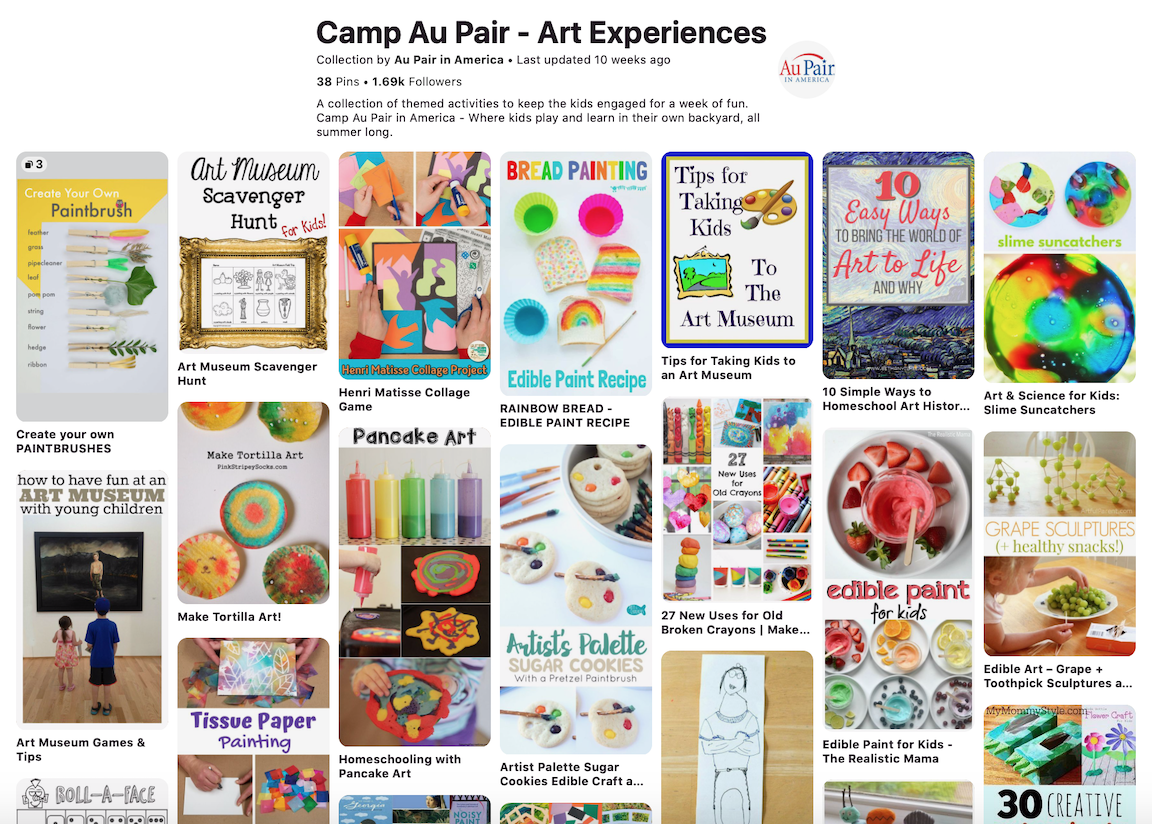
Crafts, recipes, activities, and games related to art can all be found here on the Camp Au Pair – Art Experiences pinboard.
Field Trips can be a great way for kids to learn and have new experiences. Get permission from your host parents before any outings and be sure to take all social distancing precautions. Some museums are requiring advanced tickets or have reduced hours due to the pandemic.

Online Art FunHere is a great website with lots of art activities including ones for older kids.

Webcams – You can do a google search for art websites with webcams. Here are a few to get you started:

Videos – Look for fun videos on YouTube about drawing and all kinds of art.

Books – Stop by your local library and look for books on famous artists and art.

Check YouTube for books on art being read aloud:

Image: teachkidsart.com
Camp Au Pair – Dinosaurs

This week’s Camp Au Pair theme is Dinosaurs.

Crafts, recipes, activities, and games related to dinosaurs can all be found here on the Camp Au Pair – Dinosaurs pinboard.

Field Trips can be a great way for kids to learn and have new experiences. Get permission from your host parents before any outings and be sure to take all social distancing precautions.

Local Field Trips:

    • Fossil Parks
    • Science Center
    • Science & Natural History Museums

Virtual Field Trips:

Toys – Many kids have dinosaur toys already. See what your kids have and think of fun, new ways you can play with these toys with them. Imagine taking a plastic dinosaur and making footprints in play dough to form your own fossils.

Webcam – This NPS Paleontology Lab offers a webcam where you can watch paleontologists remove rock from around fossils. The cam is normally working 9 am-5 pm PST, so 12-8 pm our time.

Videos – Look for fun videos on YouTube about dinosaurs and fossils. Here are a few to get you started.

Movies – The Good Dinosaur, Land Before Time, and Ice Age are all great family movies that fit with this theme. For older kids, consider movies like Journey to the Center of the Earth and Jurassic Park (which is rated PG-13).

Books – Check your kids’ bookshelf for books on dinosaurs.

Photo: krojotak.com

Camp Au Pair – Bugs & Butterflies

This week’s Camp Au Pair theme is Bugs & Butterflies.

More than 100 crafts, recipes, and activities related to all kinds of bugs, insects, butterflies, and spiders can be found here on the Camp Au Pair – Bugs & Butterflies pinboard.

Outdoors – Kids today do not spend enough time outdoors. Take the kids in the backyard or another nature area (approved by your host parents) and do some activities related to this theme:

  • Allow them to search for bugs and butterflies.
  • Observe lightning bugs (also known as fireflies) in the evening. Here is a map showing what people call these little guys in different parts of the country.
  • After it rains, look for earthworms. Not bugs or butterflies, but very interesting creatures you can find in your own backyard.

NOTE: If you are outdoors with the children, be sure to check for ticks when you come back inside. Here is a blog post explaining the health risk ticks can pose and how to find and remove them safely.

Videos – You can find many great videos of butterflies and insects on YouTube. Check out these videos for kids about bees and ants. All about Insects covers lots of tiny creatures who crawl and fly. Here are a few videos to get you started.

Movies – A Bugs Life, The Bee Movie, Maya the Bee, and The Ant Bully all fit this theme.

Webcams – You can do a Google search for websites with webcams that allow you to observe bugs.

Books – Make a trip to the library and/or check your kids’ bookshelf for books on bugs and butterflies. You may find some classics like The Very Hungry Caterpillar or The Grouchy Ladybug by Eric Carle. You can also find books being read aloud on YouTube videos like this one.

Image: minieco.co.uk

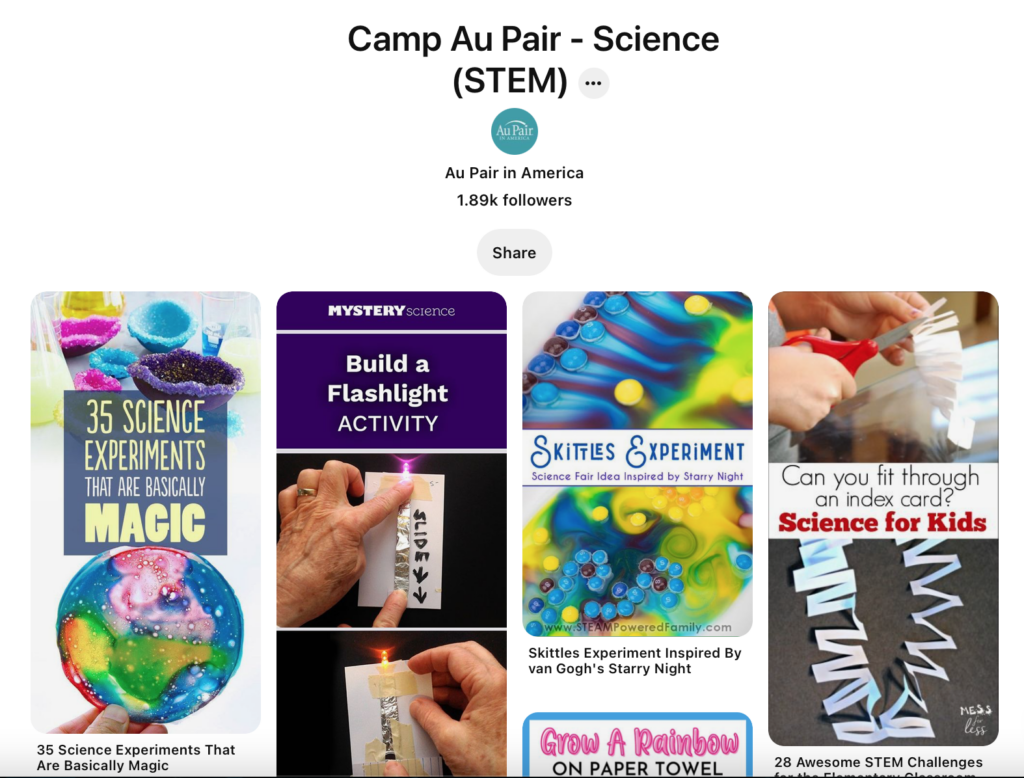
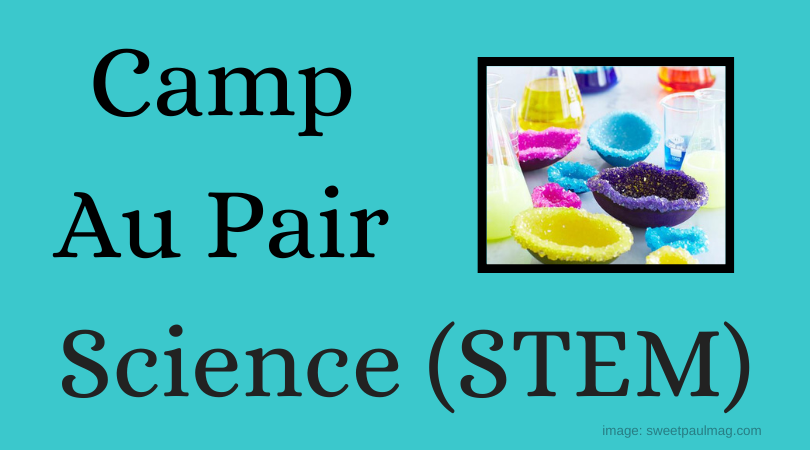
Camp Au Pair – Science (STEM)

This week’s Camp Au Pair theme is Science (STEM). This includes science, technology, engineering, and math.

More than 100 crafts, recipes, activities, and experiments related to science, technology, engineering, and math can be found here on the Camp Au Pair – Science (STEM) pinboard.

Field Trips can be a great way for kids to learn and have new experiences. Get permission from your host parents before any outings. Here are a few places to go, that fit this theme:

  • Airport Observation Area
  • Aquarium
  • Factory Tour
  • Farm
  • Krispy Kreme Doughnuts*
  • Museum
  • Nature Center
  • Planetarium
  • Science Center
  • Zoo

*Some but not all locations have a viewing area where you can watch the machines used to make them.

Virtual Field Trips

Videos – On YouTube, you can find many great videos of science experiments to do with kids.

The Magic School Bus is a cartoon series with episodes on lots of great science topics. You can find some episodes on YouTube and the entire series on Paramount Plus.

Bill Nye the Science Guy is science TV series for kids. There is an episode guide on his website with clips and explanations on a wide variety of science topics.

MoviesThe Lego Movie, Big Hero 6, Wall-E, and Hidden Figures all fit the STEM theme.

Webcams – You can do a google search for science websites with webcams. Here is a collection of 22 science webcams from around the world.

Books – Stop by your local library and look for books on science, technology, engineering, and math.

Remember… Science is learning about how things work through observation and experimentation. Every day is full of opportunities to encourage children’s natural curiosity about the world!

Image: sweetpaulmag.com