Category Archives: Host Family Tips

Health & Safety – Where are Ticks?

When the weather is nice, we spend more time outdoors with the children. Playing in the back yard, at the playground or walking on nature trails are great ways to get fresh air and exercise.

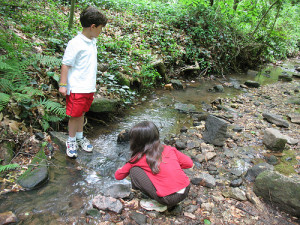
kids in woods

What are ticks? – Ticks are small mites that attach themselves to the skin and suck blood. Click HERE to see examples of ticks.

Where are ticks commonly found? – Ticks are normally found in areas with trees, bushes or tall grass. This includes back yards, parks, nature areas, and most places you would be spending time with the children outdoors in the nice weather.

What needs to be done? – When you return home from areas where ticks might live, carefully check the children and yourself (clothing, skin, and scalp) for ticks. If you find a tick on one of your host children, notify your host parents immediately.

Most ticks do not carry diseases, and most tick bites do not cause serious health problems. But it is important to remove a tick as soon as you find it. Removing the tick completely and cleaning the area with soap and water or antiseptic spray, may help avoid diseases such as Lyme Disease that the tick may pass on during feeding, or a skin infection where it bit you.

Click HERE for Instructions on Removing a tick from WebMD.com.

How do you reduce the risk of tick bites?  – Use a repellent with DEET on the skin. Repellents containing 20% or more DEET can protect up to several hours. Always follow product instructions. Adults should apply this product to their children, avoiding the hands, eyes, and mouth. When you come back in from outside, it’s best to wash the repellent off of skin with soap and water. For detailed information about using DEET on children, see recommendations from the American Academy of Pediatrics.

Drive-In Movies

In the time of COVID-19 and social distancing, the drive-in movie theater may be our only option for viewing movies outside of the house for a while.

Have you ever been to a drive-in movie? Drive-in movies are outdoor theaters where the movie is projected on a large screen and you watch from your car. There were once over 4,000 drive-in theaters in the U.S., now only a few hundred remain.

One of those still operating is right here in Maryland, in the Baltimore area.  Bengies Drive-In has been in business since 1956.

It is about an hour’s drive from most parts of our cluster, but since they are the only one left in the entire state of Maryland, that doesn’t sound so far.

If you have never been to a drive-in movie, you should definitely check it out!

Drive-In Movie Tips for First-Timers:

  • You pay one price whether you stay for 1, 2 or all 3 movies. *Tickets must be purchased online in advance*
  • The drive-in is only open Spring-Fall.
  • You may stay in your car or bring chairs to sit in front of your parking space.
  • If you go in the summer and plan to sit outside, bring insect repellent spray or bug bracelets.
  • If you go in the fall when the weather is cool, bring blankets.
  • Masks are required at the entrance and anytime you go outside of your parking space. Check the Bengie’s website for their complete rules and precautions regarding COVID-19.
  • You cannot bring in outside food or drinks unless you purchase an outside food permit. I recommend you buy your snacks there. They have some interesting options that you don’t see at a regular movie concession stand and that’s part of the full experience.
  • Before you go, read the information on their website about headlights. You need to know how to disable your headlights when you are inside the movie.
  • You also need to figure out how to turn your vehicle to the “accessory setting” with your key. This will allow you to listen to the movie without draining your battery. VERY IMPORTANT
  • There is a note on their website about how to enter their address with GPS.  There address is listed as “Middle River” not Baltimore on GPS.

If you give it a try, let me know how you like it!

Preventing Dehydration in Hot Weather

Dehydration means that the body lacks the necessary amount of fluid. Infants and small children are more likely to become dehydrated than older children or adults, because they can lose relatively more fluid quickly.

Here are some steps to take to make sure children remain hydrated in the summer months:

  • Encourage your child to drink plenty of water. On hot days, children should drink significantly more water than usual, as they are losing more due to the heat.
  • Do not wait until your child is thirsty to give him water. By the time they feel thirsty, they are already becoming dehydrated.
  • If your child is resistant to drinking enough water, have other liquids on hand for your child to drink throughout the day.
  • Be alert to changes in behavior. A child may act confused or more irritable when they are becoming dehydrated/overheated. Get them into cooler temperatures and drinking more fluids.
  • Dress your child in lightweight clothing in the summer months, particularly if she’ll be playing outdoors in warm weather. You may also consider clothes that are well ventilated as they do not trap heat close to the body.
  • When there are heat and/or air quality advisories because the weather is dangerously hot, you should avoid taking the children outdoors. Check with your host parents for further guidance on this topic.

Remember to follow these tips for yourself too, so you stay well hydrated.

Photo: Moyerphotos (Flickr)

Social Distancing: Free Virtual Escape Rooms

Libraries may be closed due to COVID-19, but many librarians are coming up with creative ideas to keep people entertained and promote literacy. One of those creative ideas is free virtual escape rooms. With a variety of themes, some may be fun to do on your own, others as activities with the kids.

Sydney Krawiec, Youth Services Librarian at Peters Township Public Library in McMurray, PA created this Hogwarts Virtual Escape Room. She shared this tutorial on how to create your own virtual escape room, which seemed to spark the creativity of many other librarians.

Some amazing librarians all over the country have been busy creating virtual escape rooms with a variety of themes.

Special thanks to the Humboldt County Library in Winnemucca, Nevada for gathering info on many of these escape rooms. Follow them on Facebook for their storytimes and weekly Facebook Live Science Time on Fridays.

Image: Canva.com

Social Distancing: Make a Family Time Capsule

When you are stuck at home, everyone tends to have their own ways to occupy that time individually. It’s also fun to have some activities you can do all together. Board games, puzzles and movie nights are always great options.

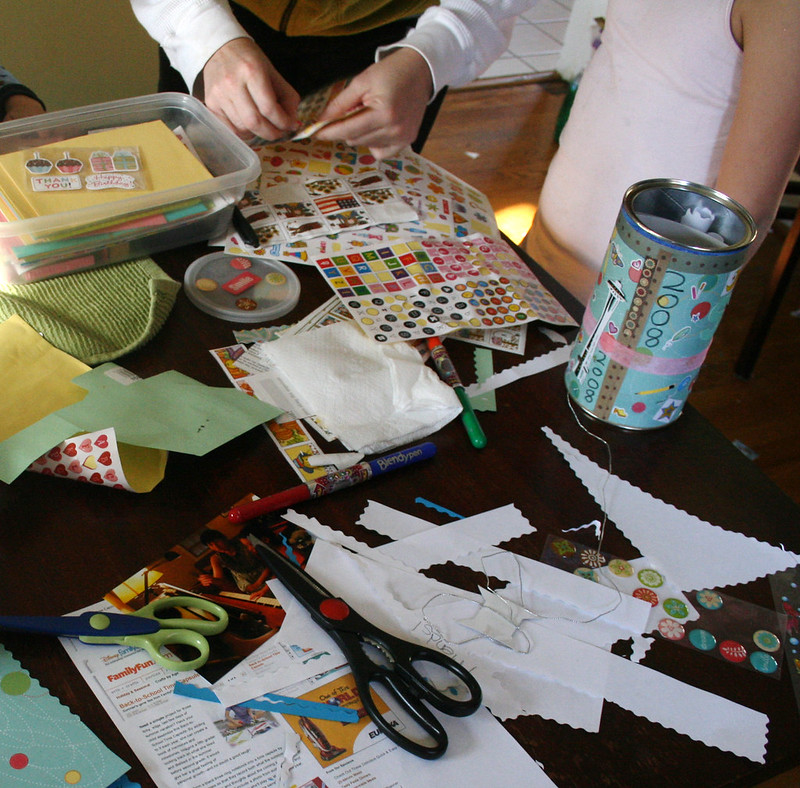
But, if you want to create something together that will be a keepsake to enjoy in the future, consider making a family time capsule. You can use materials you already have on hand at home. Working on this project together can also remind us that there is more going on in our lives than just the coronavirus, the things we enjoyed before this and what we have to look forward to when this time is over.

How to Make a Family Time Capsule 

Creating a family time capsule is a fun way to preserve what life is like today, to look back on it in the future.  Just 5 or 10 years is plenty of time for things to change. When you open the time capsule you can look back and see how things are different and whether some things remain the same. Making a time capsule with an au pair adds another layer to this idea. You can include traditions or recipes she has shared with your family.

There are many online articles about what to include in a time capsule and how to make one. Here are a few basic ideas to get you started:

Pick a container –  A large canister, plastic jar or any container with a lid that fits on tightly. Decide where you will store the time capsule to make sure you pick a container that is appropriate. Packing it away in the attic or basement is probably safer than burying it.

Decorate the container – You can decorate the container if you will be packing it away somewhere indoors.

Fill it up – The possibilities are limited only by your imagination (and the size of your container). Here are some things you may want to include:

Family photos – children’s artwork – letter to future self – newspaper, magazine pages showing popular hairstyles and fashion trends – postcards from most recent family vacation – list of prices of common items (gallon of gas, loaf of bread, etc) – tickets from movies or events, family recipe – a list of favorite things – pop culture list (movies, TV shows & music that are popular) – tracing of the children’s hands – something in each child’s handwriting – list of the technology devices you use now

Decide when you will open it – This could be in a certain number of years or on a special occasion in the future (child’s high school graduation, au pair returning to visit, family reunion).

Photo: Woodleywonderworks

Places to Go for Urgent Medical Care

In a true emergency, seek medical attention as soon as possible at the hospital emergency room.

If you have a medical problem that you would like to be seen by a doctor the same day for, but you do not feel that it is an emergency, the best place to go would be an urgent care clinic. If you go to the emergency room for something that is not an emergency (like for a sore throat or pink eye), they will see you and treat you, but will not admit you to the hospital. In a case like that, there is an additional $500 deductible by the insurance company. The emergency room is not to be used as your regular doctor.

Here is the link to the medical insurance information and claim forms: APIA Medical
You may go to any doctor or clinic you choose, but if you go to an in-network doctor you are less likely to be asked to pay upfront. If you do have to pay upfront, you can be reimbursed by submitting a claim form to the insurance (providing you have met your deductible, if applicable.)

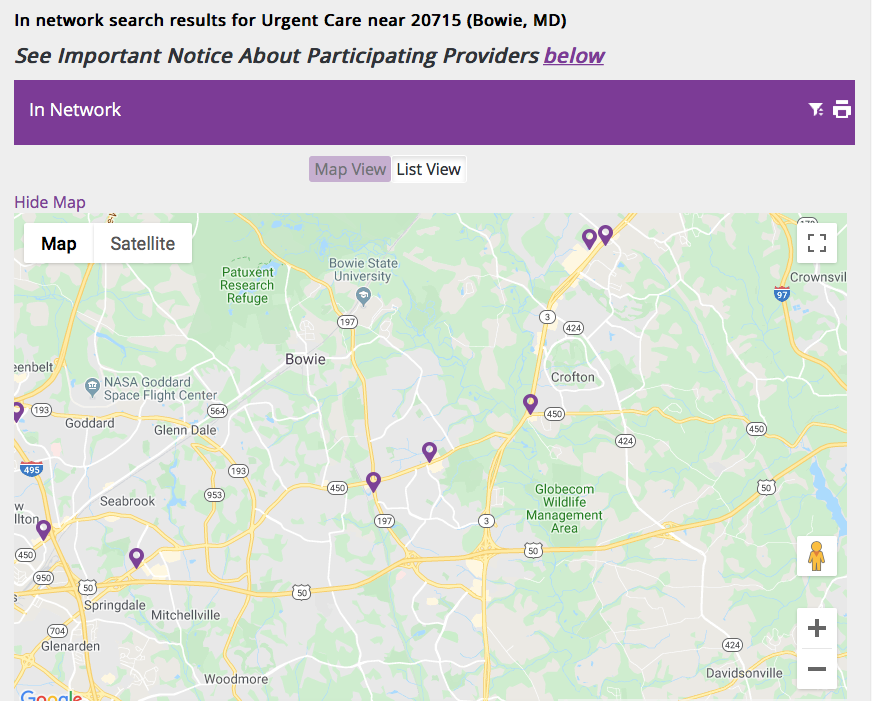
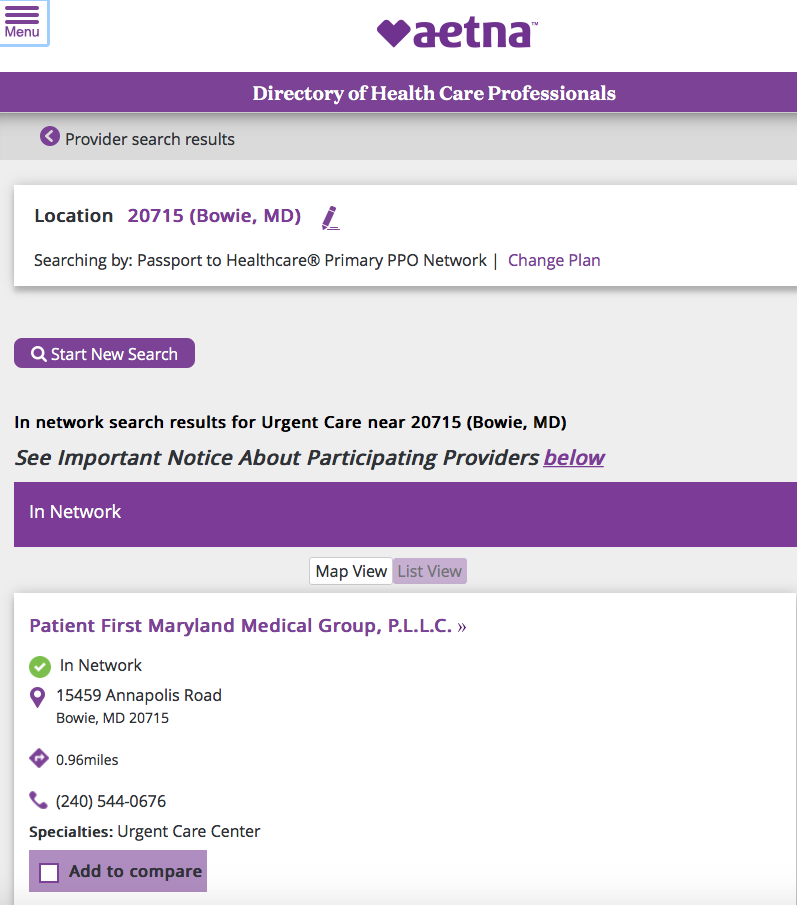
Here’s how to find the Urgent Care Centers near you who accept our insurance (Aetna)

  1. To find the one nearest to you, go HERE.
  2. Type in your zip code.
  3. Select a Plan. Choose “Passport to Healthcare Primary PPO Network”.
  4. Under “Find what you need by category”, select “Urgent Care” or “Walk-in Clinic”.

You will receive results like the examples below, in list view or map.
What if you know of another Urgent Care Center near you and it doesn’t appear on the insurance search results? You may call the facility and ask if they accept Aetna. If they say yes, you may go there also. Urgent Care Centers are popping up everywhere and they don’t always get added to the insurance listing immediately.

As of 1/9/2020, Patient First, Righttime, Concentra & Express Care are Aetna participating providers.  

For fairly simple medical issues the CVS Minute Clinic is a great option. 

CVS Minute Clinic – www.minuteclinic.com
Open daily – Hours vary by location. No appointment is necessary.
Locations including: Annapolis, Bethesda, Crofton, Edgewater, Langley Park, New Carrollton, Rockville, Silver Spring & Upper Marlboro
For less complicated illnesses including: Allergies, Bladder Infections, Colds, Ear Infections, Pink Eye & Styes, Sinus Infections, Strep Throat, Swimmer’s Ear, Athlete’s Foot, Cold Sores, and Vaccinations.
Visit their website for a complete list of locations, conditions they will treat and the costs.

Bring your Insurance Card – You will need to show your insurance card. You should have received an email from CISI when you arrived. You can search for that email and print your card. Another option is to register at the myCISI portal and print a card from there.


SaveSave

Top 3 Tips for Beating the Winter Blues

The winter has it’s own kind of beauty, but when the days are short and it’s cold outside, some people feel less energetic or even sad. The cold weather can make you feel like staying indoors. For some au pairs, those conditions can cause homesickness to resurface.

Here are some tips to fight the winter blues (sadness):

  1. Don’t hibernate. Hibernation is staying inactive or indoors for an extended period of time. Seeing friends and enjoying new activities is a great way to fight homesickness.
    • Meet up with friends for coffee or a movie.
    • Try new activities and foods.
    • Visit places you’ve been wanting to visit like museums and indoor landmarks.
  2. Stay physically active. Keeping moving helps elevate your mood and boosts your immune system.
    • Head to the gym or community center.
    • Go walking inside a shopping mall.
    • If you are feeling brave, dress warmly and get out there and enjoy the winter beauty!
  3. Maintain a Healthy Sleep Routine. It’s important to keep your body on a consistent sleep schedule. Too much or too little sleep can impact your mood and health.

Photo: Marwan Youssef

How Does Sports Insurance Work?

Trying out winter sports like ice skating, skiing and snowboarding can be very exciting, especially if this is your first time experiencing winter weather. However, you should also know the risks and be prepared.

Is it risky to do winter sports without sports insurance?

Yes. If you have to pay your own hospital bills for a broken bone, you might be shocked at how much that would cost. I checked this website for some cost estimates.


Here are a couple examples:

  • Without medical coverage, to treat a broken arm or leg (that does not require surgery) it could cost up to $2,500.
  • Without medical coverage, to treat a broken arm or leg (requiring surgery) it could cost $16,000 or more.

I wanted to make sure everyone understands how the medical coverage works for sports-related injuries. There is a list of “high-risk sports/activities” that are not covered with the basic or upgrade medical insurance plans. Those activities are only covered with the Sports Insurance Package.

The Sports Insurance was available pre-departure and may also be purchased at any time during your year. It takes effect within 48 hours of your enrollment and it is good for 12 months. The cost will be the same ($95) whether you have a month left or your whole year ahead of you. I recommend you pay for it early on, if you didn’t already purchase it. You never know when an opportunity might present itself and you don’t want to miss out on an adventure. You also don’t want to take a risk on getting injured and being responsible for the bill on your own.

Below is a partial list of sports that are only covered with the sports insurance package:
Football, Rugby, Scuba diving, Ski-doo,  Wakeboarding, Skydiving, Parachuting, Rock climbing, Zipline, Skateboarding, Rollerblading, Roller skating, Ice Skating, Skiing, Snowboarding, Snowmobile-riding & Snowshoeing. View a full list on your insurance brochure.

Note: Injuries sustained while partaking in these sports are covered with the purchase of the Sports Insurance ONLY.

How to register for the Sports Insurance
Contact Lisa or Christine, if you are unsure which insurance package you have. To sign up, submit a completed copy of the Sports Insurance Enrollment Form along with payment to Au Pair in America. It takes three days for your coverage to begin. If you think you will be doing any of these sports, you should get it now.

Surviving & Thriving in the Holiday Season

The winter holiday season is most often a time of joy and excitement. However, it can also be a time of stress and disappointment for both host families and au pairs.

Here are some ideas and insights that will hopefully help you avoid the stress and disappointment and share more of the joy and excitement.

Holiday Work Schedules

Miscommunication over the schedule is the #1 issue for host families and au pairs over the holidays. As a reminder to assist with scheduling, program guidelines state an au pair can work up to 45 hours per week and no more than 10 hours per day. Hours cannot be carried from week to week. Please take the time to discuss your schedules and expectations.

The au pair program regulations do not have requirements for au pairs to be given holidays off. However, in the spirit of the program and since most parents will be at home spending time with their children, the majority of host families give au pairs some or all of the winter holidays off: Thanksgiving Day, Christmas Day, New Year’s Eve and New Year’s Day. Please discuss this so that everyone is clear about the schedule when making holiday plans.

Religion

For au pairs with religious beliefs different from your own, you may choose to encourage her to share the associated traditions with your family. If you are not comfortable with this aspect of cultural exchange, your au pair may need your help as well as appropriate time off to participate in her own holiday traditions with another family, with a community group or with a religious institution. Enabling her to do this is very important. Her holiday or her time to celebrate the holiday may not be the same as yours; try to take this into consideration if you can when you make her work schedule. You may find that there is no conflict in giving her time off if her traditions are different, and it can relieve a great deal of anxiety to take her preferences into consideration. If you do need your au pair to work during the holiday, please tell her way in advance so that it is not a surprise. Help her to see this as a positive aspect of the cultural exchange if she will be actively sharing in the holiday celebration.

Changes to Routine

The dynamics of established relationships and routines change during the holiday. The parents are home more, and this is unsettling to the children as well as to the au pair. Some different work expectations may be needed since the kids may prefer to hover around the parents. This can make an au pair feel unwanted and unsure of what is expected of her. The high emotions and energy of the children (compared to their more reasonable behavior during the rest of the year) may seem like craziness to the au pair. Assure her that this new set of behaviors is temporary and the household will be back to normal soon. In the meantime, suggest specific things she can do to help. Encourage her to roll with the punches and enjoy the craziness. Also, the number of gifts, food, decorations, etc., can be unfamiliar and overwhelming. Try to include the au pair in some quiet, meaningful time together when the true spirit of the holidays is shared.

These are important days ahead. This is perhaps the greatest opportunity of the year to respect and learn about cultural differences, which is, indeed, one of the basic elements of the Au Pair in America program. There will be fun-filled memories. This should be a time of love and understanding. Please do your part to make that happen.

Wishing you all every happiness of the season!

Photo: Sean Hobson

Making Thanksgiving Memories Together

Thanksgiving is a public holiday celebrated on the fourth Thursday in November every year in the United States. It started as a harvest festival and has been celebrated nationally on and off since 1789.  The most important part of Thanksgiving for American families is to spend family time together.

Martin Cathrae

 “My favorite holiday was Thanksgiving. Firstly, it was my first holiday with the whole family in America. Secondly, the whole family came together. All aunts and uncles and their kids came to grandma’s. We played football with all of them, including grandma and grandpa. It was the first time I played it and it was so much fun for all. We had a great dinner with all the typical things you can imagine … it was deeeelicious! It was so great to be with such a big family and I really enjoyed that day. I will remember it my whole life, I hope.” – Swantje from Germany

Here are a few tips to help you have a terrific Thanksgiving experience.

Host Parents
Please plan to include your au pair in your Thanksgiving celebration, if at all possible. If you are traveling or will not be able to invite your au pair to join you for Thanksgiving, give her plenty of notice and help her make alternate plans. You don’t want to leave your au pair alone over the holiday.

Au Pairs
If you are invited to attend dinner, please let your family know within 5 days of the invitation, whether you are planning to attend, so they may make plans. If your host family is unable to include you in their Thanksgiving plans, please let me know if you have trouble making other plans, so I can assist.

Make sure to discuss time off during this holiday weekend. Many host families work the Friday after Thanksgiving so do not assume you have this day off or the entire weekend. Talk to your host family, BEFORE you make any plans.

Bonus Tip for the Kids
If you are looking for a fun recipe to make with your au pair, check out these turkey cookies. Find more fun activities and recipes on the Au Pair in America Fall Holidays pinboard.

Contest for au pairs: The first au pair to let Lisa or Christine know which traditional Thanksgiving food you are most looking forward to trying, will receive a prize!