Category Archives: Host Family Tips

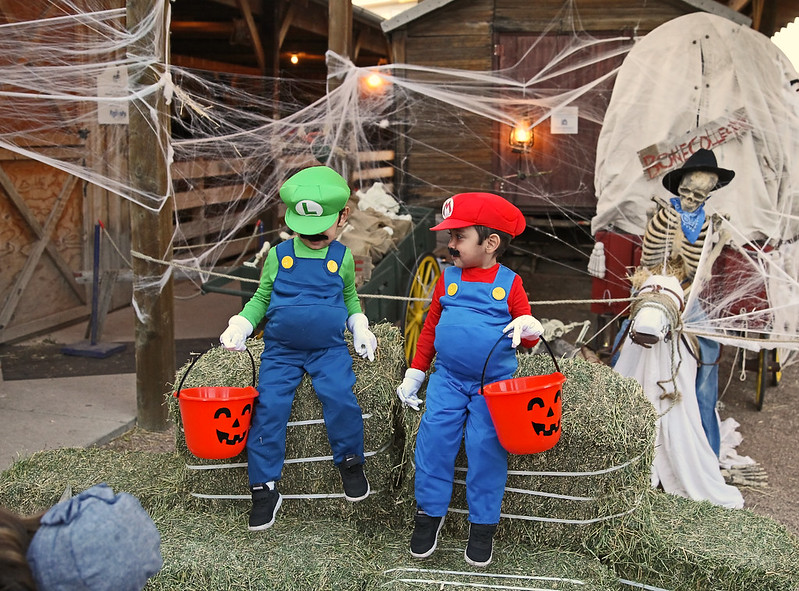
5 Tips for Safe Trick or Treating

  1. TRICK OR TREAT TOGETHER – Children should trick or treat in groups and younger children should have adult supervision.
  2. DRESS UP SAFELY – Avoid masks that block children’s vision and make sure costumes don’t pose a tripping hazard. Avoid sharp or heavy props that could cause injury.
  3. BE VISIBLE – Children should be visible to drivers. Consider reflective material on their costumes and/or carrying a flashlight or glow stick.
  4. CROSS SAFELY – Children should walk on the sidewalk and cross at corners.
  5. CHECK TREATS – Children should not eat candy until an adult has a chance to check it.

Contest: First au pair to send Christine or Lisa (through Facebook or email) the name of their favorite Halloween candy will receive a prize! 

Three Ways for Au Pairs to Stay Red Cross Ready

Being knowledgeable in basic first aid and CPR is important for au pairs (and anyone else caring for children). Au Pair in America’s commitment to infant/child safety begins before au pairs arrive to the U.S., with pre-arrival training and continue throughout the au pair year.
#1 Training At Orientation

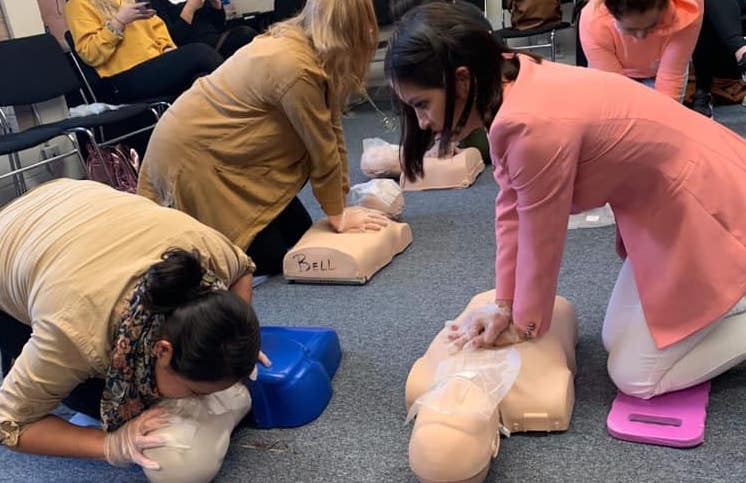
Our orientation includes seminars by American Red Cross instructors who provide hands-on demonstrations in infant/child CPR and safety. Printed materials are provided that reinforce the safety information and can be used to review from time to time.

#2 Enroll in a Red Cross Certification Class

After settling into their host community, all au pairs are encouraged to complete an Infant/Child CPR and First Aid certification program. Au Pair in America will pay for this training through the American Red Cross.
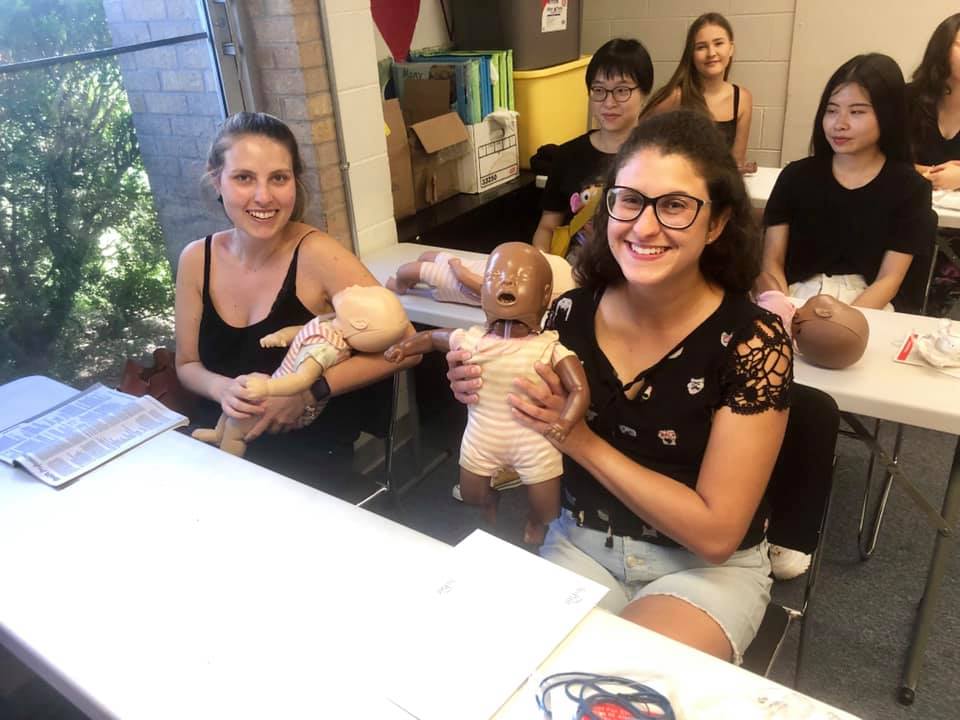
Classes are available through the Red Cross. Au Pair in America will pay for the cost of a class providing an au pair has at least six months left on her visa and is taking one of several approved childcare/child safety-related classes, such as Adult and Pediatric First Aid/CPR/AED. Au pairs should check with their community counselor and host family before signing up. Au Pair in America will register the au pair directly.

To locate a class, visit www.redcross.org/takeaclass. For step-by-step instructions on how to locate a class and have Au Pair in America complete enrollment, click here.

#3 Stay Current on Safety Information

The Official American Red Cross First Aid app puts expert advice for everyday emergencies in your hand. Available for iPhone and Android devices, this app gives you instant access to the information you need to know to handle the most common first aid emergencies. With videos, interactive quizzes and simple step-by-step advice, it’s never been easier to know first aid. Download the app for free from the American Red Cross website or in your app store.

Photos: Robin Leon
How to Handle Expenses

Host parents often ask for suggestions on how best to handle common expenses that occur as au pairs are caring for the children.
Miscellaneous Expenses

There are different ways to handle the little day to day expenses that come up.  Things like when an au pair takes the kids out for ice cream or picks up a gallon of milk.  Some families keep a cookie jar fund, a little cash that they set aside weekly or monthly for these types of expenses. Others give their au pair a prepaid debit card or transfer money using an app like Venmo or Zelle for this purpose. Below are some suggestions for avoiding problems with expenses.

Host Families

  • It’s important to be clear about how long this money should last and what types of expenses are approved.
  • Let the au pair know whether or not you expect receipts.

Au Pairs

  • Only spend the money on approved expenses.
  • If it is something you are not sure about, ask first.
  • Put your receipts in the cookie jar in place of the money to avoid any confusion.

Transportation Costs 

Host families are responsible for the au pair’s transportation costs: to and from classes, cluster meetings and when driving the kids. Transportation costs include: gas, parking, metro, bus, Uber or Lyft fare.

It is a good idea to figure out how much these transportation costs will be and give a gas or public transit allowance.  If your au pair is riding to classes or cluster meetings with another au pair, you should offer to share the cost of gas.

Au pairs are responsible for their own transportation at all other times.  You should replace the amount of gas used for personal use.

Photo: Andrea Travillian

Where to Get Your Flu Shot

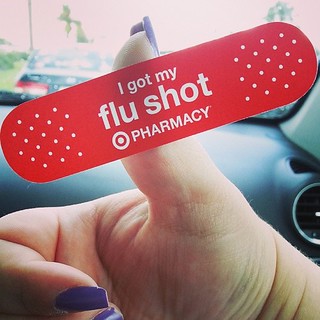
Many au pairs and host families are looking for places to get flu shots this time of year. Au Pair insurance does not cover immunizations, but there are lots of places to get flu shots for $35 or less.  If the host family is insisting that an au pair get a seasonal flu shot and she agrees to get it, the host family would be responsible for the expense.

If you are planning to get the seasonal flu vaccine, it is recommended that you get it as early as possible.

Anne Arundel County Health Department – Free, walk-in at advertised Flu Shot Clinics

Montgomery County Health Department – Free, by appointment at advertised Flu Shot Clinics 

Prince George’s County – Free, walk-in at advertised Flu Shot Clinics

I have been told that Kaiser Permanente is offering free flu shots as well.

Flu shots are also available for a fee at pharmacies such as Target, CVS, Rite Aid, Walgreens, etc.

Photo: Jen Vargas

Federal & School Holidays

As you may be aware, the public school children are out of school several days in September and October. These are regular workdays for an au pair, unless your host parents tell you otherwise. As with any “school holiday” start making plans for activities with the kids now.

In addition to holidays in September (Labor Day & Rosh Hashanah,) many public schools are also out additional days for teacher development and the end of the grading period. As with any holiday, it is up to the host family’s schedule whether you will have the holiday off. Please check with your host families before you assume you have this day off. Do not make any travel plans until you have received confirmation that you will not work on this day.

Host parents, please check your schedule to make sure that you are factoring in these hours and make adjustments as needed to stay within the State Department regulations not exceeding 10 hours per day or 45 hours per week (or 30 hours her week for Educare.)

Photo: Dafne Cholet

September 15-21 is Child Passenger Safety Week

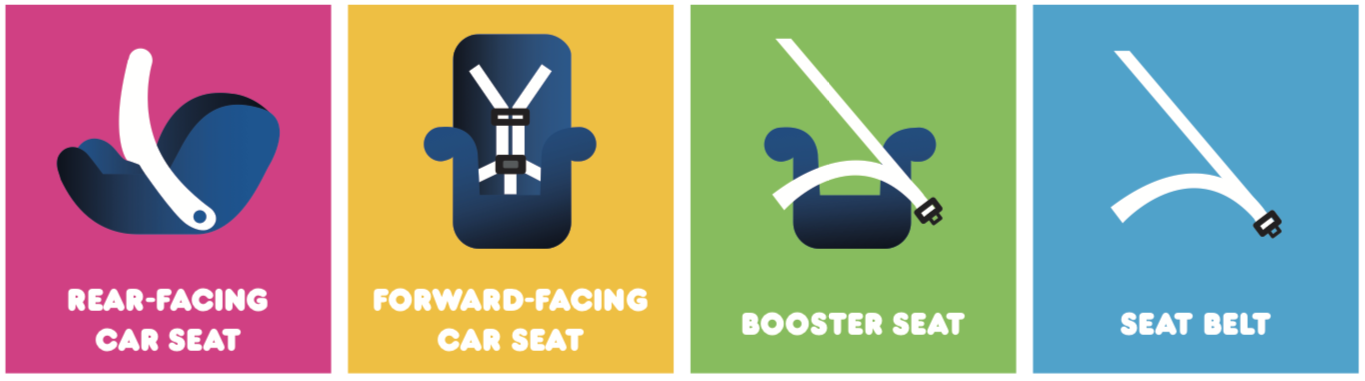
To help keep children safe on the roads, NHTSA is sponsoring Child Passenger Safety Week from September 15-21, 2019. The goal is to make sure your child is in the correct car seat, that it’s properly installed and used, and that it’s registered with its manufacturer to ensure you receive important safety updates.

Car seats and boosters are one of the easiest ways to keep your child safe and, when installed correctly, car seats can reduce the risk of fatal injury in a crash by 71% for infants and by 54% for toddlers. Unfortunately, many parents and caregivers install and/or use their child seats incorrectly. Among children under 5, an estimated 325 lives were saved in 2017 alone because they were properly buckled, but an additional 46 children could have been saved if every child was properly buckled.

Parents, Are You Using the Correct Car Seat or Booster Seat?

Parents and Au Pairs, Get Help Checking Your Car Seat

Parents, Get Notified about Recalls on your Car Seat

Image: nhtsa.gov

Stopping for School Buses


With schools about to go back in session and many new au pairs who have recently arrived, I wanted to remind everyone about what to do in different situations with school buses. If you have questions, please ask myself or your host parents.


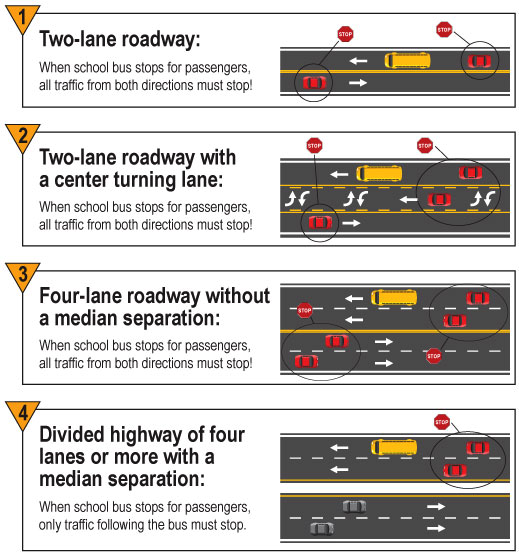
The rules regarding stopping for school buses are:

  • It is against the law to pass a stopped school bus while its lights are flashing and its’ stop arm is extended.
  • On undivided roadways, with no physical barrier or median, vehicles must stop on both sides of the roadway.
  • Yellow flashing lights indicate that the bus is preparing to load or unload children. Motorists should slow down and prepare to stop their vehicles.
  • Red flashing lights and extended stop arms indicate that the bus has stopped, and children are getting on or off. Motorists approaching from either direction must wait until the red lights stop flashing before proceeding.

Police, who observe a motorist failing to stop and remained stopped for a school bus, can issue the violator a citation which carries a $570.00 fine and 3 points. There are also cameras on buses and the camera-generated fine is $125. Drivers failing to stop for pedestrians in a crosswalk can be issued a citation for $80.00, and drivers failing to exercise due caution when encountering children can be issued a citation for $70.00.

For more information, check out this article on the Maryland MVA website.

Back to School Planning

Back to school time is here. This can mean changes to the au pair schedule and possibly to the duties.  It is very important to communicate these changes to avoid problems.

Here is a list of topics to consider discussing:

  • Au pair’s work schedule
  • The children’s school and activity schedules
  • Where the children get dropped off and picked up and who will be doing this
  • What to do if a child is staying home sick, late to school, does not get off the bus (if they are supposed to)
  • Driving laws regarding stopping for school buses
  • How to tell if school has been canceled or delayed for bad weather
  • Add the au pair to your list of people allowed to pick up the kids from school and explain the process
  • What to pack for lunch
  • The routine after school (do they have free time before starting homework, what to give for a snack, any chores, where do they put their backpacks & lunchboxes)
  • How to communicate about what’s going on at school. Your Kids in Care logbook from Au Pair in America can be a great two-way communication tool for keeping track of schedules, afterschool activities and day to day info that needs to be transferred between host parents and au pair.
  • If your au pair will be the one going through the children’s backpack and helping with homework, consider designating an area for putting things that need to be read and/or signed by parents.

Here are some Printable Fill-in-the-Blank School Notes for parents. You can print these out and have them ready for times when the kids are absent, late, have an early dismissal or you need to give permission for something.

Check out Au Pair in America’s Pinterest School Tips and Ideas pinboard for things like organization ideas, back to school traditions, printable lunch box notes, and fun lunch recipes.

Reminder: It is illegal in the State of Maryland for a child under the age of 8 to be left alone in the home or car. Please make sure that your drop off routine does not include leaving children under 8 at home or in the car while dropping off another child. Even if a host parent gives permission to do this, it is not allowed, because it is against the law.

Preventing Dehydration in Hot Weather

Dehydration means that the body lacks the necessary amount of fluid. Infants and small children are more likely to become dehydrated than older children or adults, because they can lose relatively more fluid quickly.

Here are some steps to take to make sure children remain hydrated in the summer months:

  • Encourage your child to drink plenty of water. On hot days, children should drink significantly more water than usual, as they are losing more due to the heat.
  • Do not wait until your child is thirsty to give him water. By the time they feel thirsty, they are already becoming dehydrated.
  • If your child is resistant to drinking enough water, have other liquids on hand for your child to drink throughout the day.
  • Be alert to changes in behavior. A child may act confused or more irritable when they are becoming dehydrated/overheated. Get them into cooler temperatures and drinking more fluids.
  • Dress your child in lightweight clothing in the summer months, particularly if she’ll be playing outdoors in warm weather. You may also consider clothes that are well ventilated as they do not trap heat close to the body.
  • When there are heat and/or air quality advisories because the weather is dangerously hot, you should avoid taking the children outdoors. Check with your host parents for further guidance on this topic.

Remember to follow these tips for yourself too, so you stay well hydrated.

Photo: Darwin Bell (Flickr)