Category Archives: Kids

Card Games for Kids of All Ages

I have wonderful memories of playing cards as a young child.  I was captivated as a 4-year-old when I first learned to play Fish. The way my older cousin shuffled the deck seemed like magic.  And then there was the overwhelming anticipation followed by horror if I unknowingly selected the Old Maid from the person next to me.  I couldn’t get rid of her fast enough.  Whether you have preschoolers or teens at home, here are 6 simple card games that everybody loves .

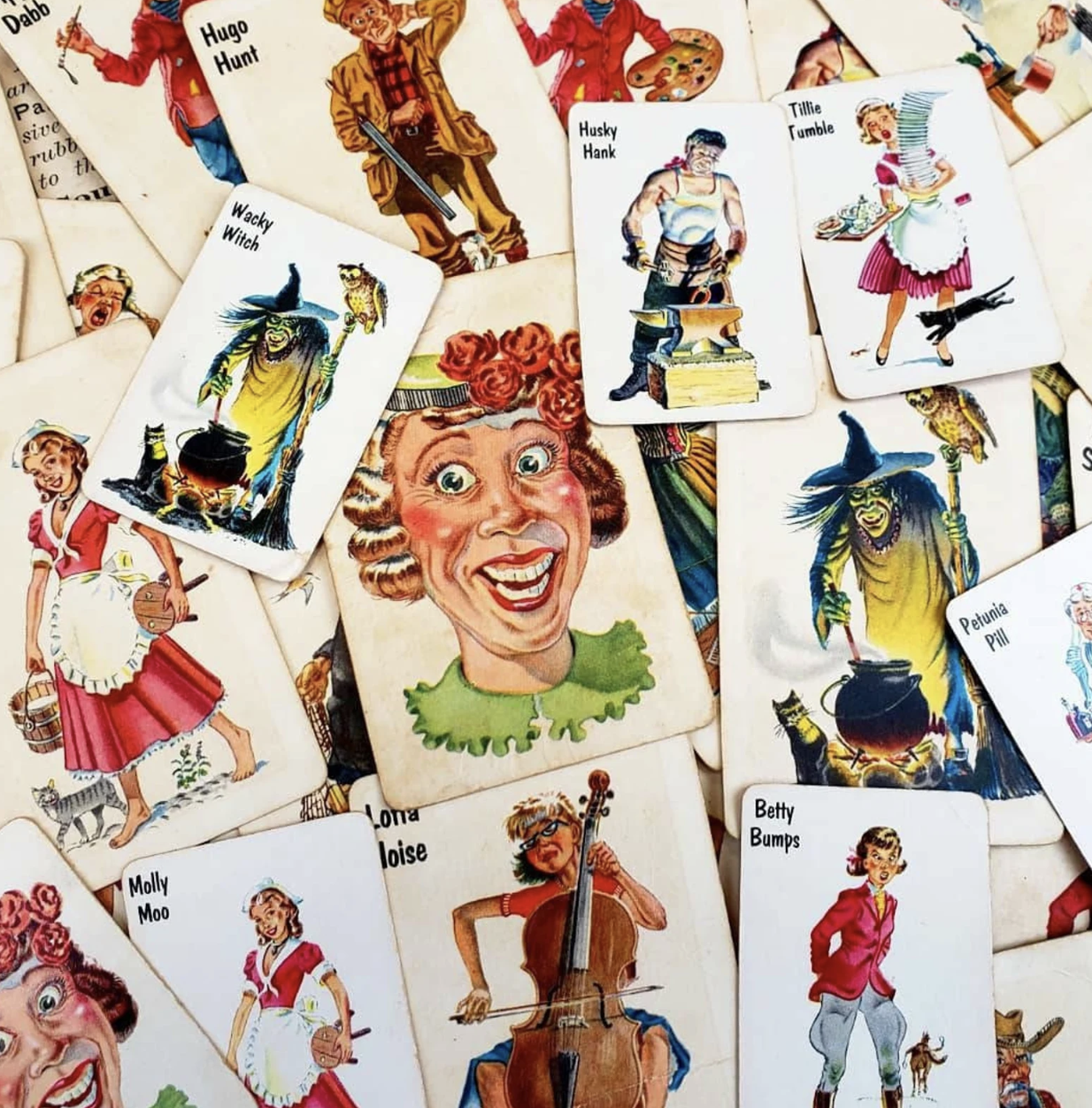
OLD MAID

Prep a standard deck of cards by removing one queen card and shuffling the deck. Deal out all the cards to all the players until there are none left. Players remove the pairs in their hands. The dealer fans out his cards in his hands and offers his hand to the player on his left. That player selects one and adds it to her own hand. Any matches are removed. The process continues around and around the circle until everything is paired up except the queen. Whoever is left with it at the end of the game is the Old Maid!

GO FISH

The goal here is to get four of a kind. Deal out seven cards to each player. If you have seven or more players, use five cards a piece. Put the remaining cards in a deck in the center. Player 1 picks any other player to ask if he has the card she’s looking for – e.g., “Do you have any threes?” Hand over the cards if you’ve got them or tell the person to “Go Fish” for a card in the pile. As soon as you find four of a kind, put them face up on the table. Whoever runs out of cards first is the winner.
WAR

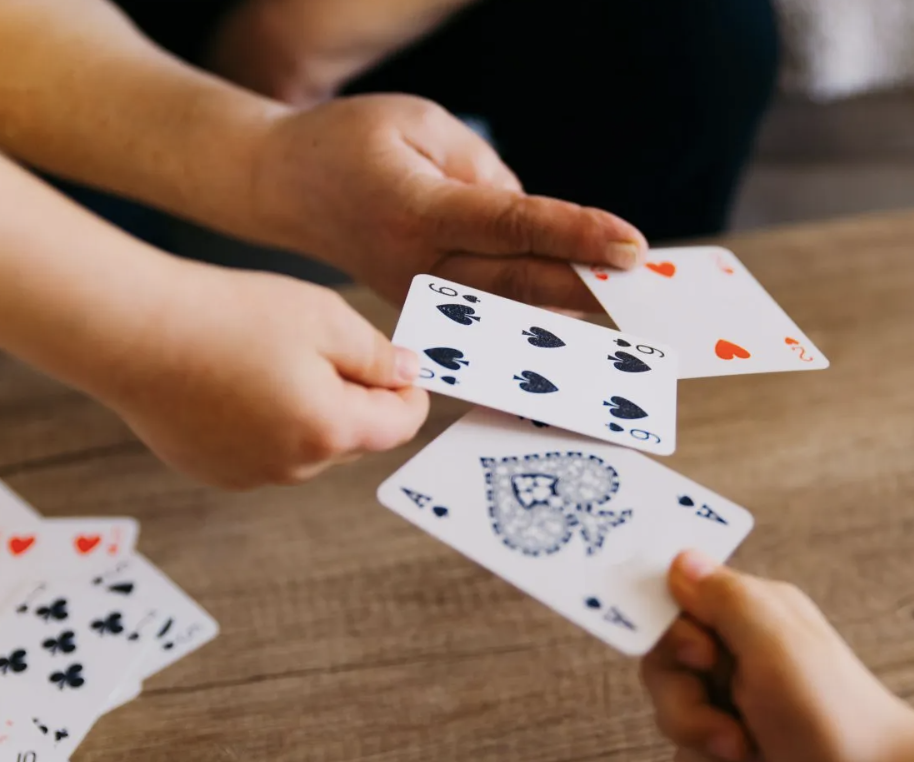
This game of luck can be totally addictive for kids. Divide the deck evenly among the two players. Each player turns over the top card on her deck at the same time. Whoever has the higher card takes both cards and puts them at the bottom of her stack. If the cards are the same, then it’s war! Each player counts out three cards (face down) and the next card is shown. Whoever has the higher card wins all the cards.

UNO /CRAZY EIGHTS

This game, played with UNO cards or a standard pack of playing cards, has one goofy twist: eights rule! Deal seven cards out to each person in a two-player game, or five cards for games with three or four players. The remaining cards go in a draw pile, and one card is turned over to start the play pile. The player to the dealer’s left must match the card’s number or suit from the face-up pile. A player who does not have a match may play an eight and change the suit to anything they wish. A player who has neither a match nor an eight must draw until he gets a card that can be played. The first to discard all their cards wins.

CONCENTRATION

Turn a standard deck of cards into a game of concentration. Shuffle the deck, laying the cards out in rows, and hunting for “matches” of the red kings, black threes, and so forth. For little ones, use just the two red suits for a more manageable set.

FOREHEAD POKER

This is a fun, super simple two-player game for the small fries. Place the deck between you and your child. Each of you grabs a card without peaking at it and places it on your forehead so that your opponent can see it, but you can’t. Have your little one guess if their own card is higher or lower than yours. If they’re right, they take the pair. If they’re wrong, it’s yours. Take turns and work your way through the deck. The person with the most cards at the end is the winner.

Make Your Own Ice Cream

Making your own ice cream is a fun summer activity to do with the kids. Here is a simple recipe. You can change it up by adding a little chocolate syrup, a few chocolate chips, or using a flavoring other than vanilla.

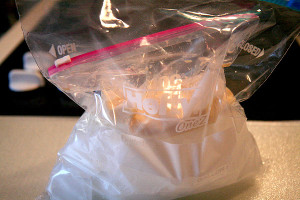
mixinbagIn a quart size zipper baggie, combine…
1 cup of whole milk or half and half
2 tablespoons of sugar
½ teaspoon vanilla extract

In a gallon size zipper baggie…
Fill ½ way with ice cubes
Add 1/3 cup of rock salt (if you don’t have rock salt you can use table salt or kosher salt)

Seal the small baggie carefully and place the inside of the large bag. Seal the large bag and shake the bags until you can see the mixture thickening (about 5 minutes.) It will be cold to hold, so you may want to carefully pass it back and forth between yourself and a partner.  Remove the small baggie and wipe the top off (to remove salt water,) unzip and enjoy!

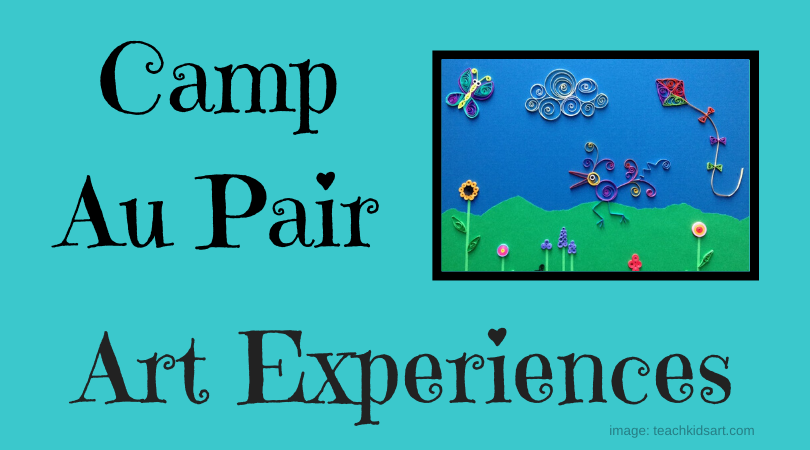
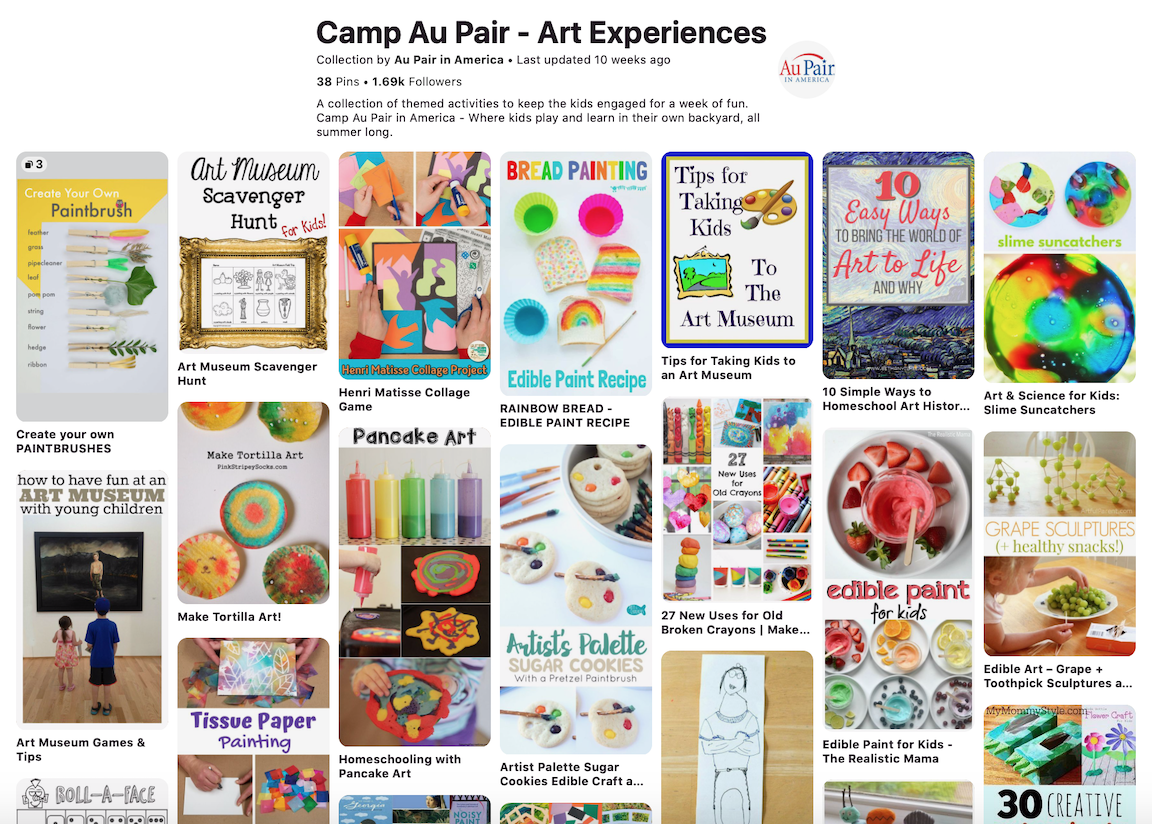
Camp Au Pair – Art Experiences

This week’s Camp Au Pair theme is Art Experiences.
Crafts, recipes, activities, and games related to art can all be found here on the Camp Au Pair – Art Experiences pinboard.

Field Trips can be a great way for kids to learn and have new experiences. Get permission from your host parents before any outings and be sure to take all social distancing precautions. Some museums are requiring advanced tickets or have reduced hours due to the pandemic.

Online Art FunHere is a great website with lots of art activities including ones for older kids.

Webcams – You can do a google search for art websites with webcams. Here are a few to get you started:

Videos – Look for fun videos on YouTube about drawing and all kinds of art.

Books – Stop by your local library and look for books on famous artists and art.

Check YouTube for books on art being read aloud:

Image: teachkidsart.com

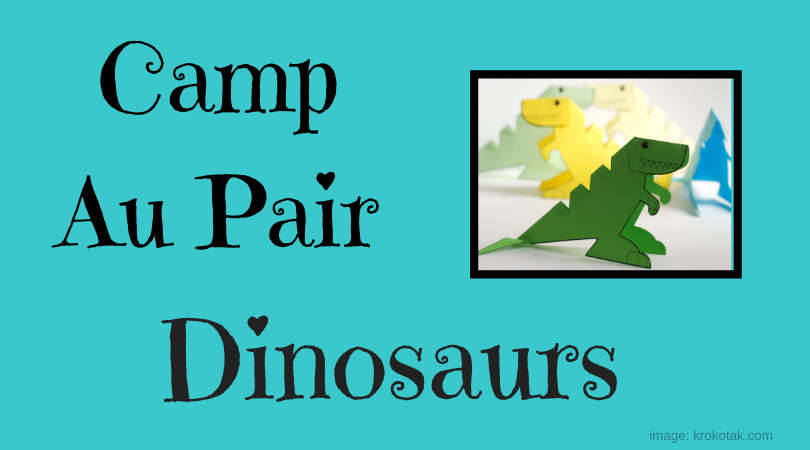
Camp Au Pair – Dinosaurs

This week’s Camp Au Pair theme is Dinosaurs.

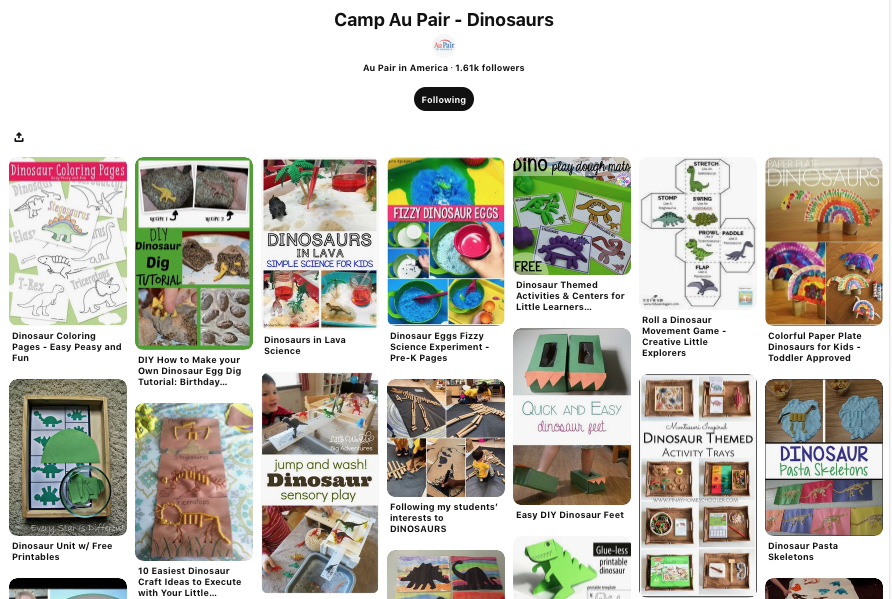
Crafts, recipes, activities, and games related to dinosaurs can all be found here on the Camp Au Pair – Dinosaurs pinboard.

Field Trips can be a great way for kids to learn and have new experiences. Get permission from your host parents before any outings and be sure to take all social distancing precautions.

Local Field Trips:

Virtual Field Trips:

Toys – Many kids have dinosaur toys already. See what your kids have and think of fun, new ways you can play with these toys with them. Imagine taking a plastic dinosaur and making footprints in play dough to form your own fossils.

Webcam – This NPS Paleontology Lab offers a webcam where you can watch paleontologists remove rock from around fossils. The cam is normally working 9 am-5 pm PST, so 12-8 pm our time.

Videos – Look for fun videos on YouTube about dinosaurs and fossils. Here are a few to get you started.

Movies – The Good Dinosaur, Land Before Time, and Ice Age are all great family movies that fit with this theme. For older kids, consider movies like Journey to the Center of the Earth and Jurassic Park (which is rated PG-13).

Books – Check your kids’ bookshelf for books on dinosaurs.

Photo: krojotak.com

Camp Au Pair – Bugs & Butterflies

This week’s Camp Au Pair theme is Bugs & Butterflies.

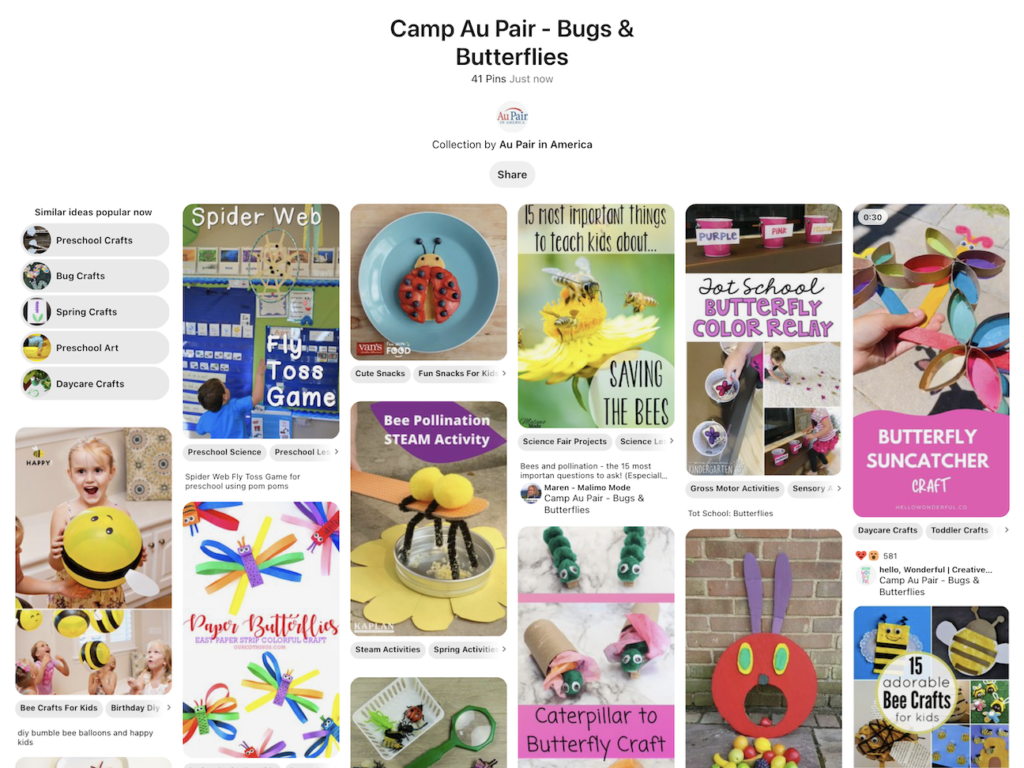
More than 100 crafts, recipes, and activities related to all kinds of bugs, insects, butterflies, and spiders can be found here on the Camp Au Pair – Bugs & Butterflies pinboard.

Outdoors – Kids today do not spend enough time outdoors. Take the kids in the backyard or another nature area (approved by your host parents) and do some activities related to this theme:

  • Allow them to search for bugs and butterflies.
  • Observe lightning bugs (also known as fireflies) in the evening.
  • After it rains, look for earthworms. Not bugs or butterflies, but very interesting creatures you can find in your own backyard.

NOTE: If you are outdoors with the children, be sure to check for ticks when you come back inside. Here is a blog post explaining the health risk ticks can pose and how to find and remove them safely.

Videos – You can find many great videos of butterflies and insects on YouTube. Check out these videos for kids about bees and ants. All about Insects covers lots of tiny creatures who crawl and fly. Here are a few videos to get you started.

Movies – A Bugs Life, The Bee Movie, Maya the Bee, and The Ant Bully all fit this theme.

Webcams – You can do a Google search for websites with webcams that allow you to observe bugs.

Books – Make a trip to the library and/or check your kids’ bookshelf for books on bugs and butterflies. You may find some classics like The Very Hungry Caterpillar or The Grouchy Ladybug by Eric Carle. You can also find books being read aloud on YouTube videos like this one.

Image: minieco.co.uk

Camp Au Pair – Science (STEM)

This week’s Camp Au Pair theme is Science (STEM). This includes science, technology, engineering, and math.

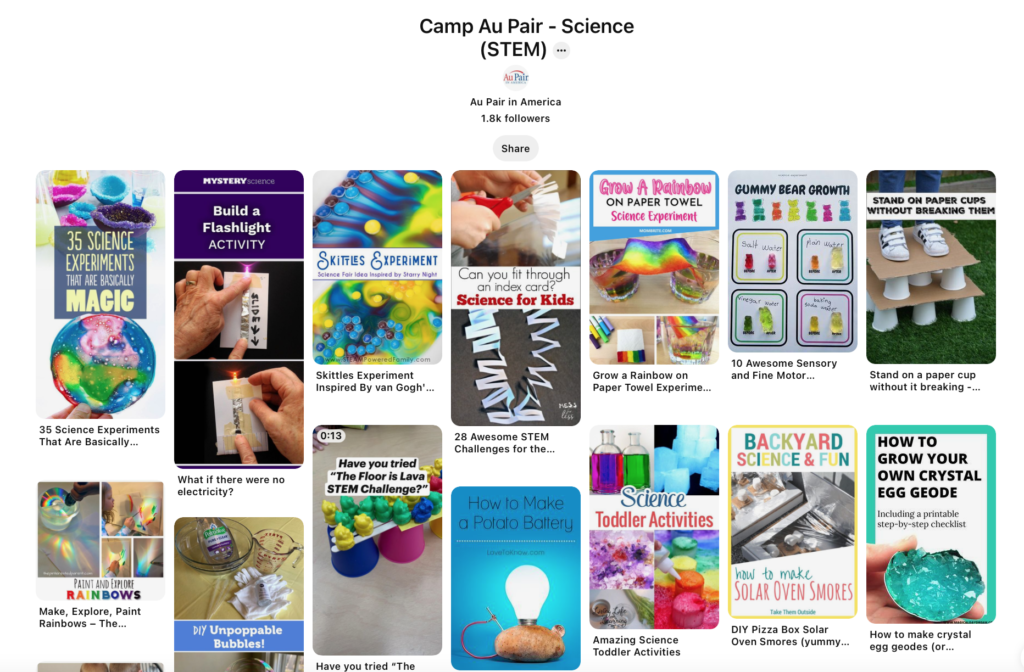
More than 100 crafts, recipes, activities, and experiments related to science, technology, engineering, and math can be found here on the Camp Au Pair – Science (STEM) pinboard.

Field Trips can be a great way for kids to learn and have new experiences. Get permission from your host parents before any outings. Here are a few places to go, that fit this theme:

*Some but not all locations have a viewing area where you can watch the machines used to make them.

Virtual Field Trips

Videos – On YouTube, you can find many great videos of science experiments to do with kids.

The Magic School Bus is a cartoon series with episodes on lots of great science topics. You can find some episodes on YouTube and the entire series on Paramount Plus.

Bill Nye the Science Guy is science TV series for kids. There is an episode guide on his website with clips and explanations on a wide variety of science topics.

MoviesThe Lego Movie, Big Hero 6, Wall-E, and Hidden Figures all fit the STEM theme.

Webcams – You can do a google search for science websites with webcams. Here is a collection of 22 science webcams from around the world.

Books – Stop by your local library and look for books on science, technology, engineering, and math.

Remember… Science is learning about how things work through observation and experimentation. Every day is full of opportunities to encourage children’s natural curiosity about the world!

Image: sweetpaulmag.com

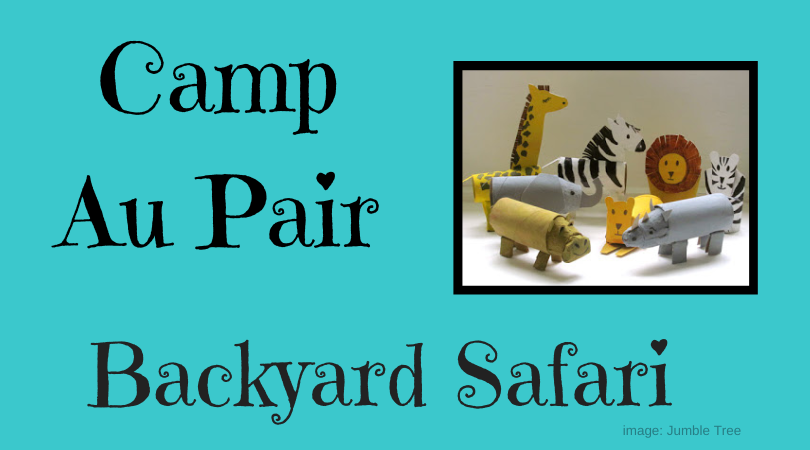
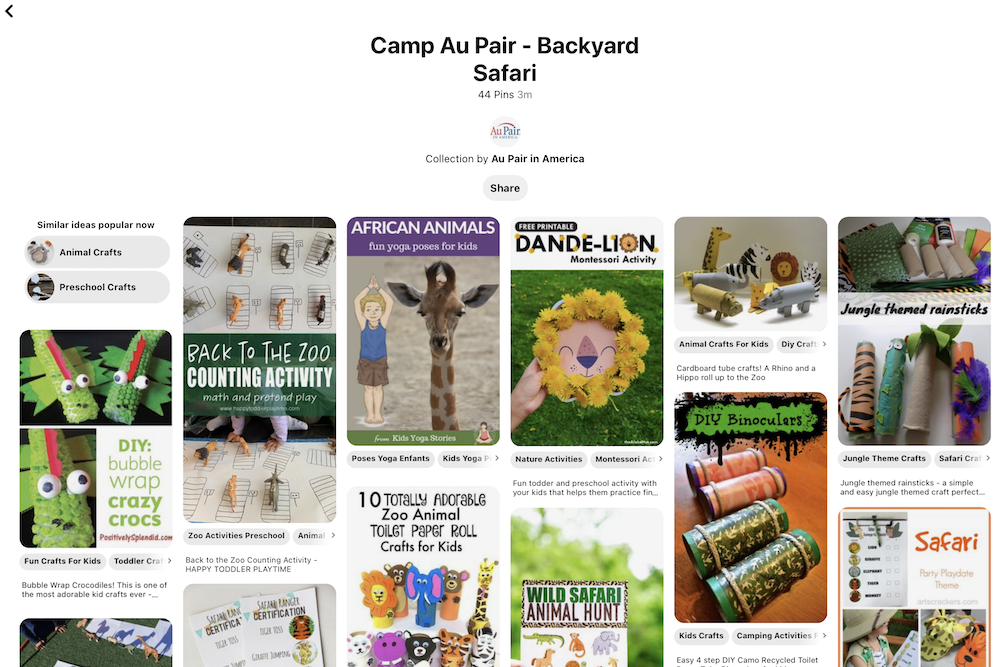
Camp Au Pair: Backyard Safari

This week’s Camp Au Pair theme is Backyard Safari.

Crafts, recipes, activities, and games can all be found here on the Camp Au Pair – Backyard Safari pinboard

Field Trips can be a great way for kids to learn and have new experiences. While we don’t have any animal safari parks near us, we are fortunate to live near two of the top zoos in the United States.

Webcams – You can do a google search for websites with webcams that allow you to observe nature.

Videos – Look for fun videos about African animals on YouTube.

Books – Stop by your local library and look for books on animals you might find on a safari or in the zoo. You can also check YouTube for some books on this subject being read aloud.

Image: Jumble Tree

Make Plans for Summer Fun with the Kids!

When the kids are out of school on summer break there are soooo many possibilities. But, if you don’t make plans, you will often end up in the house with bored kids getting into trouble and arguing with their siblings.  Make plans!

Having lots of ideas ready can minimize those problems.

Looking for fun activity ideas to get the summer started off right with your host kids?

The Au Pair in America Summer Fun Pinboard is a great place to start. Together, create a Summer Bucket List. Talk with the kids about things they would like to see and do. Even toddlers and preschoolers can contribute to the conversation. Run these plans by your host parents and clear things like how much you may spend and when is best to do some of these activities.

Check back here next week for information on Camp Au Pair in America: a weekly blog series with themes for a summer break filled with fun and new adventures.

Photo: MissMessie (Flickr)

Positive Discipline – Rewarding Good Behavior

Years ago when my kids were younger, I had a cluster meeting at my house and a few au pairs commented on the chore and behavior charts I had posted in my family room. With four kids, I sometimes found it difficult to keep track of who had done what and who had gained or lost various privileges. So, over the years, I have used charts to keep everything on track.  I have also created charts for host families and au pairs dealing with behavior the children may be having.

I uploaded a few of these charts in case you may find them helpful.

Positive Behavior – Recognizing and rewarding positive behavior can often be a good way to reduce negative behavior. The goal behind lots of children’s actions is the same, attention seeking. Try to show them more positive attention when they do well and make less of a fuss over negative behaviors.

Explain how the chart will work and then look for times when you can call their attention to something they did that was kind or helpful. It is nice to have short term and longer term goals. For example, the thrill of putting a sticker on the chart can be exciting for toddlers and preschoolers and that along with your words of praise are instant gratification. Saying when you get 5 stickers you get a larger reward (trip to the park, extra story or video, special activity) is intended to make them want to keep up the positive behavior. Positive Behavior Chart

Tracking Privileges – For school aged children it can be helpful to tie how they are behaving to privileges they want to have. I used this chart with different colored push pins, so my children could see where they were on the ladder and I could remember who I had told they could do what. The ladder style chart is based on an idea of the Dilley Family (famous parents of sextuplets.) I figured if it worked for them with six kids, it might work for me- and it has for many years. You can make this chart your own by substituting the kinds of activities your kids enjoy.  Ladder Chart 

Chores – Having chores teaches children that they are an important part of the family and their efforts count. This teaches responsibility and promotes positive self-esteem.  Chore Chart with Basic Chores

These are just a starting point, you can make your own charts and even involve the children in the process.

#1 Tip – Be Consistent!

All adults in the house need to be on the same page. It takes time to change behavior. Don’t expect instant results.


What is Passover?

What is Passover?

Passover is the Jewish celebration lasting seven to eight days (seven in Israel, eight outside of it) that marks the freedom of the Jews from enslavement by the Egyptians. According to the Old Testament, the Jews, led by Moses, had requested freedom from the Pharaoh of Egypt but were denied. To punish the Egyptians, God sent the 10 plagues to Egypt to convince the Pharaoh to release the Jews. The last of these plagues, and the most devastating, was to kill the firstborn male in each Egyptian household.

When is Passover?

Passover in 2022 will start at sunset on Friday, the 15th of April and will continue for 7 days until Saturday, the 23rd of April.

How is Passover celebrated?

Family and friends gather together after nightfall on the first and second nights of the holiday for the high point of the festival observance, the Seder. During the Seder, which means “order” in Hebrew, the experience of the Exodus is told in story, song, prayer, and the tasting of symbolic foods. The Seder meals include four cups of wine, eating matzah and bitter herbs, and retelling the story of the Exodus.

Here are some websites, with Passover activity ideas for kids.