
 The establishment of learning goals in early childhood education is crucial to ensuring that host children develop the cognitive, social, and emotional skills they need for success. But how is this done? Are my host parents involved? Where do I start?
Goal setting helps you and your host parents stay on the same page regarding the children’s growth. By using SMART goals—Specific, Measurable, Achievable, Relevant, and Time-bound—you can turn daily playtime into meaningful learning opportunities AND it offers you and your host parents another worthwhile way to connect.
1. Cognitive & Language Goals
Instead of just “playing,” focus on specific milestones that help the child’s brain develop.
- Specific: Help the child recognize and name five colors during morning play.
- Measurable: Identify at least three different shapes in a picture book twice a week.
- Achievable: Practice the “ABC Song” together during bath time or car rides.
- Relevant: Introduce three new vocabulary words related to the week’s theme (e.g., “garden,” “seed,” “flower”).
- Time-bound: Aim for the child to master 10 new words by the end of the month.
2. Social-Emotional & Behavior Goals
Since you spend so much time in the home, you are the primary coach for the child’s social-emotional growth.
- Specific: Practice “taking turns” with a favorite toy for 10 minutes daily.
- Measurable: Use a sticker chart to track every time the child uses “please” and “thank you” without being reminded.
- Achievable: Use role-play with dolls to practice expressing feelings like “I am sad” instead of crying.
- Relevant: Help the child gain independence by teaching them to put their shoes on by themselves.
- Time-bound: Observe a reduction in tantrums during transitions (like leaving the park) over a four-week period.
3. Motor Skills (Physical) Goals
Active play is a huge part of an au pair’s day. Use these goals to track physical milestones.
- Specific: Practice using safety scissors to cut straight lines during craft time.
- Measurable: Complete three “tracing” worksheets together per week to improve pencil grip.
- Achievable: Practice jumping with both feet off the ground during outdoor play.
- Relevant: Build hand-eye coordination by stacking a tower of 10 blocks.
- Time-bound: Show improved coordination in “catching a ball” by the end of the summer.
How to Implement SMART Goals at Home
- Observe: Spend the first week watching what the child finds easy and what they struggle with.
- Collaborate: Share your observations with the parents. Ask, “Which of these areas should we focus on this month?”
- Keep a Log: Use a simple notebook or a shared app to write down small “wins” or challenges you noticed during the day.
- Be Flexible: Every child has “off” days. If a goal feels too hard, break it into even smaller steps.
- Celebrate: When the child reaches a goal, celebrate! A high-five, an extra bedtime story, or a “Great job!” goes a long way.
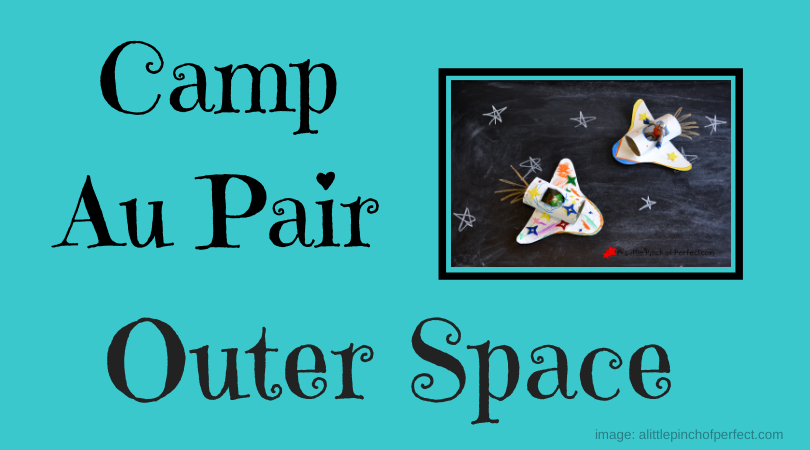 Next week’s Camp Au Pair theme is Outer Space.