Yearly Archives: 2024

Camp Au Pair – Under the Sea

Next week’s Camp Au Pair theme is Under the Sea.
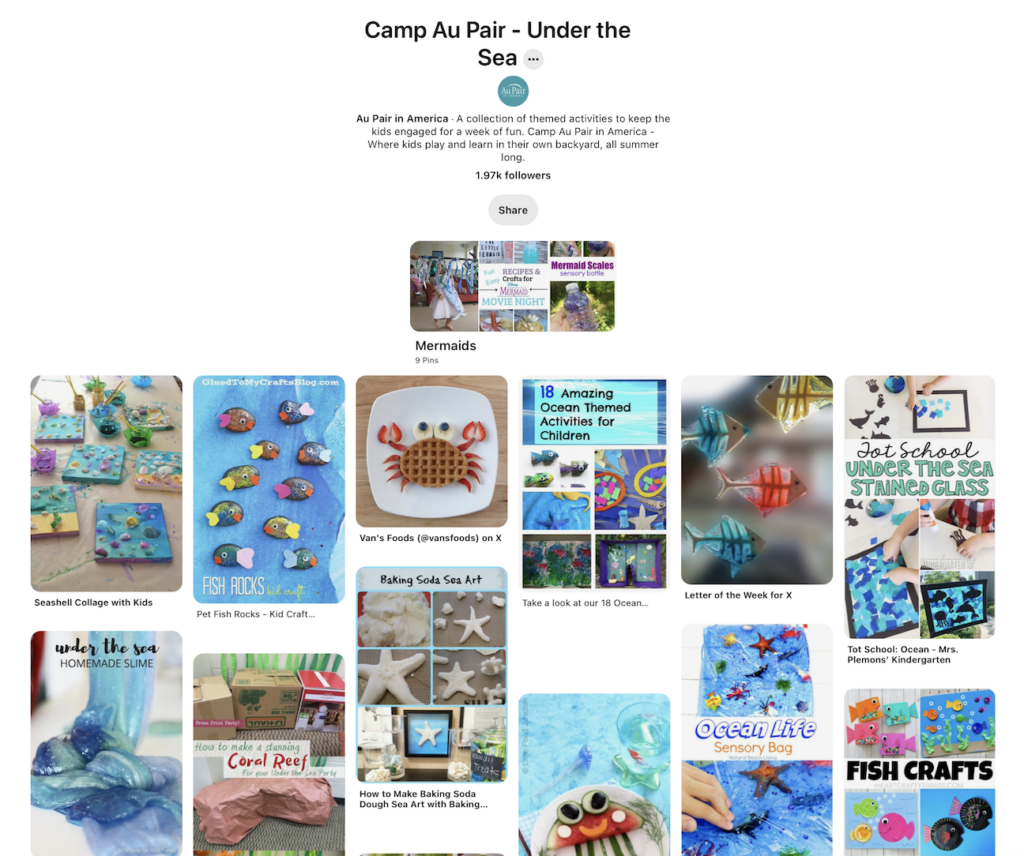
Crafts, recipes, activities, and games related to creatures who live under the sea can all be found here on the Camp Au Pair – Under the Sea pinboard.
Field Trips can be a great way for kids to learn and have new experiences. Get permission from your host parents before any outings. Check the websites before you go to be sure you understand the hours, costs, and whether advance tickets/reservations are required. Search online to see if your area has any of the following:

  • Pet or outdoor store (Bass Pro Shop) with fish tanks
  • Aquarium
  • Zoo
  • Nature Center

Online Games – NOAA has fun interactive games that help kids learn about sea turtle survival.
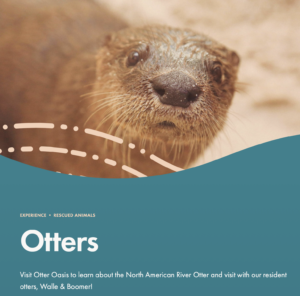
Webcams – You can do a google search for aquariums and zoos across the country (and the world) with webcams that allow you to observe sea creatures. Here are a few to get you started.

Videos – Look for fun videos on YouTube about sea creatures. There’s more to see than Baby Shark. Movies like Finding Nemo, Dolphin Tale, and The Little Mermaid also go well with this theme.

https://www.youtube.com/watch?v=0chq2uvwgvI&t=16s

Books – Stop by your local library and look for books on sea creatures. The Rainbow Fish is a classic children’s book, your kids may already own. If not, you can find videos like this of it being read aloud.

Movies – There are lots of movies with under the sea themes.

  • A Dolphin Tale 
  • Finding Dory
  • Finding Nemo
  • Little Mermaid
  • Moana
  • Shark Tale 
  • Song of the Sea

Television – There are some episodes of children’s television shows that talk about life under the sea.

The Magic School Bus is a television series that follows Ms. Frizzle and her class as they set off on field trips. Most episodes can be found on YouTube. Here are some episodes that fit this week’s theme.

https://youtu.be/L8f6T9rKZ4c

Bill Nye the Science Guy has episodes on FishMarine Animals and more on YouTube.

The Discovery Channel has an annual Shark Week. Check out 15 JAW-some Activities for Shark Week with lots of fun ideas for kids in grades 5 and up, but a few for younger kids too.

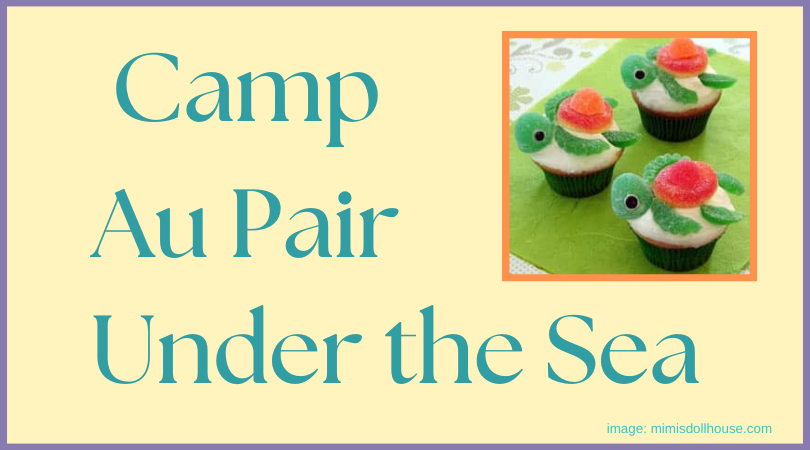
Photo: mimisdollhouse.com
Camp Au Pair – Art Experiences

This week’s Camp Au Pair theme is Art Experiences.

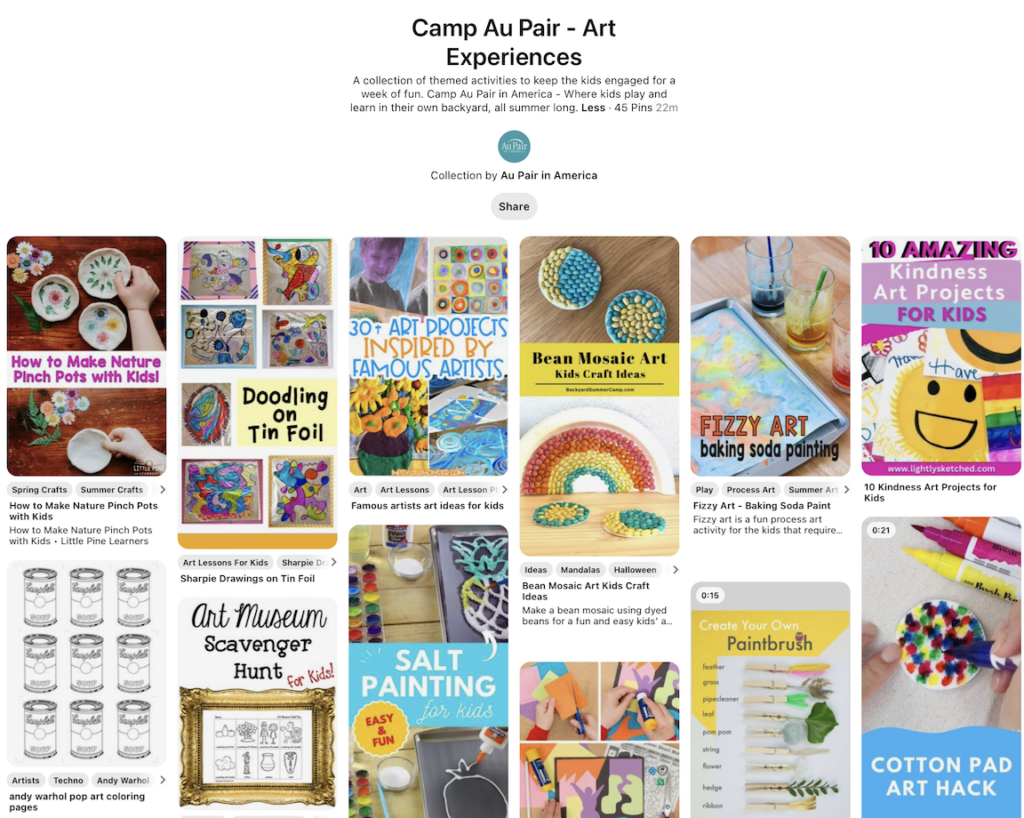
Crafts, recipes, activities, and games related to art can all be found here on the Camp Au Pair – Art Experiences pinboard.

Culture Sharing – Share any specific forms of art that are popular in your home country (mosaics, origami, murals, fabric dying, etc.) Are there any famous artists from your country that you could share their works with your host kids?

Field Trips can be a great way for kids to learn and have new experiences. Get permission from your host parents before any outings. Check the websites before you go to be sure you understand the hours, costs, and whether advance tickets/reservations are required.

Online Art Fun – Here is a great website with lots of art activities including ones for older kids.

Webcams – You can do a google search for art websites with webcams. Here are a few to get you started:

Videos – Look for fun videos on YouTube about drawing and all kinds of art.

Books – Stop by your local library and look for books on famous artists and art.

Check YouTube for books on art being read aloud:

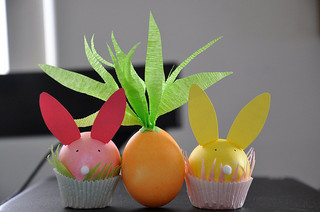
Image: teachkidsart.com

Camp Au Pair – Nature Exploration

This week’s Camp Au Pair theme is Nature Exploration.

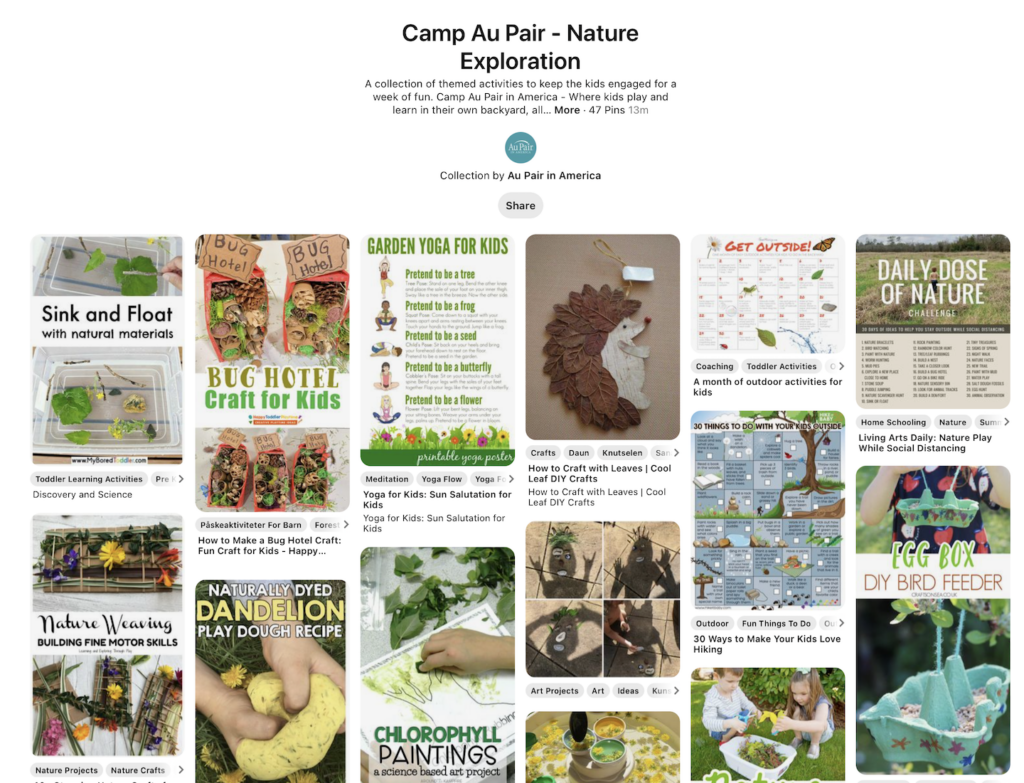
Crafts, recipes, activities, and games can all be found here on the Camp Au Pair – Nature Exploration pinboard.

Field Trips can be a great way for kids to learn and have new experiences. You can start observing nature at any local park or in your own backyard. If you want to take it a step further,  Below is a list of other local places to go explore nature. Get permission from your host parents before any outings and check websites before you go for hours and information.

Safety note: When coming inside after you have been outside exploring nature, it’s always a good idea to check the children and yourself for ticks. For more information, take a look at this post.

  • Aviary
  • Farms
  • Nature Preserve
  • Parks
  • Consider joining the Free Forest School to find outings near you.

Virtual Field Trips:

Webcams – You can do a Google search for websites with webcams that allow you to observe nature.

Videos – Look for fun videos on YouTube about nature.

Books – Check your bookshelves and/or stop by your local library and look for books on nature.  You can also find many read aloud book videos on YouTube. Here are a few to get you started.

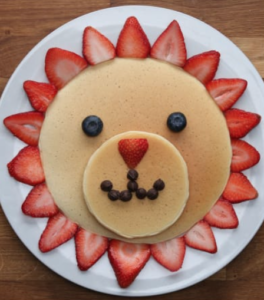
Image: toddleratplay.com

Welcome to Camp Au Pair in America!

When kids are out of school for the summer, it doesn’t take long for them to become bored and sometimes that leads to sibling squabbles and mischief. Even though they don’t realize it, they are usually missing routine and predictability in their daily schedule. One solution is to make fun plans to keep them busy! 

Each week this summer we will share a different Camp Au Pair theme. These weekly themes are designed to give you ideas to keep your host kids occupied and engaged all summer long. They will also be learning. (But shhhh, don’t tell them that part.) Check back each Friday, for the next week’s theme. This gives you a chance to make plans and gather materials for the next week. For each theme there will be crafts, games, snacks and activities. You can just use these ideas or add your own and customize the themes to fit the ages and interests of your host children.

Here are the themes you can look forward to:

  • Nature Exploration
  • Art Experiences
  • Under the Sea
  • Science (STEM)
  • Bugs & Butterflies
  • Cars and Trucks
  • Backyard Safari
  • Dinosaurs
  • Explore the World
  • Outer Space
  • Pirate Adventures
  • Princesses & Knights

Check out Summer Fun & Summer Holidays pin boards for even more ideas.

If you get some great pictures doing these activities with your host kids, please send those to your community counselor. We love to share your accomplishments and inspire other au pairs!

Let’s make this an amazing summer!

Preventing Dehydration in Hot Weather

Dehydration means that the body lacks the necessary amount of fluid. Infants and small children are more likely to become dehydrated than older children or adults, because they can lose relatively more fluid quickly.

Here are some steps to take to make sure children remain hydrated in the summer months:

  • Encourage your child to drink plenty of water. On hot days, children should drink significantly more water than usual, as they are losing more due to the heat.
  • Do not wait until your child is thirsty to give him water. By the time they feel thirsty, they are already becoming dehydrated.
  • If your child is resistant to drinking enough water, have other liquids on hand for your child to drink throughout the day.
  • Be alert to changes in behavior. A child may act confused or more irritable when they are becoming dehydrated/overheated. Get them into cooler temperatures and drinking more fluids.
  • Dress your child in lightweight clothing in the summer months, particularly if she’ll be playing outdoors in warm weather. You may also consider clothes that are well ventilated as they do not trap heat close to the body.
  • When there are heat and/or air quality advisories because the weather is dangerously hot, you should avoid taking the children outdoors. Check with your host parents for further guidance on this topic.

Remember to follow these tips for yourself too, so you stay well hydrated.

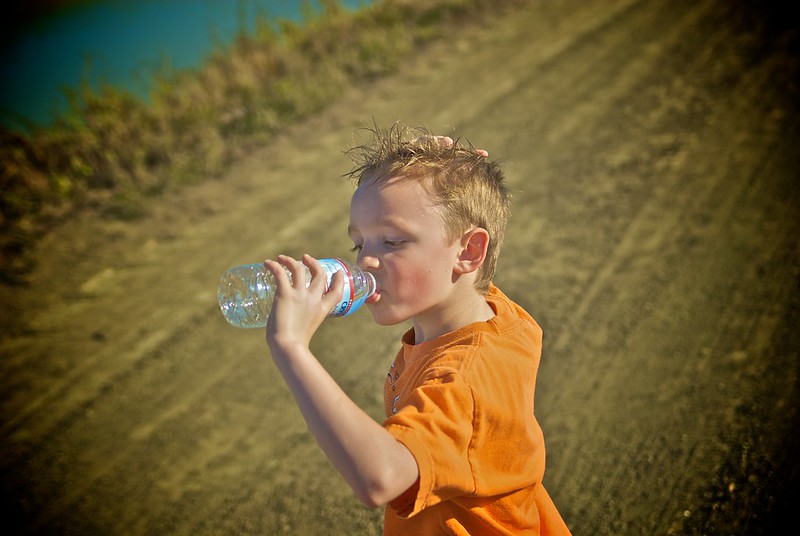
Photo: Moyerphotos (Flickr)

Hints to Help your Au Pair Match Flourish

Host parents have many responsibilities and are often very busy. Maintaining a good relationship with your au pair is essential and can prevent many potential issues. Below are a few simple things you can do to help your au pair match flourish.

Communication – Make time every couple of weeks for a check-in conversation. This provides your au pair a time to bring up questions or concerns which she may be hesitant to bring up when she sees how busy you are daily. It’s also a good time for discussing any concerns you have as well as planning for upcoming events or schedule changes.

I cannot emphasize enough how important these check-in conversations are, even after an au pair has been with a host family for months and into the extension year. Having these regular conversations says to your au pair that you care about how she is feeling and how things are going. It is an investment in keeping a match healthy and successful.

Treat Your Au Pair Like a Family Member – Au pairs who feel appreciated and included as a member of their host family tend to see their host children as family members and feel very invested in their happiness and success.

Stay on Top of Payments –  Au pairs can feel very uncomfortable if they need to ask for their weekly stipend payment. This can also make them feel their work is not appreciated or you are unconcerned about their needs. Add a recurring weekly event on your calendar, use payment apps or automatic bank transfers to schedule your au pair’s stipend payment, and give yourself one less thing to remember.

The same is true for their transportation costs to cluster meetings and classes. Au pairs let their host family know about the expenses but some host parents don’t always follow through and reimburse them. 

Creating Structure in your Child’s Day

In the whirlwind of a child’s life, they encounter constant change. Yet, amidst this flux, a child flourishes when there’s predictability—even if they may not always welcome it with open arms. By crafting a structured environment, such as establishing a routine, an au pair can foster a child’s sense of safety and stability, crucial for curbing behavioral issues.

Why Structure is Key

Introducing structure into a child’s day involves establishing a consistent routine. This might entail maintaining regular wake-up times, meal schedules, nap routines, and snack breaks.

Children benefit from rules and routines in numerous ways: understanding boundaries, learning self-discipline, navigating frustration and patience, and appropriately engaging with their surroundings.

Moreover, routines foster independence. Once a child grasps the sequence of tasks—like brushing teeth, getting dressed, having breakfast, and packing their school bag—you are spared the constant reminders, enabling the child to take charge of their morning routine confidently. This newfound independence bolsters the child’s self-esteem as they become adept at self-care.

Additionally, structured days tend to minimize behavioral issues. When a child knows what to expect, they’re less anxious and can concentrate on managing their behavior instead of fretting over uncertainties.

Establishing a Routine

For families with minimal structure in their daily routines, introducing changes gradually is advisable. Start by focusing on a specific time frame, perhaps the period between dinner and bedtime.

Identify tasks essential during this time, such as packing lunches, completing homework, bathing, reading bedtime stories, and lights out. Organize these activities in a logical sequence that suits the family’s dynamics.

Consider creating a visual aid, like a poster with task lists and accompanying photos, to facilitate the transition. Over time, children will become familiar with the routine, reducing the need for constant reminders.

Reminding the child to follow their routine and referring them to a visual chart reinforces their autonomy and accountability.

When drafting a routine, ensure it includes moments of bonding and enjoyment, such as story time or sharing daily experiences. It’s essential not to overlook these opportunities for family connection in the pursuit of adhering strictly to the routine.

Establishing House Rules

Structured living also entails implementing household rules. These rules should be clear, specific, and age-appropriate, covering areas like the use of art supplies or screen time regulations. Discuss this idea of structure with your host parents and create a plan that all of the adults in the home can adhere to. Discussing the consequences for rule violations helps children understand the repercussions of their actions, fostering accountability.

Flexibility in Adhering to Rules and Routine

Some of the most cherished memories in a child’s life stem from moments when routine is momentarily set aside for spontaneous fun, like staying up late to stargaze or playing games on a school night.

Parents, and au pairs alike, should exercise flexibility. When deviating from the norm, explain the rationale behind the deviation to the child, emphasizing its uniqueness as a special event. And of course, don’t forget about adjusting the household routine as the child matures. Rules and routines suitable for a toddler will require modifications to accommodate a grade schooler’s evolving needs.

Ultimately, instilling a sense of structure alleviates power struggles, fosters family organization, and nurtures the child’s sense of security and independence—a worthwhile outcome for your concerted effort invested over time.

Protecting Privacy & Personal Information Online

We live in a time of constant sharing through social media. We often share pictures, plans of somewhere we are going, or rants about problems, without thinking much about who will see it and what could be the consequences.

Before clicking “post”, stop to think:

  • Am I violating someone’s privacy?
  • Am I sharing personal information that could put me in danger?
  • Would I want my current or a future employer to see this?

This will help protect your privacy and safety as well as that of your host family. It is important to respect your host family’s privacy and not share personal details and information.  This applies to all kinds of situations, including personal conversations, email, and social websites.

For your own safety, it is a good idea to be careful what personal information you share about yourself as well. You should not give out information like your telephone number and address to people you don’t know. Safer to meet a new friend in a public place, than to give them your address before you know them.

Once you post something on the Internet (even if you later delete it), it can show up elsewhere.  Unless you have specific permission from your host family, you should never post pictures of them, their children, or their home on the Internet.

If you have a blog or website where you post in your native language, remember there is translation software. So, even if you say it in your native language, be sure it is not something that might be misinterpreted in translation or something you will regret saying.

Reminder: Use of your phone during work hours should be very limited, just checking for messages from your host parents. It is important that you are not distracted by your phone. Giving your full attention to work keeps your host children safe and helps you form a better relationship with them.

Create a Spring Break Game Plan

A “Game Plan” means a strategy for how you are going to accomplish something.  In the case of keeping kids from getting bored and/or into trouble, the best way to prevent it is to keep them busy with safe, fun activities.

When there are days home from school, letting kids sit around watching TV or playing video games is not the best use of their time.  Providing fun alternatives will make it much easier to pull them away from the screen.

You need to make a plan of what you will do with them each day and prepare for that. Planning is very important.  You don’t want to tell them you are going someplace fun, only to arrive there and see they are not open that day or you need to bring something and you don’t have it.

If your plan includes a craft or cooking project, make sure you have:

  • All the ingredients/supplies
  • Recipe/directions

If your plan includes an outing to someplace fun, figure out:

  • How will you get there?
  • When you should leave?
  • How much it will cost?
  • What will you do for lunch?

This local kids website also highlights many different child friendly activities around town. Have fun!!

Making Plans for Future Travel

Sometimes in the first few months after arrival, au pairs are still getting settled and making friends and not yet traveling very much. Believe it or not a year flies by faster than you think! These early months can be a great time to set goals, research places to go and make plans.

What can you do right now? Research and figure out where you want to go and what things you want to see and do there. Being a spontaneous traveler can be fun, but without planning you will often waste some of your precious vacation or weekend time figuring out things you could have looked into before you started your trip.

These ideas are to help you make general plans. You shouldn’t book any tickets or make any financial commitments until you discuss your vacation time with your host parents.

Planning can help you:

  • Save money
  • Make the best use of your time
  • Fit in more adventures
  • Visit places you might not have heard of before

It also extends the joy of the travel time. Making plans like this can help reduce homesickness by giving you things to look forward to and reminding you of why you came to the U.S. in the first place. You have many adventures ahead of you!

If you are looking for travel inspiration and ideas or a place to keep your travel ideas organized, Pinterest is a great place to start. You can browse other people’s travel and bucket list pinboards. You can create your own pinboards for places you want to go and ones you have already visited.

These three apps are all trip planners and offer the ability to research places and create your own itinerary. Each one has its own look and feel and slightly different features. Download them and see which one is the best fit for you.

Road trips can be the ultimate adventure. You set your own pace and stop to see what you want. The journey can be as much fun as your destination.

  • Road Trippers is an app that helps you plan the ultimate road trip. It helps you determine your route and find interesting stops along the way.
  • Atlas Obscura has lots of unusual places to visit all over the world.

Make plans to get the most out of your au pair year!

Photo: Natacha R. from France