Category Archives: Host Family Tips

Hanukkah 2017

You can visit the world's largest menorah on the Ellipse in Washington, DC. Photo: Ted Eytan (Flickr)

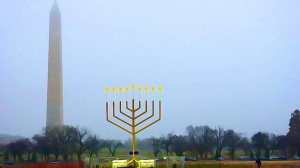
You can visit the world’s largest menorah on the Ellipse in Washington, DC. Photo: Ted Eytan (Flickr)

We have host families from a wide variety of backgrounds and faiths; some host families celebrate Hanukkah, some celebrate Christmas, some celebrate Kwanzaa, and some celebrate more than one holiday or none at all. If you’re an au pair living with a host family who celebrates Hanukkah and you do not, I encourage you to take part and experience it with them. This can be a great opportunity for learning and culture sharing. I also encourage host families to ask their au pairs to share their holiday traditions and customs. 

Hanukkah is the Jewish Feast of Lights or Feast of Dedication. The Hebrew word Hanukkah means dedication. The holiday begins on the eve of the 25th day of the Hebrew Month of Kislev and lasts eight days. Hanukkah usually falls in the month of December, but occasionally can start in November. This year Hanukkah begins at sundown on Tuesday, December 12, 2017, and ends the evening of Wednesday, December 20, 2017. 

How Do You Spell Hanukkah?

According to Judaism 101, the process of writing Hebrew words in the Roman (English) alphabet is known as transliteration. Transliteration is more an art than a science, and opinions on the correct way to transliterate words vary widely. This is why the Jewish festival of lights (in Hebrew, Cheit-Nun-Kaf-Hei) is spelled Chanukah, Chanukkah, Hanuka, and many other interesting ways. Each spelling has a legitimate phonetic and orthographic basis; none is right or wrong.

History

The books of the Maccabees tell the story of Hanukkah which occurred in 165 B.C. After three years of struggle, the Jews in Judea defeated the Syrian tyrant Antiochus. The Jewish people held festivities in the Temple of Jerusalem and rededicated it to God. After removing all Syrian idols from the Temple, the Jews found only one small pot of oil to light their holy lamps. Miraculously, the small pot provided oil for eight days. Judas Maccabaeus, the Jewish leader, then proclaimed a festival to be observed by Jewish people. (Source: www.apples4theteacher.com)

Hanukkah Traditions (Source: www.bhg.com)

  • The Menorah

The centerpiece of the Hanukkah celebration is the Hanukkah or menorah, a candelabra that holds nine candles. Eight candles symbolize the number of days that the Temple lantern blazed; the ninth, the shamash, is a helper candle used to light the others. Families light one candle on the first day, two on the second (and so on) after sundown during the eight days of Hanukkah while reciting prayers and singing songs. The menorah — either store-bought or homemade and crafted of metal, wood, papier-mache, or clay — is filled from right to left, but lit left to right so each new candle is lit first. (Source: www.bhg.com)

  • Singing Songs

Hanukkah — one of the most family-oriented of Jewish holidays — comes with its own set of carols sung around the glowing menorah. These celebrate everything from the glory of God and the ancient Temple of the Jews (“Maoz Tzur”) to the simplicity of a dreidel (see below), as in “Dreidel, dreidel, dreidel/I made it out of clay/And when it’s dry and ready/Dreidel I shall play.”

  • Yummy Treats
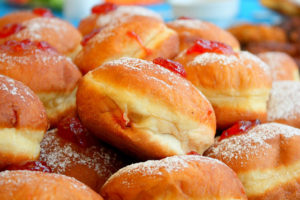
Photo of Sufganiyot (Donuts): Avital Pinnick (Flickr)

Photo of Sufganiyot (Donuts): Avital Pinnick (Flickr)

There’s nothing low-fat about Hanukkah – many of the traditional foods of the holiday are deep-fried. In honor of the oil-y miracle people celebrating Hannukah like to eat foods that are fried in oil like latkes (potato pancakes) and sufganiyot (jelly-filled doughnuts) and different fried breads.  Want to have a go at making something?  There are lots of recipes for yummy treats here.

  • Spinning Tops 

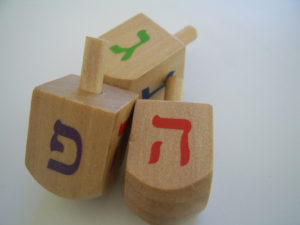
    Photo: Marina Shemesh (Flickr)

    Photo: Marina Shemesh (Flickr)

It’s customary to play with dreidels (spinning tops) during the holiday, even wage gambling games in which players guess which side of the top will fall face up. Legend has it that during the Greek-Syrian dictatorship in Israel of yore, Jews got around the ban on reading the Torah by bringing spinning tops to study sessions so their oppressors would think they were just playing around. The Hebrew characters carved into the four sides of today’s dreidels are the first letters of “Ness Gadol Haya Po/Sham,” which roughly translates to “Great Miracle Happened Here/There” (depending on whether you’re in Israel or not).

Directions to play the Dreidel game

More fun and educational Hanukkah activities for children


Celebrating Hanukkah in Washington, DC
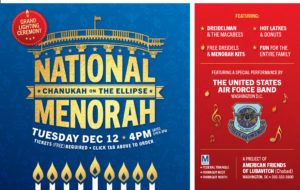
The lighting of this menorah – the world’s largest – is attended by thousands every year and seen via media by tens of millions across the nation and around the world. Along with the lighting, there will be live entertainment and menorah kits and dreidels to take home. Tickets are free but must be ordered in advance.

A very Happy Hanukkah to all!
5 Thanksgiving Tips for Au Pairs and Host Parents

Thanksgiving is celebrated on the fourth Thursday of November each year. Even though a few other countries also celebrate Thanksgiving, it’s still considered a uniquely American holiday, one that the au pairs look forward to experiencing. You can learn more about it here.  Continue reading →

Au Pair Technology Tips

Imagine if you went to the hospital and the doctors and nurses were more interested in texting or tweeting than caring for you. How would that make you feel, about yourself and about them?  Would you think that you were getting the treatment you deserved?  Would you feel like paying the bill after your stay?

Life as an au pair is a fine balance between employee and family member. You live with your host family and participate with them as a member of the family, but you also have clear responsibilities as a childcare provider.

Being a childcare provider is a very important job because you are helping to shape our next generation. What message are you sending to your host kids when you would rather interact with a computer than with them? How will they feel about themselves and about you? Children feel as though everything is about them. They will see this as a rejection of them and they will be more likely to act out.

Not paying enough attention to your host kids poses safety concerns too. Accidents happen, but when an adult caregiver is close by and appropriately supervising children, the chances of a major injury are dramatically reduced.

When you are working, you should not do any of the following:

  • Texting
  • Talking to friends on the phone
  • Chatting with friends online
  • Using Skype or FaceTime
  • Messaging
  • Emailing
  • Tweeting
  • Updating your status on Facebook or any other social media site
  • Using Snapchat, WhatsApp or any other app or social media site
  • Watching videos on YouTube
  • Uploading photos on Instagram
  • Playing Pokemon Go
  • Using the phone or tablet while driving
  • Exceptions- the only time it’s okay to use your computer, phone, tablet, etc. is when your host parents have given your specific permission to text or call them, help your host children find a pre-approved website (like Nickjr.com), or some other job-related task that your host family has asked you to complete. When in doubt- ask your host parents.

Finally, please do not text, scroll through Facebook, answer your phone, etc. when eating meals with your host family or talking with your host parents. Even if you think you’re a great multi-tasker, your host family will think you are being rude.

Going unplugged during work may seem impossible, but think about this — even if you work 45 hours a week, you still have 123 hours left in the week for all of that other stuff, or about 70 hours (if you are getting the recommended 7-8 hours of sleep per night).

Host Parents – Please be clear about what you consider acceptable technology use during work hours to avoid misunderstandings. Your au pair is most likely very accustomed to being plugged in at all times. Her intention is not to be rude, but she might not realize how her actions will be perceived. Please use this information as an opportunity to begin a dialogue on the issue.

(Adapted from Christine Connally’s blog post, Going Unplugged During Work Hours)

Celebrate Halloween 2017!

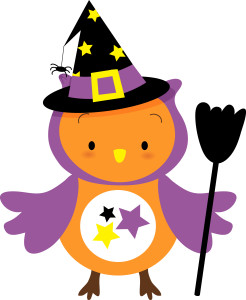
JWI_HalloweenOwlHalloween (or Hallow e’en) is a celebration observed in a number of countries including the United States on October 31st.  Halloween has a special significance for children, who dress in funny or ghostly costumes and knock on neighborhood doors shouting “Trick or Treat!” Pirates and princesses, ghosts and witches all hold bags open to catch the candy or other goodies that the neighbors drop in.
Since the 800’s, November 1st is a religious holiday known as All Saints’ Day. The Mass that was said on this day was called Allhallowmas. The evening before became known as All Hallow e’en, or Halloween. Like some other American celebrations, its origins lie in both pre-Christian and Christian customs.

The most popular Halloween activities include trick-or-treating attending Halloween costume parties, decorating, carving pumpkins into jack-o’-lanterns, lighting bonfires, apple bobbing, playing pranks, visiting haunted attractions, telling scary stories, and watching horror films.

For more information and a “how-to” video on carving a pumpkin, click here.  Find more pumpkin carving ideas, scary snacks, and other fun Halloween activities on the APIA Halloween Fun Pinterest board.

Halloween can be a lot of fun but it is also a time when safety should come first. Here are some tips for Monday:

Adult supervision is essential. Always accompany the children if they are going door to door to trick or treat

Try tick-or-treat-friendly homes. Ensure the children only visit houses with lights on. And, you might also suggest the houses they visit have some sort of Halloween decoration on the porch.

Stay outside. Make sure the children don’t go inside someone’s house. They can trick or treat on the porch.

Remain visible. Dress the children in bright costumes or have them wear reflective strips or carry a glow stick or flashlight.

Quality-check treats. Check the candy before they eat it. Throw out any candy that is not in its original wrapper or looks like it has been tampered with.

Say “no” to strangers. Remind the children to never accept a ride or go anywhere with a stranger.  

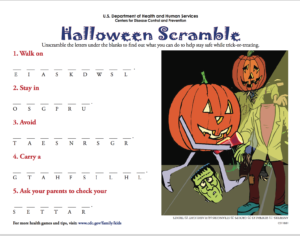
Click here for more Halloween safety tips and a fun word game to help teach these tips to your host kids. 

2017 Halloween Safety Tips

Going trick or treating? Check out these tips from the CDC to help make the festivities fun and safe for trick-or-treaters.

Swords, knives, and other costume accessories should be short, soft, and flexible.

Avoid trick-or-treating alone. Walk in groups or with a trusted adult.

Fasten reflective tape to costumes and bags to help drivers see you.

Examine all treats for choking hazards and tampering before eating them. Limit the amount of treats you eat.

Hold a flashlight while trick-or-treating to help you see and others see you. WALK and don’t run from house to house.

Always test make-up in a small area first. Remove it before bedtime to prevent possible skin and eye irritation.

Look both ways before crossing the street. Use crosswalks wherever possible.

Lower your risk for serious eye injury by not wearing decorative contact lenses.

Only walk on sidewalks whenever possible, or on the far edge of the road facing traffic to stay safe.

Wear well-fitting masks, costumes, and shoes to avoid blocked vision, trips, and falls.

Eat only factory-wrapped treats. Avoid eating homemade treats made by strangers.

Enter homes only if you’re with a trusted adult. Only visit well-lit houses. Never accept rides from strangers.

Never walk near lit candles or luminaries. Be sure to wear flame-resistant costumes.

screen-shot-2016-10-25-at-1-51-57-pm

Download the CDC’s Halloween Safety Scramble to review these safety tips with your kids.

Keeping Our Kids Safe and Healthy This Summer

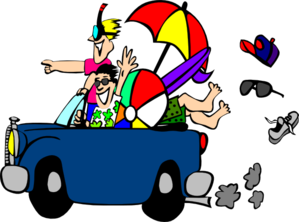
Illustration: MLARGE (clker.com)

If you ask my children what they think their parents’ most important job is, they’ll say “to keep us safe and healthy.” We use that phrase to explain everything from why our daughter can’t cross the street alone to why our son needs to go to sleep at night. While our children have been known to roll their eyes when they hear it, this all-purpose phrase is one that explains a lot of our decisions as parents. We encourage our au pairs to use it as well.

When my son was worried about his upcoming swimming lesson, I heard our au pair tell him that he was going to be safe because that was her job. Immediately, he smiled and relaxed a bit, and while he was still worried, he knew that he was safe because his au pair was there to keep him out of harm’s way.

Summer can be a wonderful time of year full of adventure and fun, but it can also be a time when routines are unsettled and rules are relaxed. I encourage you to think about ways that you can keep your children safe and healthy. The American Academy of Pediatrics’ Healthy Children website has many excellent articles on how you can help your family have a wonderful and healthy summer. Below are some highlights with links to the full articles.

Summer Safety*

Sun Safety

  • Keep infants 6 months or younger out of direct sun.
  • Cover up with protective clothing and hat and dress in cool layers. Wear protective sunglasses.
  • Play outdoors in the early morning and limit your exposure to sun between 10 am and 4 pm.
  • Use a broad-spectrum sunscreen and apply it often.

Heat Safety*

  • Reduce the intensity of outdoor activities during times of high heat & humidity.
  • In Washington, DC smog can also cause days when the air is unsafe for young children to be outdoors. You can check the daily index here.
  • Children and adults should be allowed to drink water liberally and freely. When outdoors take a break for water every 20 minutes.
  • NEVER leave a child in a car. Heatstroke and death can occur quickly. Always check the backseat to make sure all children are out of the car. Leave your purse or wallet on the back seat when you are driving to remind you to check when you arrive at your destination.

Insects*

Summertime brings an onslaught of bugs- some of which can cause diseases like West Nile Virus, Lyme Disease, and Rocky Mountain Spotted Fever. Stay up-to-date on your region and how to prevent these diseases spread by insects.

Prepare a summer first-aid kit for bug bites and more:

  • Be prepared for allergic reactions from bug bites. Benadryl is probably the most important over-the-counter medication to have in your first aid kit to treat insect bites, hives, and other allergic reactions.
  • Hydrocortisone ointment can help the itches that come from bites.
  • Use bug spray containing DEET or picaridin.

 Swimming Safety

  • Review swimming rules with your children.
  • Always make sure an adult who is able to swim is watching children when they are in the water.
  • Take steps to prevent drowning*.

*These articles have been updated by the American Academy of Pediatrics’ Healthy Children website for 2017.

2017 Summer Day Camps

Illustration: www.hikingArtist.com (Flickr)

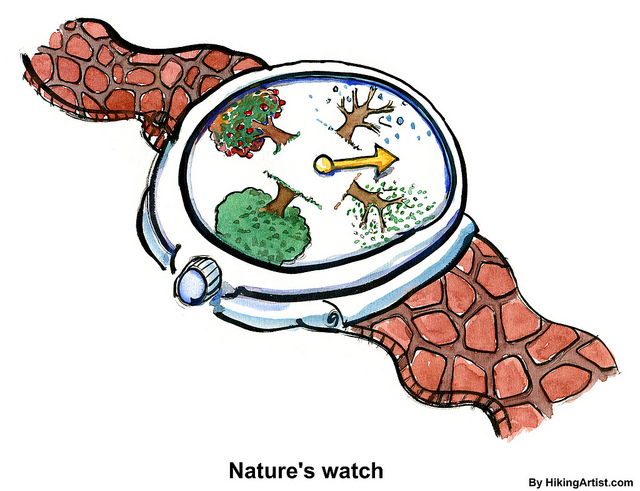
Illustration: www.hikingArtist.com (Flickr)

Does it seem like the days are getting longer, but the hours are getting shorter?

Too much to do and never enough time to do it all? Continue reading →

Preventing Dehydration in Hot Weather

Dehydration means that the body lacks the necessary amount of fluid. Infants and small children are more likely to become dehydrated than older children or adults, because they can lose relatively more fluid quickly.

Here are some steps to take to make sure children remain hydrated in the summer months:

  • Encourage your child to drink plenty of water. On hot days, children should drink significantly more water than usual, as they are losing more due to the heat.
  • Do not wait until your child is thirsty to give him water. By the time they feel thirsty, they are already becoming dehydrated.
  • If your child is resistant to drinking enough water, have other liquids on hand for your child to drink throughout the day.
  • Be alert to changes in behavior. A child may act confused or more irritable when they are becoming dehydrated/overheated. Get them into cooler temperatures and drinking more fluids.
  • Dress your child in lightweight clothing in the summer months, particularly if she’ll be playing outdoors in warm weather. You may also consider clothes that are well ventilated as they do not trap heat close to the body.
  • When there are heat and/or air quality advisories because the weather is dangerously hot, you should avoid taking the children outdoors. Check with your host parents for further guidance on this topic.

Remember to follow these tips for yourself too, so you stay well hydrated.

Photo: Darwin Bell (Flickr)

Holiday & Vacation Reminders

“Rest and be thankful.” – William Wordsworth

Holidays and vacations are a great opportunity to rest, recharge and explore the U.S.

Memorial Day Weekend is the unofficial start of summer travel season. Here are some reminders about program rules regarding holidays and vacations.

Holidays

  • Host families are not required to give au pairs any specific holidays.
  • Each host family will make different arrangements on holidays, some au pairs will be off and others will be required to work.
  • Au pairs should not make plans for holidays without checking with your host family first.

Vacations

  • Au pairs earns 2 weeks of paid vacation during the course of her year.
  • Vacation time should be mutually agreed upon.
  • All vacation should be preplanned (at least 4 weeks in advance.)
  • All au pair’s friends and/or family visits/vacations should be pre-approved prior to purchasing tickets.
  • If an au pair travels with her host family, it should be discussed in advance whether this is the au pair’s vacation or if she is working.
  • If an au pair travels with the host family to work, the host family is required to pay for her transportation, lodging and meals.

Important: If an au pair is traveling outside of the U.S., she must have her DS2019 signed (travel validation) PRIOR to her departure from the US. More information about this may be found on the Au Pair in America website.

Photo: torbakhopper (Flickr)